

Kerry and Iran’s Zarif discuss sanctions relief in Vienna
Top diplomats talk about implementing nuclear deal by December, redesign of Arak reactor
 Add ToI as a Preferred Source on Google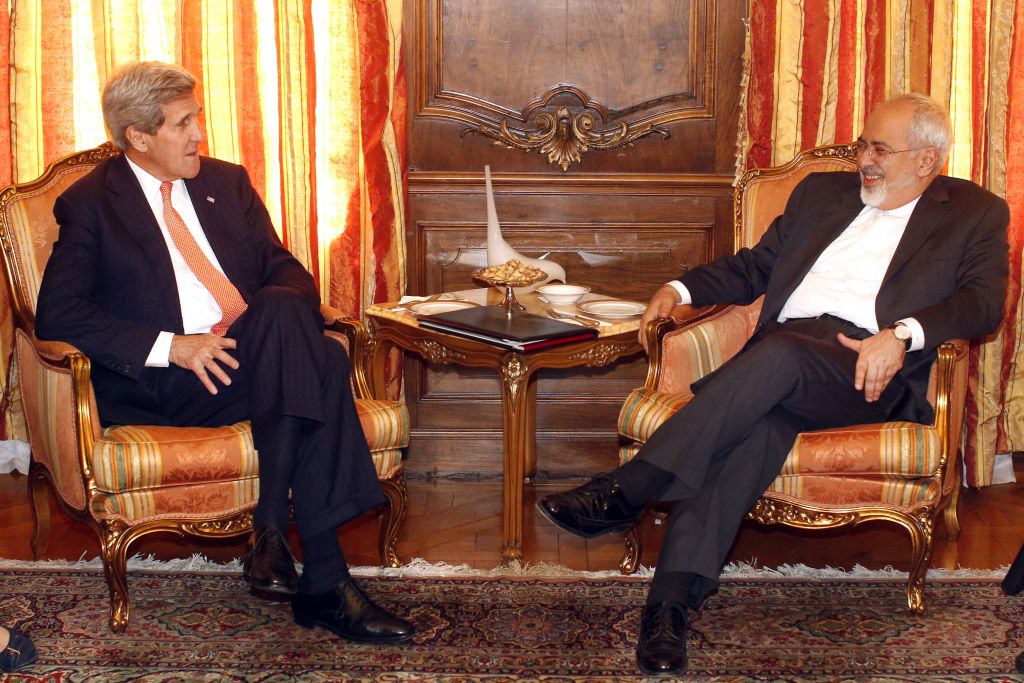
US Secretary of State John Kerry met with Iran Foreign Minister Javad Zarif Saturday to discuss sanctions relief related to the landmark nuclear pact, as officials say the landmark deal has begun to be implemented.
The three-hour meeting took place on the sidelines of an international summit discussing the Syria crisis, which saw the participation of representatives of nearly 20 nations.
Zarif mentioned that the talks had been conducted in a “serious and expert” manner, and that he expected that the commitments of both sides would be implemented by late December.
Kerry reportedly reiterated the US commitment to easing sanctions and mentioned that the US has already begun allaying the concerns of American companies that want to do business with Iran, The Tehran-based Mehr News reported.
The nuclear deal, signed in July between Iran and the P5+1 (the US, UK, France, China, Russia, Germany) puts limits on Iran’s nuclear activity in exchange for sanctions relief.
An additional topic at the meeting was Iranian plans, based on commitments it made in the deal, to redesign the Arak heavy-water research reactor.
This provision requires Iran to work with an international team to modernize the reactor so that it “will support peaceful nuclear research and radioisotope production for medical and industrial purposed.” The redesign is also meant to eliminate the reactor’s production of weapons-grade plutonium.
Zarif reportedly discussed with Kerry a document outlining the proposed reactor redesign, which has been approved and signed by most of the foreign ministers involved.
The nuclear deal was officially “adopted” by the US on October 18, when President Barack Obama ordered the US government to take steps toward lifting sanctions on Iran.
The next milestone for the agreement is expected to be “implementation day,” the point when the IAEA is able to certify that Iran has fully complied with its end of the bargain. Iran has been trying to speed up the date of implementation of the sanctions relief.
Under the deal with world powers, Iran will dramatically reduce its uranium enrichment program, surrender or dilute most of its highly enriched fuel and open its nuclear sites to inspectors from the IAEA, the UN nuclear watchdog.
In return, the United States, Europe and other countries will rescind a raft of economic sanctions imposed on Iran because of fears that its nuclear research program concealed plans to develop an atomic bomb.
AFP contributed to this report.





The Times of Israel Community.