

Defending Iran deal, Kerry says US can track any violations
Secretary claims he never sought ‘anytime, anywhere’ inspections; leaves ‘door open’ to warmer relations with Tehran
 Add ToI as a Preferred Source on Google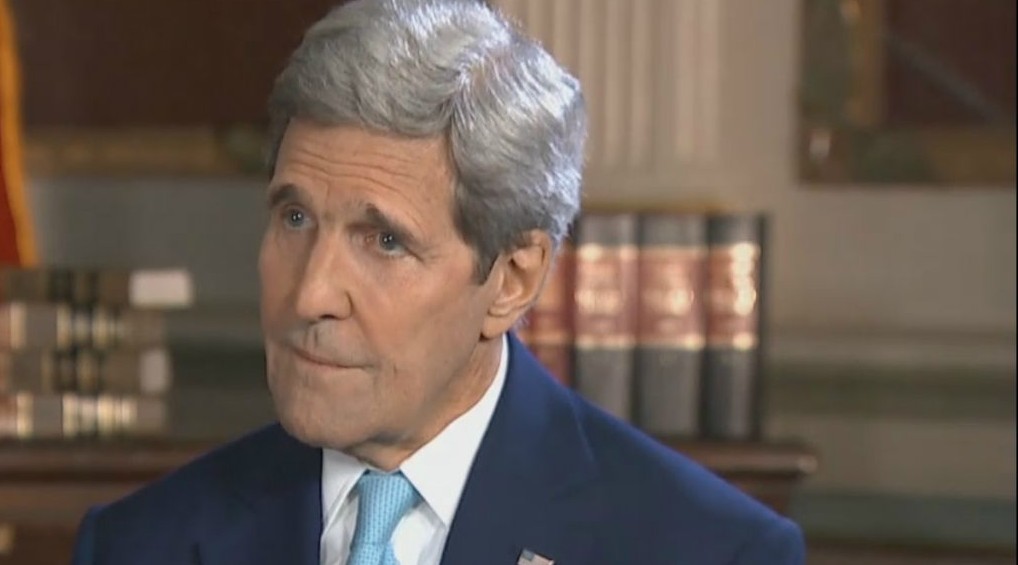
Five days after signing an agreement to curb Iran’s nuclear program, Secretary of State John Kerry said Sunday he was confident that the US intelligence apparatus will have the ability to watch and track the Islamic Republic’s military facilities “at any time.”
Speaking on ABC News, Kerry dismissed critics’ demands for “anytime, anywhere” inspections of suspect Iranian facilities as unreasonable, because no such standard exists in the international community.
“We never, ever had a discussion about ‘anywhere, anytime, [inspections]’” he reiterated in an interview with Fox News. “It’s called ‘managed access.’ It’s under the IAEA. Everyone understands it and the intelligence community has made it clear to us, as they did before we signed on to this deal, that we would be able to know what they are doing during that intervening time.”
“The fact is that, in arms control, there is no country anywhere on this planet that has ‘anywhere, anytime.’ There is no such standard within arms-control inspections,” added Kerry.
The US secretary said the intelligence community has confirmed that the possible 24-day delay mandated in the deal before it would be possible to inspect suspicious activity at Iranian facilities would still enable the IAEA to detect any breaches in the nuclear deal.
As for the controversial lifting of financial sanctions — some of which will be lifted immediately, and others over a period of five and then eight years, Kerry said it could have been worse.
“Three of the seven [negotiators] thought [Iran] shouldn’t be held to any kind of restraint,” Kerry said. “We prevailed.”
Critics have questioned the Obama administration’s optimism vis-à-vis the Iranian regime in the face of the overt anti-American and anti-Israel hostility from Iran’s leaders in recent days.

On Saturday, Iran’s supreme leader, Ayatollah Ali Khamenei, delivered a virulently anti-American speech, castigating American arrogance, praising his people for demanding “Death to Israel” and “Death to the US,” and declaring that Iran would be reconciled with America.
“Plainly, we don’t want war,” Khamenei said. “But if war breaks out, it will be the aggressive, cruel America that loses.”
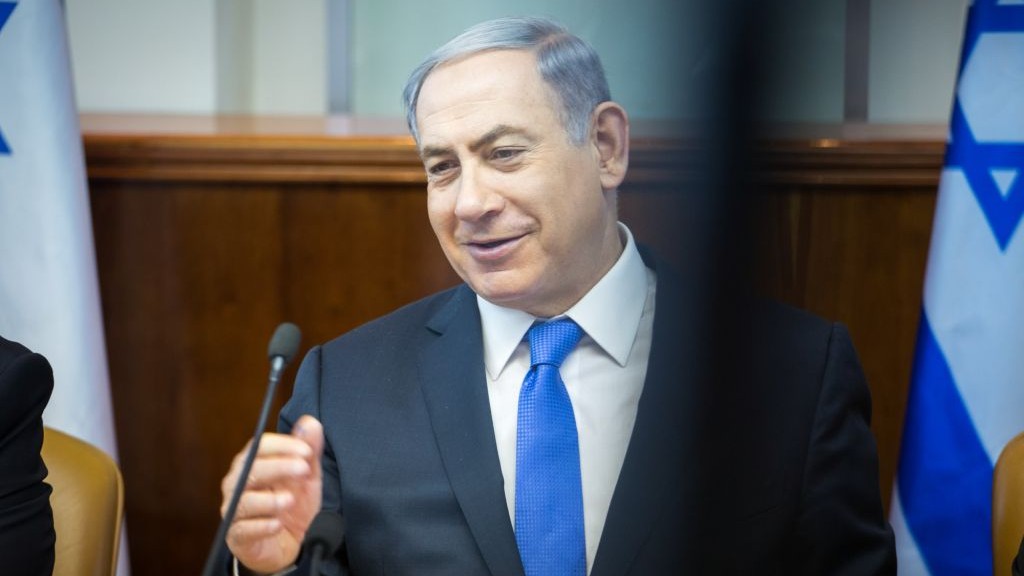
Critics, among them Prime Minister Benjamin Netanyahu, have slammed the deal, lambasting the premature sanctions relief, the failure to ensure an adequate inspection mechanism, and the fact that Iran is maintaining its core nuclear facilities and the right to ongoing R&D of faster centrifuges, among other alleged flaws. Netanyahu on Sunday also asserted the Khamenei’s “bellicose” address proved that Iran will not change for the better in the wake of the deal.
Kerry, who last week called Netanyahu’s criticisms “way over the top,” said that warmer ties with the Islamic Republic was not an impossibility. Kerry noted that although a restart in diplomatic ties was not part of the nuclear accord, Washington would remain “open to possibilities” that the Iranian regime would reform its ways and cease its aggressive behavior in the Middle East.
“We’re prepared to test whether or not they’re prepared to change their relationship in the region, and it would be diplomatic malpractice if we didn’t keep our door open to possibilities,” Kerry said.
Strengthening ties between the two countries was “not the purpose of the negotiations, it was about the nuclear program,” Kerry added, noting that it was still too early to tell if there will be a change in relations.
The secretary of state all but ruled out a visit to Tehran during his tenure. “It’s not being contemplated,” Kerry said. “We don’t have relations at this point.”
Marissa Newman contributed to this report.










The Times of Israel Community.