

Long after society bade them adieu, greeting cards get a second look
An Israel Museum exhibit examines the near-defunct form of Rosh Hashanah communication and its place as a sort of folk art
 Add ToI as a Preferred Source on Google
Jessica Steinberg, The Times of Israel's culture and lifestyles editor, covers the Sabra scene from south to north and back to the center
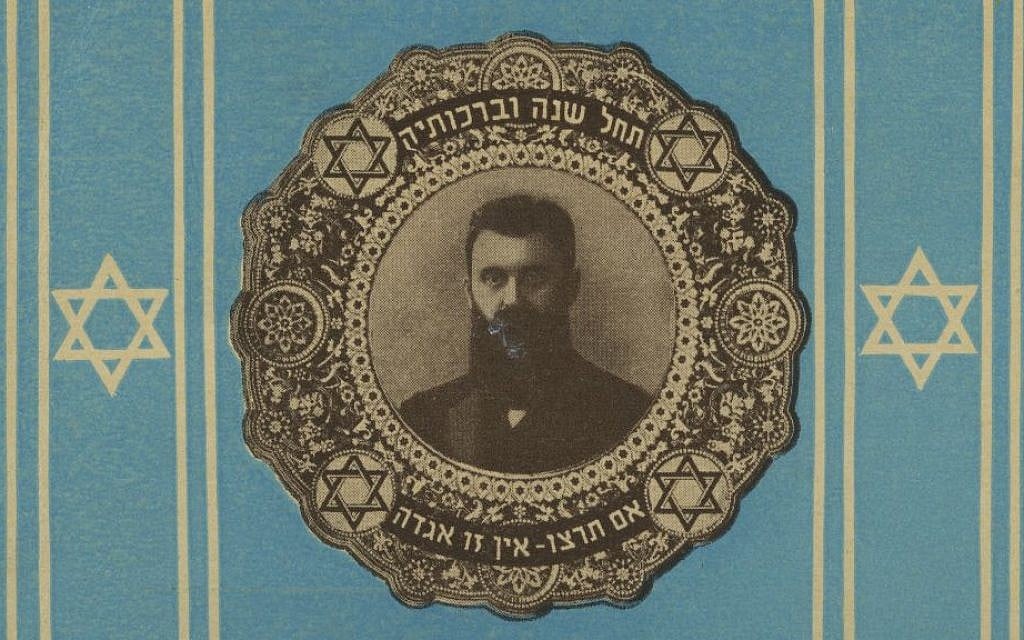
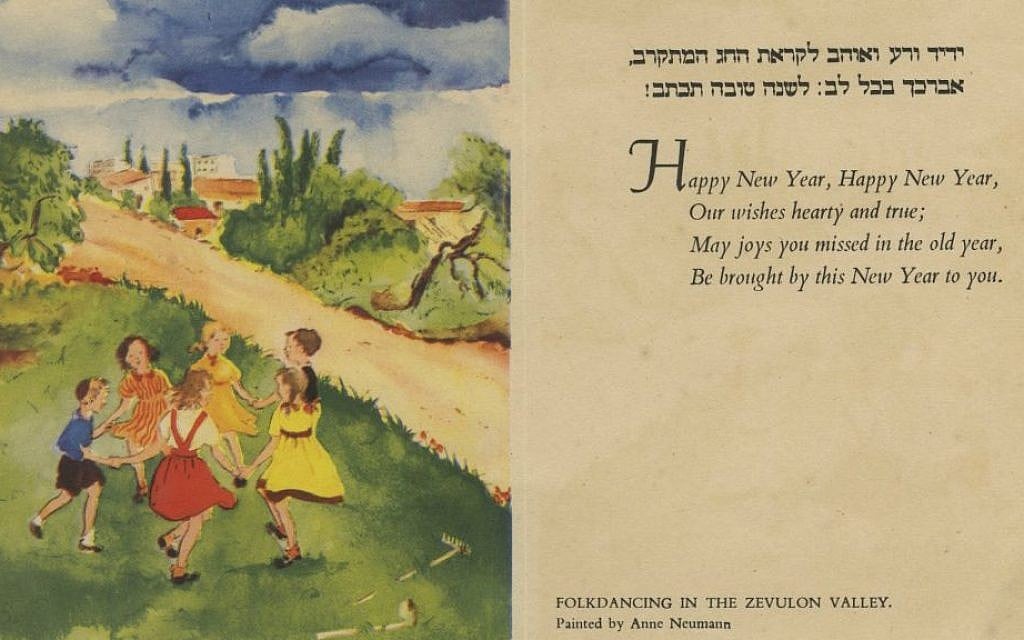
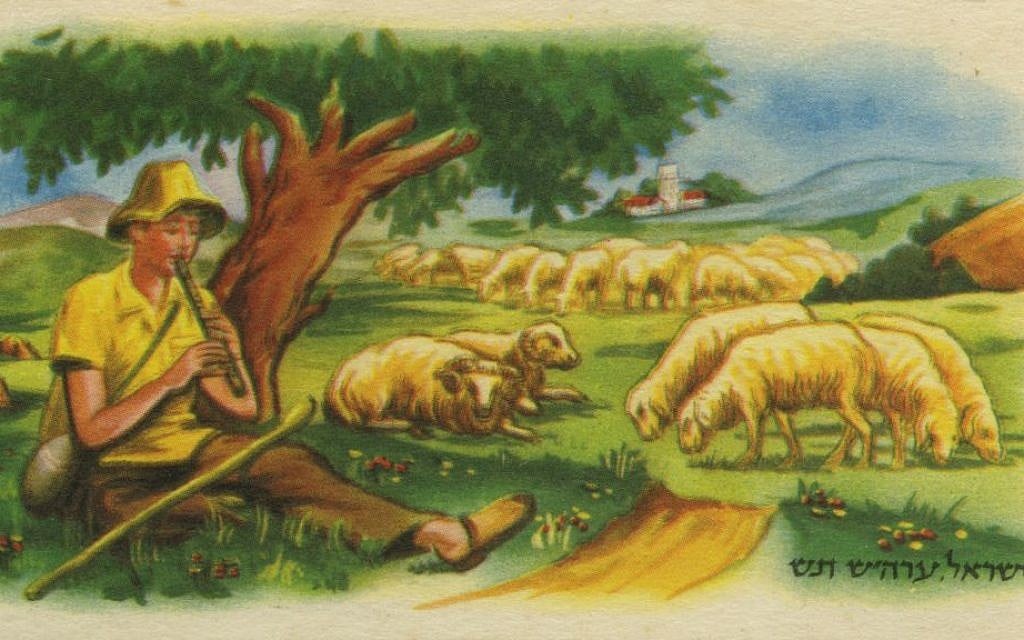
Rosh Hashanah cards, those annual holiday greetings sent each September to friends and family, are pretty much obsolete.
But until recently, sending greeting cards were as elemental to Rosh Hashanah preparations as hearing the call of the shofar or eating honey cake.
In fact, people sent New Year’s greeting cards for more than a century, said Israel Museum curator Rachel Sarfati, reflecting on “Each Year Anew: A Century of Shanah Tovah Cards,” a new exhibit curated on the subject.
“It was a time when this was the form of communication between people,” said Sarfati. “Our collection ends with the other forms of communication that exist now.”
The exhibit is based on the Haim Stayer collection of greeting cards, which tripled the museum’s original collection to more than 3,000 cards, said Sarfati. The museum’s first collection of New Year’s cards was based on what it initially received from the Bezalel National Museum, the art museum that formed the core of the Israel Museum’s original collection.
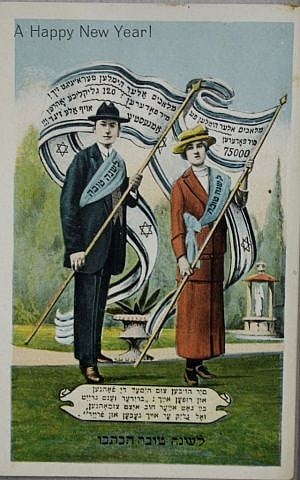
In its heyday, New Year’s cards offered iconic snapshots of graphic design styles and images that harkened to the relevant moments of the previous year.
It was a custom first popularized in Germany, wrote Sarfati in the catalog accompanying the exhibit, where the printing press industry first flourished. The German printing companies also exported cards to the American Jewish market at the turn of the 20th century.
Yet the tradition of sending New Year’s greeting cards had its roots in Jewish law, noted Sarfati. Talmudist Yaakov ben Moshe Levi Moelin, also known as Maharil, the Hebrew acronym for “Our Teacher, the Rabbi, Yaakov Levi,” was a leading German rabbinic authority in the 14th century who wrote about sending Rosh Hashanah greetings, wishing one’s friends and loved ones to be inscribed in the book of good life, one of the major themes of the holiday liturgy.
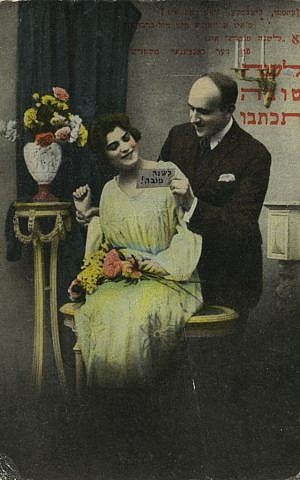
It was a custom that ended up being carried into the Old Yishuv, the early community of pre-state Palestine, wrote Sarfati, and eventually was adapted by new immigrants to Israel, even by those who didn’t recognize the ritual from their own home countries.
The Israeli printing industry eventually became a leader in the creation of New Year’s cards and calendars, and the business reached an all-time high in the 1950s and 1960s, when vendors would appear before the holiday selling stacks of cards from sidewalk stall. The Israel Postal Service would hire extra workers to help sort and deliver the ten million sacks of mail that piled up before the holiday.
The cards also offered a form of anonymous folk art, said Sarfati. Graphic artists would create the cards, decorated with iconic images of Israel, creating a kind of “creative outlet on a wide spectrum of subjects,” she said.
The cards were a method of expressing Israelis’ feelings “about everything,” she added, from joy over the creation of the state of Israel and belief in its leaders to statements of satire and caricatures of political leaders in later years.
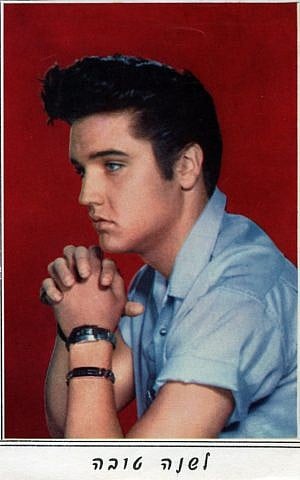
In the earlier years, there were images of the Israeli landscape, pioneering kibbutz farmers, and later, portraits of Madonna, Michael Jackson and Elvis.
Cards from the early 1950s expressed wishes for proper housing for new immigrants or an earlier version of the selfie, with self-portraits of the well-wisher portrayed against the Western Wall or Tel Aviv beach.
Now that email and social media reign, the annual greeting cards are often relegated to e-cards, and often don’t get sent at all, as people instead wish each other a happy new Year in a Facebook thread or with a selection of emojii in a Whatsapp text message.
But whatever the method of communication, it’s the message that counts. Happy New Year.
“Each Year Anew” opened on August 19 and is located in the library reading room of the museum.









The Times of Israel Community.