

Over 17,000 migrants trapped in Croatia after border crackdown
Zagreb returns 3,000 to Hungary, over 1,000 make it into Slovenia; almost 7,000 arrive in Austria en route to preferred destination Germany
 Add ToI as a Preferred Source on Google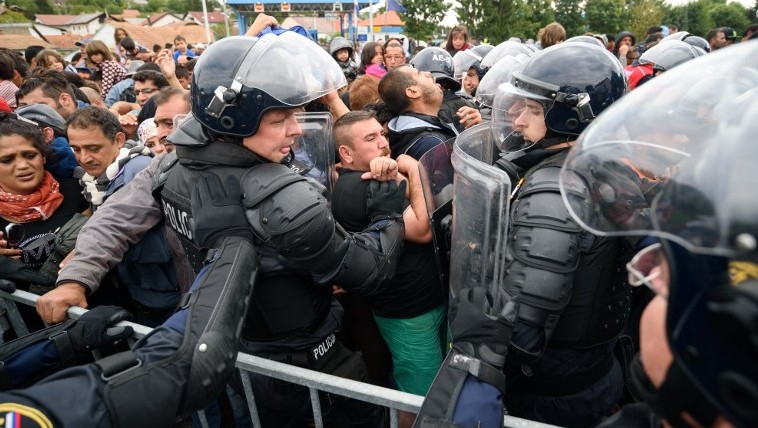
Over 17,000 migrants entered Croatia over the past three days and were essentially trapped there after Hungary sealed its border with Serbia and was working on a fence along its border with Croatia as well.
Many of the migrants seek to get through to Slovenia and Austria and eventually to Germany, their preferred destination as the EU’s biggest economy
A 41-kilometer (25-mile) barbed-wire barrier along part of Hungary’s frontier with Croatia “was finished overnight Friday,” said defense spokesman Attila Kovacs.
The remaining 330 km of the border runs roughly along the Drava river, which is difficult to cross.
Reversing an open-door policy, Croatia on Friday said it was swamped and redirected at least 3,000 migrants back to Hungary and Serbia
Croatian Prime Minister Zoran Milanovic said Saturday the policy of redirection would continue.
“There has not been an agreement with Hungary,” he said in a visit to Beli Manastir, near the Hungarian border.
“We have in some way compelled them to accept the refugees by sending them (to the border) and we will continue to do so,” he said
On the Croatian border with Slovenia, hundreds of migrants spent the night in the open at the Bregana crossing, state-run HRT television reported.
At Harmica, several dozen migrants faced off with a cordon of riot police on the frontier bridge, demanding that Slovenian police let them enter the country, an AFP reporter saw.
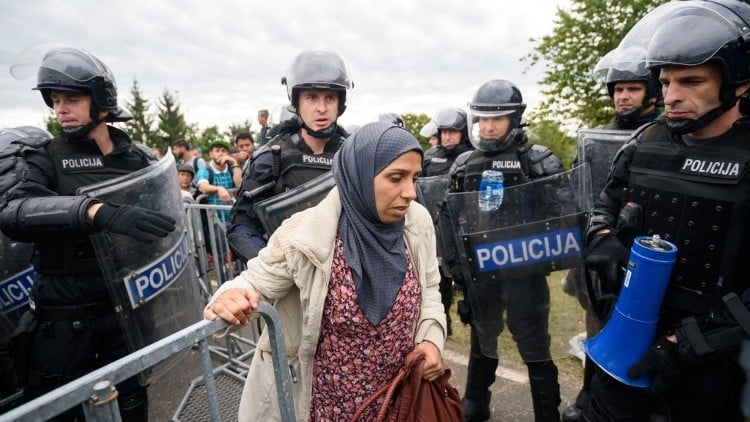
Slovenian police said on Saturday that 1,287 had arrived as of midnight Friday, of which 483 were from Afghanistan, 470 from Syria and 126 from Iraq.
Meanwhile, at least 6,700 migrants flooded into Austria on Saturday from Hungary, Austrian police said.
More are expected as people continue to make their way north via Turkey and Greece after fleeing conflict and poverty in the Middle East and Africa.
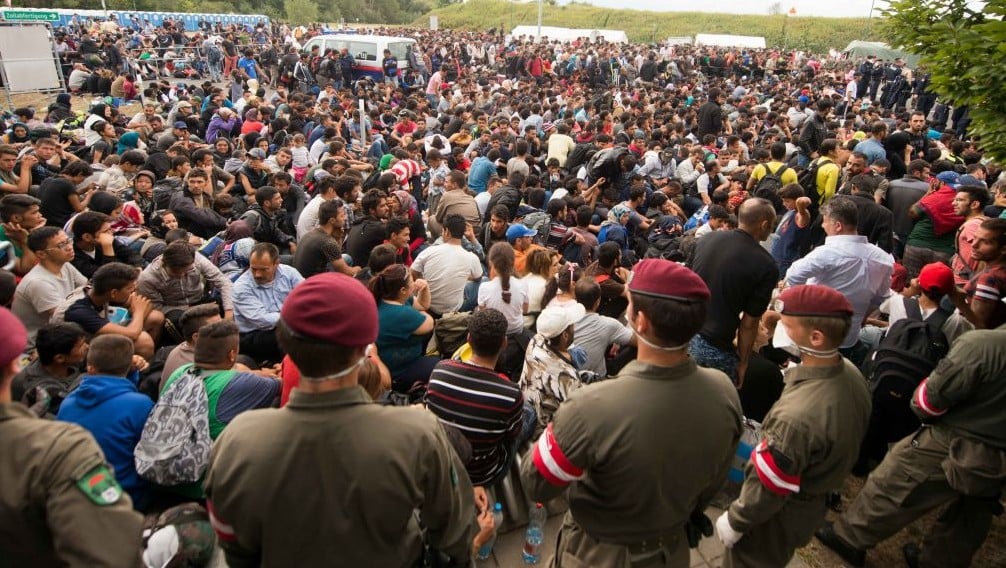
The continent’s biggest migratory flow since the end of World War II has dug a deep rift between western and eastern EU members, with Hungary leading the hardline group.
On Friday, Germany warned it could invoke EU’s majority voting system to force reluctant states to accept quotas of migrants.
The migrants are trapped in a vicious tug-of-war as bickering European governments shut border crossings, blocked bridges and erected new barbed-wire fences in a bid to shut down the flow.
Another worry is over the fate of the Schengen agreement, a pillar of the European project which allows borderless travel between member states.
There are now fences or restrictions on parts of the border between Croatia, Hungary and Slovenia.
These are in addition to identity checks that Germany, Austria and Slovakia have reimposed on parts of their borders, and Poland and the Netherlands are considering whether to follow suit.








The Times of Israel Community.