

Palestinians lay first brick for Gaza reconstruction
A year after Hamas-Israel war destroyed thousands of homes, rebuilding begins in beleaguered territory
 Add ToI as a Preferred Source on Google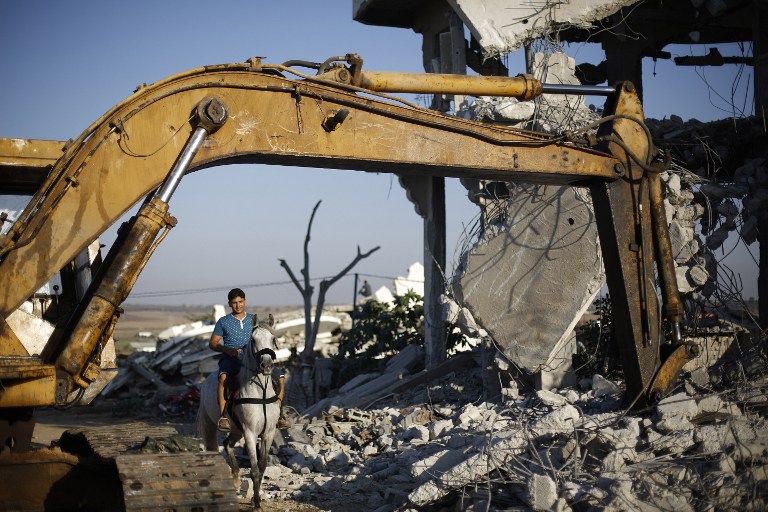
Palestinian housing minister in the Gaza Strip Mufid al-Hasayneh laid a brick Wednesday for the first Gaza home to be rebuilt since the Israel-Hamas war a year ago, as frustration mounts over the slow pace of reconstruction.
The 50-day war in July-August 2014 killed 2,200 Palestinians, according to Hamas and UN figures, and 73 on the Israeli side, and destroyed or damaged tens of thousands of homes in the Gaza Strip.
Until now the only repairs have been to homes that were partially damaged, while 18,000 totally destroyed houses remain in ruins. Israel has also accused Gaza’s rulers of diverting building supplies to work on military tunnels and other military installations.
Egypt and Israel’s ongoing blockade of Gaza to prevent weaponry and material that can be used for military purposes from entering the Strip, now in its ninth year, has been blamed for the slow progress, as well as a lack of international donor support for the territory, ruled by the Islamist movement Hamas.
Hasayneh laid the brick at the Harara family’s home in Shejaiya, an area east of Gaza City that was one of the worst hit by shelling during the war.
“The march toward real reconstruction of the Gaza Strip has begun, and nothing will stop it,” Hasayneh said.
“We will see a lot of movement on the reconstruction front in the coming days. We will rebuild all homes destroyed by Israel,” he said, thanking several Arab countries including Qatar and Saudi Arabia for their donations toward Gaza’s reconstruction.
But the process is expected to take years in the war-torn coastal enclave, whose 1.8 million residents have seen three wars in six years between Israel and Palestinian terrorist groups.
Palestinian refugee agency UNRWA has said that so far it only received enough money for 200 out of the 7,000 houses it is tasked with rebuilding.
Donations pledged at an international conference in Cairo in October have been slow to arrive.
Israel controls two of the three goods and personnel crossings into the enclave, and Egypt controls a third. Israel says more than 1.1 million tons of construction material have been allowed in since October through the Kerem Shalom goods crossing. Egypt last month allowed cement supplies to be brought in through the Rafah crossing.
Critics of the blockade have called for it to be fully lifted to accelerate reconstruction, warning that an ongoing humanitarian crisis could fuel further conflict.





The Times of Israel Community.