

The fault in our arms
2 mess-ups on the northern border — one involving a grenade accident that killed 2, and the other involving missiles failing to intercept a drone — give the press much to chew on
 Add ToI as a Preferred Source on Google
Joshua Davidovich is The Times of Israel's Deputy Editor
There are times when the English-speaking expatriate community in Israel can feel impossibly small. Estimates of how many immigrants from English-speaking countries live in Israel range in the low hundreds of thousands, but just cruising around Facebook sometimes makes it feel like the so-called community is linked by web of intersecting strands that would put Kevin Bacon to shame.
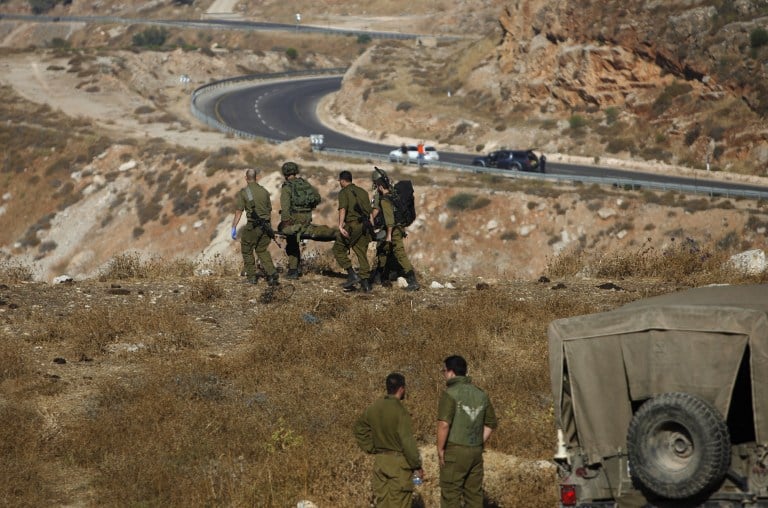
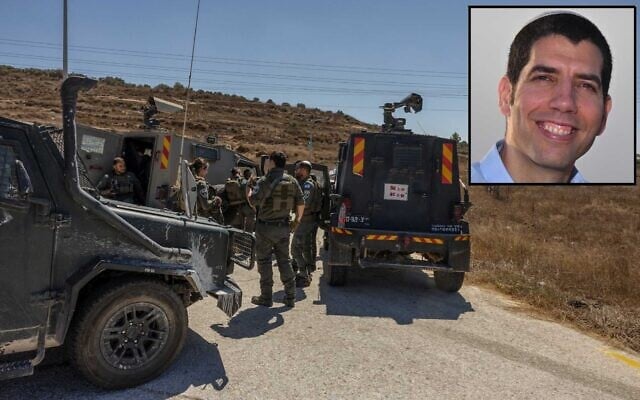
This is rarely truer than after a tragedy sweeps in, as occurred Sunday when Shlomo Rindenow was killed by an apparently accidental grenade blast, one of two army operational failures in the Golan Heights Sunday that are both top stories in the Hebrew print press Monday morning.
The failure of Israel to shoot down a drone from Syria, despite three tries, may have more international import, but the death of two IDF soldiers – Rindenow and Hussam Tafesh, in a grenade blast at a post on the far northern border, is a story about humans, and thus gets just as much play.
While tabloid Yedioth Ahronoth is far from being seen as the voice of the aforementioned Anglo ex-pat community, it seems to channel the deep wound created by Rindenow’s death, running the headline “Born in New Jersey, to be buried in Israel.”
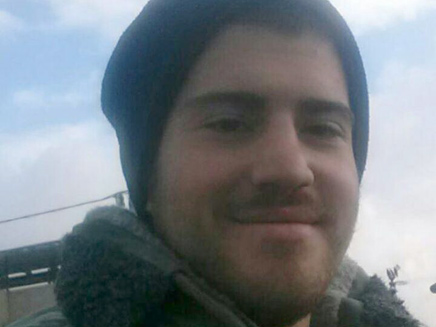
The paper notes that Rindenow was the youngest of nine children in his family, including five brothers who moved to Israel to join the army.
“Shlomo was a kid that was just full of love, full of giving,” one of his brothers is quoted by the paper saying. “We got to Israel, a few of us brothers together, and we have an amazing connection here, we would meet all the time, holidays, Shabbat, birthdays. We’re also in great touch with our parents, all of us like friends. We may be Americans, but we love Israel and we have a true connection to Israel. This is our country and here is were true freedom is. That’s what we believe and that’s also what Shlomo believed.”
Rindenow’s place as an outsider making his way in is also highlighted by the head of the Kibbutz Sde Yoav, where he lived as a lone soldier.
“As a lone soldier, he stayed with a family who opened their home to him and he became one of us. Despite the fact that he was not a member of the kibbutz, Shlomo grew into the same values of giving and volunteerism that we embody as a kibbutz,” he tells Israel Hayom.
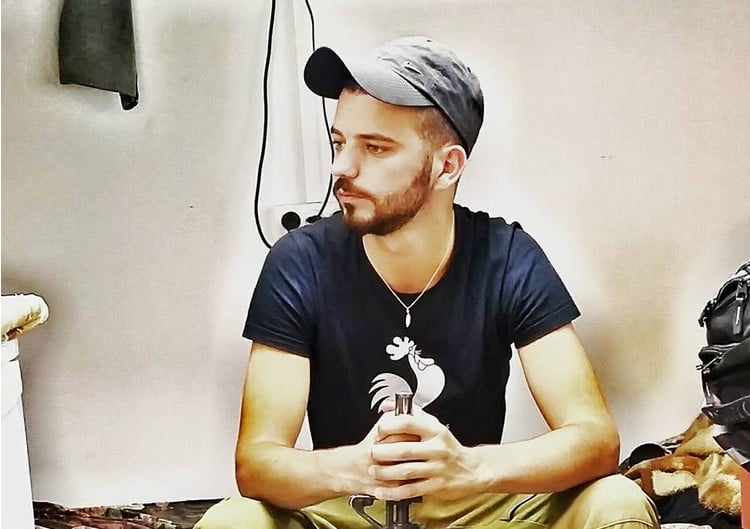
That’s not to forget Tafesh, who is also recalled fondly in the papers’ pages.
“He had a good soul, was smiling, caring and had a good work ethic,” his brother is quoted telling Yedioth. “He wanted a career in the army, to save up for school and to build a life.”
Yet casting a shadow over all the nice words is the lingering question of how the grenade, being held by Tafesh after he exited a jeep and approached Rindenow, came to explode.
Haaretz reports that Tafesh, who was a jeep driver, was not supposed to have any grenades, and it’s possible he had found it in the jeep.
“They were handling the grenade, but we need to understand what happened in the minutes before the explosion,” a senior military source is quoted saying in the paper.
The army will also likely be trying to figure out how two Patriot missiles and an air-to-air missile managed to miss a drone that flew in from Syria.
Yedioth reports that the drone was likely Russian-made, without citing a source, and notes that even though Israel’s missiles didn’t manage to hit the drone, they did succeed in scaring the living bejeezus out of northerners, and one even injured a 14-year-old girl.
“The whole house shook,” the paper quotes an area resident saying. “I stood in my yard and heard a loud boom, and afterward a bunch of combat helicopters in the sky.”
In Israel Hayom, columnist Yoav Limor writes that with a fudge-up this big, the army will have to learn some lessons, calling the incident “an air defense failure.”
“Despite the fact that the incident did not involve an actual attack, it should still raise a number of questions in the IDF. The detection mechanism indeed worked great and allowed the drone to be tracked, but the interception system failed. The Patriot system’s failings are understandable and known, but it’s supposed to be able to deal with drones better than with rockets. The investigation will need to clarify the range for detection, identification and interception, and to check why one of the failed intercept missiles fell on a residential area,” he writes.
Even with all the goings on on Israel’s northern border, it pales in comparison to what’s happening even further north in Turkey, where the aftereffects of a failed coup are continuing to reverbate, including in the Israeli press.
Haaretz’s lead story is a dispatch from correspondent Anshel Pfeffer in Istanbul, where he reports on the post-putsch purge roiling Turkey and notes that President Recep Tayyip Erdogan fears there may still be some rebel cells, keeping him locked down in Istanbul instead of returning to the seat of power in Ankara.
The paper’s Zvi Bar’el, however, writes in an analysis that with the coup quashed and the army proven loyal enough to Ankara to be unable to overthrow the government, Erdogan’s liberal opponents have been put in a lose-lose situation.
“The Turkish military, which was once considered a partner of the liberal and secular public, has become over the past five years a government army, so it can no longer be a partner in revolutions. When this is the new balance of power, Turkey’s liberal movements have no one to provide them with the legitimacy that would let them carry out their political dreams,” he writes. “The paradox is that even more than in the past, the opposition will now need to prove its patriotism so as not to be considered enemies of democracy, after Erdogan has turned into the icon of Turkish democracy thanks to the conspirators.”







The Times of Israel Community.