

Young Aleppo bomb victim who shocked world just one of many, rescuers say
Medical workers and photographers describe working to save 5-year-old Omran Daqneesh from collapsed building, and say his case is anything but unique
 Add ToI as a Preferred Source on Google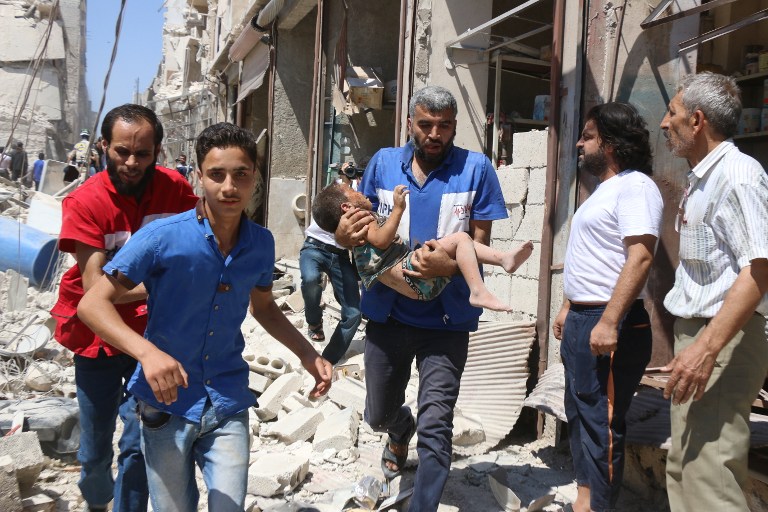
An Aleppo-based journalist who filmed a boy covered in dust and blood following a bombing, bringing renewed world attention to the horrors of the Syrian civil war, said he was surprised by the amount of attention images of the 5-year-old received — given how commonplace scenes like that are.
“These are children bombed every day. It’s not an exceptional case,” Mustafa al-Sarout told the Guardian. “This is a daily fact of Russian and Syrian government airstrikes. They take turns bombing civilians in Aleppo before the whole world. This child is a representative of millions of children in Syria and its cities.”
A still picture of the stunned and weary-looking boy, sitting in an ambulance caked with dust and with blood on his face, captured the horror that has beset the war-torn northern city as photographs of the child and a video shot by Sarout were widely shared on social media.
A doctor in Aleppo identified the child as Omran Daqneesh. He was brought to the hospital, known as “M10,” on Wednesday night, following an airstrike by Russian or government warplanes on the rebel-held neighborhood of Qaterji, said Dr. Osama Abu al-Ezz.
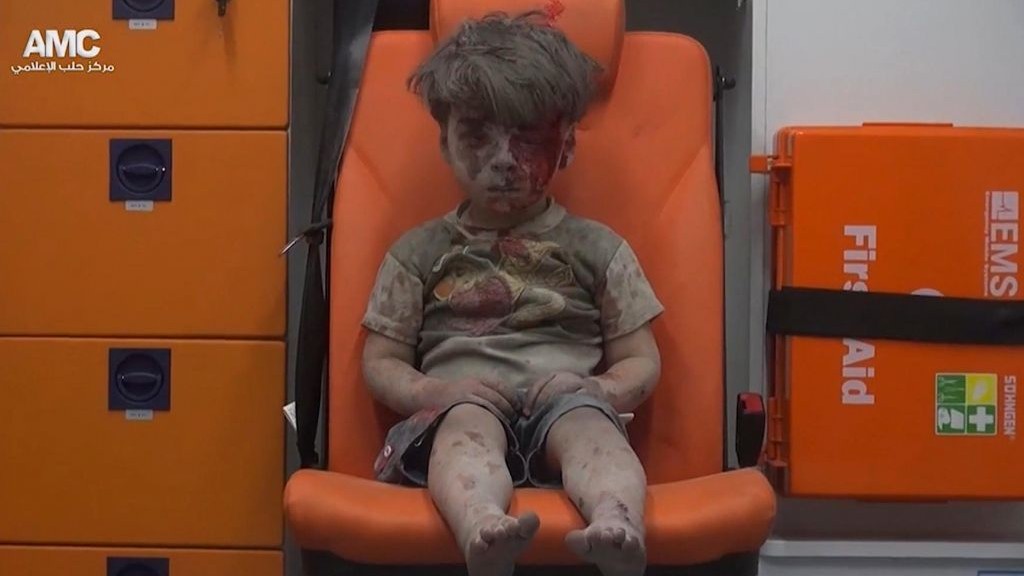
The boy suffered head wounds but no brain injury, and was later discharged.
“I’ve seen so many children rescued out of the rubble, but this child, with his innocence, he had no clue what was going on,” Sarout said.
Scenes like the airstrike Wednesday night that wounded Omran are commonplace in Aleppo, where 233 civilians were killed in indiscriminate exchanges of fire between rebels and government forces in the first two weeks of August alone, according to the Britain-based Syrian Observatory for Human Rights monitoring group.
“It’s taxing, emotionally,” said Mahmoud Abu Rajad, a nurse who treated Omran. “Sometimes, you have to cry. Once, there were three children — both their parents had died — and they were just standing in front of us.”
Doctors in Aleppo use code names for hospitals, which they say have been systematically targeted by government airstrikes. “We are afraid security forces will infiltrate our medical network and target ambulances as they transfer patients from one hospital to another,” Abu al-Ezz said.
#Aleppo: We've been hit by FOUR airstrikes so far this morning! They're specifically targeting hospitals!!
PLEASE RT pic.twitter.com/v4zQAs1418— Live Updates Frontline (@LiveUpdateSyria) August 13, 2016
Activists living in opposition areas rely on informants in government-controlled Latakia province to warn residents of impending airstrikes. On Wednesday evening, an informant relayed word of a warplane taking off from the Russian air base at Hmeimim.
“We expected the plane to arrive in Aleppo airspace in two minutes, and sure enough it did,” said photojournalist Mahmoud Raslan, who took the dramatic photo. “It struck twice.”
No one was injured in the first strike, he said. The second one turned little Omran’s life upside down.
Rescue workers and journalists arrived shortly after the strike and described pulling victims from the rubble.
“We were passing them from one balcony to the other,” Raslan said . He said he had passed along three lifeless bodies when someone handed him the wounded boy. Raslan gave the child to a rescue worker, who rushed him to the ambulance.
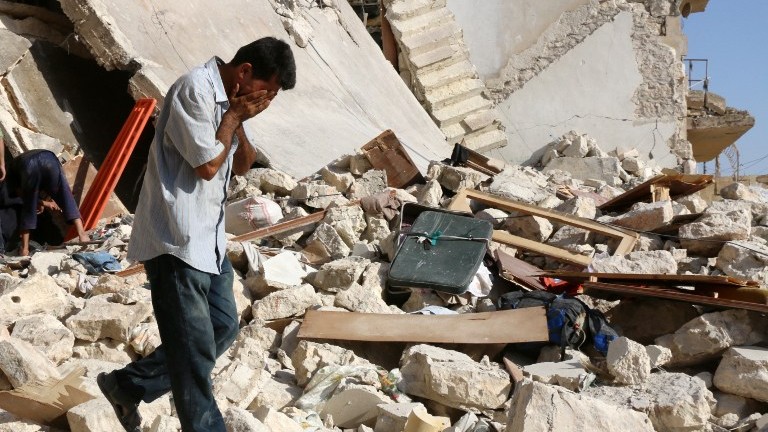
Eight people died in the strike, including five children, according to a doctor who gave only his first name, Abo Mohammadian. Many doctors working in Aleppo’s opposition areas do not give their full names for fear of reprisals against their relatives in government areas.
An hour after his rescue, the badly damaged building the boy was completely collapsed.
A nurse who treated Omran said “he was in a daze.”
“It was as if he was asleep. Not unconscious, but traumatized — lost,” said Mahmoud Abu Rajab.
Medical workers feared internal injuries, but an X-ray and an ultrasound revealed his wounds were superficial. Abu Rajab stitched up the child and wrapped his forehead and left eye in a bandage.
Omran’s three siblings, ages 1, 6, and 11, and his mother and father were also rescued from the building. None sustained major injuries.
“We sent the younger children immediately to the ambulance, but the 11-year-old girl waited for her mother to be rescued,” said Raslan, adding that the woman’s ankle was pinned beneath the rubble.
In the video posted late Wednesday by the Aleppo Media Center, a man was seen carrying Omran away from the chaotic nighttime scene and into an ambulance. Looking dazed, the boy ran his hands over his blood-covered face, then wiped them on the orange ambulance chair.
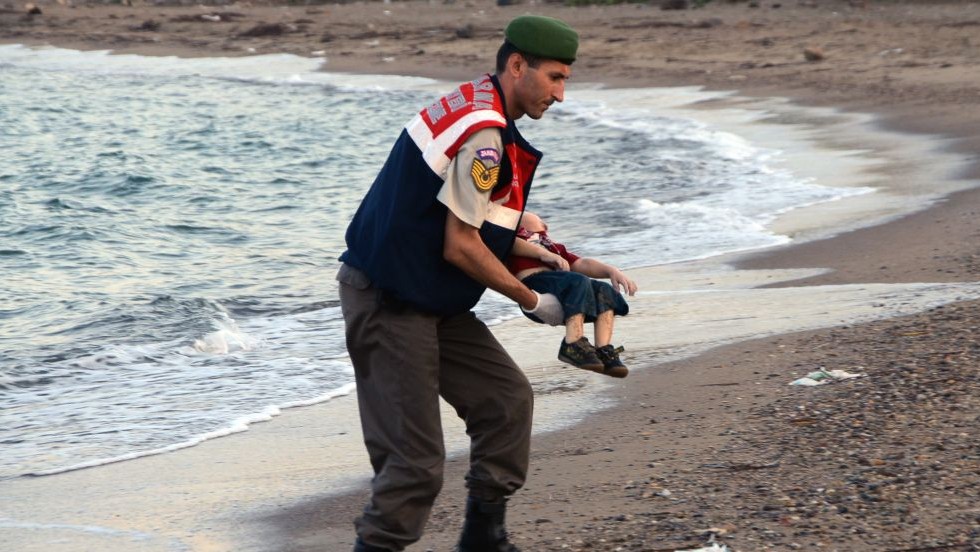
The powerful imagery reverberated across social media, drawing to mind the anguished global response to the photos of Aylan Kurdi, the drowned Syrian boy whose body was found on a beach in Turkey and came to represent the horrific toll of Syria’s civil war.
The Russian defense ministry denied Friday that it had carried out the airstrike, instead blaming rebel fighters for the bombing.
The Russian Defense Ministry said in a statement it never targets populated areas and that rebels themselves hit urban areas in order to derail humanitarian efforts there.
The ministry also said the footage of the boy’s rescue showed windows in the house next door intact, indicating that the boy’s house was not targeted by an airstrike but was hit with a mine that rebels use.
The fighting has frustrated the UN’s efforts to fulfill its humanitarian mandate, and the world body’s special envoy to Syria cut short a meeting Thursday of the ad hoc committee — chaired by Russia and the United States — tasked with de-escalating the violence so that relief can reach beleaguered civilians.
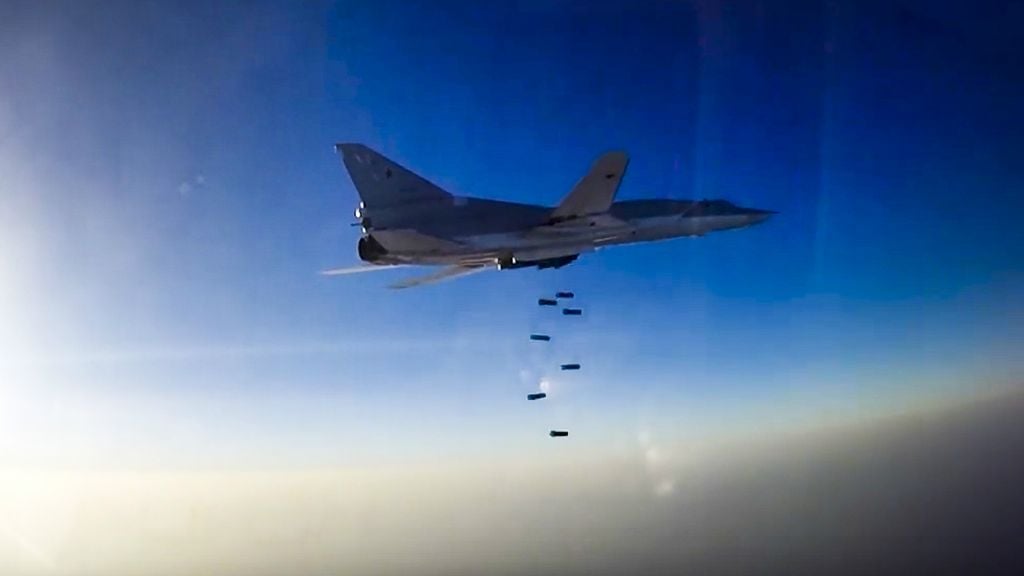
The UN envoy, Staffan de Mistura, said there was “no sense” in holding the meeting in light of the obstacles to delivering aid. The UN is hoping to secure a weekly 48-hour pause to the fighting in Aleppo.
Later Thursday, Russian Defense Ministry spokesman, Maj.-Gen. Igor Konashenkov said Russia would back the initiative on condition the aid convoys travel to both rebel-controlled and government-held parts of the city. He said Russia was ready to support deliveries starting next week.
In Washington, State Department spokesman John Kirby said that while the US would welcome any “genuine effort to stop the bombing, even if it is just for 48 hours, that’s not the long-term answer.”
“It is important for Russia to work with us … to try to come to an agreement on the technicalities of these proposals, which if … fully implemented in good faith, could allow the cessation of hostilities to be expanded across the country,” Kirby said.



The Times of Israel Community.