

Cheap smokes an early benefit of Palestinian accord
Reconciliation between Fatah and Hamas brings drop in the price of cigarettes and other goods
 Add ToI as a Preferred Source on Google
GAZA CITY — Palestinians in Gaza desperately waiting for a reconciliation agreement to improve their lives haven’t seen much change yet — but at least cigarettes are cheaper.
Under the deal agreed last month, Islamist terror group Hamas is supposed to return control of the Gaza Strip, which it has ruled for a decade, to the Palestinian Authority by December 1.
Palestinians hope it will lead to easing Israeli and Egyptian blockades of Gaza, where poverty is widespread and unemployment is more than 40 percent for the territory’s two million residents.
The blockades were put in place to prevent the importing of weapons by terror groups.
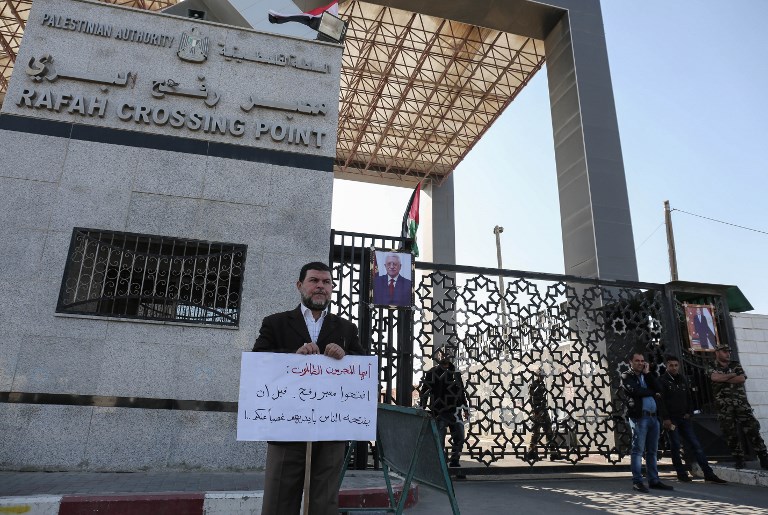
In a first step, the Palestinian Authority, dominated by president Mahmoud Abbas’s Fatah, took control of Gaza’s borders with Egypt and Israel on November 1.
The PA also immediately scrapped “illegal” taxes and fees — those charged by Hamas during its decade of rule.
It includes removing a 25% tax on cars, as well as taxes on other goods.
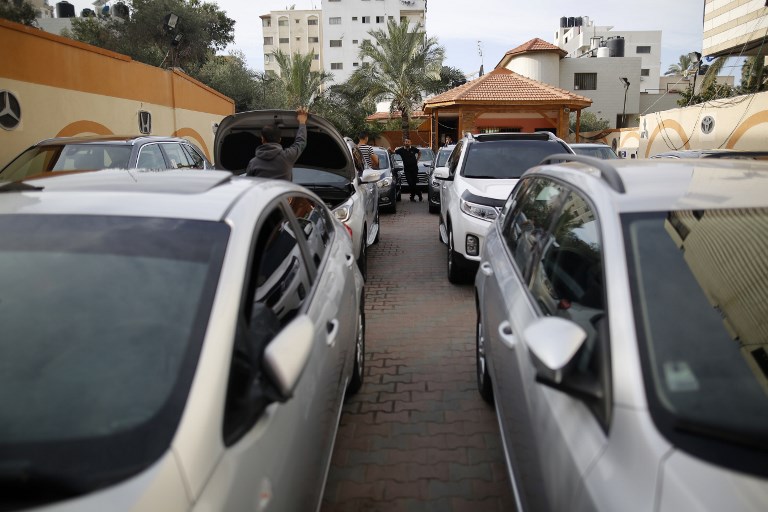
So far most of the cuts haven’t been passed on to customers, with businesses waiting to see what happens on December 1.
But smokers in the coastal Palestinian territory can exhale in relief, with cigarettes already cheaper.
‘End poverty’
Hamas had imposed a seven-shekel ($2) tax on packs of cigarettes entering the Gaza Strip through border tunnels with Egypt.
Since November 1, the price of a pack of Marlboros has fallen from NIS 35 to NIS 25 ($9.91 to $3.5), while Palestinian-produced cigarettes –- made in the West Bank -– have been imported for the first time in years.
The Palestinian smokes — called “Liberty” — are selling for eight shekels a pack ($2.27).
When they became available, a crowd gathered at one shop in Gaza to take advantage.
About 15% of Gazans smoke, according to 2016 figures from the Palestinian Central Bureau of Statistics.
“Today I bought them for eight shekels a pack, but I was paying at least 15 for Egyptian cigarettes,” said Ahmed Khalil, a 45-year-old government employee, who smokes more than two packs a day.
“The drop in the cigarette prices is good, but we want reconciliation to end poverty, unemployment and the economic situation.”
Osama Nofal, who worked for the Hamas-led economy ministry in Gaza, said it previously collected around NIS 20 million ($9.9 million) in taxes from cigarettes a year.
Hamas took in around NIS 70 million ($20 million) a month in taxes and fees, according to Nofal.
‘My profit margin’
Taxes on purchases of cars and other goods have also decreased, but Gazans are still waiting to see the benefits in many cases.
“Since the unification of the taxes, prices have reduced between $15,000 and $1,000 dollars per car, depending on the model,” said Wael Al-Hallis of the Association of Vehicle Importers in Gaza.
“But the market is still largely static. People are watching cautiously for what will come after reconciliation (on December 1).”
Ahmed Abu Aida, who owns an electrical company, told AFP that they were yet to pass on the savings to customers.
“All these (Hamas) fees were paid from my profit margin,” he said.
Israel has maintained a blockade on Gaza for a decade, restricting many goods it says Hamas can use for its military purposes.
Hamas, which seeks the destruction of Israel, has fought three wars against the Jewish state since 2008.
Palestinian leaders had hoped Egypt would reopen its border with Gaza on November 15, but that has not happened.
Egypt is expected to host a meeting of Palestinian political factions on next steps in the reconciliation process on November 21.
Economic analyst Maher al-Tabaa told AFP that as long as the Israeli and Egyptian grip on Gaza’s borders continued, the reconciliation agreement could only have a marginal impact.
More than two-thirds of Gazans are reliant upon international aid, according to the United Nations.
Tabaa said while removal of the taxes was “positive,” the “economy will not recover in a noticeable way in Gaza because of the lack of purchasing power and the continuation of the blockade.”
Times of Israel staff contributed to this report.









The Times of Israel Community.