

Documentary explores brief life, enduring legacy of artist Eva Hesse
Complicated, charismatic German-Jewish refugee was on verge of stardom when she died in 1970 at only 34
 Add ToI as a Preferred Source on Google
Renee Ghert-Zand is the health reporter and a feature writer for The Times of Israel.
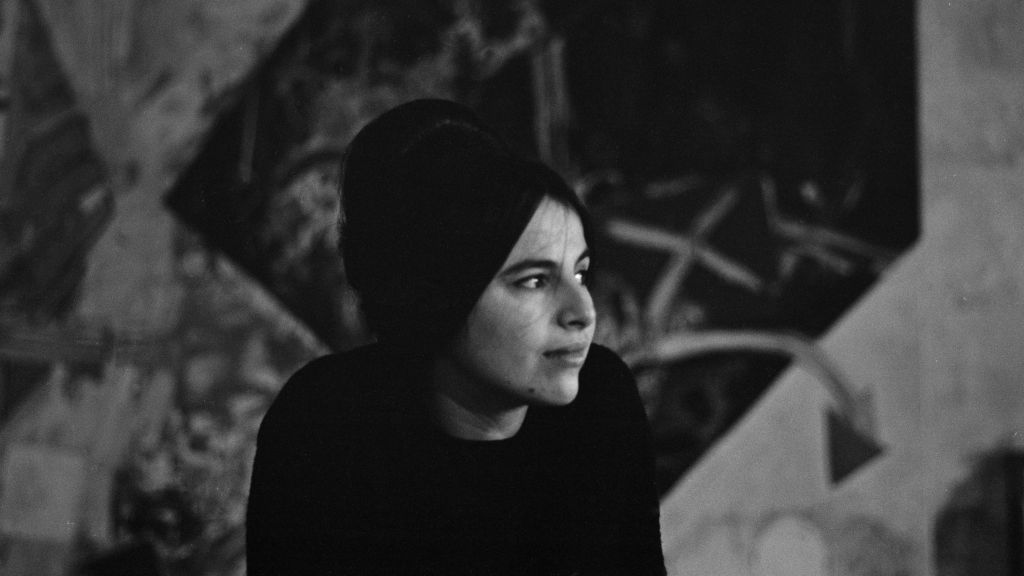
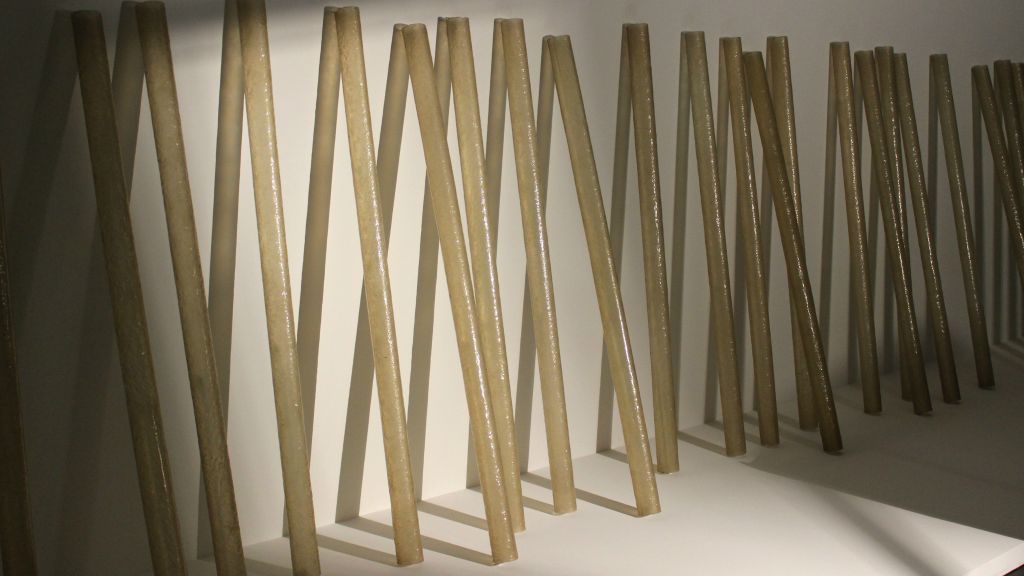
In the mid-to-late 1960s, artist Eva Hesse created sculptures out of then-new materials like latex, plastics and fiberglass. She knew they had a high probability of disintegrating over time, but didn’t let that stop her.
She forged ahead, helping to usher in post-minimalism with her eccentric, absurd and repetitive creations that broke away from the rigid straight lines and sharp edges of minimalism. She dipped, shaped and molded materials to create works that were highly personal and “on the borderline of uncontrollability,” as one critic put it.
“Life doesn’t last. Art doesn’t last. It doesn’t matter,” Hesse said.
Hesse was right about two-thirds of this statement. She died soon after from a brain tumor at age 34 in 1970. And predictably, some of her work has had difficulty standing up to the passage of time.
However, Hesse was wrong in saying, “It doesn’t matter.” She and her art remain highly influential 46 years after her death. Retrospectives of her work are still being mounted, and her drawings, paintings and sculptures continue to be part of the curriculums studied by art students around the world.
Film director Marcie Begleiter first discovered Hesse when she herself was a graduate student in fine arts. Now, after immersing herself in extensive research about Hesse for a decade, Begleiter has made a documentary film introducing Hesse to audiences beyond art schools and museums.
“Eva Hesse,” which opens in New York this week, is at once a gripping biography of a psychologically complex artist on the verge of stardom, and a tutorial on art-making in New York in the 1960s.
Hesse was a Jewish German refugee who arrived in the United States with her parents and older sister Helen in late summer 1939, just prior to the outbreak of WWII. In December 1938, Hesse, who was only two at the time, and her sister were separated from their parents for six months after having been sent to safety on a Kindertransport from Hamburg to Holland. The family was reunited and passed through the UK before landing up in the German-Jewish community in Manhattan’s Washington Heights. Although they had made it out, their extended families were trapped in Germany and all of Hesse’s grandparents were killed by the Nazis.
Tragedy continued when Hesse’s mother committed suicide in 1946 by jumping off the roof of an apartment building on Manhattan’s Upper West Side. She had suffered from depression and separated from the family two years earlier.
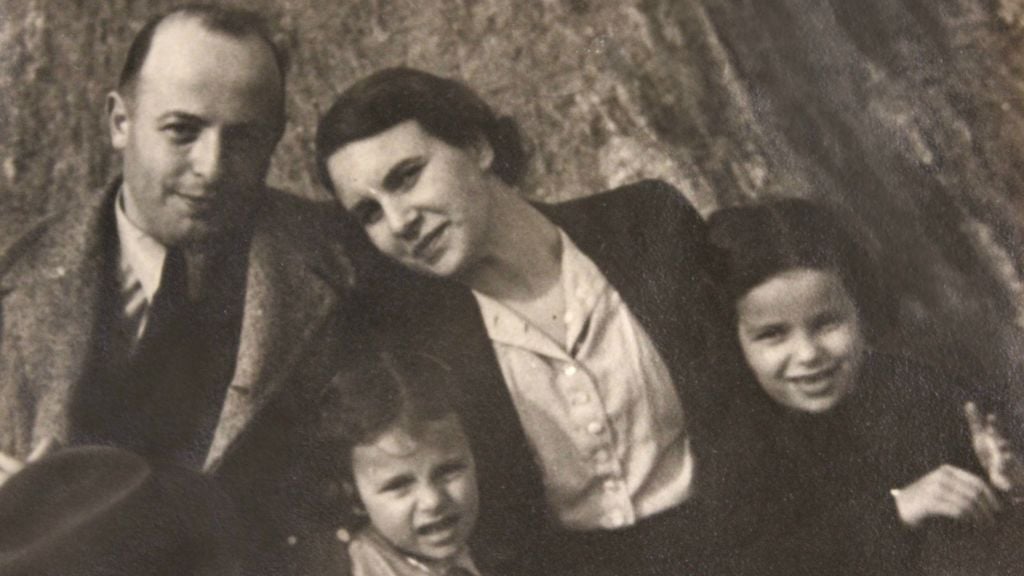
Deeply affected by this loss, Hesse ended up in psychotherapy at the urging of her stepmother. As a teenager, she opted to pursue an arts-focused education, graduating from New York’s School of Industrial Art (today the High School of Art and Design) at the age of 16. From there she went on to intern at Seventeen Magazine and take classes at the Art Students League and Pratt Institute. Hesse earned a certificate from Cooper Union and continued to Yale University, from which she graduated in 1959 with a Bachelor of Fine Arts. A student of Josef Albers and a fan of Willem de Kooning, she initially directed her efforts toward painting in the abstract expressionism style.
“Eve Hesse” is narrated with the journals and letters of the artist, her father William Hesse and her close friend artist Sol LeWitt. It is abundantly evident that Hesse — often hard on herself — was consumed with making art that was original and good.
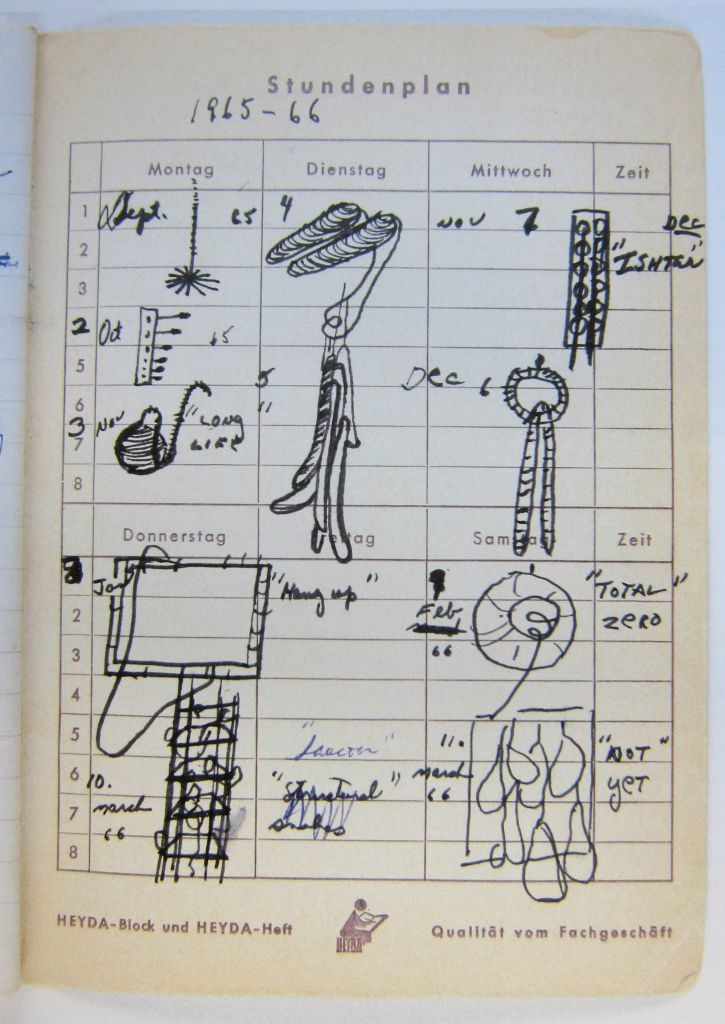
“I was completely hooked after spending 10 days at Allen Memorial Art Museum in Oberlin, Ohio [where Hesse’s archives are housed]. I put on white gloves and pored over boxes and boxes of journals, postcards, letters and art scene ephemera dating back to Eva’s teenage years,” Begleiter told The Times of Israel.
“I became interested in the woman behind the work. I saw this woman on paper in her own handwriting. She was complex, ambitious and neurotic. She was an extraordinary human being,” she added.
The fact that Hesse vacillated between self-confidence and self-doubt fascinated Begleiter. She found that she could personally relate to the artist’s struggles.
“I’m also female and Jewish. We have different personal histories, but I could related to her. I could also relate to the fact that she was a woman struggling to be an artist in a world dominated by men, and the fact that she was trying to put this struggle down on paper,” the filmmaker said.
“Eva kept going, no matter what faced her. It was not easy for her as a woman in the New York art scene. She was highly competitive and wanted to be identified as an ‘artist’ and not a ‘woman artist,'” added Karen S. Shapiro, the film’s producer.
‘She was highly competitive and wanted to be identified as an “artist” and not a “woman artist”‘
“Feminist” was not a label Hesse adopted during her short lifetime, but her sister Helen Charash is confident she would have been a feminist had she lived longer.
“She was very angry about male dominance, and I am sure she would have identified as a feminist had she lived long enough to see the women’s movement take off,” Charash told The Times of Israel.
The film’s narration is supplemented by interviews with artists, curators and art historians who knew Hesse. Among those interviewed were minimalist artists Richard Serra and Carl Andre, who are generally reluctant to go on camera.
“They did it for Eva,” Shapiro said. “Every interview was as though Eva was in the room next door. She’s so present in these people.”
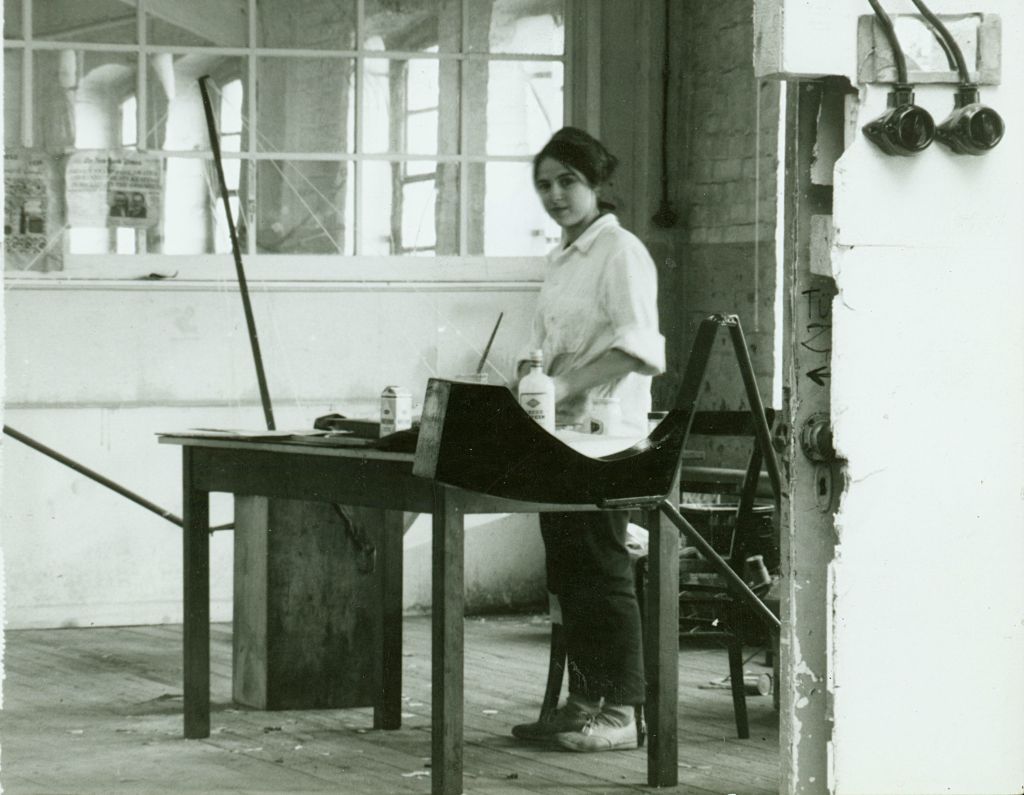
The pivotal and most interesting part of the film deals with Hesse’s return to Germany for a year in 1965, when her then-husband sculptor Tom Doyle received an offer from the Kunstverein, a prestigious art association devoted to contemporary art. (Doyle, who was divorced from Hesse after the couple’s return to New York in 1966, converted to Judaism before the marriage.)
Despite — or perhaps because of — the emotional difficulty of returning to Germany for Hesse, she ended up coming into her own as an artist during that year. That winter, Hesse started playing with found materials like plaster and string at the factory-studio where she and Doyle were working.
Back in New York, she began to focus exclusively on sculpture. Her inclusion in the “Eccentric Abstraction,” exhibition of 1966, organized by Lucy Lippard for Fischbach Gallery, was a turning point for her career.
Hesse’s work was starting to get the commercial and critical attention it deserved. She had over 20 group shows scheduled and was chosen for a cover article in ArtForum Magazine in 1970, the year she died. Today, her work is held by many important museum collections including the Whitney, MoMA, the Hirschhorn, the Pompidou in Paris and London’s Tate Modern and Cologne’s Ludwig Museum.
Although Hesse’s father’s had come from a family of traditional Jews, she herself identified more as a cultural Jew by the time she reached adulthood.
Begleiter noted that Hesse approached death in a spiritual, Buddhist-like way.
‘She looked death straight in the face and accepted it in a joyful manner’
“She was letting go. She believed that what mattered is life, the here and now. She looked death straight in the face and accepted it in a joyful manner,” she said.
There is little doubt that Hesse, who would have turned 80 this year had she lived, would have gone on to have an illustrious career.
However, Begleiter emphasized that “Eva Hesse” is not a tragic film.
“Eva did more in 34 years than most people do in 100. This is a story about creativity in the face of mortality,” she said.
In addition to the film’s domestic and international release, “Diaries,” a book of Hesse’s journal entries, will be published in May by Yale University Press.









The Times of Israel Community.