

 From the Liveblog of
Sunday, August 24, 2025
From the Liveblog of
Sunday, August 24, 2025
IDF confirms uprooting olive trees in W. Bank village after attack, denies collective punishment
 Add ToI as a Preferred Source on Google
Emanuel (Mannie) Fabian is The Times of Israel's military correspondent
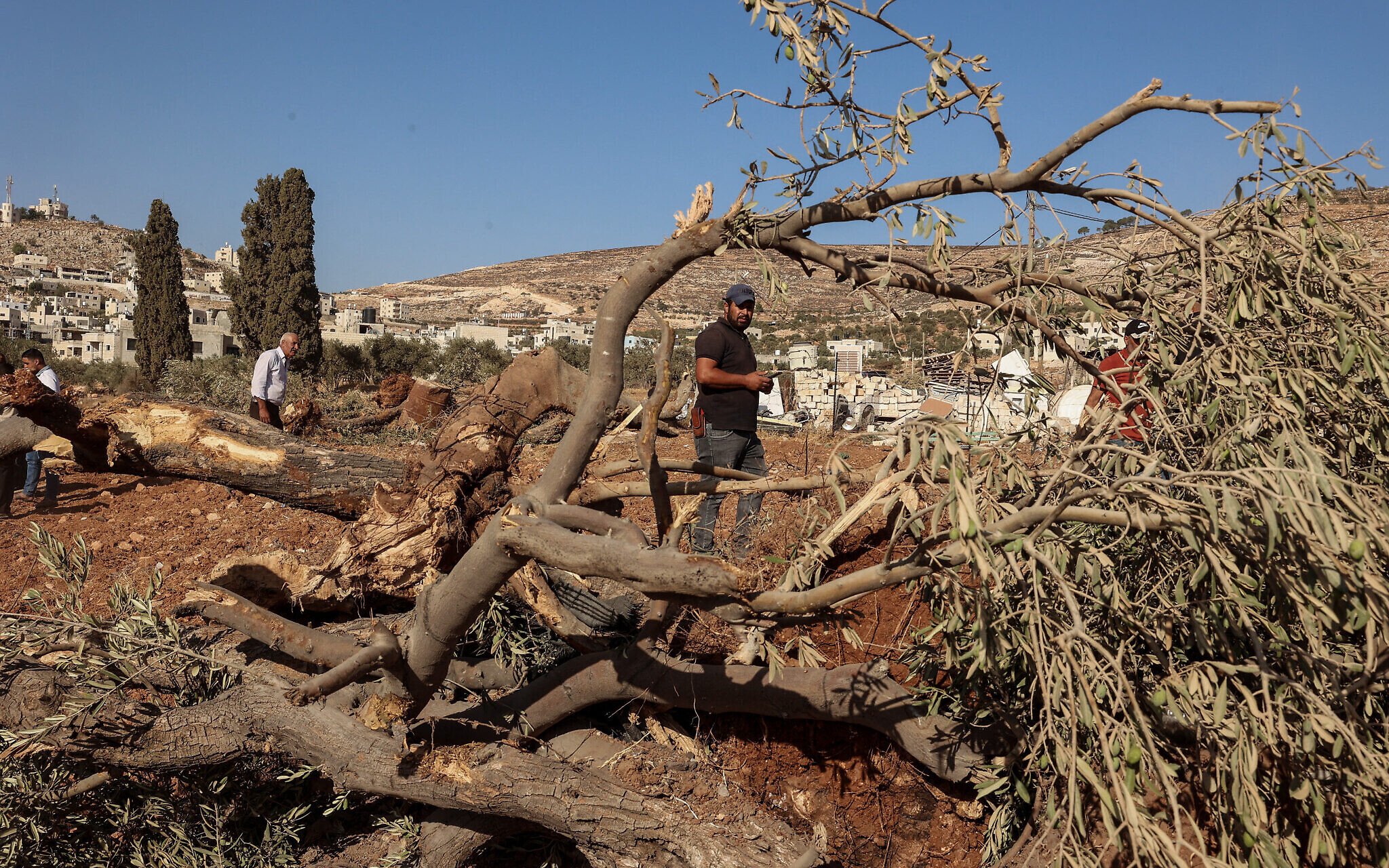
The IDF confirms it uprooted olive trees in the West Bank village of al-Mughayyir in recent days following a shooting attack in the area, but denies the move was collective punishment.
Since Thursday, the day after the attack, in which one Israeli was lightly hurt, the military says it “began intensified operational activity” in the al-Mughayyir area.
The military says this activity included clearing vegetation in an area adjacent to a highway, “which the terrorist used to flee the scene of the attack.”
“The clearing was required immediately to prevent danger to life, caused by the concealment of the area by the vegetation that obstructed the identification of enemy movement,” the military says.
The IDF also says it condemns “inappropriate remarks” made against the chief of Central Command, Maj. Gen. Avi Bluth, after he implied that the uprooting of the trees was collective punishment against the village, saying it would “pay a heavy price” for the attack.
Bluth “acts out of operational considerations and in accordance with the law, with the security of the State of Israel and its residents foremost in mind,” the IDF says, adding that “any other claim is completely unfounded.”
A military official adds that Bluth, during an assessment at the scene of the attack, emphasized to troops “that the necessary course of action requires distinguishing between the civilian population and terrorists,” and that doing so is intended “to ensure the security of the area… while minimizing as much as possible the disruption to the fabric of life of the local population.”




The Times of Israel Community.