

Mighty shekel could boost shoppers and travelers, but many will miss out on bonanza
Though the shekel is trading at its highest level in years, retailers might not pass the gains to consumers, and manufacturers and others working in dollars are likely to feel the pain
 Add ToI as a Preferred Source on Google
Sharon Wrobel is a tech reporter for The Times of Israel

Over two-and-a-half years of war and its aftermath, one surprising bright spot has been the unusually muscular shekel, which on Thursday was at one of its strongest levels since the mid-1990s.
But the currency’s appreciation, which has picked up sharply since April, could prove a double-edged sword for an economy dependent on exports and high-quality human capital.
While the overly strong shekel has a deflationary force as it makes imports cheaper, restrains price rises and credit costs for consumers, and enables the Bank of Israel to lower interest rates, it also presents its own set of problems for Israeli manufacturers and businesses reliant on exports and earning in dollars.
The risk is that the shekel’s success story could make Israeli goods and services more expensive abroad, dampening one of the local economy’s most important engines of growth and curbing employment.
“The trend of a stronger shekel is not a technical or temporary phenomenon, but a direct reflection of solid fundamentals driving foreign investments in Israeli companies and capital into the country and the local stock market, amid confidence for a rapid recovery of the economy,” Meitav Investment House chief economist Alex Zabezhinsky told The Times of Israel. “The strong currency is making imports of raw materials, and many goods such as clothing, furniture, equipment, electronic appliances, as well as foreign travel, cheaper.”
“However, a strong shekel is also making Israeli goods less competitive, while the companies producing the goods in Israel are paying expenses, including salaries in shekels, which in turn is affecting their profits,” Zabezhinsky said.
On the eve of the breakout of war with the Hamas terror group on October 7, 2023, the shekel was already slumping, and by late October, with the country and region still in shock over the devastating attack, it had fallen to an 8-year-low and was trading close to NIS 4 against the dollar.
Just a month later, though, the local currency had recovered, and more than two years later, it is now trading at a four-year high of around NIS 3.14 against the greenback. The local currency has strengthened against both the dollar and the euro despite an economy strained by ballooning war costs and a growing debt burden.
Israel’s military successes have helped buoy investor optimism, strengthening the shekel. The currency saw sharp gains following targeted strikes that eliminated most of the Hezbollah leadership, including its leader Hassan Nasrallah and another boost following Israel’s campaign against Iran in June.

The Bank of Israel attributed the shekel’s 6 percent appreciation against the dollar in the last six months of 2025 to the decline in Israel’s risk premium, which it said fell markedly after the Iran war in June and continued to decline after the declaration of a ceasefire in Gaza in October.
Israel’s risk premium as perceived by investors is now almost back to its level just before the Hamas war, the central bank said in a report earlier this month.
In the first two weeks of 2026, the shekel strengthened 1.6% against the dollar despite tensions over a potential US attack on Iran and the possibility of Tehran’s retaliation against Israel, according to data by the Tel Aviv Stock Exchange.
“How surprising that even when it is, or was thought that the Iran conflict could have a phase two, the shekel is not fazed,” said Leader Capital Markets chief economist Jonathan Katz. “It’s not viewed as an existential threat but another skirmish which will come to an end, if it happens at all.”
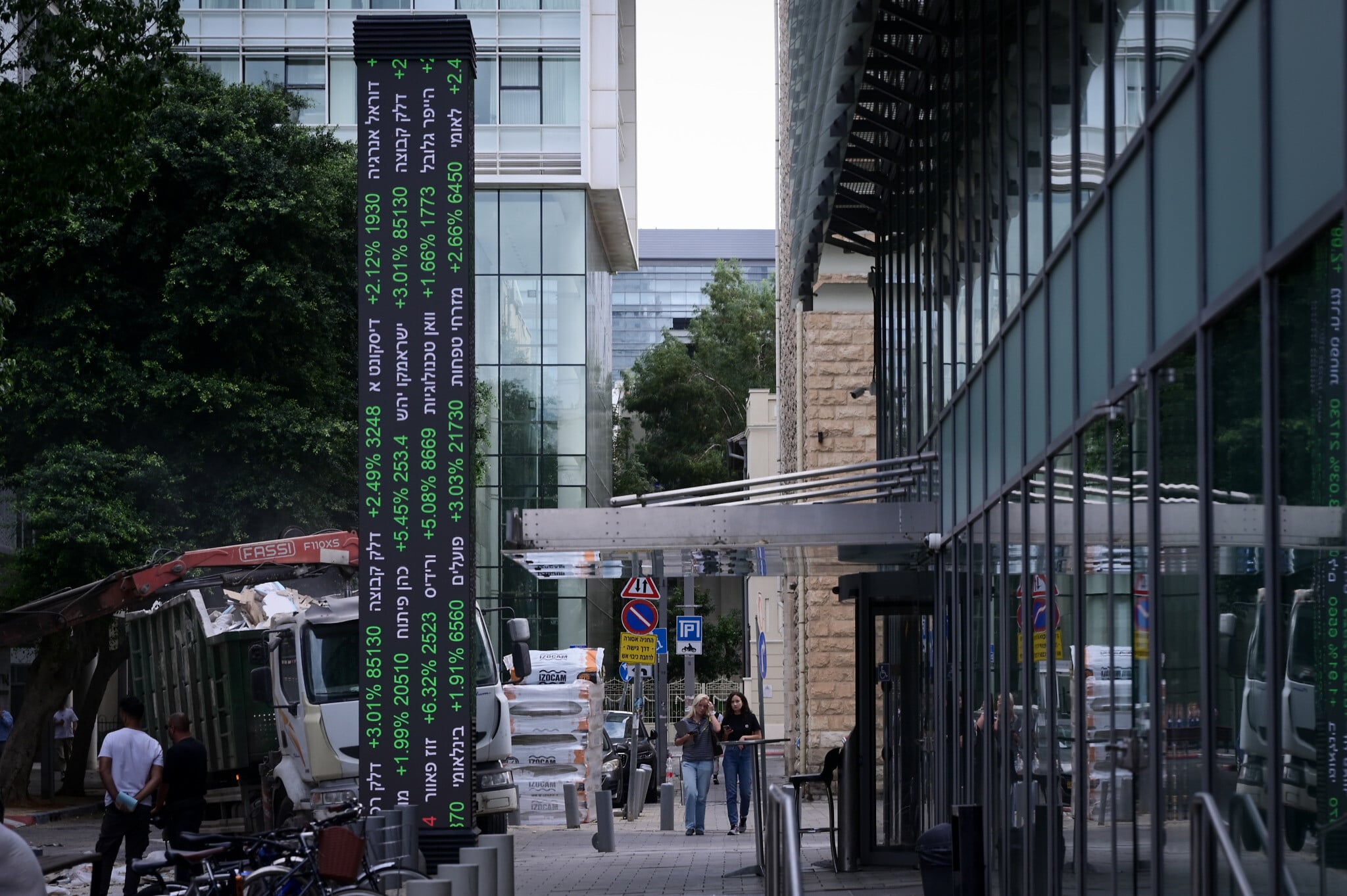
The shekel’s strength helped push Israel’s annual inflation rate down to 2.6% in 2025 from 3.2% in 2024 and 3% in 2023, according to data by the Central Bureau of Statistics. The government has an annual inflation target range of 1% to 3%. A breakdown of the CBS data for 2025 showed that clothing and footwear prices fell 8%, furniture and home appliances dropped 3.4%, while the food component rose 3.2%.
Zabezhinsky noted that the cost of cheaper imports doesn’t always trickle down to the consumer, “but at least retail chains are not expected to raise prices,” he said.
“Food is more of a concentrated sector, and the retail chain sector is a less competitive sector, and one could make the claim that they haven’t passed on the impact of the stronger shekel,” said Katz.

Another factor for why Israeli consumers are unlikely to see immediate price reductions is that importers and retail chains, including those in the fashion sector, do not buy inventory on a day-to-day basis. Orders with suppliers are placed months in advance and are locked in, or hedged to a dollar exchange rate at the time of ordering. Electrical appliance retailers, in particular, usually have inventories held in warehouses that were purchased at least four to six months ago.
The strong shekel is good news for vacation-hungry Israelis traveling abroad, as their shekel goes further when paying for flights, hotels, car rentals, tours and shopping. It’s a welcome reprieve for Israelis who have become accustomed to expensive plane tickets during the two-year Hamas war, when foreign airlines repeatedly suspended flight services to and from the country.
Worse than the war
But the rise of the currency is threatening to wreak havoc for local manufacturers and export-reliant industries, which are grappling with the effects of the war and the newly imposed Trump tariffs on Israeli goods. Exporters sell their products in dollars, but pay workers, taxes, and other expenses in shekels.
With exports making up as much as 40% of economic activity, exporters selling primarily to the US and Europe have been vocal about their diminishing competitiveness, especially as it has coincided with a 15% tariff on Israeli goods entering the US and a spike in the costs of salaries, fuel, electricity, and other living costs.
Exports of goods are down 7.4% in 2025 in shekel terms, according to CBS data.
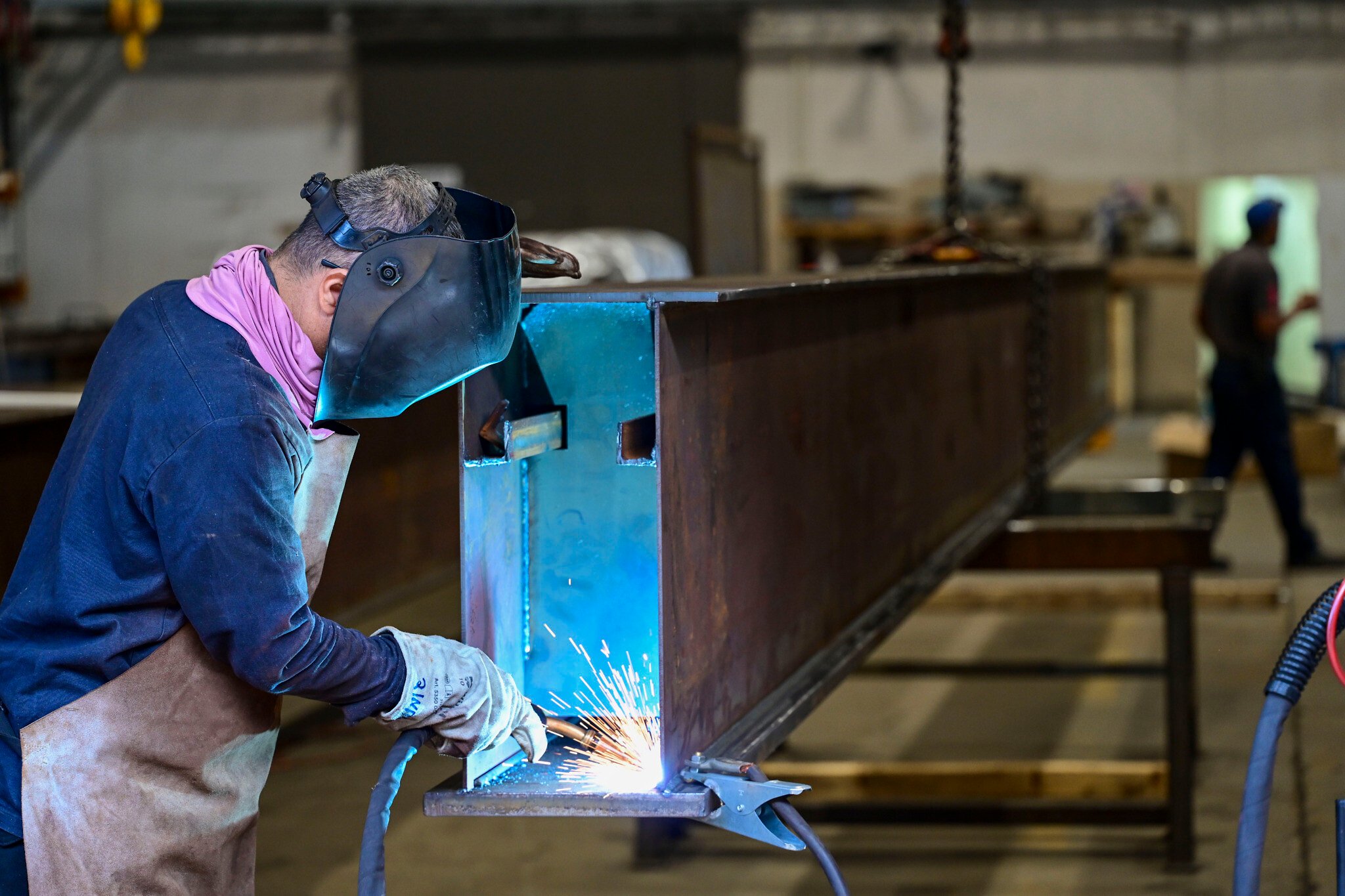
“For many Israeli companies, the current period is even more challenging than during the war with Iran in June,” said Netanel Haiman, head of the economics division at the Manufacturers Association of Israel. “On a day-to-day basis, we get more complaints from local manufacturers and producers on the foreign exchange rate than during the height of the Iran war.”
“Exchange rate risk is not new to exporters, and they have hedging tools, but it comes at a time when a large majority of our exports to the US are hit with a 15% tariff, which requires manufacturers to either become more efficient, update prices and profitability, or try to renegotiate with suppliers,” said Haiman.
Haiman said that firms will be forced to raise prices and become less competitive in the global market, or see their profit margins whittle down, or a combination of the two.
“A strong shekel is making Israeli goods less competitive, while the companies producing the goods in Israel are paying expenses, including salaries in shekels, which in turn is affecting their profits,” said Zabezhinsky. “Companies are responding by cutting back on expenses, laying off workers, or relocating to cheaper locations.”
Haiman said that the confluence of the 15% US tariff on Israeli goods and the continued shekel appreciation is creating a perfect storm for local export companies and manufacturers, which could hurt their revenues and profits by up to 30%.
The manufacturers’ association already warned that Israeli exports are expected take an annual hit of $2 billion to $4 billion due to the 15% tariffs, and tens of thousands of Israelis could lose their jobs.
“Shekel salaries for engineers in Israel are becoming more expensive compared to offices and branches of Israeli companies in other countries of their operations – ultimately, it doesn’t only affect traditional industries, it hurts everyone,” said Haiman. “The effect takes time to have a real impact as many companies have hedging positions which are still in place but will run out eventually, or have signed contracts for months and sometimes years ahead, which are supplied under the same conditions over time.”

Asked about whether Israeli companies are weighing or starting to move some of their operations to more cost-effective locations, Heiman said that “for many Israeli companies it is important to produce in Israel and to leave their R&D in Israel.”
“But, it will be more difficult to commit to new contracts, which could have an impact on investment or employment decisions,” he cautioned.
Similarly, Zabezhinsky said that as the cost of hiring a development engineer is higher in Israel and production costs have risen, hurting their ability to compete, “we are likely to see Israeli companies hiring elsewhere, such as Poland or Ukraine, where staff is cheaper.”
Heiman said that the association has already urged Economy Minister Nir Barkat and Finance Minister Bezalel Smotrich to help exporters and manufacturers.
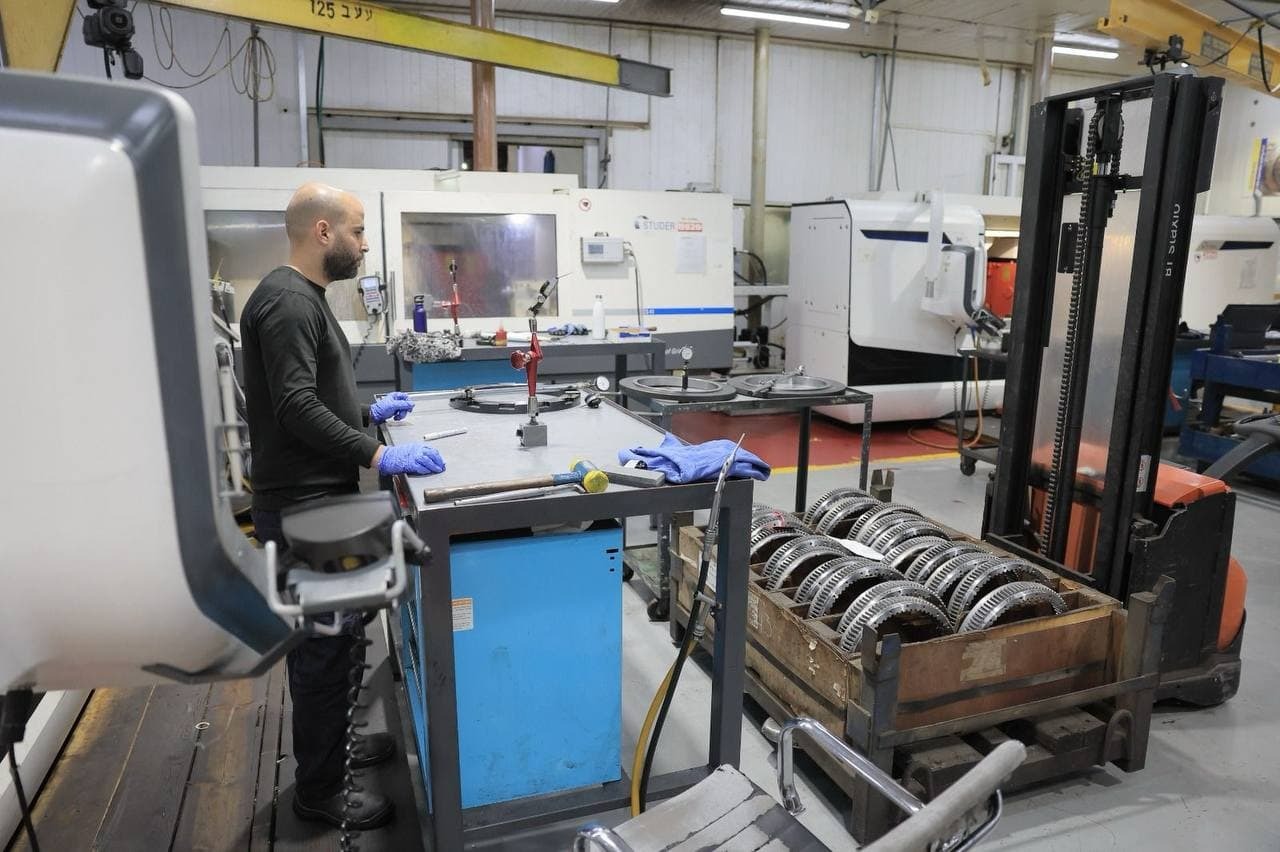
“We are fighting this fight alone for the moment – we don’t see the government offering support or fiscal assistance to help the industry,” said Haiman. “If the government were to participate in the risk of loans for making investments and taking efficiency measures, that would also help.”
The strength of the shekel has also been a draw for foreign investors interested in investing in Israel. Despite an ongoing war, foreign investors have been pouring billions of dollars into the local market, buying tech companies and parking funds in the local stock market.
During 2025, foreign investors purchased local shares worth about NIS 4.3 billion ($1.37 billion under the current rate), mainly of companies in the financial and defense sectors, after a sell-off in the previous year. Israeli retail investors bought NIS 13.7 billion ($4.37 billion) worth of shares last year.
In a year of war and geopolitical uncertainty, merger and acquisition deals of Israeli-founded tech companies generated a record NIS 82.3 billion ($26.24 billion), a fivefold increase from 2024, according to data by Startup Nation Central.
The acquisition spree was led by Google’s $32 billion (NIS 100 billion) acquisition of cybersecurity unicorn Wiz, the largest deal involving an Israeli-founded company. Other prominent deals were Palo Alto Networks, a Santa Clara, California-based cybersecurity firm founded by American-Israeli entrepreneur Nir Zuk, buying CyberArk for $25 billion (NIS 78.4 billion); and US software firm ServiceNow’s $7.8 billion (NIS 24 billion) deal for Armis.
“The local high-tech sector has been very robust over the past year, even more than in the previous year and two years ago, with tech companies raising a lot of funds, and attracting investments, which is money, mainly dollars coming from abroad that in part is converted and has to pay salaries and other expenses in shekels, which is putting upward pressure on the local currency,” said Katz.

Booming global equity markets are another factor causing the shekel to strengthen against most currencies, as investors hedge their investments in foreign stock markets by selling foreign currency reserves.
“There is a strong correlation between US equity markets and the shekel-dollar exchange rate,” said Katz. “As US stock markets have been going up in the past two years, the value of assets of Israeli institutional investors in major Wall Street stocks increases, which in turn means that they are required to balance the increase by selling dollars and increasing their exposure to the shekel, which strengthens the local currency.”
Looking ahead, both Zabezhinsky and Katz expect the forces behind the shekel appreciation to continue to propel the value of the local currency.
“The trend of shekel appreciation is likely to continue, even if at a slower pace. A change in trend could occur only through a significant market correction abroad or a sharp deterioration in the security and geopolitical situation,” said Zabezhinsky. “There is no reason why the shekel should not break through its next psychological barrier of NIS 3 to the dollar.”






The Times of Israel Community.