

Officials to look into police violence after clash with ultra-Orthodox
Public security minister says it seems cops used excessive force in breaking up protest, calls pictures ‘shocking’
 Add ToI as a Preferred Source on Google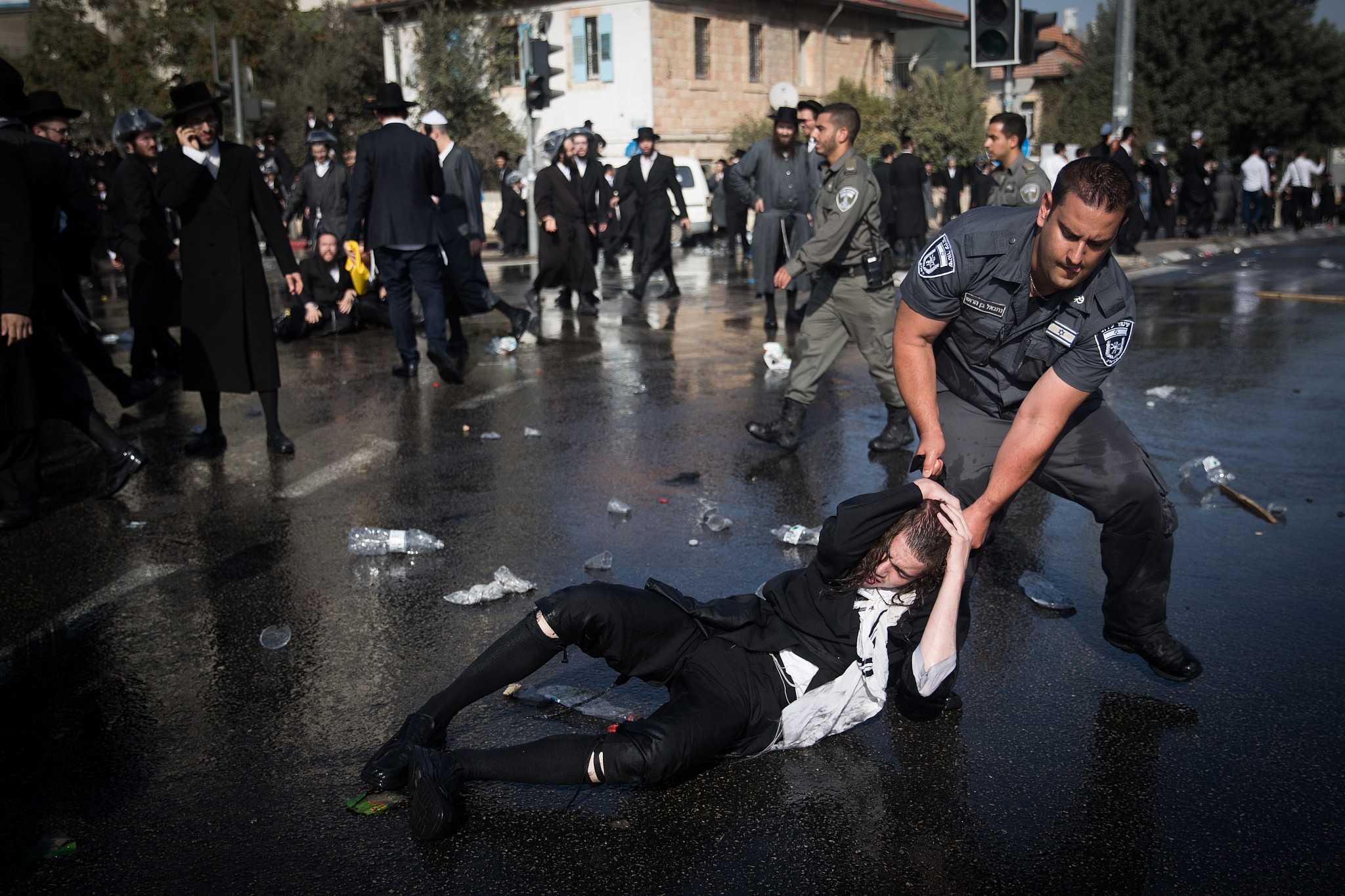
Justice officials are looking into launching a probe into possible police violence following a demonstration Sunday in which ultra-Orthodox protesters clashed with officers, drawing claims of excessive force by the cops.
Israel’s minister in charge of police endorsed the possible probe Monday and said it seemed police had used excessive force.
On Sunday, several hundred ultra-Orthodox Jews scuffled with police during demonstrations in the capital to protest against a court ruling last week that rejected Knesset legislation deferring the mandatory conscription of their community members into the Israel Defense Forces.
Police used water cannons and horse-mounted officers to try and disperse the crowd. One video clip filmed by demonstrators showed a police officer slamming an ultra-Orthodox protester to the ground, apparently unprovoked.
Other footage showed officers forcefully throwing protesters to the ground and punching and kicking them while they were being held down, and horses trampling over demonstrators.
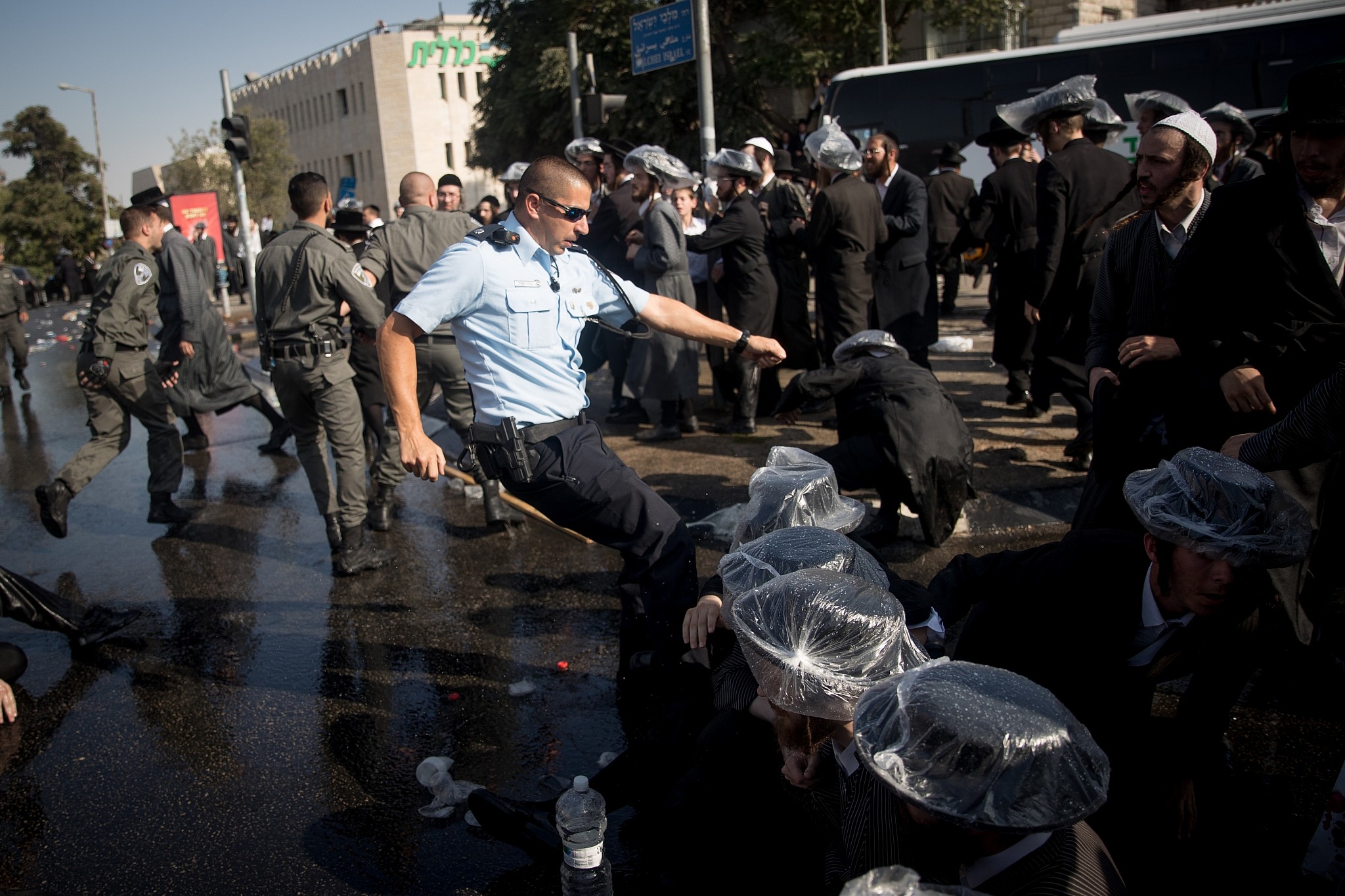
The demonstration in Mea She’arim, an ultra-Orthodox neighborhood of the city, was organized by the hardline group Eda Haredit after the arrest of a relative of a prominent rabbi for draft dodging. Nine people were arrested during the demonstration.
Demonstrators had blocked roads and thrown rocks at police during the clashes.
At least three protesters were hospitalized, according to reports. One of them, aged 16, was in moderate and stable condition with internal bleeding, having suffered head injuries.
In an unusual move, the Police Internal Investigations Department said Sunday it would not wait for any complaints to be filed by demonstrators at the event but was reviewing various video clips of the clashes that were published in media and shared by members of the public on the internet, Channel 2 television reported.
The Justice Ministry unit said it will later decide whether or not to open an investigation against the police and border police involved for using excessive force.
Public Security Minister Gilad Erdan, whose ministry is responsible for the police, said he thought officers had used excessive force at the demonstration.
In an interview with public broadcaster Kan, the minister said the video evidence from the clashes was “shocking” and endorsed the Justice Ministry involvement in the incident.
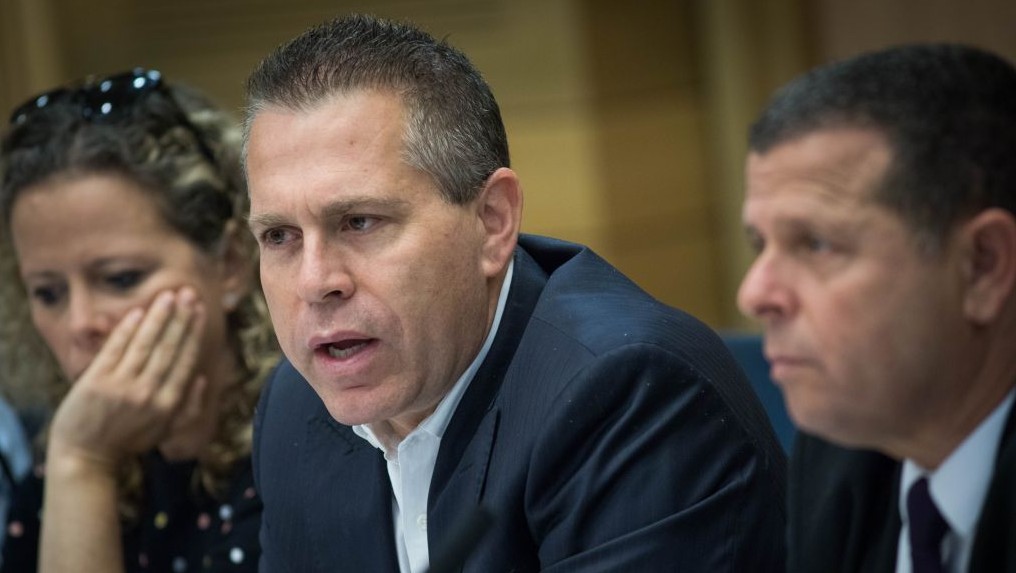
“Based on the pictures, at least, it seems that police lost control and acted with unreasonable force,” he told the radio station. “The police did the right thing by announcing that it had given matters over to the investigations department, since it went beyond its internal disciplinary purview.”
However, Erdan noted that there was “also harsh violence against the officers. The material will be presented and it includes stone throwing and officers injured. However, it doesn’t justify beating a demonstrator who has already been cleared and is lying on the ground.”
According to the television report, the rabbi whose son was arrested has since asked his follower to stop holding demonstrations.
מחאת העדה החרדית. שוטר יס״מ מפיל בברוטאליות מפגין חרדי העומד בצומת. pic.twitter.com/xYl4sn6uKp
— ישראל כהן (@Israelcohen911) September 17, 2017
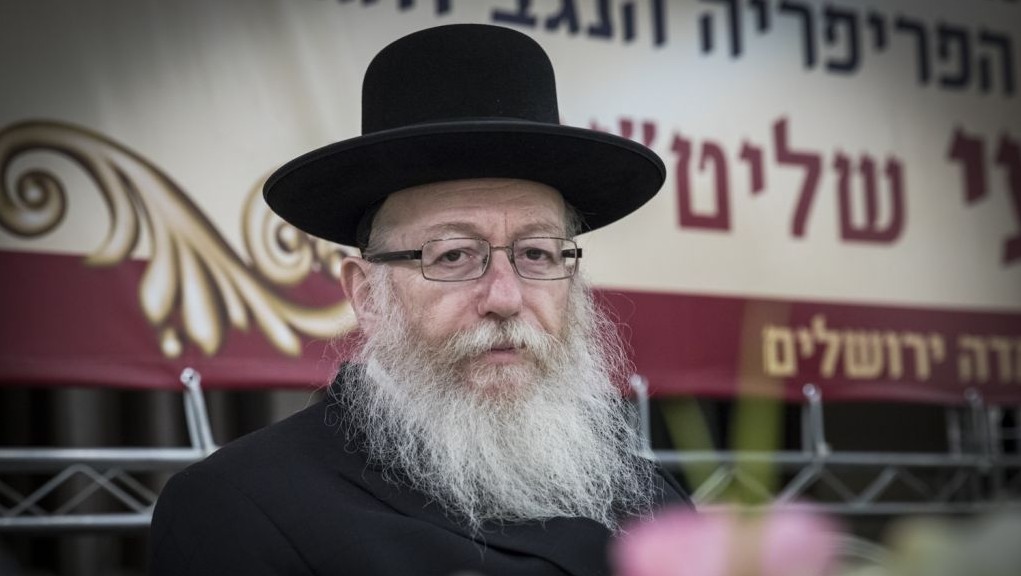
Health Minister Yaakov Litzman, who leads to the ultra-Orthodox United Torah Judaism party, slammed police for what he claimed was systematic violence toward the demonstrators.
“I fully condemn the harsh violence against haredim in Jerusalem,” the minister said in statement using another term for ultra-Orthodox Jews.
“This is excessive force, that endangers life, and that is clearly unacceptable,” Litzman continued. “The disturbing documentation of police behavior proves that Haredi demonstrators have become a way of letting off steam for no reason by violent and dangerous police. The police must rein in this behavior immediately to ensure public peace.”
Police said in a statement that officers applied riot dispersal methods “while trying to prevent the continuation of a violent and illegal demonstration and the blocking of roads.”
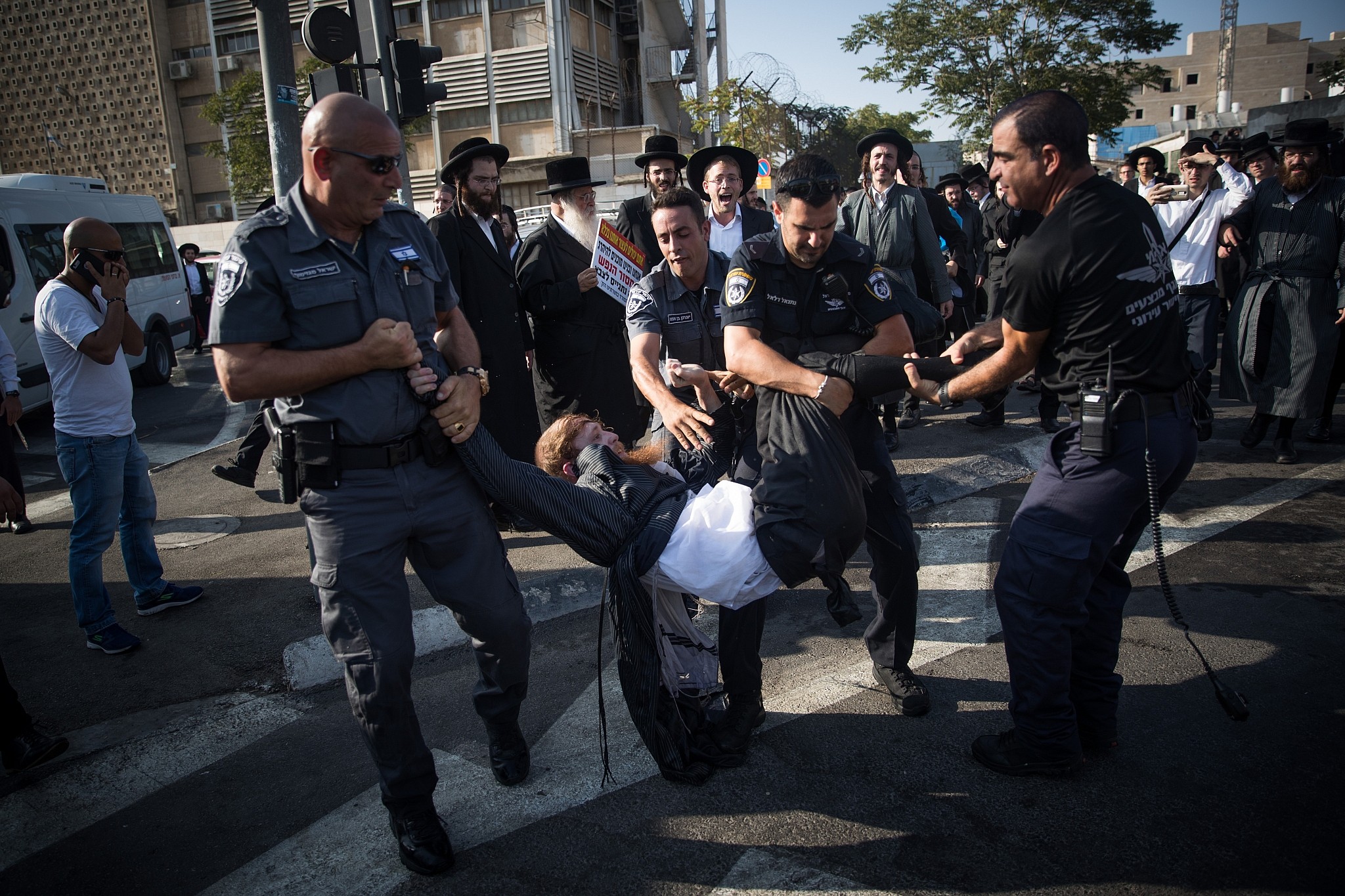
“As in every incident of this kind, the behavior of police at the scene will also be checked, with an emphasis on one of the incidents in which allegedly it seems from the video that was shared on the internet, as though force not necessary for enforcement was used. Anything that is alleged to be a deviation from authority and the use of disproportionate force will be handed over for the PIID to check.”
Last week’s High Court decision struck down a law exempting ultra-Orthodox men engaged in religious study from military service, saying it undermined equality. The decision raises the possibility that they could be forced into service, a highly contentious proposition with political implications.
However, the court suspended its decision for one year to allow for preparations for the new arrangement — which also provides the government with the opportunity to pass a new law.
Ultra-Orthodox political parties, holding key positions in the ruling coalition, are likely to draft new legislation that could seek to override the court ruling and keep the exemption in place.
The issue is part of a decades-old debate over whether young ultra-Orthodox men studying at yeshivas should undergo compulsory military service like the rest of Israel’s Jewish population.
After reaching the age of 18, men must serve for 32 months, and women must serve for 24.
Ultra-Orthodox seminary students have been largely exempt from Israel’s military draft since then-defense minister David Ben-Gurion exempted 400 students from service in 1949 on the grounds that “their studies are their craft.” Exceptional young artists and athletes are often granted exemptions by the Defense Ministry on the grounds that two or three years of military service could hold them back dramatically.
The ultra-Orthodox oppose serving for a variety of reasons, with the most extreme believing a Jewish state is not allowed before the coming of the Messiah. Others argue that study of religious texts is just as important to Israel as military service or that ultra-Orthodox soldiers would be confronted with irreligious behavior.
The court decision drew instant condemnation from ultra-Orthodox leaders and sparked a number of protests opposing the move.
AFP contributed to this report.





The Times of Israel Community.