

Hundreds of Russian Twitter bots stirred up UK politics, researchers say
Chair of British parliament committee investigating claims says accounts appear to have bombarded country with ‘fake news and hyper-partisan content’
 Add ToI as a Preferred Source on Google
Hundreds of fake accounts associated with the Kremlin attempted to influence British public opinion, including about Brexit, researchers have learned.
Twitter suspended 2,752 fake accounts operated by the Russian Internet Agency for trying to influence the 2016 US presidential election, according to a Tuesday Guardian report. Of those accounts, 419 also tweeted about the British referendum to leave the European Union, in addition to other related British issues.
Using the Twitter handle @SouthLoneStar, one of the accounts was used to churn anti-Islamic sentiment following a March terror attack outside the British Parliament.
The Russian bot posted a picture of a woman wearing a hijab walking by one of the victims who was being treated by passersby. “Muslim woman pays no mind to terror attack, casually walks by dying man while checking her phone #PrayForLondon #Westminster #BanIslam,” the account tweeted.
Пользователь с ником Southlonestar, обвинивший мусульманскую женщину в игнорировании теракта на Вестминстерском мосту в Лондоне, оказался лубянским троллем. Об сообщает The Independent.https://t.co/I9Sn90jBsA pic.twitter.com/u0LQdZA6QM
— Nasha Canada????????Наша Канада (@NashaCanada) November 15, 2017
Despite a zoom in on the Muslim woman clearly showing her distress, the post was picked up by at least two mainstream British media sites, including the Daily Mail and the Sun.
Another view of the hijab wearing woman walking past that scene on Westminster Bridge – single snap shots of events can be misleading pic.twitter.com/oyQQMGLLJe
— Garth Godsman – ガース・ゴッズマン (@GarthGodsman) March 26, 2017
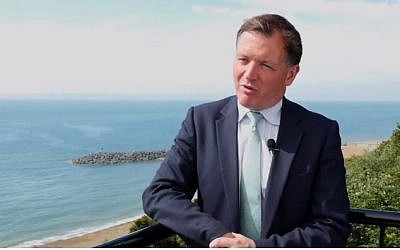
“What is at stake is whether Russia has constructed an architecture which means they have thousands of accounts with which they can bombard [us] with fake news and hyper-partisan content,” Conservative MP Damian Collins told the Guardian.
The House of Commons Digital, Culture, Media and Sport Committee, which Collins chairs, has been seeking details of ads and Facebook pages set up by Russian-linked accounts during the 2016 Brexit referendum and 2017 election campaign, as well as information about their cost, targeting and reach.
In a letter to Facebook chief executive Mark Zuckerberg, committee chairman Collins said the information is being sought for an investigation into “the role of foreign actors abusing platforms such as yours to interfere in the political discourse of other nations.”
The committee announced earlier this year it was setting up an inquiry into the phenomenon of “fake news.”
Collins said the requested information is in line with that supplied by Facebook to US Senate committees investigating the 2016 presidential election.
Facebook said last month that it has received the letter “and will respond once we have had the opportunity to review the request.”
Facebook disclosed in September that it had found ads linked to fake accounts — likely run from Russia — that sought to influence the US election. Facebook said the ads focused on divisive political issues such as immigration and gun rights in an apparent attempt to sow discord among the US population.
The social network has handed over several thousand ads to three congressional committees and shut down 470 pages and accounts in response to US lawmakers’ probes into Russian meddling in the election.
In Britain, calls are increasing for more information on the role of online advertising in the June 2016 EU referendum, in which 52 percent of voters opted to leave the bloc and 48 percent to remain.
Opposition Labour Party lawmaker Ben Bradshaw last week urged the government and electoral officials to investigate reports of “the role of dark money in the EU referendum campaign.”



The Times of Israel Community.