

Foreign ministers powwow in 11th-hour bid for nuke pact
World powers, Iran officials gather in Vienna for full meeting; Tehran official says deadline was never considered binding
 Add ToI as a Preferred Source on Google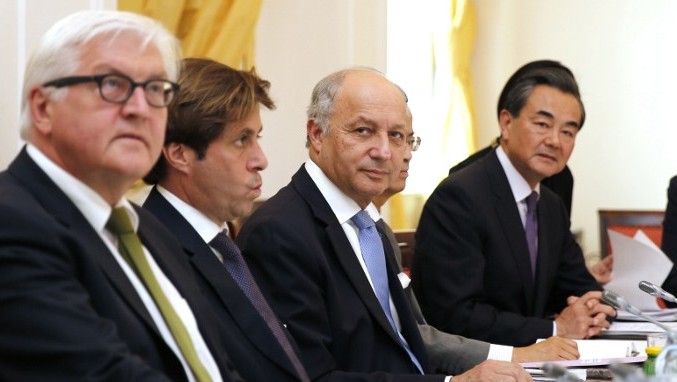
VIENNA, Austria — Foreign ministers from six major powers met with their Iranian counterpart Monday, on the eve of a deadline in Vienna to agree on a historic nuclear deal.
Mohammad Javad Zarif and his counterparts from the US, China, Russia, Britain, France and Germany are seeking to nail down an accord curbing Iran’s nuclear program in exchange for sanctions relief.
The seven foreign minister sat down in the mid-afternoon for about an hour. They were expected to reconvene later Monday, ahead of a Tuesday deadline to wrap up talks.
But an Iranian official indicated the sides would extend talks, and that his delegation had never really considered Tuesday as a deadline.
“July 7, July 8, we do not consider these dates as those dates we have to finish our job,” the official, who asked not to be named, told reporters.
“Even if we pass July 9, there will not be the end of the world, there will be another period for us to watch.”
Tuesday’s deadline is the latest that has been set for a comprehensive pact that would replace the interim deal world powers and Iran reached in November 2013. That package was extended three times, most recently on June 30.
The deal, aimed at ending a 13-year-old standoff over Iran’s nuclear program, would build on a framework accord reached in April in Switzerland.
Under that framework, Iran will reduce by more than two-thirds its uranium centrifuges, which can make nuclear fuel but also form the core of a nuclear bomb, and also reduce its uranium stockpiles and alter its Arak reactor.
Tough issues in finalizing the accord include working out the pace and timing of sanctions relief, Iran’s future capacities to develop nuclear equipment and enhanced UN access, including potential access to military bases in Iran.
Iran focused Monday on pushing to lift the UN arms embargo on the country as a parallel deal — a demand that the United States opposes as it seeks to limit Tehran’s Mideast clout.
A senior Iranian official said his country and the six world powers it is negotiating with are also working on a UN resolution that endorses any future nuclear deal.
Officials from both sides warned however that success was far from guaranteed.
US Secretary of State John Kerry said Sunday the talks were “not yet where we need to be on several of the most difficult issues.”
On Monday, an Iranian official said that “tough issues” remained to be resolved.
Iran denies wanting nuclear weapons, saying its activities are purely for peaceful purposes such as generating electricity and treating cancer patients.
Lifting the arms embargo would be separate from a long-term accord that foresees limits on Iran’s nuclear programs in exchange for relief from crippling sanctions on the Islamic Republic.
But Iran also sees existing UN resolutions imposed on Iran’s nuclear program and the accompanying sanctions as unjust and illegal. It has insisted that those resolutions be lifted since the start of international negotiations nearly a decade ago to limit its nuclear-arms making capability.





The Times of Israel Community.