

Jewish Agency head visits vandalized Reform synagogue in Ra’anana
Natan Sharansky meets with representatives from shul and Israel’s Reform movement at Kehilat Ra’anan synagogue
 Add ToI as a Preferred Source on Google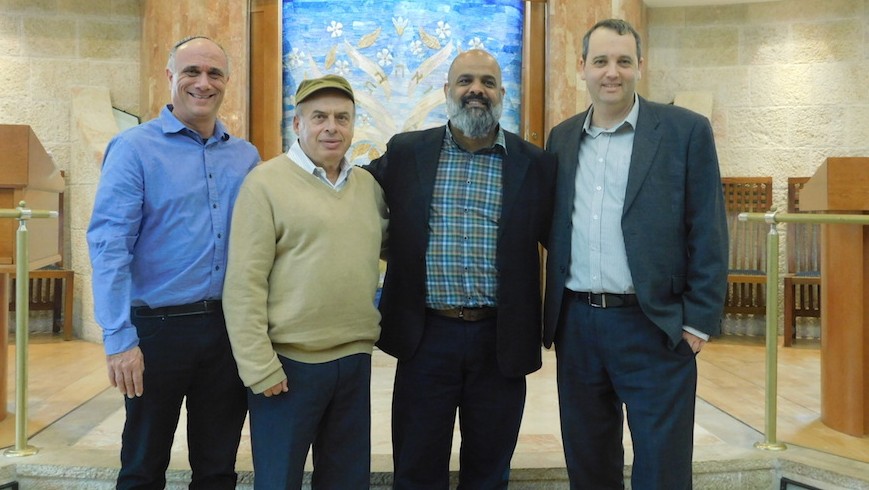
Natan Sharansky, the chairman of the Jewish Agency for Israel, visited a Reform synagogue in Israel that was vandalized and received death threats last week.
On Wednesday, Sharansky visited Beit Samueli, Kehilat Ra’anan synagogue in Raanana, meeting with representatives from the shul and Israel’s Reform movement.
“It goes without saying that we must not tolerate acts of violence and vandalism in our society,” he said, according to a statement. “As we forcefully condemn the attack on this synagogue, we also recognize the tremendous service that this community and other Reform and Conservative synagogues in Israel provide in making Judaism accessible to hundreds of thousands of Israelis throughout the year.”
The vandalism, which was discovered November 24, included hate graffiti on the walls of the synagogue and death threats in envelopes held down by a knife at its doorstep. The threats were addressed to prominent Reform leaders.
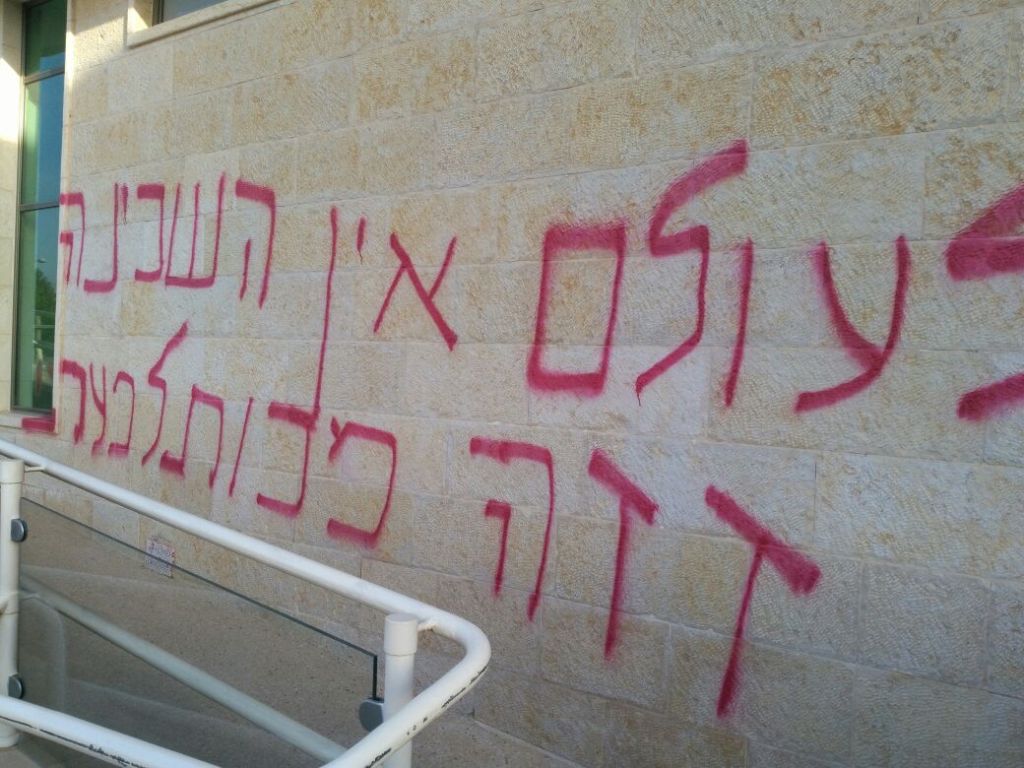
The vandalism seemed to have been tied to a push by the Reform Movement and others to open the Western Wall to non-Orthodox prayer services.
The phrase, “The divine presence will never leave the Western Wall,” was sprayed on the front of the synagogue, as was a biblical chapter and verse reference, “Ovadia 18 and 21.”
“Psalms 139:21-22” was written on an adjacent wall.
The passages from Ovadia speak of the destruction of Israel’s enemies at the hand of a vengeful God, while the passage from Psalms reads, “Did I not hate Your enemies, O Lord? With those who rise up against You, I quarrel. I hate them with utmost hatred; they have become my enemies.”
A phrase scrawled on the knife appears to refer to a Jewish legal obligation to kill traitors.
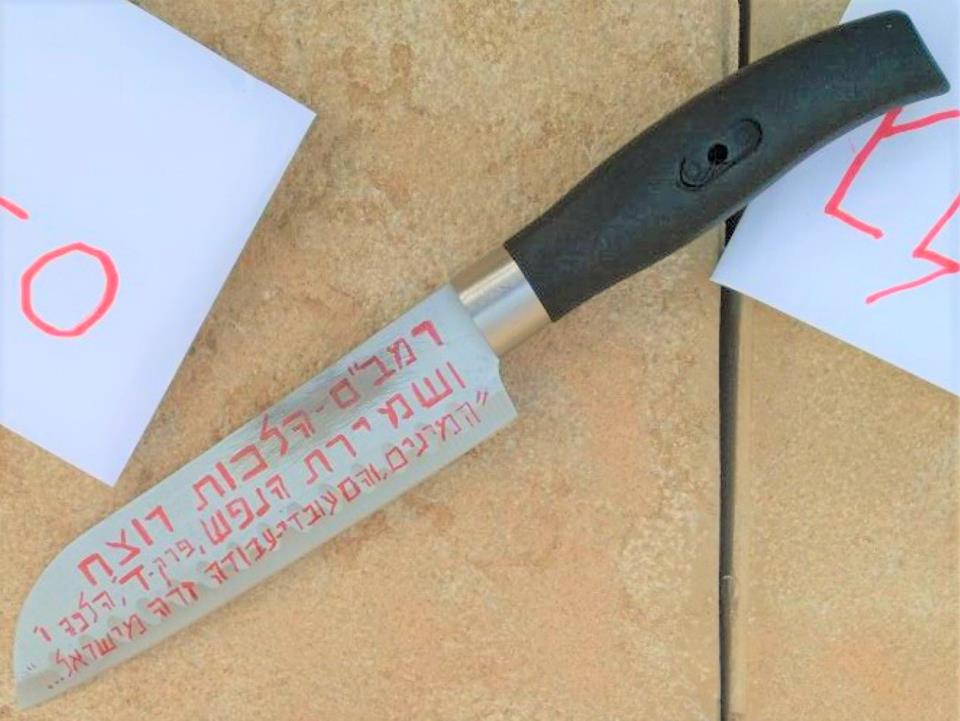
The death threats were directed at Rabbi Gilad Kariv, the executive director of the Israel Movement for Reform and Progressive Judaism; Rabbi Rick Jacobs, the US-based president of the Union for Reform Judaism; and Anat Hoffman, head of the Women of the Wall activist group.
The three have been leading the campaign for an egalitarian prayer space at the Western Wall, a proposal the government agreed to but has not carried out.
Earlier this month Kariv, Jacobs and Hoffman participated in what they called an “unprecedented act of civil disobedience” by holding a mixed-gender service in the main Western Wall plaza.
A similar attack occurred at the synagogue in January, though it did not include death threats.
The synagogue of 80 families has been in Ra’anana for 18 years. Three preschools reportedly operate out of the building.
Prime Minister Benjamin Netanyahu condemned the attack.
“Such acts have no place in our free society,” he said in a statement issued by his office.
Aida Bibliowicz, chair of the Kehilat Ra’anan congregation, said she was “disgusted” by the repeat attack and called on those who disagree with the Reform movement to engage in productive discourse rather than “vicious and hateful” acts.
“If someone doesn’t agree with us then we invite them to talk to us, we will sit and we will talk about it. That is our way,” she said.
The Tzohar Rabbinical Organization, a group of religious-Zionist rabbis, also condemned the attack, saying that differences in opinion should never lead to “any hint of violence — neither verbal nor physical.”







The Times of Israel Community.