

Rivlin: Rabin’s legacy is one of true leadership
On 19th anniversary of assassination, president says slain prime minister pushed for a more just and secure Israel
 Add ToI as a Preferred Source on Google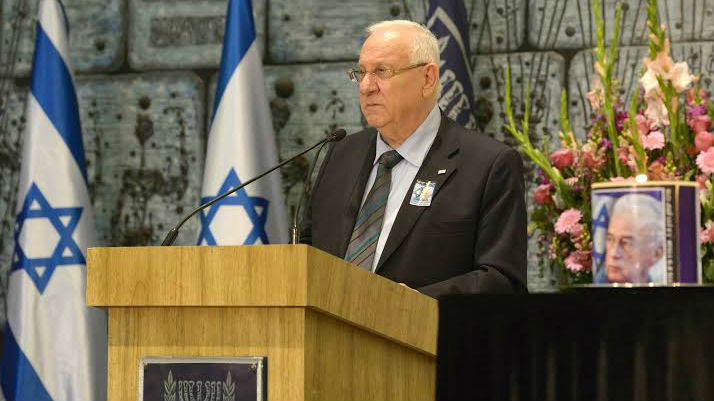
President Reuven Rivlin said Tuersday that he may not have agreed with slain prime minister Yitzhak Rabin’s policies, but he admired the man for his genuine concern for the success of the Jewish state and his unparalleled leadership.
Speaking at a memorial marking the 19th anniversary of Rabin’s assassination, Rivlin recalled the slain Israeli leader’s display of true leadership throughout difficult periods in the country’s history.
“A leader is one who sticks to his principles, regardless of the threats or danger one may encounter as a result,” Rivlin said Tuesday at a service at the President’s Residence in Jerusalem. “Rabin’s legacy is to bravely face tough decisions. Rabin did not sit and wait idly for a post-peace Israel; he was bold enough to deal with the Israel of here and now.”
“For me, Rabin’s legacy is not the legacy of war and peace. It is a legacy of his leadership. He was a leader who did not just walk at the head of the camp, but rather within its midst, motivated by a concern not just for our security, but for our existence as a society, more just and more equal.”
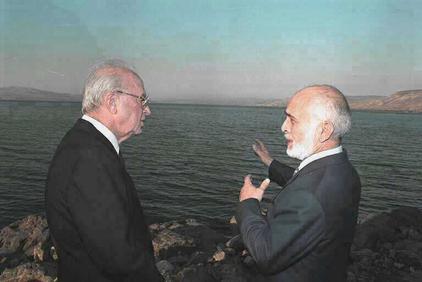
Rivlin said that he had always respected and appreciated Rabin, despite the different views held by the two with regard to the ongoing Israeli-Palestinian conflict and the peace process. Rivlin was a veteran right-wing Likud party MK, whereas Rabin served twice as prime minister for the left-wing Labor Party.
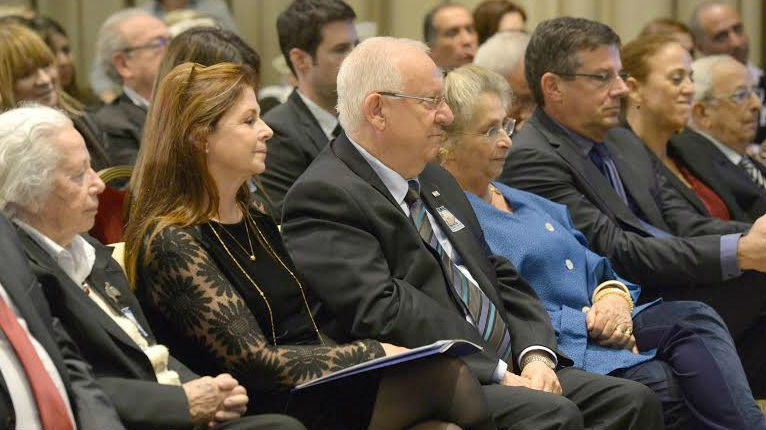
“It is no secret that I was and am not among the supporters of the Oslo [accords], but I nevertheless loved Yitzhak,” the president said. “It was always clear to me that our disagreement was a worthwhile debate, between two true lovers of this land.”
Tuesday’s ceremony was attended by members of the Rabin family, ministers, members of Knesset, and students at the Rabin School in Netivot.
Rabin’s daughter, Dalia Rabin-Pelossof, spoke at the memorial as well.
“I always heard from you warm words of memories you shared with my father,” she said to Rivlin.
“It is true you did not come from the same backgrounds, and we do not share the same political views, but we have always been members of the same sect, for whom the rules of democracy are sacred, and from which we may not deviate under any circumstances.”
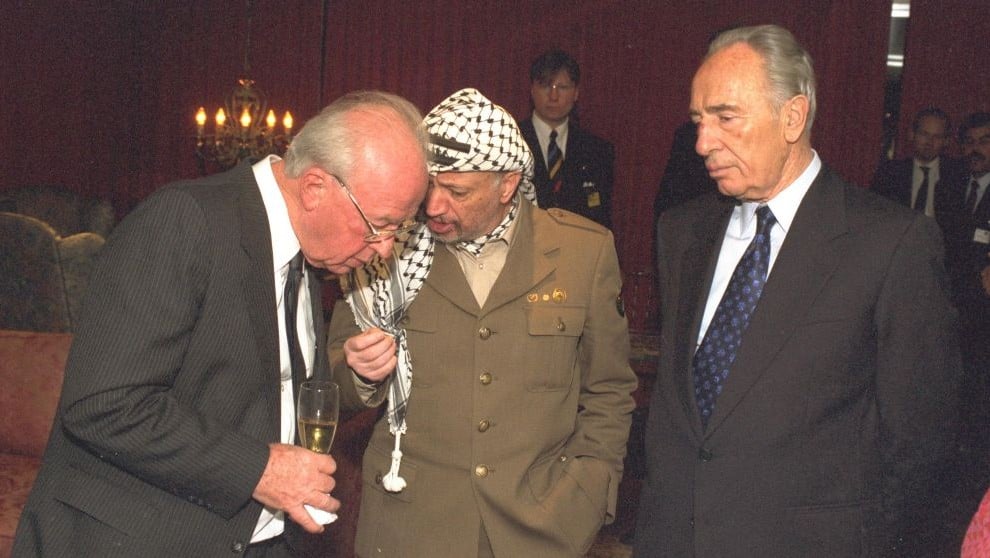
Rabin served as Israel’s chief of staff during the Six Day War in 1967 and was later assigned as the country’s ambassador to the US. Rabin also served as defense minister and was twice prime minister.
In 1994, he was awarded the Nobel Peace Prize along with then-foreign minister Shimon Peres and PLO chairman Yasser Arafat for his part in signing the Oslo Peace accords a year earlier.
Rabin was shot dead on November 4, 1995, by right-wing extremist Yigal Amir.
An official memorial ceremony for Rabin and his late wife, Leah, is scheduled to be held Wednesday afternoon at Mount Herzl in Jerusalem.
Last week, Rabin-Pelossof condemned what she called the growing incitement against Israeli officials like Rivlin, who is perceived to hold a moderate stance toward the country’s Arab minority. Rabin-Pelossof said she was horrified to hear the expressions of hatred leveled at Rivlin following his appearance at a memorial marking the 58th anniversary of the Kfar Kassem massacre, and his Knesset speech slamming racial discrimination and violence within the Jewish state.
Rabin-Pelossof expressed particular concern about a doctored photo showing Rivlin in an Arab keffiyeh, or checked headscarf, which had been circulating on right-wing websites and social media. News of the photo was reported by the Maariv (Hebrew) website; it did not give a source or credit for the image.
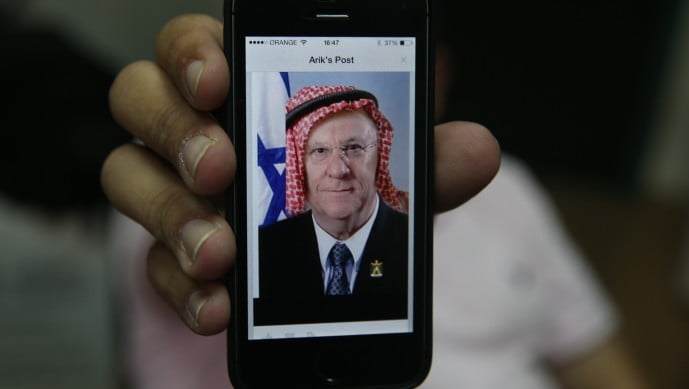
The photo is somewhat reminiscent of an infamous doctored image of the late Rabin in the same kind of headscarf, which was disseminated as part of a vicious incitement campaign against him following the signing of the Oslo Accords in 1994 and before his assassination.
During his speech at the opening of the Knesset’s winter session last month, Rivlin said this summer’s conflict with Hamas brought vehement internal criticism and racism to the fore, and called on politicians to speak out against it.
“During this long summer, we knew how to unite against an external enemy,” he said. “But during this summer we dedicated much time, unfortunately, to mark internal enemies as well. ‘Little Jew liar,” my critics said to me, and said: ‘May your name be obliterated, Arab agent,’ ‘Go be a president in Gaza… ‘traitor,’ ‘president of Hezbollah’ and these are only some of the voices.”
“We cannot be silent. Our silence is dangerous. This institution has seen very difficult discussions, even screaming… this is the way of politics,” Rivlin said. But at this point, it is the silence “which echoes the loudest,” he concluded.
Adiv Sterman and JTA contributed to this report.


The Times of Israel Community.