

Thousands mark Holocaust Remembrance Day at Auschwitz
Jews from around the world, students and Israeli officials gather at Nazi death camp for annual March of the Living
 Add ToI as a Preferred Source on Google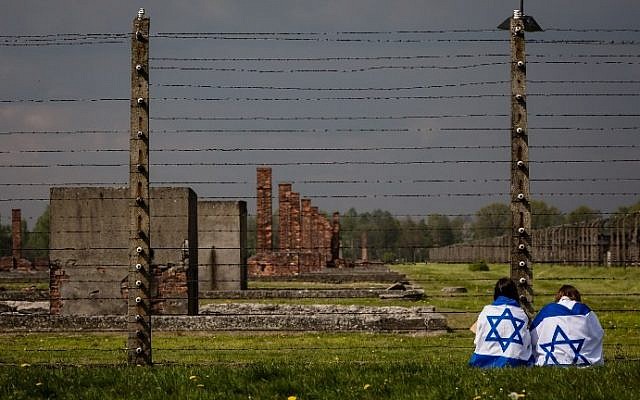
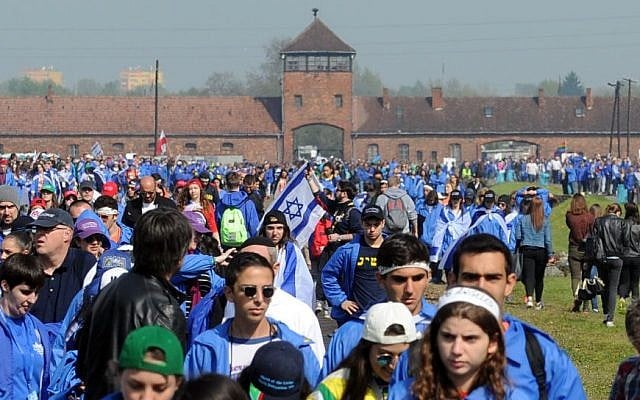
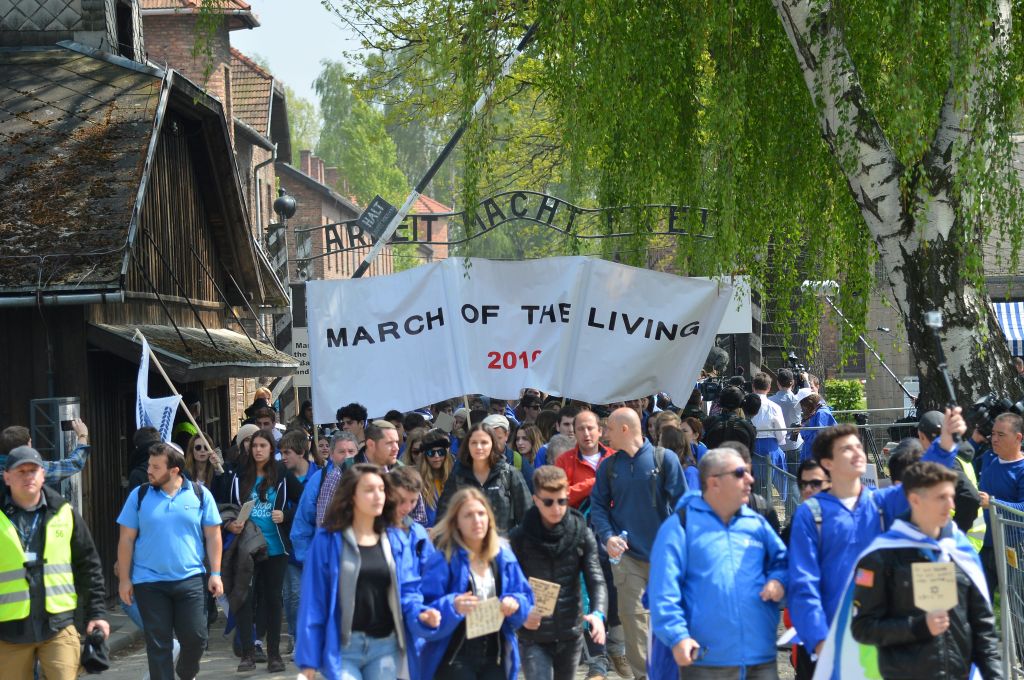
Thousands of young Jews from 40 nations marched alongside a handful of Holocaust survivors and Polish teenagers Thursday in homage to the victims of the Auschwitz-Birkenau Nazi death camp in southern Poland.
Now a memorial and museum run by the Polish state, the site is symbolic of Nazi Germany’s genocide of European Jews. One million perished there between 1940 to 1945.
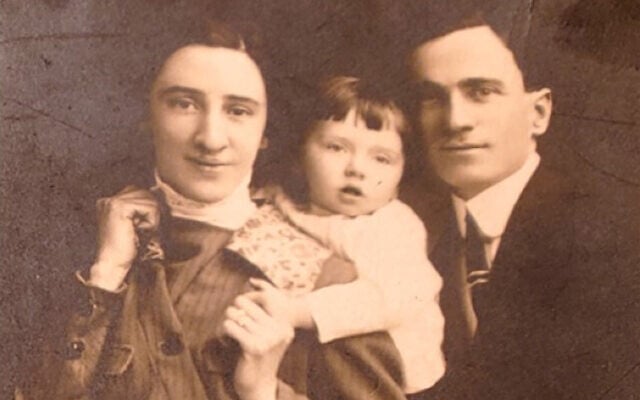
Survivor Feiga Francis Schmidt Libman, 81, told AFP she lost her grandmother, aunt and cousins at Auschwitz.
Her father died at Dachau, another Nazi camp located in Germany, but she and her mother survived the ordeal of life in the Stutthof camp. She was just 10.
“I want them (young people) to know that hatred kills,” Libman, now a great grandmother, told AFP. “I have a motto: if you have hatred in your heart, there is no room for love. I want everyone to be nice to each other and it doesn’t matter if you pray in a synagogue, if you pray in a church or if you pray in a mosque.
“We are all the same and we should love each other and try to get along because there is beauty and goodness in all of us.”
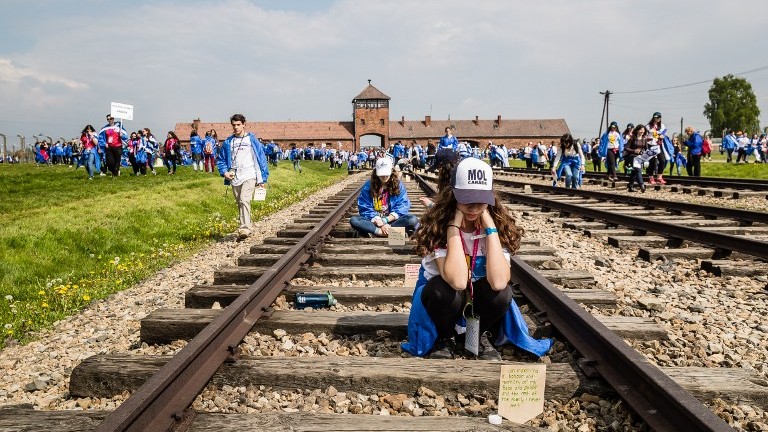
The doleful sound of the shofar — a traditional Jewish ram’s horn symbolic of freedom — marked the start of the march in brilliant sunshine in the southern Polish town of Oswiecim, where Nazi Germany built the death camp in 1940.
Participants walked through the notorious “Arbeit Macht Frei” (Work Will Set You Free) gate at Auschwitz, before marching two miles (three kilometers) to Birkenau, the main extermination site.
Held for the 28th time, organizers say the annual March of the Living is the world’s largest single Holocaust memorial event.
It marks Yom Hashoah, Israel’s Holocaust Remembrance Day.
“I’m afraid that Europe and maybe some other parts of the world didn’t learn much (from the Holocaust),” Dr Shmuel Rosenman, march chairman, told AFP.
He urged governments to enact tough legislation “against anti-Semitism, racism, fascism.”
Yossi Fischer, a 19-year-old New Yorker, said that his great grandfather was the lone survivor among his relatives, all of whom perished at Auschwitz.
“They tried to destroy us, but thank God we’re still around.”
Eight Knesset members from across the political spectrum attended the annual event, including Justice Minister Ayelet Shaked who addressed modern-day anti-Semitism in her remarks to participants after the march.
“Many in Europe, even in modern Europe of 2016, are only willing to accept the Jew in one role and one role only: that of a victim. A perpetual victim,” she said.
“A strong and thriving State of Israel, one which wins its wars and overcomes its enemies, is a state that many in Europe find difficult to accept.
“Does such a state have a place in the world? Does it have a right to exist? Here in Birkenau I will say this: The existence of the State of Israel is justified in every moment. Even when it enjoys, as we do today, a time of prosperity. Even in days of great strength.
“We must remember that even today, there are those who call for the destruction of the Jewish people.
‘They tried to destroy us, but thank God we’re still around’
“From this place, I call upon you and upon all the countries that you represent here: Study the lessons of the most terrible of horrors and do not let their seeds sprout anew,” Shaked said.
Also in attendance was Zionist Union MK Yael Cohen Paran, who is the daughter of Holocaust survivors.
“It’s a really important day, Holocaust Remembrance Day, and the March of the Living symbolizes the victory of the Jewish people over the terrible Nazi Shoah. Nearly all of the relatives of my grandparents died in the Holocaust, and being here is very meaningful to me, like coming full circle,” Paran said. “I haven’t started to cry yet but I am sure I will.”
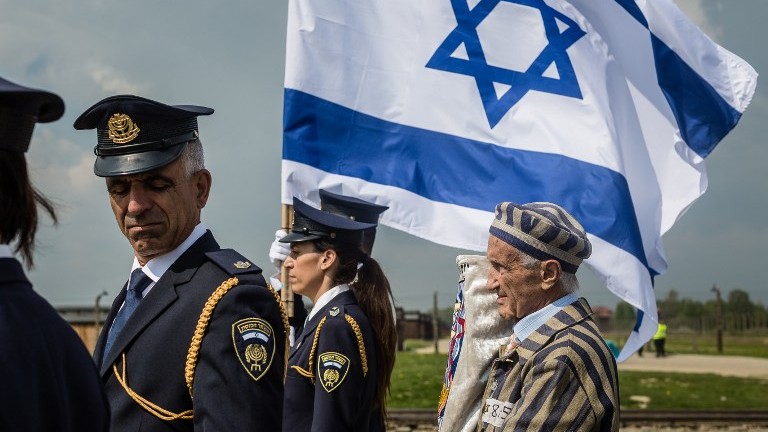
Prime Minister Benjamin Netanyahu, who stayed in Israel to attend official state memorial events, addressed the 10,000 participants via videolink.
“It is here that the Jews were burned to death, millions perished and nobody lifted a finger, so it was a double tragedy: the tragedy of extermination and the tragedy of neglect,” he said.
“The March of the Living represents the rebirth of the Jewish people, the rebirth of the Jewish sate, the rebirth of the Jewish commitment to defend ourselves against those who wish to destroy us.”
Historical records show that six million European Jews perished under the Nazi German genocide during World War II.
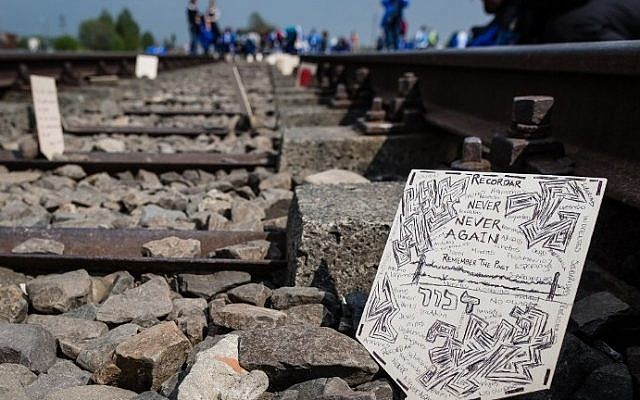
In 1944, some 430,000 Jews were brought to Auschwitz-Birkenau by train from Hungary. Most were immediately put to death in gas chambers, while the others shared the fate of all of the camp’s inmates: forced labor, hunger and disease that most often led to death.
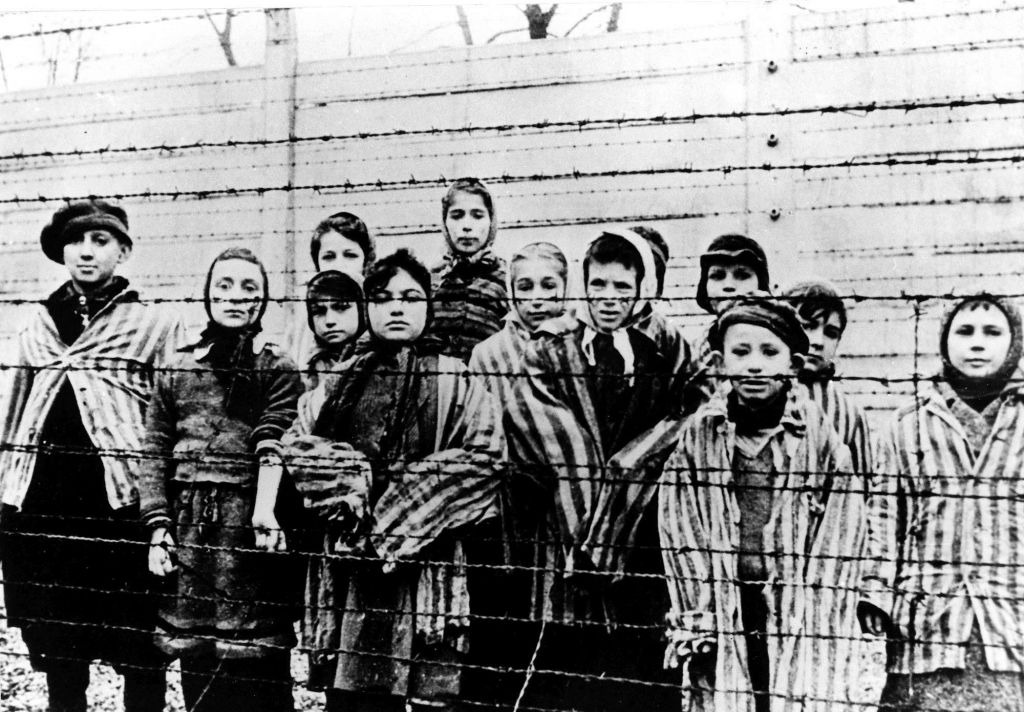
More than 100,000 non-Jewish Poles, Roma, Soviet prisoners of war, homosexuals and anti-Nazi partisans also died at the infamous death camp in occupied Poland. The Soviet Red Army liberated it in 1945.
The March of the Living began in 1988 as a biennial event, but was soon staged yearly.
So far, almost 200,000 Jewish youths have taken part in the march, according to the International March of the Living organizers, who intend it to be an element of education for new generations.







The Times of Israel Community.