

German theater offers free seats for swastika wearers at ‘Mein Kampf’ play
Theater says plan, which includes issuing yellow stars to those who pay for tickets, intended to show how easily people can be corrupted; investigation launched
 Add ToI as a Preferred Source on Google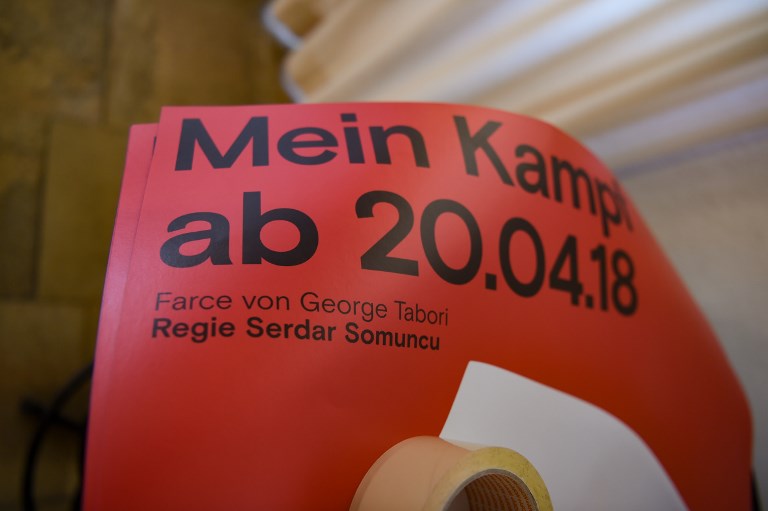
BERLIN, Germany — A probe has been launched after a theater in Germany promised free entry to spectators who wear a swastika to a play named after Adolf Hitler’s “Mein Kampf,” prosecutors said Tuesday.
A spokesman from the prosecutor’s office in the southern city of Constance said it would investigate after a number of complaints were made, according to the German news agency DPA. Under German law, publicly displaying the Nazi symbol is illegal.
Theatergoers in the picturesque lakeside city have been offered free tickets to Friday’s premiere if they wear a swastika, given to them on entry, during the performance.
Those who pay for a ticket will be asked to wear a Star of David “as a sign of solidarity with the victims of National Socialist (Nazi) barbarism,” the theater’s operators wrote on their website.
The premiere of “Mein Kampf,” a reference to the book written by Hitler when he was in prison before taking power, is scheduled to take place on Friday, April 20, the anniversary of his birth in 1889 in Austria.

The theater says it aims to show how easily people can be corrupted, but the approach has sparked controversy.
The German-Israeli Society in the Lake Constance region and the Judeo-Christian Society called for the boycott.
The play by George Tabori, who died in 2007, is a caricature of Hitler’s youth, according to the theater.
Investigators, however, need to examine the extent to which this can be a freedom of artistic creation.
The controversy comes as German authorities are worried about the rise of anti-Semitism, especially in schools.










The Times of Israel Community.