

 From the Liveblog of
Wednesday, August 20, 2025
From the Liveblog of
Wednesday, August 20, 2025
German court rules Buchenwald Holocaust memorial can bar people wearing keffiyehs
 Add ToI as a Preferred Source on Google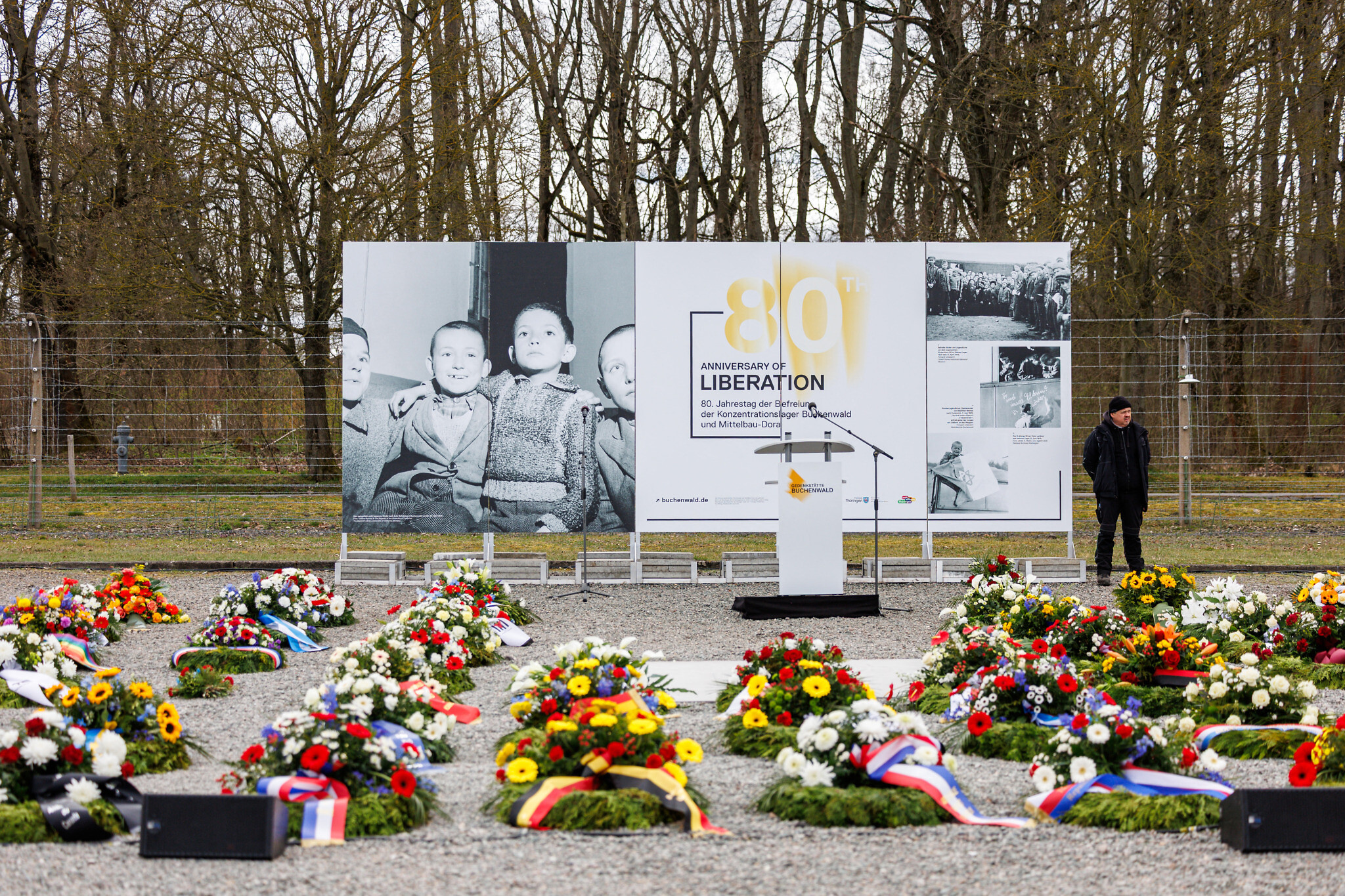
A German court says that a Nazi concentration camp memorial has the right to refuse entry to those wearing keffiyehs.
The higher administrative court in the eastern state of Thuringia rejected a request from a woman to be allowed entry to the Buchenwald concentration camp memorial while wearing the scarf.
According to local media reports, the woman was turned away when she attempted to attend a commemorative event marking the 80th anniversary of the camp’s liberation in April while wearing a keffiyeh.
She then petitioned the courts to allow her to return to the memorial for another commemorative event this week while wearing a keffiyeh.
The court found that the memorial was within its rights to deny her entry, pointing to the woman’s declared aim of “sending a political message against what she saw as the (memorial’s) one-sided support for the policies of the Israeli government.”
“It is unquestionable that this would endanger the sense of security of many Jews, especially at this site,” the court said.
The court said the woman’s right to freedom of expression was outweighed in this case by the memorial’s “interest in upholding the purpose of the institution.”
The Buchenwald memorial faced criticism last month when an internal document was leaked, which described the keffiyeh as “closely associated with efforts to destroy the state of Israel.”
The director of the memorial, Jens-Christian Wagner, said subsequently that the document contained “mistakes” and would have to be reworked.
On the question of the keffiyeh, he told the NDR broadcaster last month that it was not per se “a forbidden symbol” at the memorial.
“However, when it is used together with other symbols… to relativize Nazi crimes, then we would ask people to remove those symbols,” he said.
Around 340,000 inmates, including Jews, Roma, homosexuals and Soviet prisoners of war, passed through Buchenwald and its annex, Mittelbau-Dora, both located near the German city of Weimar.
Around 56,000 people were killed at Buchenwald — some executed, others starved or worked to death — and a further 20,000 killed in Mittelbau-Dora, where inmates worked on the Nazis’ V1 and V2 rockets.




The Times of Israel Community.