

Rev. Jesse Jackson, US civil rights icon with rocky ties to Jews, dies at 84
Protégé of Martin Luther King, Jr. led Black causes for decades and broke barriers as a presidential candidate; he also had to apologize for referring to NYC as ‘Hymietown’
 Add ToI as a Preferred Source on Google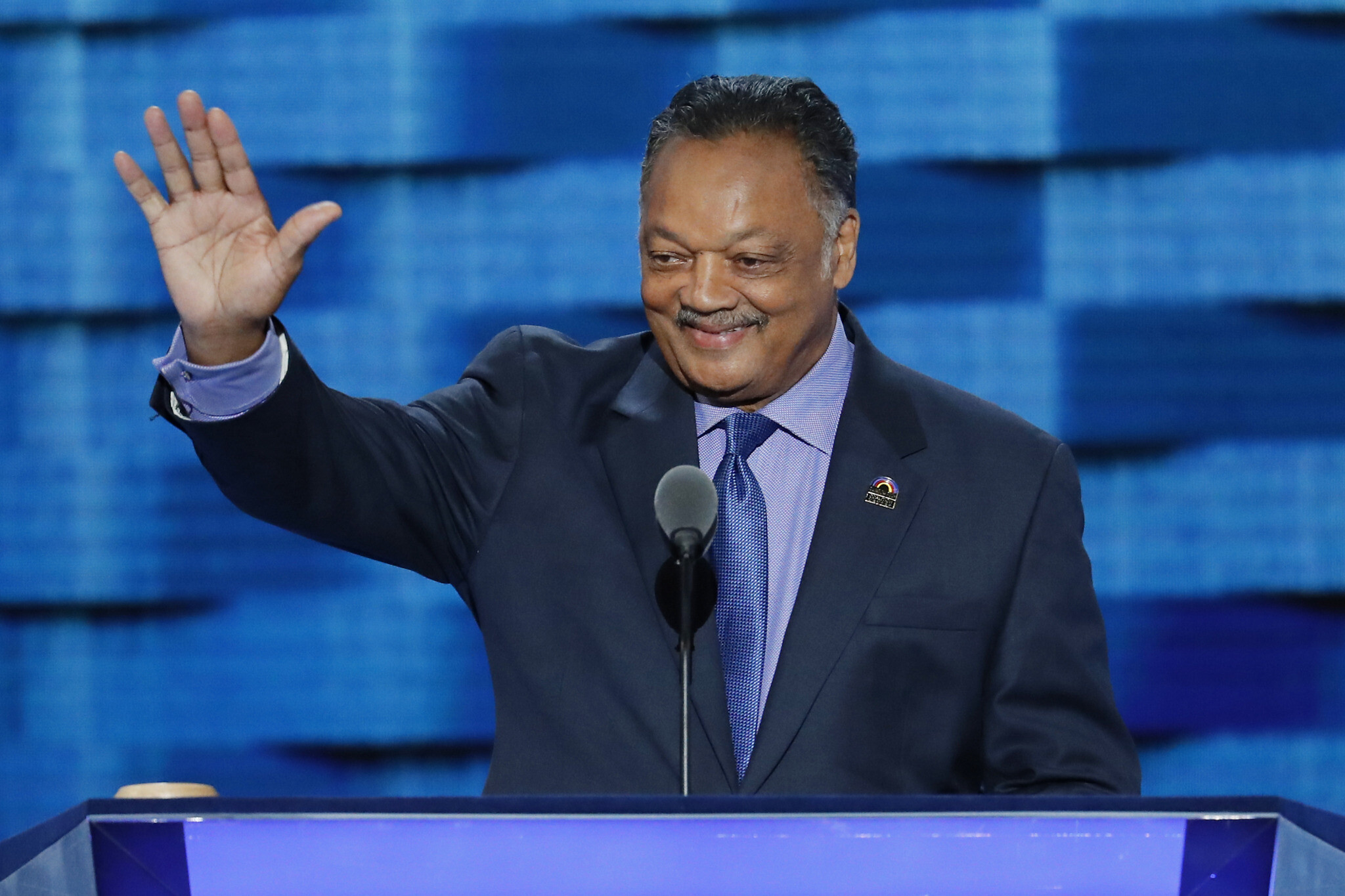
The Reverend Jesse L. Jackson, a protégé of the Rev. Martin Luther King Jr. and two-time United States presidential candidate who led the civil rights movement for decades after King’s assassination, died Tuesday, his daughter confirmed. He was 84.
The African-American leader had rocky relations with the American Jewish community for much of his career, due to his 1980s friendship with Nation of Islam leader Louis Farrakhan and his description of New York City as “Hymietown,” for which he later apologized. His support for the Palestinian Liberation Organization also strained the relationship, though it improved over time.
Jesse Louis Jackson was born on October 8, 1941, in Greenville, South Carolina, the son of high school student Helen Burns and Noah Louis Robinson, a married man who lived next door. Jackson was later adopted by Charles Henry Jackson, who married his mother.
Arriving at the historically Black college of North Carolina A&T in 1960, just months after students there launched sit-ins at a whites-only diner, Jackson immersed himself in the blossoming civil rights movement.
By 1965, he joined the voting rights march King led from Selma to Montgomery, Alabama. King dispatched him to Chicago to launch Operation Breadbasket, a Southern Christian Leadership Conference effort to pressure companies to hire Black workers.
Jackson called his time with King “a phenomenal four years of work.” He was with King on April 4, 1968, when the civil rights leader was slain at the Lorraine Motel in Memphis, Tennessee. Jackson’s account of the assassination was that King died in his arms.
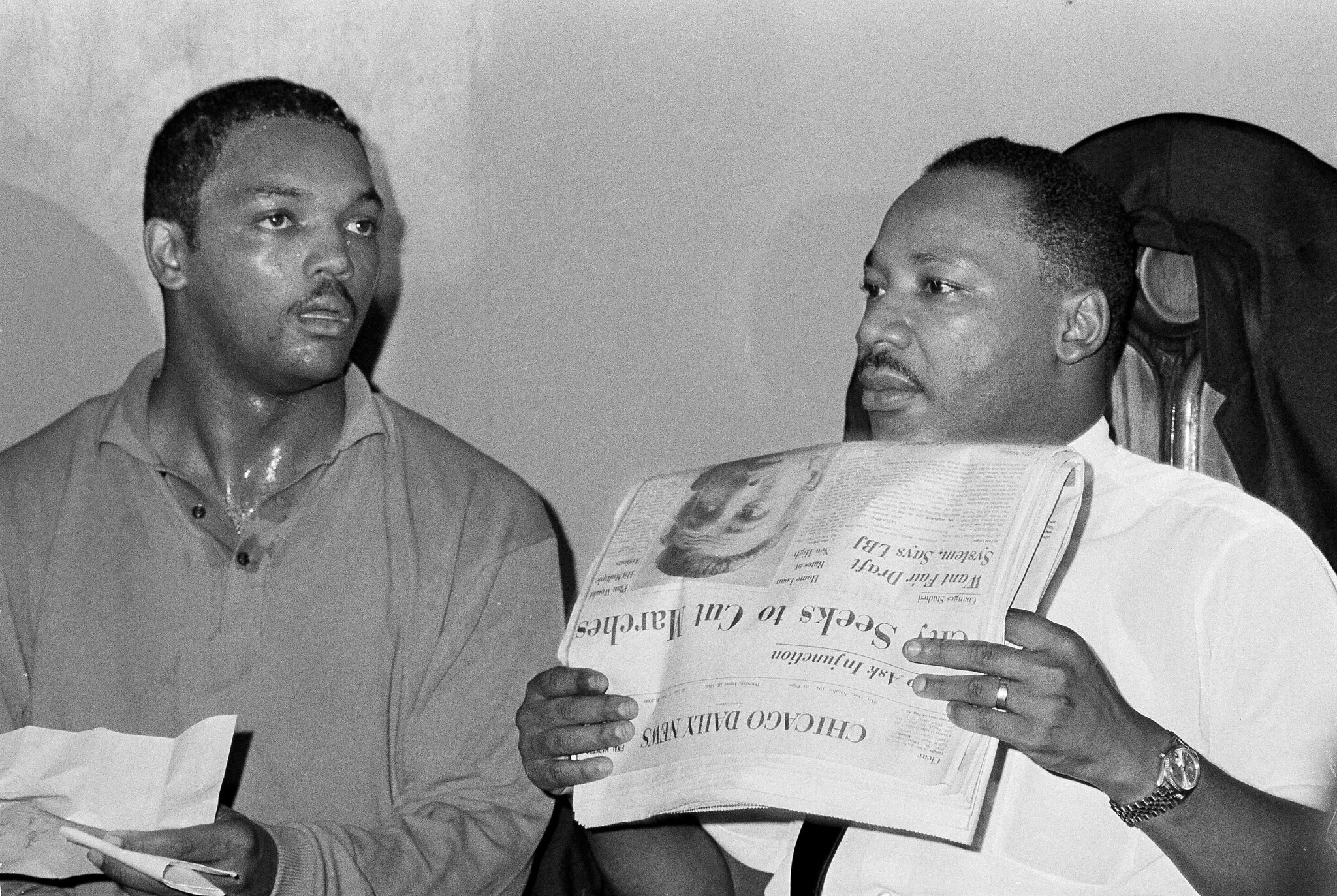
With his flair for the dramatic, Jackson wore a turtleneck he said was soaked with King’s blood for two days, including at a King memorial service held by the Chicago City Council, where he said: “I come here with a heavy heart because on my chest is the stain of blood from Dr. King’s head.”
However, several King aides, including speechwriter Alfred Duckett, questioned whether Jackson could have gotten King’s blood on his clothing. There are no images of Jackson in pictures taken shortly after the assassination.
In 1971, Jackson broke with the Southern Christian Leadership Conference to form Operation PUSH, originally named People United to Save Humanity. The organization based on Chicago’s South Side declared a sweeping mission, from diversifying workforces to registering voters in communities of color nationwide.
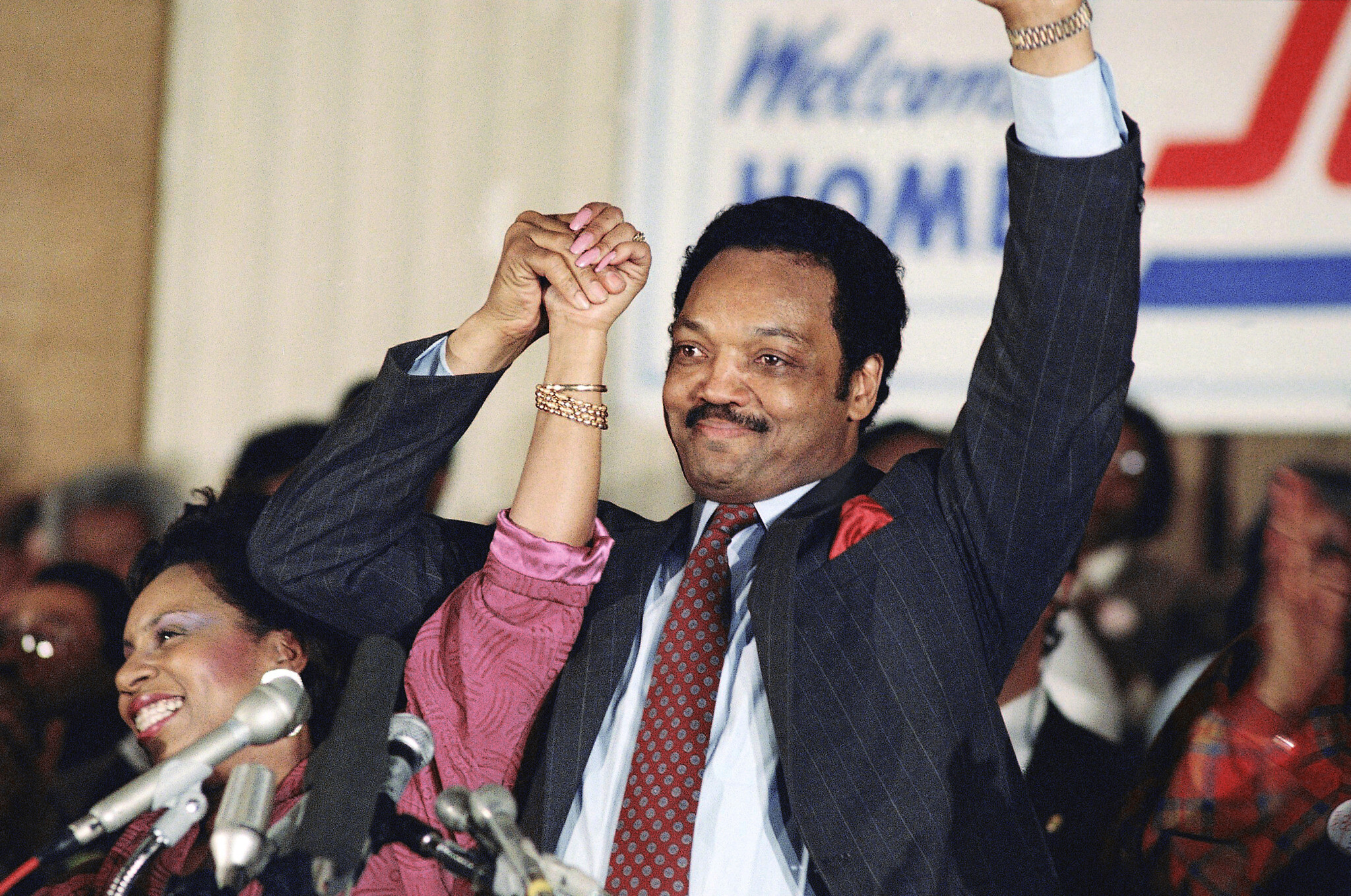
Jackson ran for president twice, and did better than any Black politician had before president Barack Obama, winning 13 primaries and caucuses for the Democratic nomination in 1988, four years after his first failed attempt.
He also had influence abroad, meeting world leaders and scoring diplomatic victories, including the release of Navy Lt. Robert Goodman from Syria in 1984, as well as the 1990 release of more than 700 foreign women and children held after Iraq’s invasion of Kuwait. In 1999, he won the freedom of three Americans imprisoned by Yugoslav President Slobodan Milosevic.
Infamously called NYC ‘Hymietown,’ denied then apologized
In January of 1984, in what he thought were private remarks to a journalist, he referred to New York City as “Hymietown,” a derogatory reference to its large Jewish population.
When the remarks were published in The Washington Post, the civil rights leader denied having made them, and blamed a Jewish conspiracy for the controversy. He ultimately acknowledged the remarks and apologized in a New Hampshire synagogue. In later years, he attempted to mend the relationship, and met with Jewish leaders and organizations.
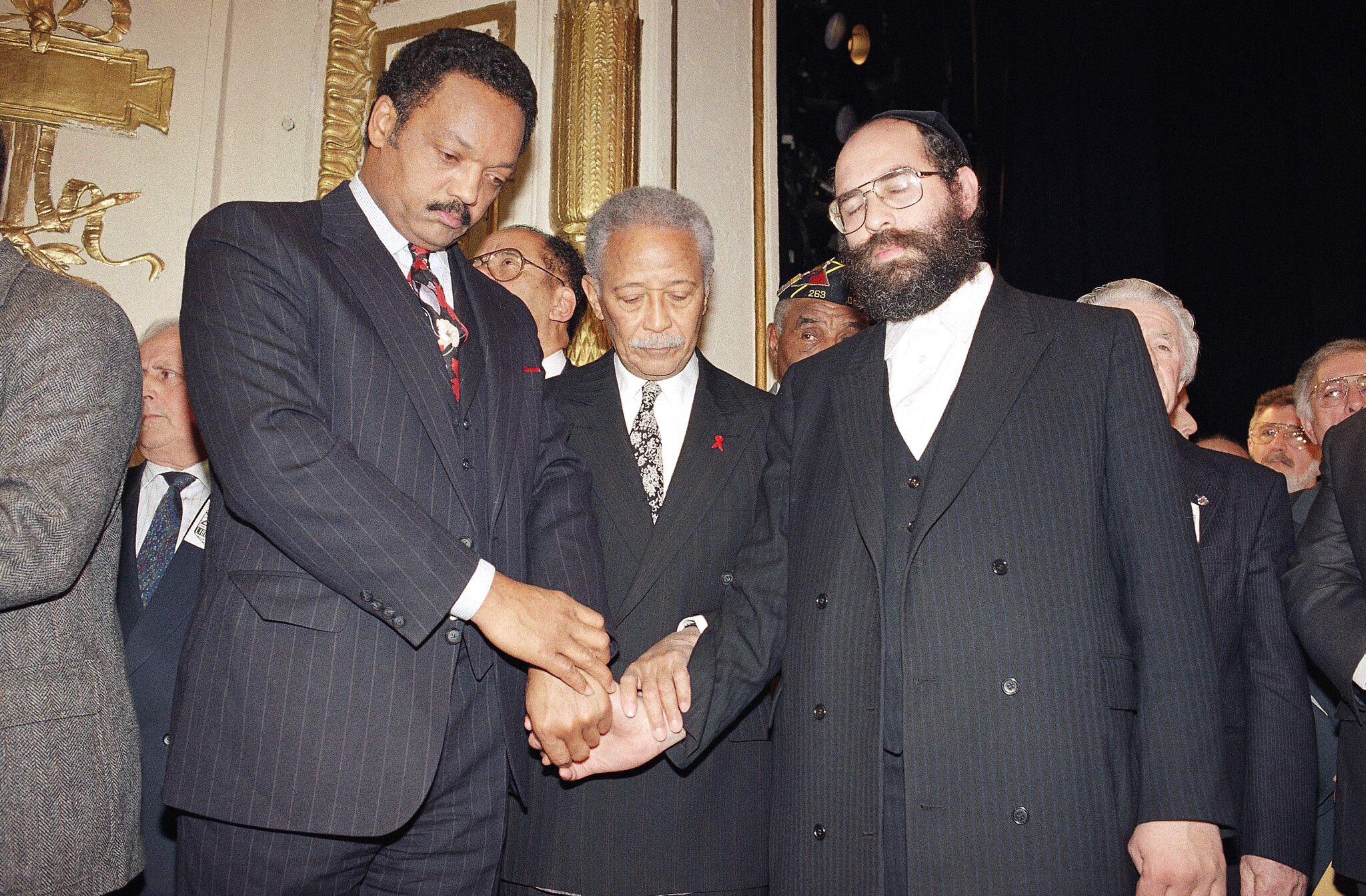
During his 1988 campaign, his support among Jews was far lower than among white people in general, and his electoral chances took a serious hit when, in the New York primary, he only won three percent of the Jewish vote.
His platform advocated “secure borders” for Israel. About a decade earlier, in 1979, he had visited the Jewish state, where prime minister Menachem Begin refused to arrange any high-level meetings. In speeches throughout the trip, Jackson voiced support for the cause of Palestinian statehood, but opposition to acts of terrorism.
Jackson did meet, however, with Palestine Liberation Organization leader Yasser Arafat in Beirut. He continued to speak well of Arafat, and met him again several times in subsequent years, including in the West Bank.
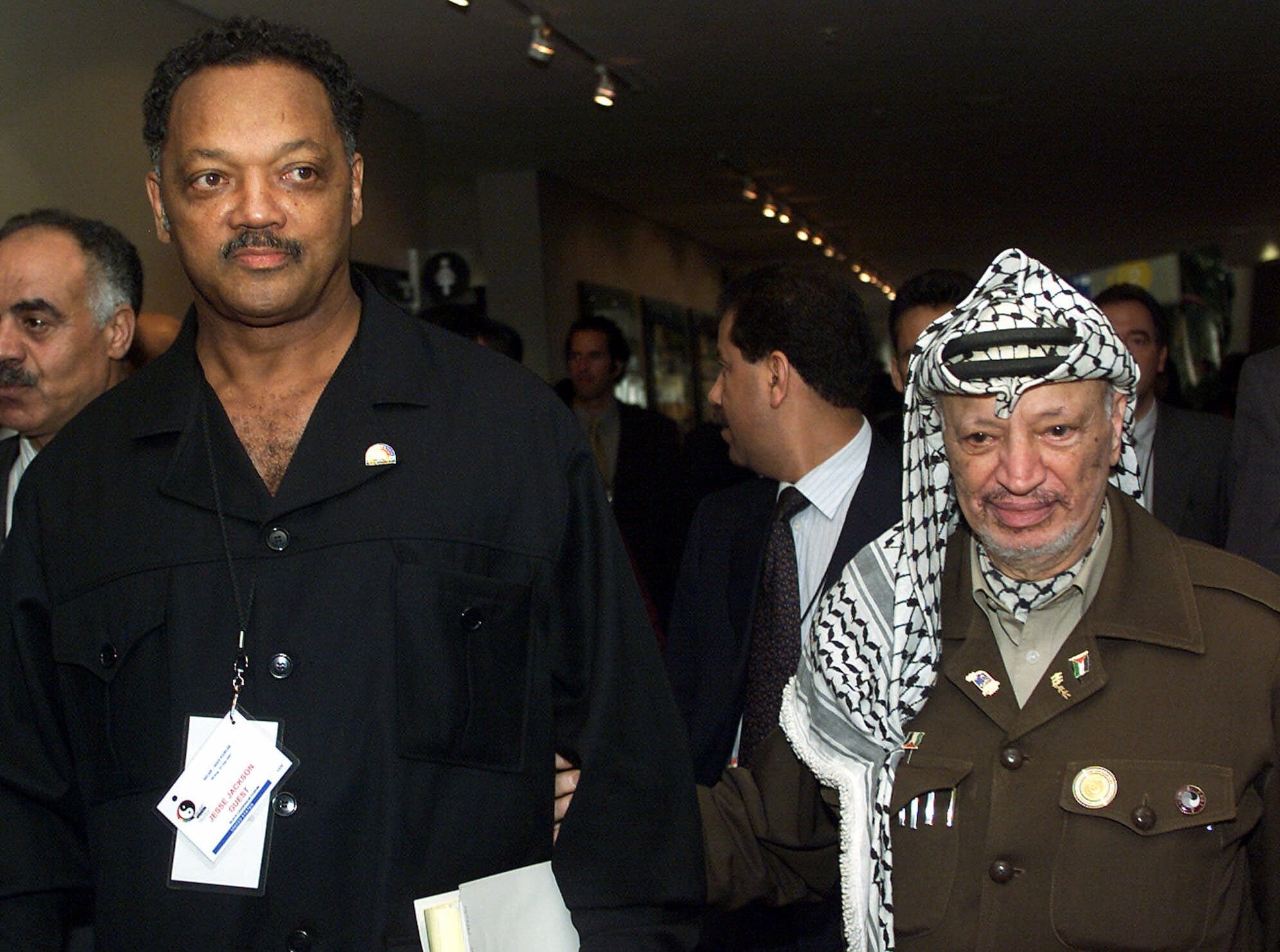
Another sore spot was his relationship to the Nation of Islam’s Farrakhan, though the reverend condemned the latter’s antisemitic statements as “reprehensible” during his 1984 campaign, which he said Farrakhan was “not a part of.”
In his later years, Jackson lent his voice to the Black Lives Matter movement. In 2021, he joined the parents of Ahmaud Arbery inside the Georgia courtroom where three white men were convicted of killing the young Black jogger, and called for federal charges against former Chicago police officer Jason Van Dyke in the 2014 killing of Black teenager Laquan McDonald.
Jackson stepped down as president of Rainbow/PUSH in July 2023. He disclosed in 2017 that he had sought treatment for Parkinson’s, but he continued to make public appearances even as the disease made it more difficult for listeners to understand him.
Earlier this year, doctors confirmed a diagnosis of progressive supranuclear palsy, a life-threatening neurological disorder. He was admitted to a hospital in November.






The Times of Israel Community.