

UN Security Council to hold emergency meeting on Gaza flareup
Kuwait, Bolivia request Tuesday session on latest violence between Israel and Hamas; Israeli envoy: ‘We won’t accept a call for both sides to exercise restraint’
 Add ToI as a Preferred Source on Google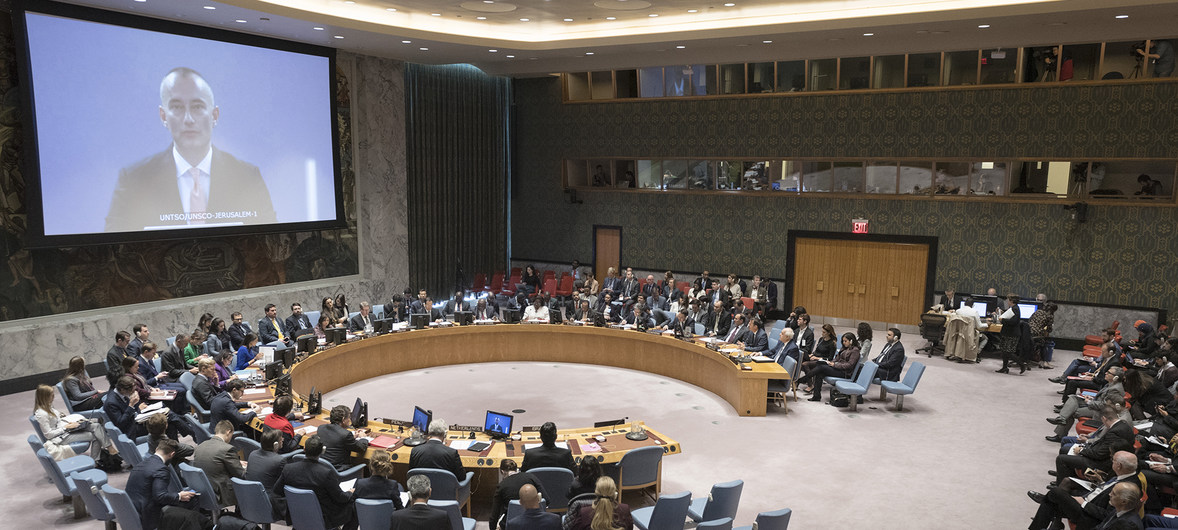
The UN Security Council will meet behind closed doors later Tuesday to discuss the escalation of violence in the Gaza Strip, the worst flareup since the 2014 war.
At the request of the Palestinian UN delegation, Kuwait, which represents Arab countries at the council, and Bolivia asked for the emergency meeting during which council members will hear a briefing from a UN official on the crisis, diplomats said.
Israel’s ambassador to the UN Danny Danon said in response that Israel “will not accept a call for both sides to exercise restraint. There is one side that attacks and fires 400 missiles at civilian populations, and there is another side that protects its citizens.”
“Every member of the Security Council should ask themselves how they would respond after a barrage of missiles on their country,” Danon added.
Palestinian terrorist groups in the Gaza Strip announced that Egypt brokered a ceasefire agreement between them and Israel on Tuesday evening, after over 460 rockets and mortar shells were fired at southern Israel over the course of 25 hours.
A senior Israeli diplomatic official appeared to confirm the reported armistice. First reports said the decision to accept a ceasefire agreement with Hamas, Palestinian Islamic Jihad, and other terror groups in Gaza was taken by Prime Minister Benjamin Netanyahu at Tuesday’s seven-hour meeting of the security cabinet without being put to a vote. Four ministers quickly said they opposed it.
“Israel maintains its right to act. Requests from Hamas for a ceasefire came through four different mediators. Israel responded that the events on the ground will decide [if a ceasefire will go into effect],” the Israeli official said, on condition of anonymity.
According to the military, over 460 rockets and mortar shells were fired at southern Israel over the course of 25 hours on Monday and Tuesday.
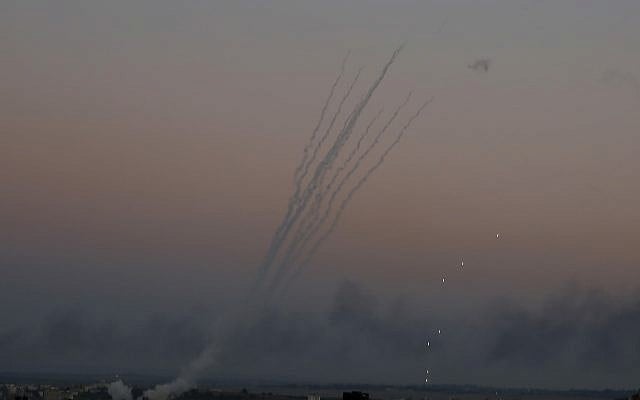
The Iron Dome missile defense system intercepted over 100 of them. Most of the rest landed in open fields, but dozens landed inside Israeli cities and towns, killing one person, injuring dozens more, and causing significant property damage.
In response to the rocket and mortar attacks, the Israeli military says it targeted approximately 160 sites in the Gaza Strip connected to the Hamas and Palestinian Islamic Jihad terror groups, including four facilities that the army designated as “key strategic assets.”
Egyptian intelligence officials, United Nations Special Envoy to the Middle East Peace Process Nickolay Mladenov, and other third-party mediators had scrambled to broker a ceasefire between the two sides.
According to the IDF, the barrage of more than 460 rockets and mortars lobbed at southern Israel began shortly after 4:30 p.m. Monday when Palestinian terrorists fired a Kornet anti-tank guided missile at a bus near the border, severely injuring an Israeli soldier on board.
The anti-tank missile attack occurred less than a day after an IDF special operations officer was killed in an operation in Gaza gone awry that also killed seven Palestinian gunmen. Following the clashes, Hamas said “the blood of our righteous martyrs will not be wasted.”
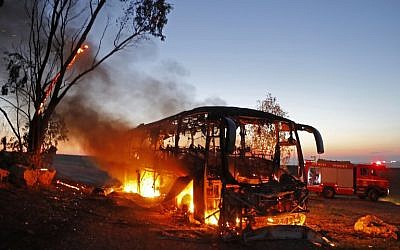
Dozens of incoming rockets and mortars exploded inside cities and towns throughout southern Israel, several of them directly hitting homes and apartment buildings in Ashkelon, Netivot, and Sderot.
One man was killed in one of those direct hits in Ashkelon. He was later identified as a 48-year-old Palestinian man from Hebron, Mahmoud Abu Asbah, who was living in Israel with a legal work permit.
According to medical officials, 27 other people were injured in attacks, including the soldier hit in the anti-tank missile attack and two women wounded in direct hits on apartment buildings in Ashkelon. A man in his 40s was also moderately wounded by shrapnel, medics said.
In Gaza, seven Palestinians — at least five of them later claimed by terrorist groups as members — were reportedly killed in the IDF’s raids on Monday and Tuesday, apparently in airstrikes on rocket-launching cells.
Judah Ari Gross contributed to this report.






The Times of Israel Community.