

Was Henri Matisse’s sojourn in Vichy France de facto collaboration or quiet resistance?
In his new book ‘Matisse at War,’ Christopher C. Gorham explores the renowned artist’s troubled but prolific life under the Nazis during WWII, and his family’s role in the French underground
 Add ToI as a Preferred Source on Google
Reporter at The Times of Israel
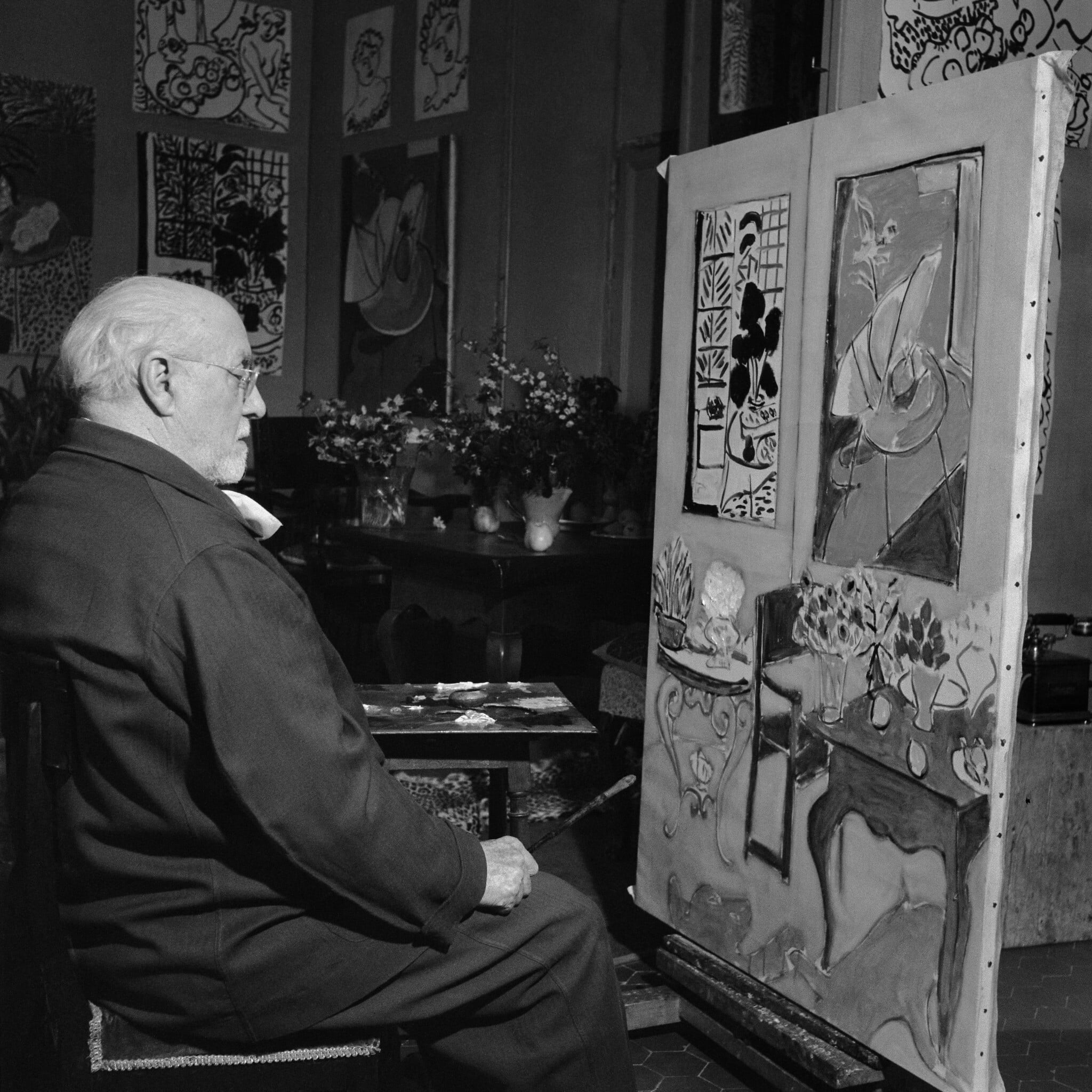
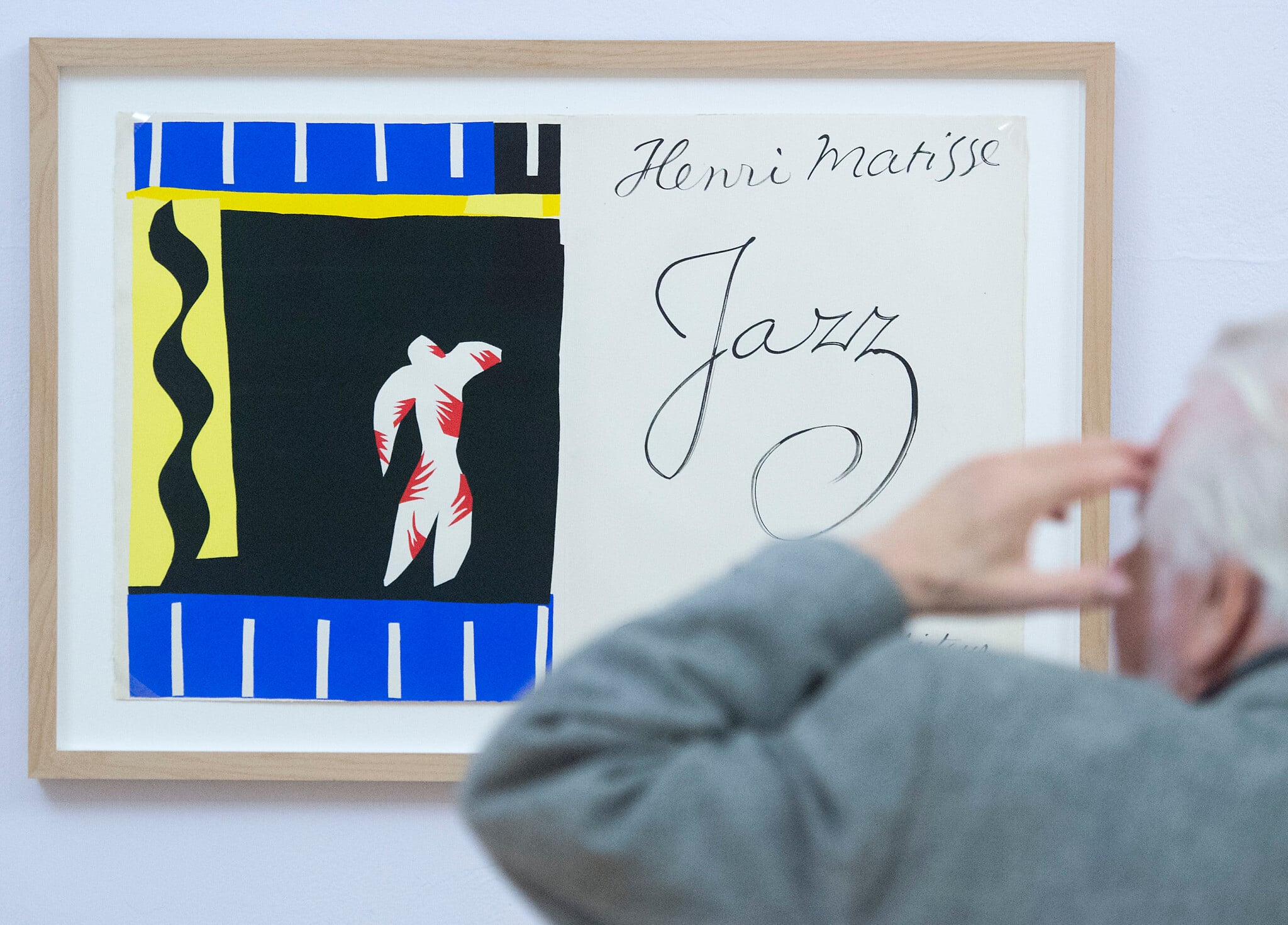
In 1947, the celebrated French artist Henri Matisse released a bound series of 20 prints collectively titled “Jazz.” The haunting, brightly colored prints were of collages Matisse made from shapes he cut out from sheets of paper.
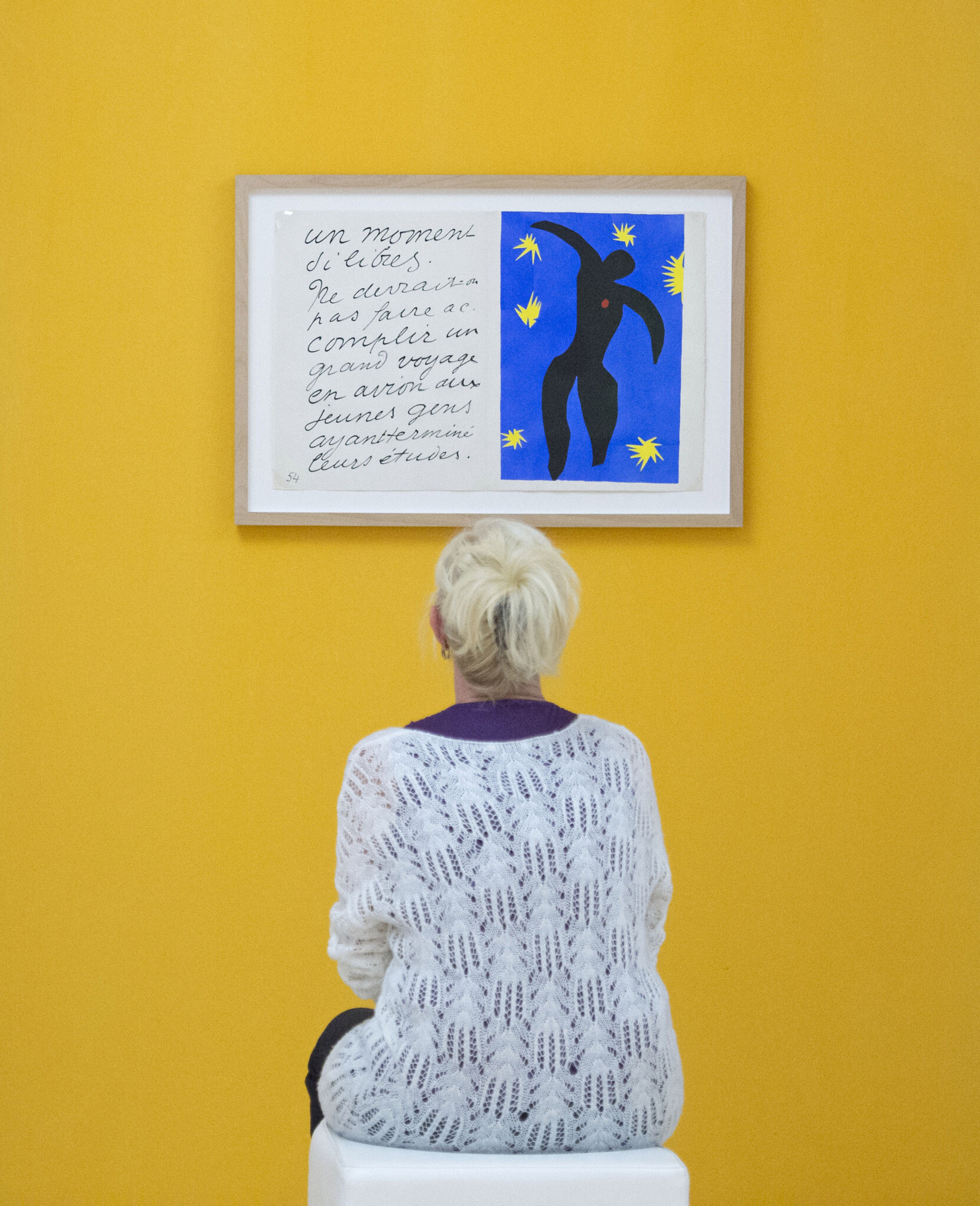
Begun in 1943, the artworks lent themselves to comparisons with what France had endured in World War II. The Surrealist poet Louis Aragon found one image particularly compelling: “The Fall of Icarus.” Named after the ill-fated flyer of Greek mythology, “The Fall of Icarus” depicts a black figure, a single red dot on its chest, careening through a blue space interspersed with yellow star-like shapes. To Aragon, these yellow shapes were not stars but German shells exploding in the nighttime sky over occupied France in 1943.
What led Matisse to create such a work? Was it the turmoil of his outer and inner life under the Nazis? The occupation he endured, the secrets he may have kept? These are the questions at the center of “Matisse at War: Art and Resistance in Nazi Occupied France,” a new book by author Christopher C. Gorham.
During the war, the painter “becomes a beacon to the French people, the young people,” Gorham said. “This elderly and ill artist continued to create during the destruction all around him.”
All three of his children aided the French Resistance in some way, explained Gorham: Daughter Marguerite Duthuit-Matisse would be captured, tortured and imprisoned for her clandestine work.
Matisse himself had not tried to leave his country after the Fall of France. Rather, he relocated to the southeastern, Vichy-controlled part, first to Nice, then to Vence. His once-praised artworks were now calumnied by the Nazis as “degenerate art” and hustled out of public view — and sometimes into the hands of Third Reich thieves.
Yet the painter kept creating — and might even have sheltered refugees in one of his studios.
There are sweet accounts of Matisse’s creativity throughout the book. While in Nice, Matisse hired a Frenchwoman named Monique Bourgeois as a night nurse. They formed a bond, with the artist portraying her in his paintings, until their paths diverged.
“Matisse was a terrible insomniac,” Gorham said. “She helps him get some sleep. Every day, he would wake up with the sun, paint, create.” One day, “she tells her patron, ‘I’ve decided to take my vows and become a nun.’ Matisse, by this time, has grown very fond of her … The relationship goes into a kind of disagreeable period. Matisse is not in favor of what she’s doing, and she criticizes him for not being religious enough.”
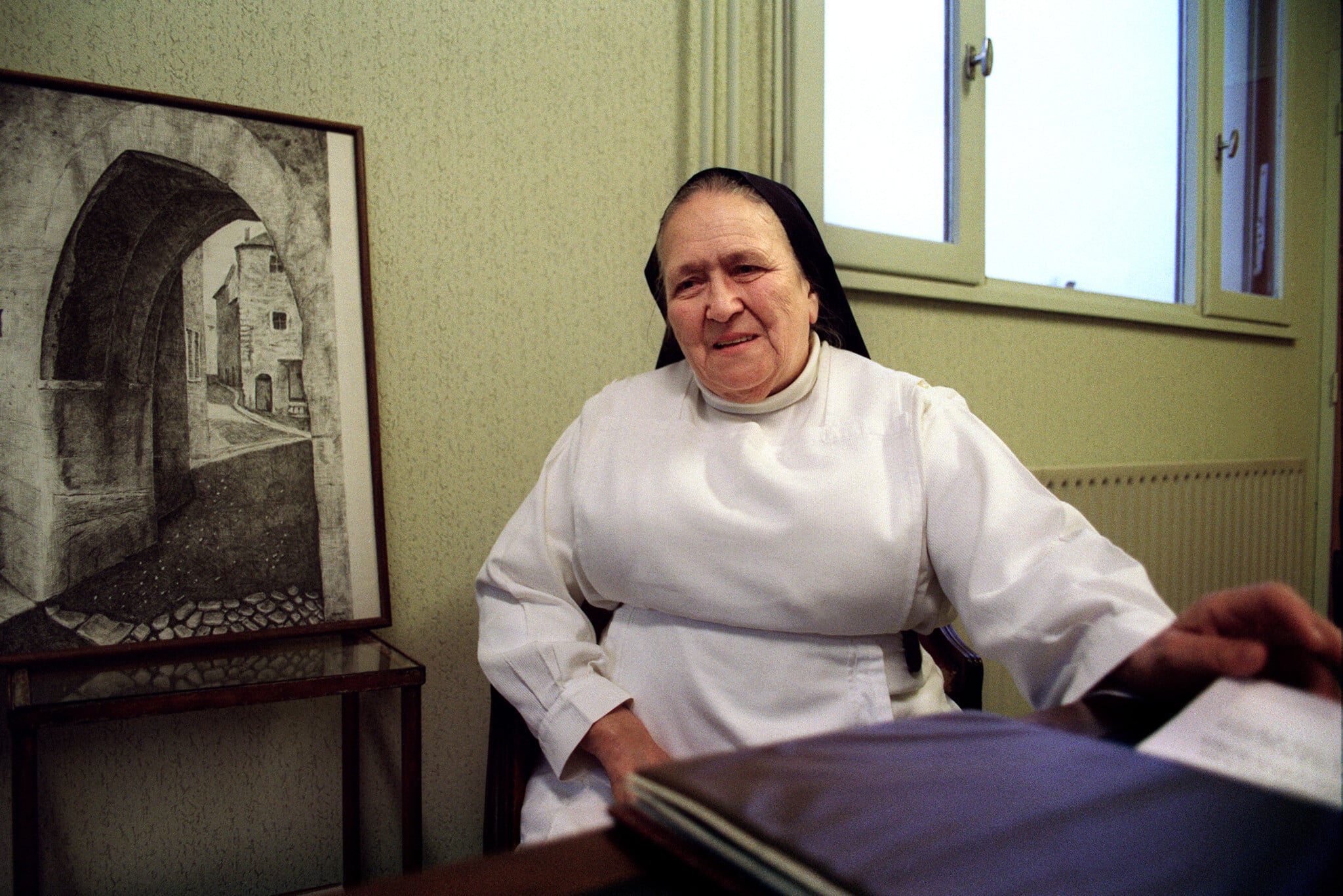
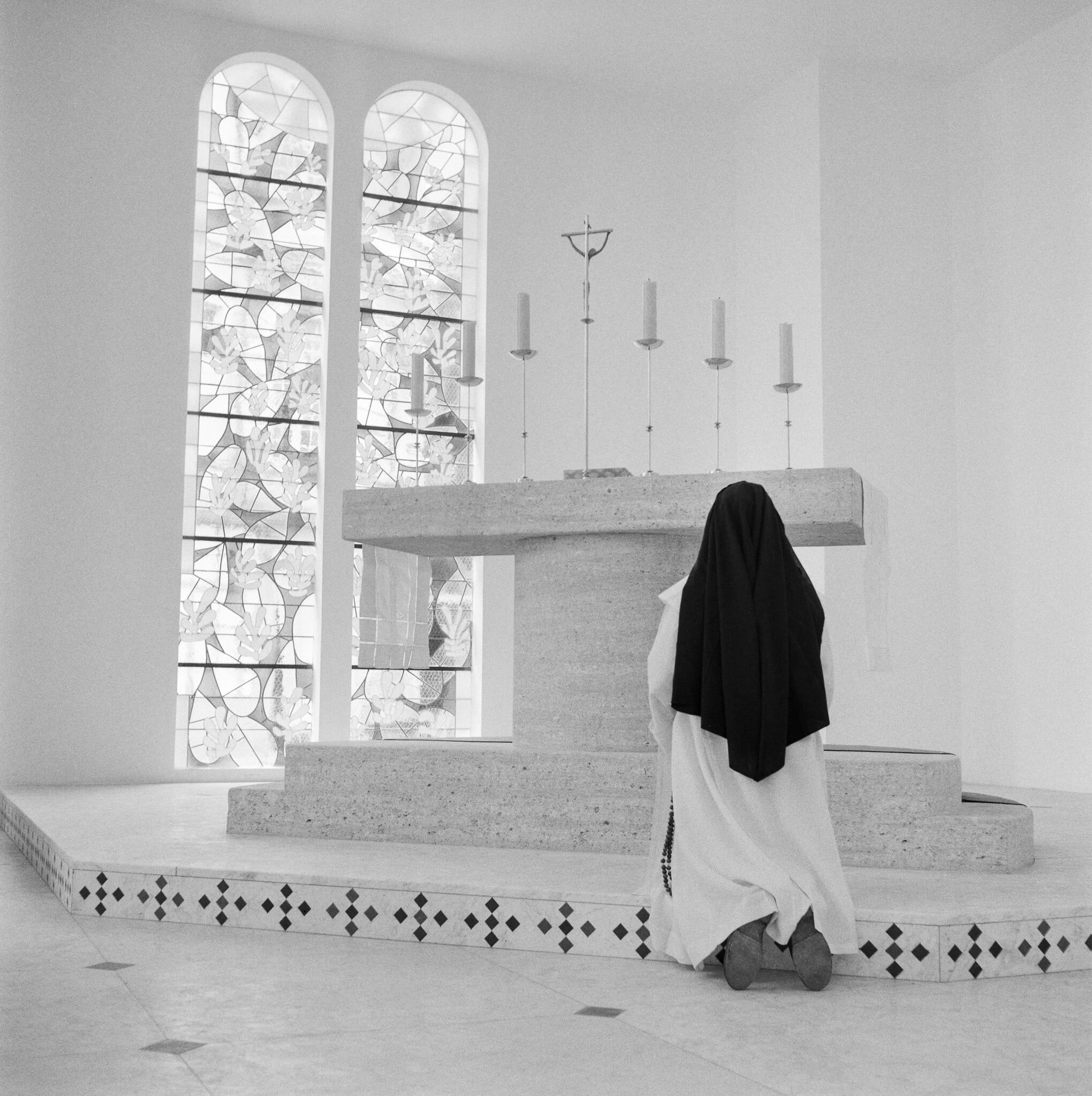
It all turned out well for Matisse and the future Sister Jacques-Marie. In 1947, the same year “Jazz” was published, the nun asked Matisse if he would design a stained-glass window for her. He instead offered to create an entire chapel, which he did, over several years. Located near Nice, the Chapelle du Rosaire de Vence was consecrated in 1951.
“It’s a very moving place to be,” Gorham said, “whether you’re religious or not, whatever religion you choose to practice, a very moving testament to human creativity.”
Matisse not only survived the war, defying a doctor’s diagnosis, but he lived for nearly a decade after it ended. Upon his death in 1954, his friend and rival Pablo Picasso — arguably the other greatest artist of the era — keenly felt the loss.
“A quote attributed to both of them is, ‘When one of us goes, there will be nobody for me to talk about these things with,’” Gorham said. “It was the rarest of human languages, only two people … Only they could have these discussions. It was a very, very moving sentiment they shared with each other.”
When one plus one doesn’t add up
Gorham is in the self-described third act of his career. Based near Boston, Massachusetts, he’s a lawyer turned high school history teacher turned author. Job one imbued him with research skills, job two showed him how to be a good storyteller. It turns out you need both abilities for job three, which is writing historical nonfiction for a lay audience.
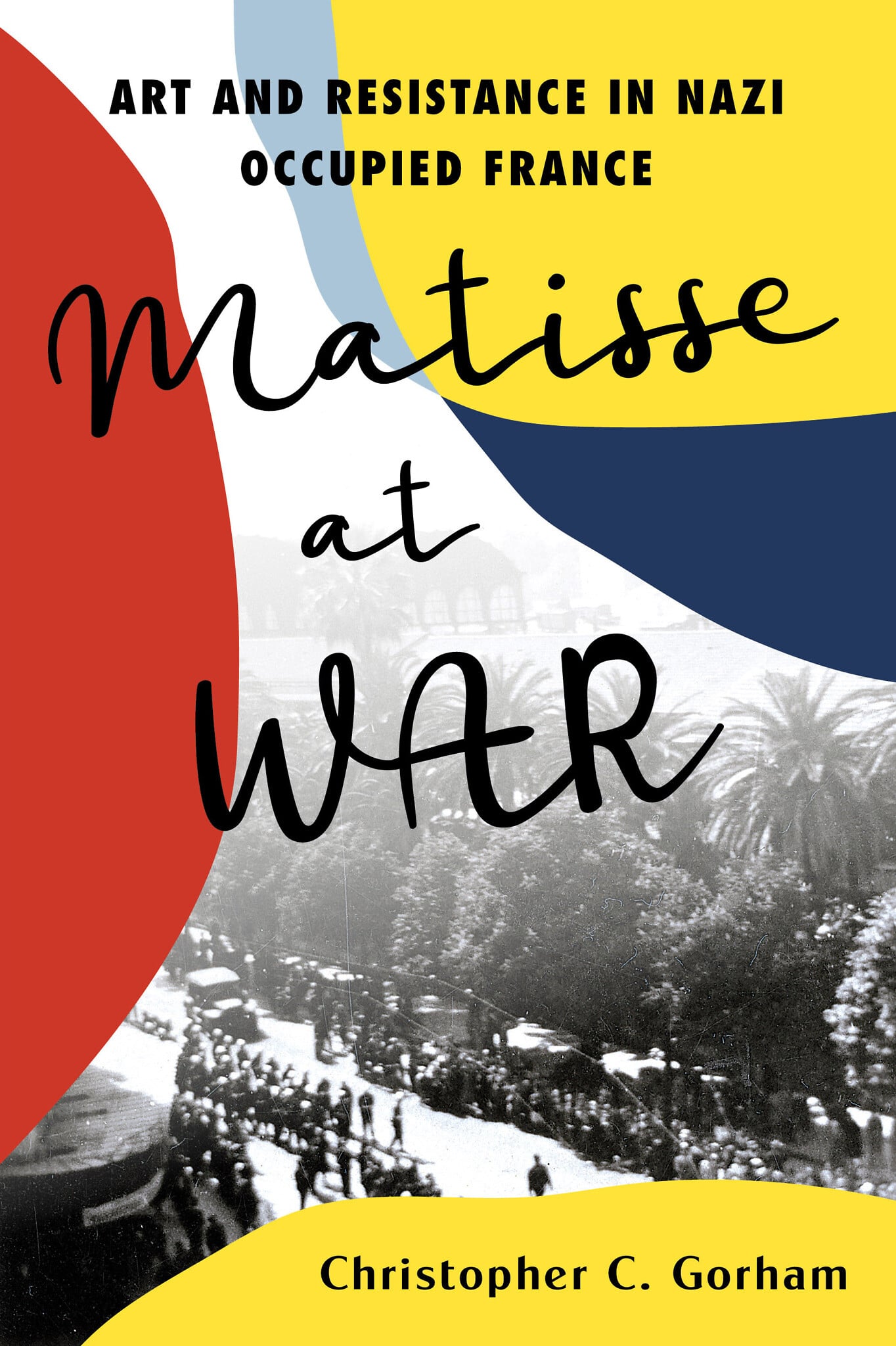
“Matisse at War,” his second book, is drawing critical praise and appearances at events such as last year’s Boston Book Festival.
The author has made about 20 trips to Nice since he and his wife were married nearby. At least in part, he intended this book to defend Matisse’s conduct during WWII, including against claims of acceptance of Vichy rule.
“I always knew Matisse’s daughter was active in the French Resistance,” Gorham said. “How is it possible that the father could be virtually a collaborator and the daughter, at the same time, would be risking her life to defend her country from the invader?”
Matisse’s three children — Marguerite, Jean and Pierre — and his estranged wife Amelie all played roles in the Resistance. Marguerite had her own code name, a file in the French government archives, and a miraculous escape from deportation to the Ravensbrück concentration camp. Pierre, based in New York, helped Jewish refugee artists start over in the United States, including Marc Chagall.
“All three of the children and the estranged wife, all were an active part of resisting tyranny during those dark days,” Gorham said.

So was Matisse’s grandson Pierre Henri Matisse: From Antibes, he and his father, Jean, aided British intelligence. Then, in 1944, Pierre H. went to Normandy to stay with his other set of grandparents. Arriving in the aftermath of the D-Day landings, he promptly began printing counterfeit passes.
“If caught by the Germans doing something like that, it could lead to punishment, including death,” Gorham said.
What about Matisse himself? How much did he know about his family’s clandestine work?
“There are clues he might have had an inkling,” Gorham said. “The allowance he gives to Marguerite … goes up and up and up over the war. There are a couple of comments in his letters — he’s anxious over the whereabouts of his children, he has not heard from Marguerite or Jean.”
Rooted in resistance?
Gorham considers Matisse’s decision not to leave France as a quiet act of resistance.
“His son Pierre says, ‘Father, you aren’t well physically, you’re 70 years old, there’s a teaching post for you in San Francisco,’” Gorham said. “There was a visa to Rio de Janeiro he could have used any time. On two occasions, Varian Fry, an [American] agent sent to Europe to find artists [to rescue], twice asked him to reconsider. To each opportunity, he said no. He likened it to desertion.”
There were some who found inspiration in Matisse staying in France, including the Surrealist poet Aragon, who was part of the Resistance.
“[Aragon] goes to Nice to visit the venerated old French Modernist,” Gorham said. “He says, we have to accept the national reality of Matisse, he was France. You do not have to be a sloganeer or bomb-thrower to give sustenance to those who wanted to resist.”
There’s a chance that Matisse may have participated in a more active form of resistance.
“He himself made a very, very notable remark to one of Varian Fry’s men,” Gorham said, dating the remark to 1941. “Matisse said he had harbored refugees in one of his studios. It’s straight from Matisse’s mouth.”
For French Jews, Nice offered an initial opportunity but a subsequent tragedy.
From June 1940 to November 1942, under the somewhat benign control of Italy, “It was an island of relative normalcy, the only place in Nazi Europe where Jews did not have to wear the yellow star,” Gorham said. “Their lives were relatively normal. Tragically, it came to an end when the Allies invaded North Africa.”
As he explained, after the Torch landings of 1943, part of the German response was to take over Nice from Italy and install the notorious Alois Brunner, an SS official whose war crimes included deporting over 128,000 Jews across Europe to almost certain death.
A memorial in Nice is dedicated to the 3,485 Jews deported during the war.
“It’s very sad, a terrible story,” Gorham said.
By 1944, the Nazi occupiers’ days in France were numbered. Yet they were still capable of acts of cruelty. That April, the Gestapo ensnared members of the French Resistance — including Matisse’s daughter Marguerite, who was subjected to torture but bravely withstood it.
“She was denounced by some traitor and given up to the Gestapo, who arrested her and tortured her,” Gorham said. “Marguerite Matisse had been told, ‘If you’re caught, you need to withstand these torture episodes to give us enough time to close up our act. She was schooled in how not to say anything.”
Overall, Gorham reflected, “It was very moving to research, very moving to write.”










The Times of Israel Community.