

Bennett says Israel missed chance offered by Trump election
Two-state solution has failed, says Jewish Home leader, but we can’t expect US policy to change ‘if we continue with that mantra’
 Add ToI as a Preferred Source on Google
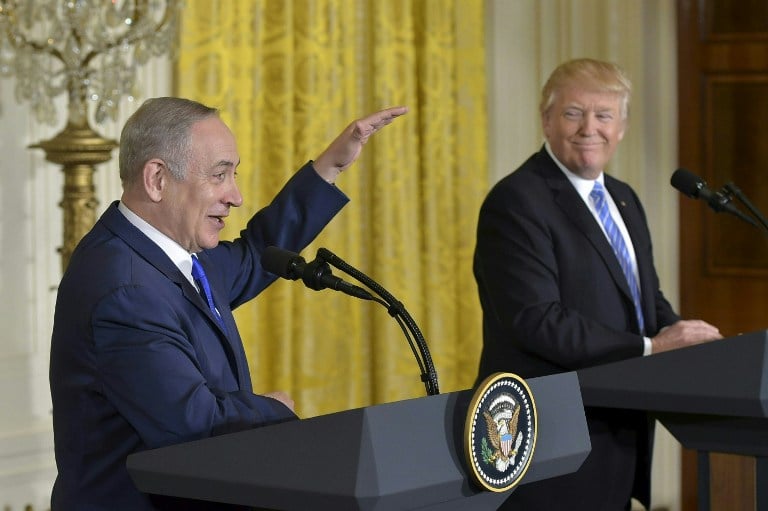
Jewish Home leader Naftali Bennett on Monday launched fresh criticism of Prime Minister Benjamin Netanyahu, saying that he failed to take advantage of the election of US President Donald Trump in order to change the narrative of the conflict between Israel and the Palestinians.
Bennett, who proposes annexing large parts of the West Bank, said Israel needs to get away from the idea of establishing a Palestinian state alongside Israel as prescribed in the Oslo agreements signed in the 1990s.
“The Oslo plan didn’t work,” the education minister told Army Radio on Monday. “We have the most Zionist president in years and we missed our chance.”
Bennett comments followed the government’s announcement on Friday of some self-imposed limits on settlement construction, restricting new building in most cases to areas already inside the settlements’ existing boundaries. No limits have been placed on the numbers of homes that can be built.
Bennett said that the process which began with the Oslo accords of recognizing the PLO and giving territory to the Palestinians has not led to peace. Every time that Israel conceded territory, be it in the West Bank or in Gaza, it has led to war, intifada and terror, he claimed.
“There are alternatives,” said Bennett, who heads the pro-settlement Jewish Home party in Netanyahu’s coalition. “We can’t expect Trump to reject the two-state solution if we continue with that mantra.”
Trump himself said in February that he is not committed to any particular solution, but favors whatever the Israelis and Palestinians view as the best way forward. Others in his administration have indicated that it backs a two-state solution, however.
A member of the security cabinet who voted for the new building limits, Bennett said his objections were to the government’s overall direction.
“I accept the new policy of building, as long as we follow through with it,” he told Army Radio. “A policy which says we can build without limits on numbers is acceptable to me.”
Likud’s Deputy Foreign Minister Tzipi Hotovely and Yehuda Glick both accused Bennett of hypocrisy.

“I’m shocked by Bennett’s behavior,” said Hotovely. “He is attacking decisions he himself voted for.”
She also claimed that he had no business using social media to attack the government. “If it were me I would say my opinions in the cabinet meeting rather than on Twitter,” she told Israel Radio.
Bennett first made his accusations on Twitter on Sunday night.
Glick also expressed his dismay at Bennett’s behavior.
“I cannot figure Naftali Bennett out,” he tweeted. “He attacks Netanyahu’s historical failure on every media channel after a cabinet decision that Mr Bennett himself voted for!”

Bennett refuted claims that his statements were intended solely to drum up support before his party’s primaries. “”I am very stubborn,” he said. “I state my mind before elections, during elections and after elections.”
After approving a new settlement for the evacuees of the Amona outpost, the Prime Minister’s Office said overnight Thursday-Friday any future construction would be limited to existing settlement boundaries or adjacent to them.
However, if legal, security or topographical limitations do not allow adherence to those guidelines, new homes will be built outside the current settlement boundaries but as close as possible to them.
Israel will also prevent the construction of any new illegal outposts, Netanyahu told his ministers.
The White House on Friday welcomed the new policy.
Notwithstanding the Israeli unilateral steps to curry favor with the US, Israel Radio reported Sunday that the negotiations between Israel and the US over settlement construction were put on hold on Sunday morning after Netanyahu and Jason Greenblatt — Trump’s special envoy — and working groups on both sides failed to reach understandings on the issue.
However, the White House said later Sunday that it is not holding “formal negotiations” with Israel over the settlements. “I would dissuade you from the notion that there is some set of formal negotiations regarding settlements,” an administration official told The Times of Israel. “We continuously discuss a range of issues, including how to improve the overall climate.”








The Times of Israel Community.