

Final fight over Amona synagogue looms as evacuation nears end
Dozens barricaded inside outpost’s largest building, with only a few homes remaining to be cleared out; police say they will continue to work slowly to avoid stoking tensions
 Add ToI as a Preferred Source on Google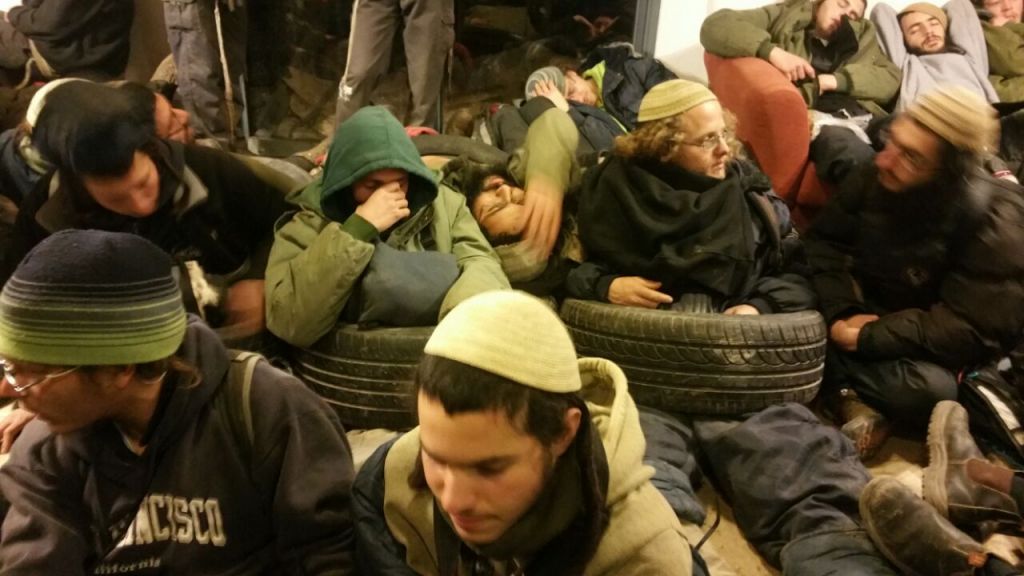
AMONA, West Bank — Police and protesters girded for a final battle over the synagogue in the Amona outpost as night settled over the West Bank on Wednesday, wrapping up a day that saw much of the illegal settlement outpost cleared out amid low level clashes and high emotions.
Just a few homes remained to be evacuated as of 11 p.m. Wednesday night, and over 400 protesters had been forcibly removed from the hilltop enclave, police said as they neared the end of the operations.
Throughout the day, police clashed with protesters and pulled tearful settlers from their homes, carrying out a court order to clear the outpost found to be built on private Palestinian land, ending decades of legal battles and political fighting over the settlement’s fate.
Between 60 and 100 protesters were thought to be holed up inside the synagogue, setting a final showdown in the outpost, which was the scene of a violent melee during a partial evacuation in 2006.
In contrast, Wednesday saw only low-level clashes, with protesters hurling stones, bottles and bleach at police and most others resisting the eviction order only passively. However, emotions ran sky-high, with protesters and evacuees yelling at officers or pleading with them to refuse the orders.
One border police officer at the scene said he would not take part in the evacuation. He was led away by a colleague as a protester ran alongside, praising him.
“This is a dark day for us, for Zionism, for the state and for the great vision of the Jewish people returning to its homeland,” Avichay Boaron, a spokesman for Amona, told Channel 2 TV.
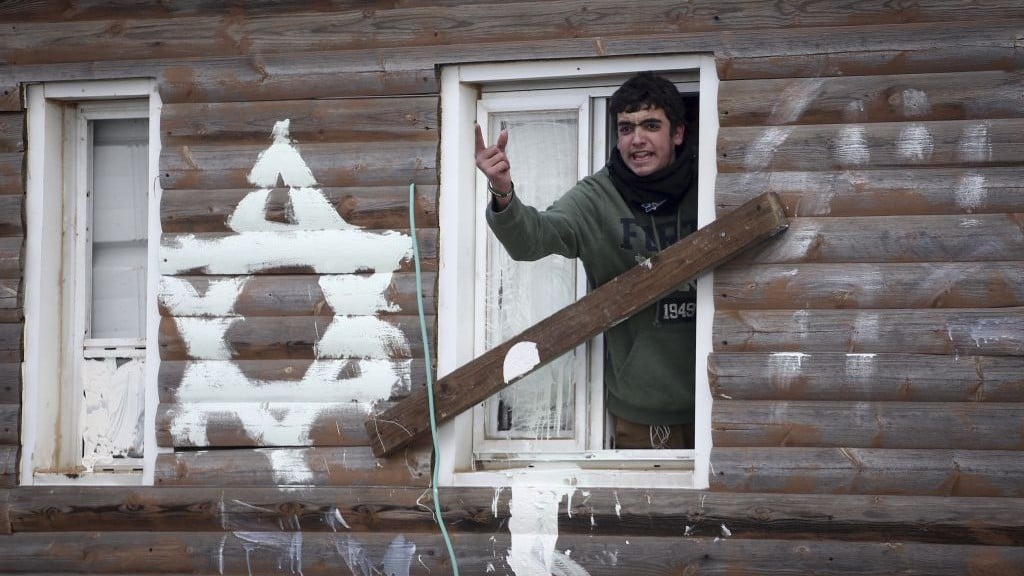
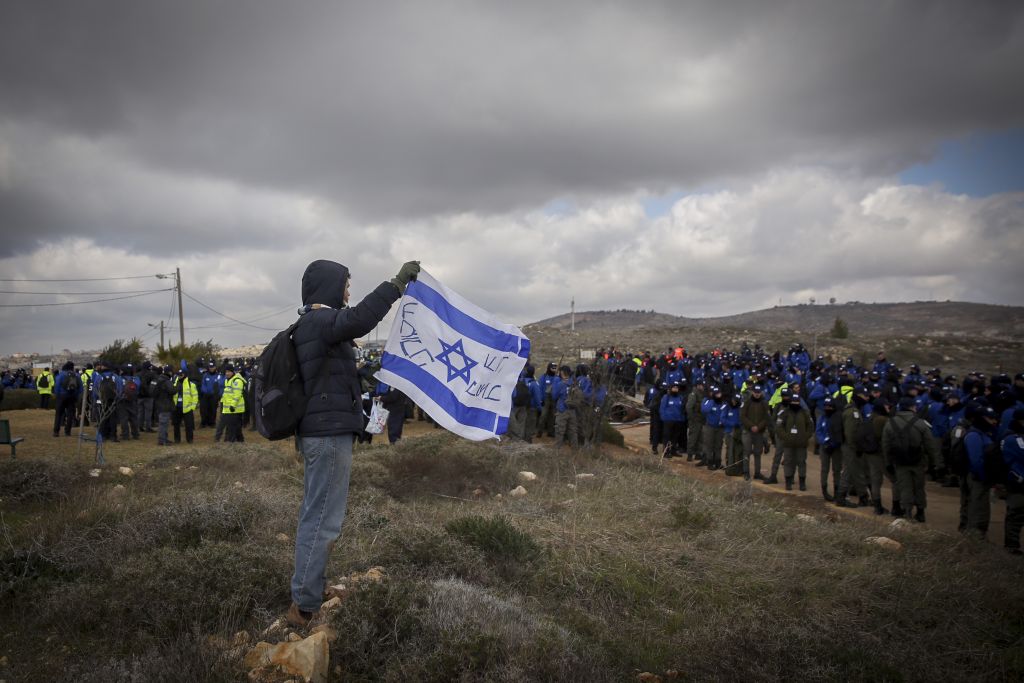
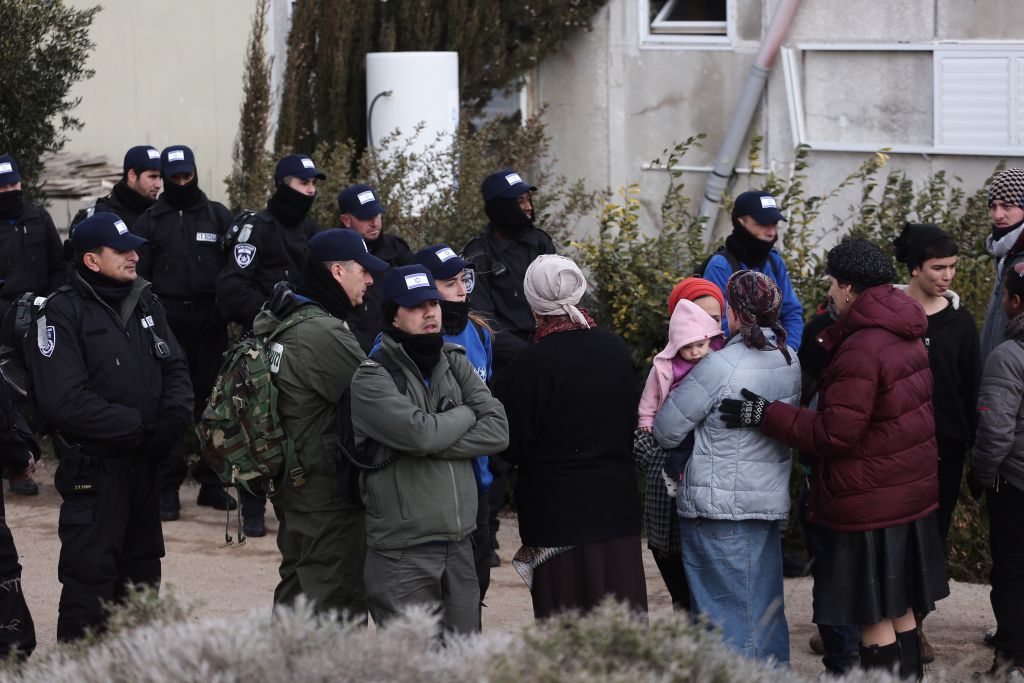
Unarmed police in blue sweatshirts and black baseball caps made their way up the hill around midday. On the hilltop, home to some 40 families, hundreds of nationalist youths erected makeshift barricades out of smashed tiles, rusty metal bars and large rocks to slow their advance. Some protesters threw rocks at security forces, while others set fire to tires and trash piles.
Twenty-four police personnel sustained light injuries in the fighting, and several protesters were also hurt.
Thirteen people were arrested for disturbing the peace and obstructing police work, while some 400 protesters were simply led by officers off the hilltop with no charges, police said.
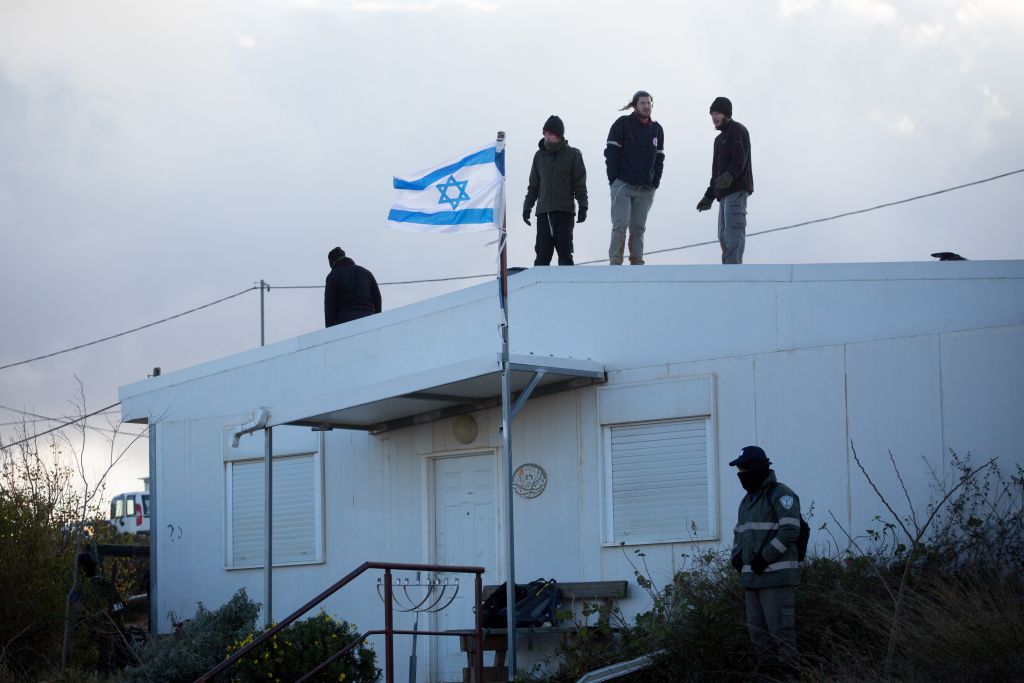
About 3,000 security personnel were deployed to the operation; about 1,000 people — residents and their supporters — were estimated to be at Amona when the evictions began.
Police said they planned to work through the night to clear out the remaining homes and protesters.
A police spokesperson said officers would continue to work slowly and methodically to avoid stoking tensions, even as temperatures dipped below freezing after the sun went down.
“There’s no deadline for the evacuation. It’ll end when it needs to end. We don’t want to go into time pressures,” police spokesperson Meirav Lapidot told Channel 2 news.
With most homes cleared out and many protesters bussed away by 10 p.m., only a few nationalist youth remained milling around the freezing hilltop as police continued their work.
In contrast to the fires set as police moved in Wednesday morning, flames were now employed in the service of keeping those still on the hilltop warm.
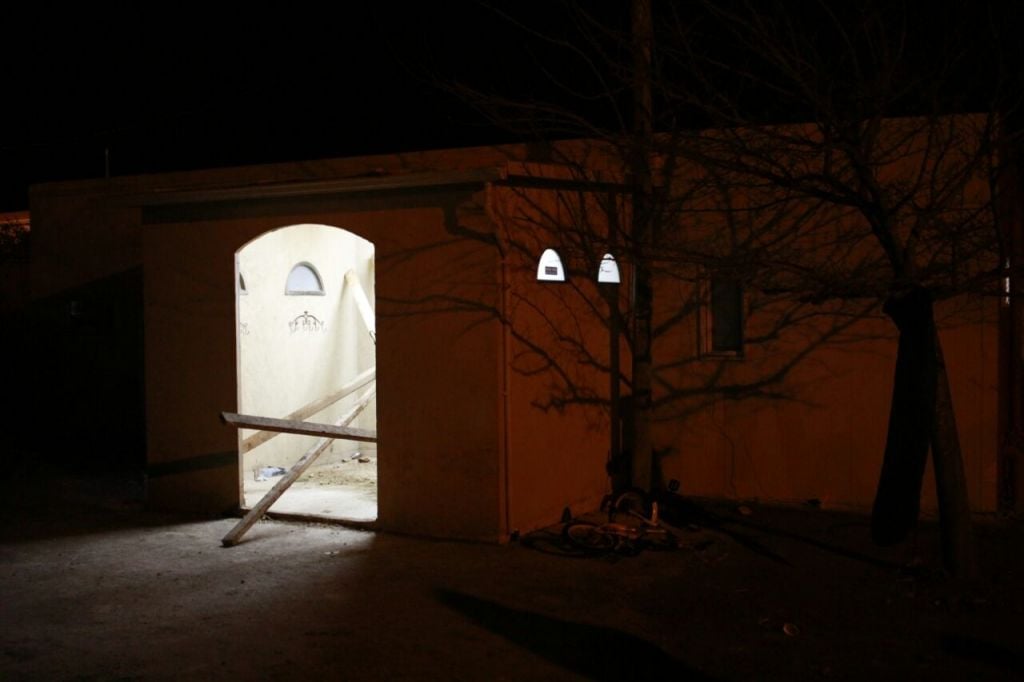
It was not clear when police would move to begin evacuating the synagogue, the largest permanent structure in the outpost, and a particularly sensitive site given its religious nature. Protesters barricaded the entrance to the building with wooden planks in an apparent effort to slow the security forces.
Earlier, two Torah scrolls were seen being removed from the outpost along with a carful of women who had chosen to leave of their own volition.
The women were part of about a dozen families who chose not to resist the eviction notice during the afternoon. However, a police officer remarked that while they were leaving without force, “at this point, no one is leaving here willingly.”
Standing in the street with tears in her eyes, Ayelet Vidal, one of the residents who left on her own, said she didn’t know where she would go.
“Until the last moment I didn’t think this would happen,” she told Channel 2 news.
However, Prime Minister Benjamin Netanyahu announced Wednesday night that he had ordered the creation of a new settlement to replace Amona, the first official new Israeli community in the West Bank in some 25 years.
The announcement came hours after the High Court struck down an agreement for most of the settlers to move to an adjacent plot of land, after the land’s owner came forward.
The deal, struck last month, staved off an earlier evacuation that had also threatened to be met by violence.
As the army began to prep for the evacuation operation Tuesday night, protest organizers had told supporters to make their job as difficult and long as possible, and that message was apparently taken to heart.
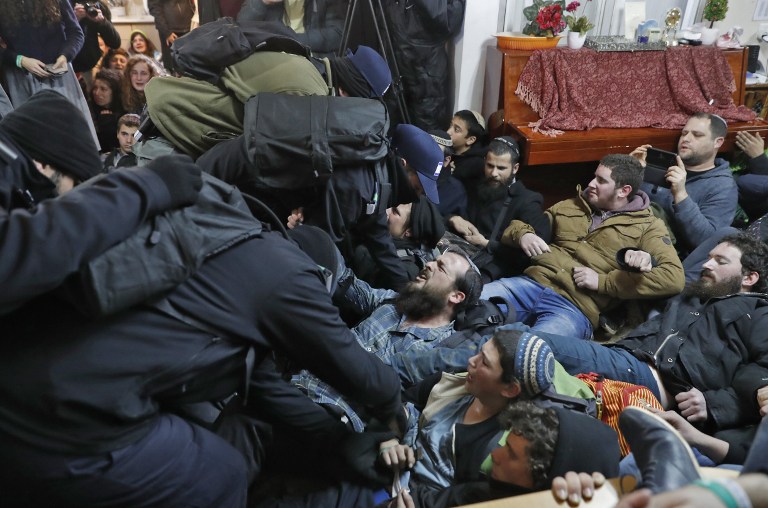
Hundreds of protesters, most of them religious teenage boys, but also a number of right-wing lawmakers who had flocked to the outpost ahead of the evacuation, locked themselves inside houses and sheds. At one home, several dozen young residents and supporters linked arms, sat on the floor and sang songs, including the national anthem, when police came to remove them.
When removed from Amona, some of the protesters were taken away by bus and set down at bus stations on Road 443 near Jerusalem, Channel 2 reported.
Bilha Schwarts, 24, came along with her husband and nine-month-old daughter to support the residents. “If they want it they can take it, we will not fight. We will leave but we will come back,” she told The Associated Press.
Officers injured by bleach
A small police force had been in place on the road leading up to the outpost throughout Tuesday. At approximately 8 a.m. Wednesday, they were joined by nearly 20 buses full of additional officers, along with police vans, cruisers and two ambulances.
As the hundreds of police officers disembarked from their vehicles, they were met by jeers — and some rocks — from the hundreds of protesters gathered on the hilltop.
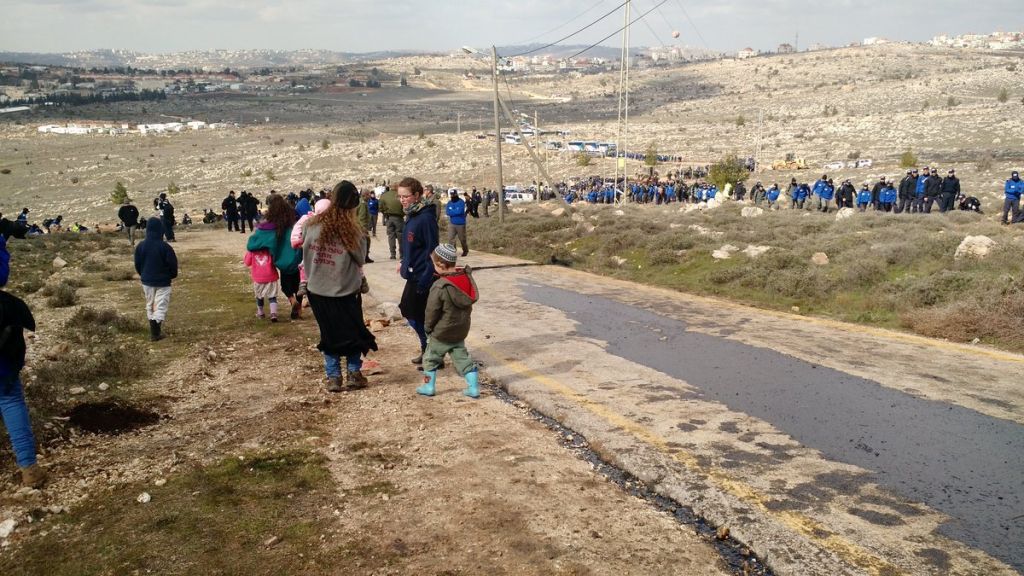
Just after 11, the officers — a mix of Border Police and Israel Police — made their way up the hill in two straight lines, trekking alongside the road, as the street itself had been slicked with oil and was littered with rocks and caltrops.
The police moved methodically, setting up at the entrance to the outpost, before moving in those two lines deeper and deeper into the settlement.
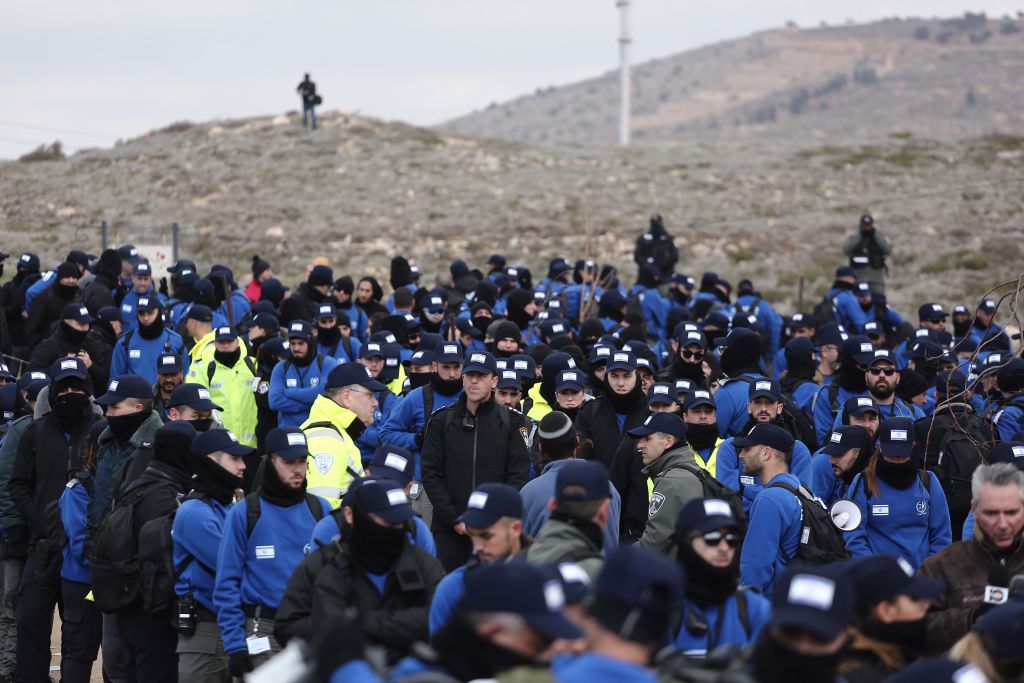
As they approached the settlement’s houses, protesters pushed back against the approaching police lines. Small scuffles broke out, with demonstrators shouting at the officers to “be ashamed of themselves” and to not obey the evacuation order. Bleach and paint were also thrown at the officers.
The protesters screamed that the officers were “enemies of Israel” and “traitors.”
“Why are you doing this? For a salary? It’s not worth it,” one protester told an officer.
At this stage, one Border Police officer determined he could not carry out the evacuation order and left the area, flanked by other officers.
The protesters cheered the border guard, chanting “Hero! Hero!” and hugging him as he left.
Slowly, the police pushed back against the protesters and made their way to the far end of the outpost and set to work on the actual evacuation.
A dozen officers would surround an individual house or trailer. Once given the go-ahead, they would break open doors and windows that had been sealed shut.
One by one, the officers removed the protesters. Some emerged on foot, while others were carried out forcibly.
Tears were shed, by the protesters themselves, and by the predominantly older settlers who were watching the events but not taking part themselves.
During this evacuation stage, there were relatively few violent incidents, as organizers encouraged protesters not to resist or lash out at the police.
After the officers removed from the protesters from the homes, they took them aside, giving them water and speaking with them calmly.
The protesters were then led to buses and driven away from Amona.
‘We lost the battle’
On Tuesday residents were given eviction notices, warning them to be out of their homes within 48 hours. The order allowed residents to file a new appeal to the IDF for a further 48-hour extension. Nevertheless, police began the evacuations a day later.
After over a decade of delays and legal wrangling, the High Court ruled in December 2014 that Amona, which lies east of Ramallah, was built on private Palestinian land and must be demolished. Nine homes in the adjacent Ofra settlement were also due to be demolished.
The eviction came ahead of the final February 8 deadline to demolish the outpost.
Yesh Din, the Israeli legal rights group that represented the Palestinian landowners in court, welcomed the evacuation. In a Facebook post, it said the landowners are “waiting to return.”
“Our feeling is indescribable,” said Abdel-Rahman Saleh, the mayor of the nearby Palestinian town of Silwad, who assisted the landowners in building their case. “We struggled for 20 years to get our land back.”
Shortly after the notices were given, troops began blocking off roads leading to the outpost, in a bid to keep supporters seeking to thwart the eviction order from reaching the hilltop.
Ahead of the evacuation, parents sent their children down the hill toward the adjacent Ofra settlement so that they wouldn’t be involved in the expected confrontations.
Agriculture Minister Uri Ariel joined fellow Jewish Home lawmakers Bezalel Smotrich and Shuli Muallem-Refaeli in Amona, along with Likud’s Oren Hazan.
Speaking at a Knesset debate on Wednesday, Jewish Home leader and Education Minister Naftali Bennett called the residents of Amona “heroes” and hailed their determination to remain steadfast on the windy hilltop, defying harsh conditions in their struggle to settle the Land of Israel even after it emerged that their outpost was built on private Palestinian land.
“We fought a hard fight but we were confronted with a final court order by the High Court of Justice. We came to Amona and looked the residents in the eye. We knew that we were embarking on a struggle against all odds, but we didn’t give up. Together with the residents, we turned over every stone, we explored all possibilities and exhausted all ways to save Amona,” Bennett said. “To our regret, the struggle over Amona was not successful. We lost the battle, but we will in the war over the Land of Israel.”
In a deal struck last month with the government, the outpost residents agreed to move peacefully to an adjacent plot. But the deal was complicated after a Palestinian claimed ownership of the nearby hilltop, prompting the High Court to order a stop to all work on the site. A ruling on the matter was expected from the court on Wednesday.
As part of preparation for the impending eviction, residents of Amona handed over to authorities a bag containing nonlethal weapons, police said. The bag contained stun grenades and flares, according to a police statement.
Police called on residents “to continue to show responsibility so that the court order can be carried out appropriately and to prevent the eviction turning violent.”
“This is a hard and sad day for the people of Israel,” Public Security Minister Gilad Erdan said ahead of the evacuation.
“Despite the difficulty and the pain, I call on everyone who is still on the mountain – let the police do their job,” he said in the statement, adding that he also calls on Knesset members and public leaders to avoid statements that could “exacerbate the situation.”
Erdan says he expected the police to bring to justice anyone who acts violently.
Ashkenazi Chief Rabbi David Lau called on Amona residents and those who have joined them to refrain from violence against security forces.
“Evacuating a settlement and those living there arouses pain and sadness but we have an obligation to respect the law and not to use any violence towards anyone,” he said. “Everyone should act in accordance to Jewish law.”
Residents of the neighboring Ofra settlement announced that Thursday would be a “public fast day.”
The fast — a Jewish sign of mourning — is being called “over the destruction of houses and communities in the Land of Israel, a merciless and unjust [High Court] ruling, and the wantonness of elected officials.”
The Associated Press contributed to this report.








The Times of Israel Community.