

Liberman jabs at MKs for ‘attacking soldiers, weakening IDF’
As Knesset returns from recess, defense minister tells lawmakers to direct criticism at him and not officers ‘who are not allowed to respond’
 Add ToI as a Preferred Source on Google
Raoul Wootliff is a former Times of Israel political correspondent and Daily Briefing podcast producer.
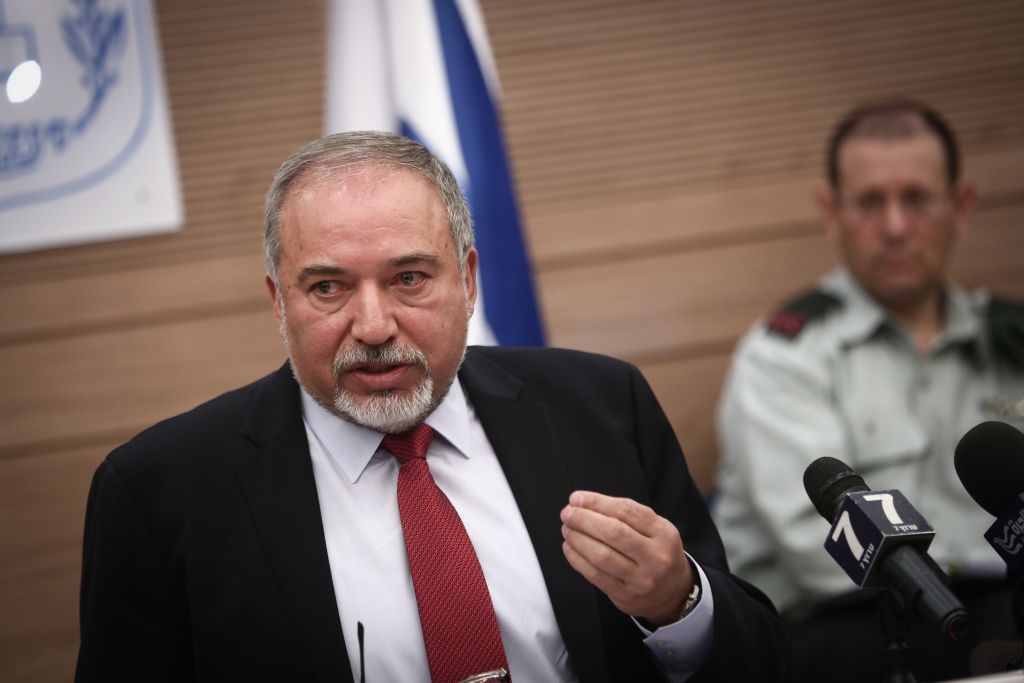
Defense Minister Avigdor Liberman went on the attack Monday against Knesset members who he claimed were “damaging” the army by publicly criticizing the IDF, calling on MKs to direct complaints at him instead.
Speaking at the Knesset Foreign Affairs and Defense Committee, hours before the official opening ceremony of the legislature’s winter session, Liberman said it was unacceptable for lawmakers to question the army or its officers.
“We cannot accept any situation where officers in uniform are a target to be attacked or lashed out against, especially by Knesset members,” Liberman told the committee. “I am not willing to accept this — and it doesn’t matter if you agree with the Coordinator of Government Activities in the Territories or not, or whether you think the Commander of the Central Region made the right decision or not, or any example.”
COGAT is Israel’s administrative body for civil activity in the West Bank.
It was not clear if the defense minister was referring to a specific example of criticism leveled against these positions.
Liberman said that MKs are allowed to “attack the minister or the deputy minister or any one else from the political echelon but not the representatives of the IDF, who are not even allowed to respond.”
“If you have criticism, direct it at the political echelon, attack me, not the army and not the officers,” he said. “The responsibility is on the government and the defense minister. If you have complaints — come to us.”
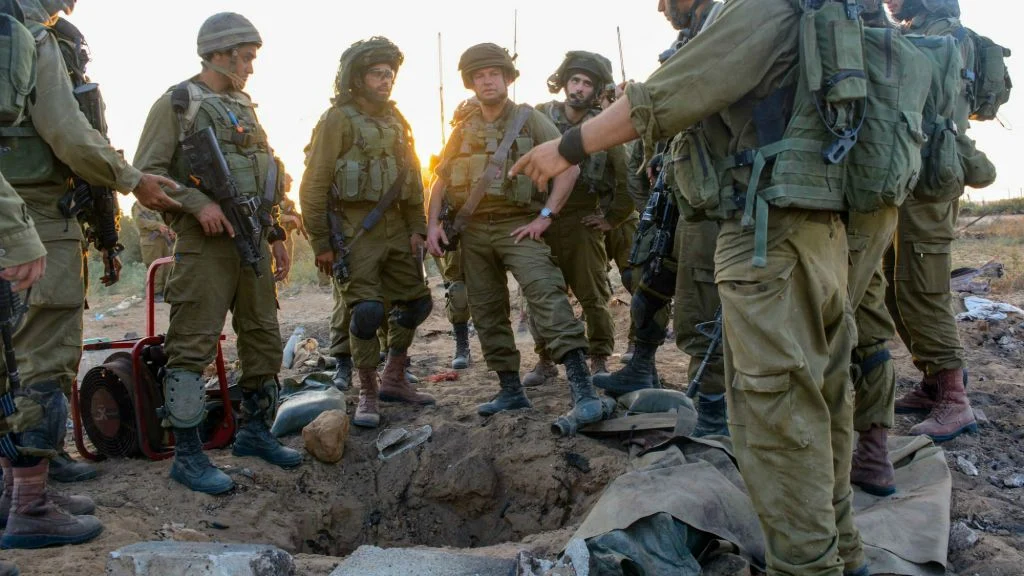
While most of his comments appeared to refer to direct criticism of IDF officers, Liberman also railed against the recent public debate over the army’s readiness for the threat of Hamas attack tunnels during the 2014 Gaza war.
A recently leaked internal IDF report, which was prepared after the war, found that the army was aware tunnels were being used by Hamas but combat units were not prepared sufficiently to deal with the threat, according to Army Radio.
A number of tunnels were used by Hamas fighters to infiltrate Israel and carry out deadly attacks on troops during the Gaza Strip conflict in the summer of 2014. During that campaign, dubbed in Israel “Operation Protective Edge,” Israeli forces discovered and destroyed at least 34 tunnels, many of them leading into Israeli territory.
“The army carried out the instructions of the cabinet and in that case there is also no need to drag the army into an unnecessary political debate,” Liberman told the committee.
He said that recent criticism was part of an effort to damage “the widest common denominator we have in Israeli society — the IDF.”
Liberman’s criticism of his colleagues comes a month after he fired a broadside against the media for what he said was unfair criticism of Sgt. Elor Azaria, an IDF soldier accused of manslaughter for shooting dead a supine, disarmed Palestinian assailant in Hebron in March.
Liberman said then that Israel must support its soldiers under any circumstances, even if their actions prove to be incorrect.
“We should remember, all of us, including members of the media, public figures and politicians, that until you are convicted in court, you are innocent,” he said at the time.
The trial of Azaria has gripped Israel for months, with predominantly right-wing supporters of the soldier calling him a hero while detractors see the shooting as an extrajudicial execution.
Liberman said that attacks against the military itself should be considered out of bounds in the public discourse.





The Times of Israel Community.