

To repair a broken world: The words of Elie Wiesel
The prolific author, scholar and humanitarian, who has died at 87, leaves a legacy of memory
 Add ToI as a Preferred Source on Google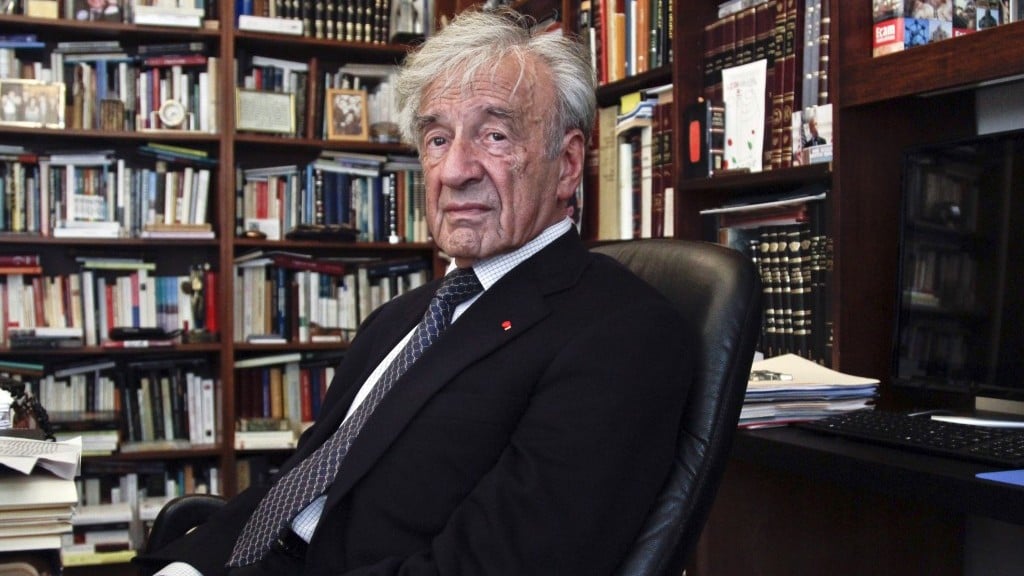
As a witness to the horrors of the Holocaust, author Elie Wiesel said he felt compelled to write. And throughout his dozens of books and articles, and hundreds of speeches and interviews, he disseminated his dark tales as an eyewitness to the genocide that killed some six million of his fellow Jews.
Wiesel explained in several early 1970s dialogues with American Holocaust scholar Harry James Cargas that to him, to be a writer was to fulfill his life’s mission. Their talks were later published in 1976 as “Conversations with Elie Wiesel.”
“True writers want to tell the story simply because they believe they can do something with it — their lives are not fruitless and are not spent in vain. True listeners want to listen to stories to enrich their own lives and to understand them. What is happening to me happens to you,” Wiesel told Cargas.
“Both the listener and the reader are participants in the same story and both make it the story it is,” Wiesel said.
Up until Wiesel’s death at 87 on Saturday, millions of readers around the world had already “participated” in his story. Millions more will.
The following is a brief selection of some of Wiesel’s many words.
Selections from ‘Night’ (1958)
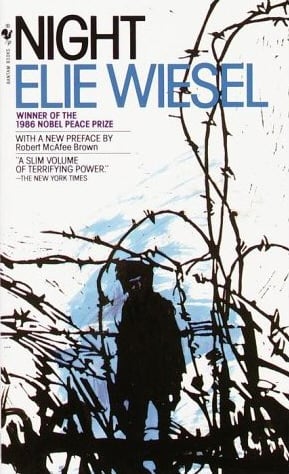
“Human suffering anywhere concerns men and women everywhere.”
“For the survivor who chooses to testify, it is clear: his duty is to bear witness for the dead and for the living. He has no right to deprive future generations of a past that belongs to our collective memory.
“To forget would be not only dangerous but offensive; to forget the dead would be akin to killing them a second time.”
“I am not so naïve as to believe that this slim volume will change the course of history or shake the conscience of the world. Books no longer have the power they once did. Those who kept silent yesterday will remain silent tomorrow.”
‘Open Heart’ (2002)
“I belong to a generation that has often felt abandoned by God and betrayed by mankind. And yet, I believe that we must not give up on either.”
“Was it yesterday — or long ago — that we learned how humans beings have been able to attain perfection in cruelty? That for the killers, the torturers, it is normal, thus human, to act inhumanely? Should one therefore turn away from humanity?”
Nobel Prize lecture, ‘Hope, Despair and Memory’ (1986)
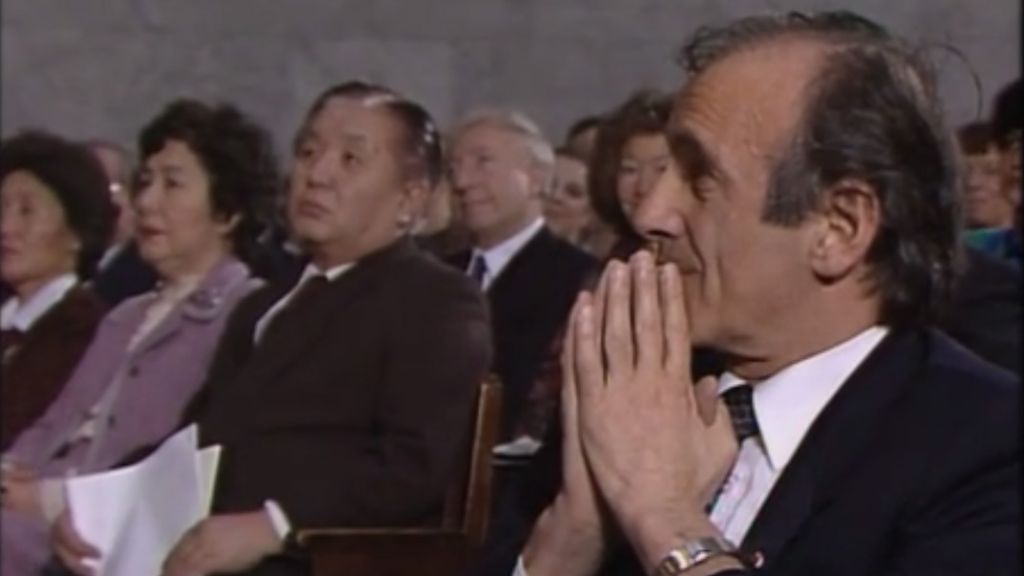
“We must always take sides. Neutrality helps the oppressor, never the victim. Silence encourages the tormentor, never the tormented. Sometimes we must interfere. When human lives are endangered, when human dignity is in jeopardy, national borders and sensitivities become irrelevant. Wherever men or women are persecuted because of their race, religion, or political views, that place must – at that moment – become the center of the universe.”
‘There may be times when we are powerless to prevent injustice, but there must never be a time when we fail to protest’
“If someone had told us in 1945 that in our lifetime religious wars would rage on virtually every continent, that thousands of children would once again be dying of starvation, we would not have believed it. Or that racism and fanaticism would flourish once again, we would not have believed it.”
“Remembering is a noble and necessary act. The call of memory, the call to memory, reaches us from the very dawn of history. No commandment figures so frequently, so insistently, in the Bible. It is incumbent upon us to remember the good we have received, and the evil we have suffered.”
“There may be times when we are powerless to prevent injustice, but there must never be a time when we fail to protest.”
Address at Auschwitz on the 50th anniversary of its liberation (1995)

“Close your eyes and listen. Listen to the silent screams of terrified mothers, the prayers of anguished old men and women. Listen to the tears of children. Jewish children, a beautiful little girl among them, with golden hair, whose vulnerable tenderness has never left me. Look and listen as they walk towards dark flames so gigantic that the planet itself seemed in danger.
Remarks at Yad Vashem in 2002
“But who will be the last survivor, the last to tell the tale, the one who, like the prophet Jeremiah, said, “I am he, I was there.” Who will be our witness? What will happen to our legacy?”
‘This kaddish is still within us, and I sometimes wonder whether, in all my writings, I am doing anything else, or just saying kaddish’
“This kaddish is still within us, and I sometimes wonder whether, in all my writings, I am doing anything else, or just saying kaddish.”
“Often we feel weary and melancholy and close to despair, not only for the past, but also for the present. In other words, for what was done by so many on so many levels to the memory of our past.”
From media interviews
“The opposite of love is not hate, it’s indifference. The opposite of beauty is not ugliness, it’s indifference. The opposite of faith is not heresy, it’s indifference. And the opposite of life is not death, but indifference between life and death.”
— US News & World Report (1986)
‘The opposite of love is not hate, it’s indifference’
“I don’t believe in accidents. There are only encounters in history. There are no accidents.”
— International Herald Tribune (1992)
“For me, every hour is grace. And I feel gratitude in my heart each time I can meet someone and look at his or her smile.”
— O: The Oprah Magazine (2000)



The Times of Israel Community.