

An Israeli drama about sorrowful sisters arrives in theaters
Dorit Hakim’s ‘Moon in the 12th House’ brings the filmmaker’s own story to the big screen
 Add ToI as a Preferred Source on Google
Jessica Steinberg, The Times of Israel's culture and lifestyles editor, covers the Sabra scene from south to north and back to the center
It took filmmaker Dorit Hakim more than a decade to decide whether to make a film about her own complicated life.
Released at the start of September, “Moon in the 12th House” is an ode to Hakim’s complicated family history, which won’t be revealed here for fear of spoiling the film.
But suffice it to say, there was enough trauma to warrant strained family relations and a screenplay. With time.
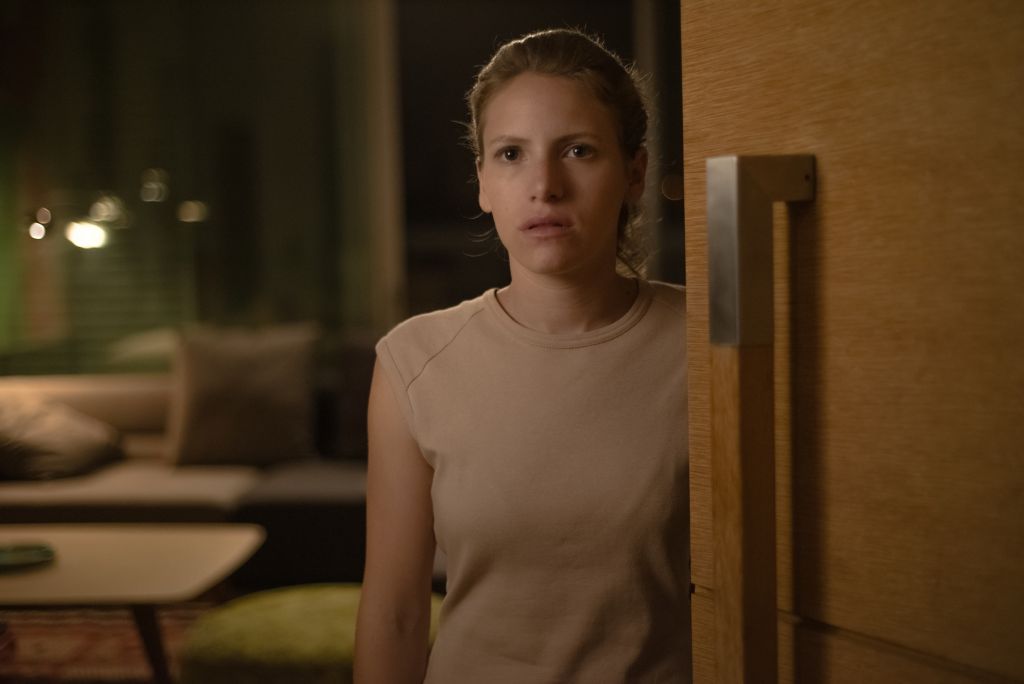
It’s about two sisters who are very different — played by Yaara Pelzig and Yuval Scharf, with a supporting cast of Gefen Barkai, Gal Toren, and Avraham Horowitz — and react in conflicting ways to the disaster that happens to them.
“It’s close to my life,” said Hakim. “I have a big sister, we’re very different and we experienced our family story very differently. But relationships between sisters are like the relationships between women and there’s women and their connections.”
The ultimate storyline of “12th House” was narrowed down from something much larger, said Hakim.

“A lot of time gets wasted until you figure out what works,” said Hakim, while stirring a cappuccino at a Tel Aviv restaurant. “And during that time, my kids got older, and we were headed to the US and the distance from Israel really affected me.”
Hakim’s peripatetic life was due to her husband, Shlomo Kramer’s success in Israeli hi-tech — he was one of the founders of security company Checkpoint and several other, subsequent startups — that led the family to spend the better part of a decade traveling back and forth to Silicon Valley, including three full years living in the area.
It was during that time in Silicon Valley that Hakim’s father died, bringing her back to Israel for the funeral, seven days of shiva, and, to her father’s house for the first time in many years.

“The house looked exactly the same,” said Hakim. “Even the little knickknacks on the shelf were the same. There was the same rug, and it really threw me. Until then, I had succeeded in putting it all behind me. I had a good life, with three kids and a husband who I love and who loves me. So either it was time to forget it all and move on and do something else. But once I was back in the US after the funeral, I decided to go ahead with it.”
Hakim had first worked as a culture reporter for Ha’aretz and other newspapers before studying at Sam Spiegel Film and Television School, where she made her first film, “Small Change,” an award-winning short about two neighbors and their particular relationship.
She had considered making that work into a longer feature, but it never quite warranted the attention.
The decision to make “12th House” ultimately brought Hakim and her family back to Israel in 2013, where she has spent the last three years filming, editing and marketing the film.
Now that the film is completed and on the move to festivals and screenings, Hakim feels satisfied with the process, as well as her family’s return to Israel and all that it has meant to her as a filmmaker and to their family unit.
She came back to Israel and the film set, said Hakim, with something of an American attitude.
“There’s something in the US about having everything so well organized and you know what’s expected,” said Hakim. “People aren’t emotionally clear, but they’re clear about what the rules are. You go to an amusement park and you know what’s included in your ticket. I came to Israel with that attitude. I was very organized, sending summaries by email. Israelis can’t understand why you’re not just writing everything on WhatsApp.”
Yet while Hakim doesn’t consider herself an inside player in the local film industry, she felt comfortable taking complete control of the filming process.
“I’m a grownup, I had nothing to lose and this film has been in me for such a long time,” she said. “I came as an outsider, an entrepreneur, and I got a lot from my husband, who taught me how to go with it and believe in what you’re doing.”
That American experience also had an effect on her upcoming material, which is shaping up around the story of a successful entrepreneur in Silicon Valley who is experiencing a loss of direction.
“It’s telling the story of a very specific life of Silicon Valley, which is the biggest bubble in the world, maybe apart from Israel,” said Hakim.”It’s a more comic story.”
She wants her next film to be completely American in content, partially due to the difficulties in making films in Israel.
“You have to do a lot to make money in film,” she said. “It’s not a coincidence that lots of Israelis are trying to make films abroad. The whole world is facing changes because everything is about YouTube and that affects films, too.”
Hakim said it was challenging raising money for her film, and she wasn’t able to secure funding from Israel’s film funds. She ended up relying on private investors and support from broadcaster Keshet.
“The world loves Israeli film and is very interested in it, but in a certain type of film, that tells about the conflict,” said Hakim. “I have a feeling sometimes that filmmakers make those kinds of films because they know they’ll succeed. So either there’s films that deal with settlers, Arabs, religious Jews, and the conflict, or just jokes and Ibiza. It’s either high or low, but not mainstream.”
“Moon in the 12th House” is neither of those, said Hakim. It’s not particularly Israeli, either, she said.
“It’s just a film about people,” she said.
“12th House” was nominated for six Ophir awards last year, and had its international premiere at the Seattle International Film Festival in May. Producers Movie Plus are acting as sales agent, and United King is distributing it in Israel.
The movie is currently playing in theaters around Israel.










The Times of Israel Community.