

Authors claim to crack case of stolen painting coveted by Hitler
For decades, the missing panel of the Adoration of the Mystic Lamb has been sought by investigators of every ilk — including Nazi officers during WWII
 Add ToI as a Preferred Source on Google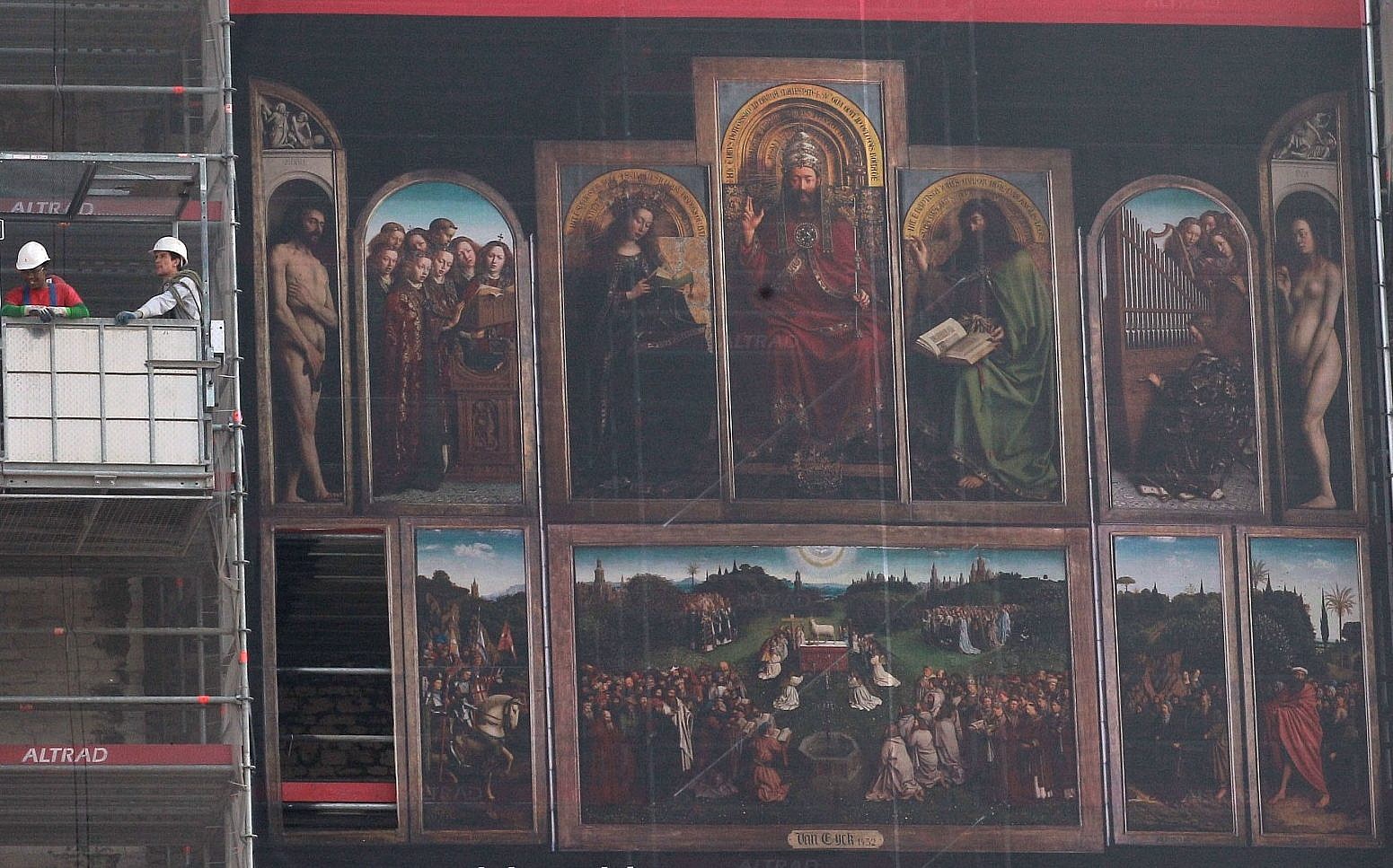
Two authors have claimed to have discovered the whereabouts of a long-lost panel of Hubert and Jan van Eyck’s Adoration of the Mystic Lamb — an oil painting completed in 1432 which depicts the story of Jesus Christ.
Speaking at a press conference in the Flemish city of Ghent in Belgium, Marc de Bel and Gino Marchal said they believed the piece was located beneath a square in the city, according to the Guardian.
Ghent authorities said they were investigating the claim.
Made of 12 oak panels painted on both sides, the altarpiece was the talk of Europe when it debuted, attracting kings and queens to St. Bavo’s Cathedral in Ghent.
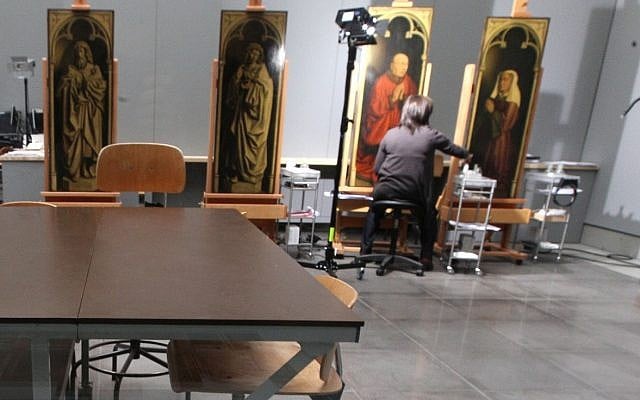
In 1934 two of the panels were stolen. One panel — titled St. John the Baptist — was found that year in the luggage claim of a Brussels train station wrapped in brown paper. It wasn’t the sign of a guilty criminal conscience — just an extortion ploy to prove that the thief had the second panel, titled The Just Judges. A note demanded a million Belgian francs, a massive sum at the time, for the panel’s return.
The local bishop produced only a fraction of the ransom demand and more extortion letters followed.
Ever since, Belgium has been in the grip of a decades-long treasure hunt, one that has drawn detectives of every ilk, including cab drivers, computer scientists, lawyers and retired police inspectors.
From divining rods to endoscopes to SS Nazi search parties, it has all been to no avail. Overanxious amateur sleuths have even drilled holes in important monuments on the hunch the panel might be there.
During World War II the altarpiece, coveted by Adolf Hitler, was hidden in France, but was found and seized by the Nazis, who later hid the panels in a salt mine in Austria.
There they were found by the US Army, and later returned to Ghent.
“The public prosecutor’s office takes this theory very seriously,” Ghent’s mayor Daniel Termont said, according to a report in the Guardian. “If this new theory was no more than a stunt to promote a book, I would never have cooperated, and as a city we would not have made our council hall available for a press conference.”
Termont warned civilians not to attempt to dig up the masterpiece themselves. “It may sound ridiculous, but please do not dig any holes on the Kalandeberg. That is work for the police and the public prosecutor’s office,” he said, according to the Guardian.
The public was not informed of the exact location suggested by the two authors.










The Times of Israel Community.