

Exposure to polluted air in Israel up to 3.5 times global target levels
Air quality review, included for first time in Central Bureau of Statistics’ quality of life index, shows high levels of particles linked to heart disease and asthma
 Add ToI as a Preferred Source on Google
Sue Surkes is The Times of Israel's environment reporter
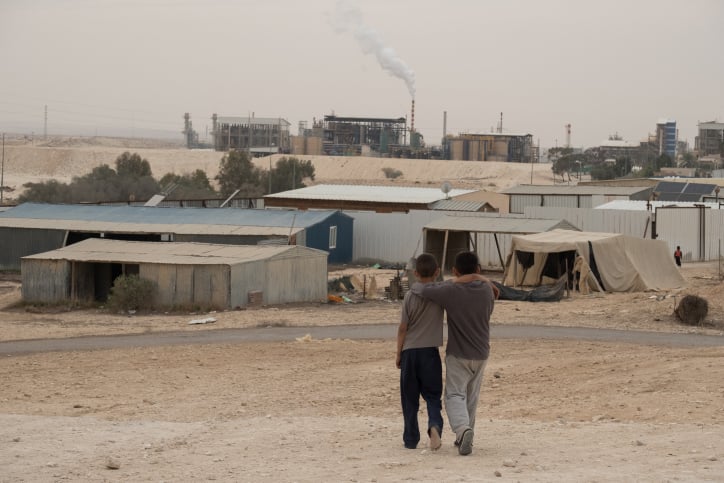
Israelis’ exposure to air pollution improved between 2015 and 2022, but was still substantially higher than World Health Organization targets adopted by Israel’s Environmental Protection Ministry, according to an air quality review included for the first time in a Central Bureau of Statistics’ quality of life index.
The review looked at the presence of fine particulate matter — particles that are 2.5 microns or less in diameter — with the target represented by the figure of 100. The desired value for the index is 100 or below.
Exposure to abnormal levels of such particles can increase the risk of heart disease, and asthma, and contribute to low birth weight.
The Israel index showed the national average stood at 340 in 2022 — down from 419 in 2015, but still nearly three and half times higher than desirable.
The cities worst affected were Petah Tikva and Hadera in the center (scored at just under 400), followed, in an equal position, by Bnei Brak, Rishon Lezion, Netanya, and Kfar Saba (all 375). Those least affected were Jerusalem and nearby Beit Shemesh (just under 300), and Ashkelon on the southern coast (just over 300).
The ministry said the main reason for the prevalence of such particles was Israel’s proximity to desert areas, but they are also known to come from emissions of industry and transportation.
Separately, exposure to nitrogen dioxide, which can cause chronic lung disease, has come down since 2015, the index showed, but is still just above the ministry’s target, having dropped from a score of 150 in 2015 to 114 in 2022.
The highest anomalies were seen in the cities of Ramat Gan (just under 250), Bnei Brak (240) and Rishon Lezion (just under 200), and the lowest in Haifa in the north (around 90), and Beit Shemesh (100).
Dr. Ilan Levy, in charge of pollution monitoring and sampling at the ministry, said the overall decrease in exposure to fine particles and nitrogen dioxide was due to factors such as improvements in vehicle emissions and lower industrial emissions following the implementation of the Clean Air Act and changes in air emissions permits for industry to bring them into line with European standards.
Exposure to ozone increased from a score of 162 to 182. Ground-level ozone we breathe is produced mainly when pollutants from cars, power plants, refineries and other chemical-producing facilities react in the presence of sunlight.
Exposure to abnormal levels can cause anything from headaches and coughing to asthma.






The Times of Israel Community.