

Historical imagery, magical letters capture the imagination in Bible Lands exhibits
Jerusalem’s Bible Lands Museum extends its archeological focus with two new exhibits, one connected to October 7 and the other to the Hebrew alphabet
 Add ToI as a Preferred Source on Google
Jessica Steinberg, The Times of Israel's culture and lifestyles editor, covers the Sabra scene from south to north and back to the center
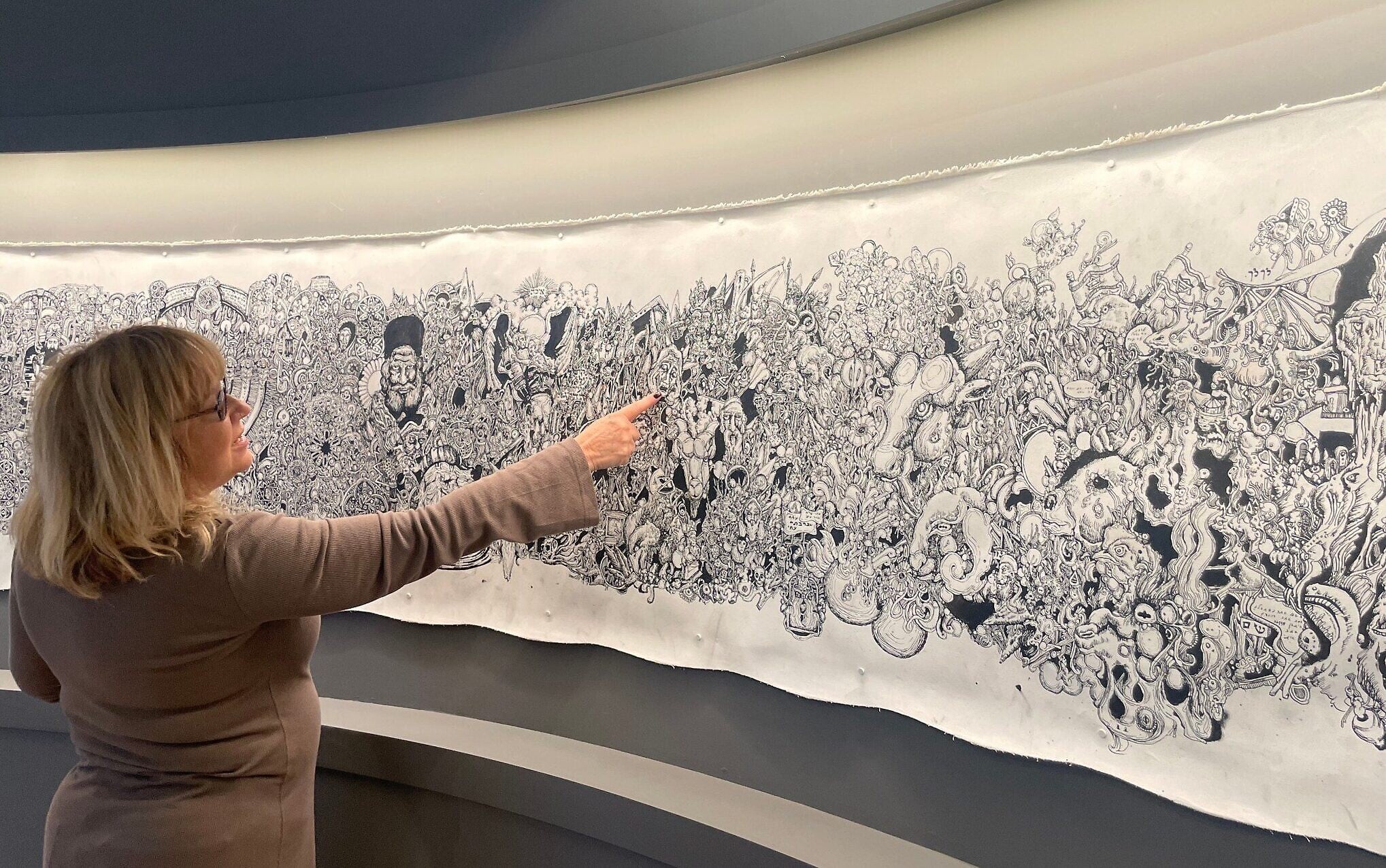
Last winter, as Israelis reeled from the trauma of the October 7, 2023, Hamas-led attack and subsequent war in Gaza, Jerusalem’s Bible Lands Museum director Risa Levitt happened upon the artwork of Eitan Rosenzweig, a soldier killed that November while fighting in the coastal enclave.
She was struck by the intricate, illustrated scroll Rosenzweig made as part of a final project while participating in an art program at his yeshiva.
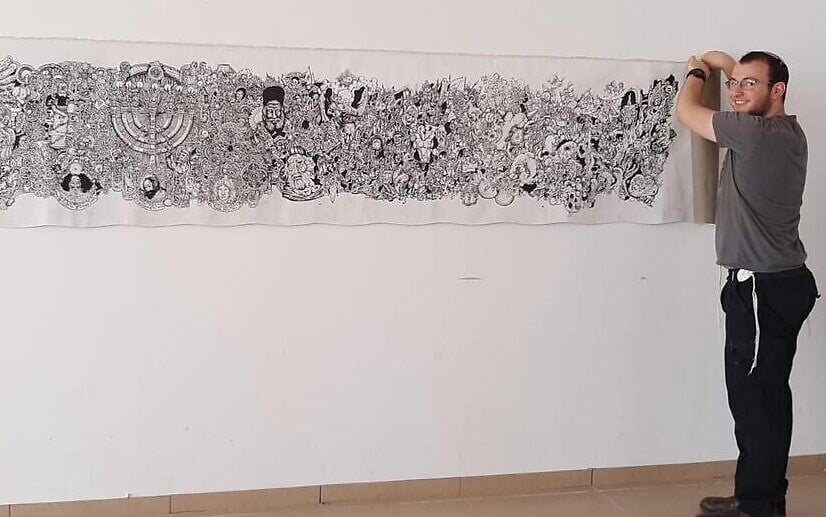
The three-meter scroll unveils a vast network of interlocked, inked symbols, quotations and imagery from the Bible and the Talmud, as well as Kabbalistic literature, poetry and archaeological finds.
“It’s like an anime of the Torah, basically,” said Levitt, referring to the hand-drawn and computer-generated animation originating in Japan. “It’s his interpretation of Jewish history on a Torah scroll.”
Levitt turned Rosenzweig’s artwork into “Kuma,” a solo exhibit of his imagery, and an elegy to the young artist whose life was cut tragically short.
“Kuma” is short for “Kuma, Mei-Afatzim Vekankantum,” Rosenzweig’s name for the scroll, harkening to the ingredients used to create ink for Jewish sacred texts.
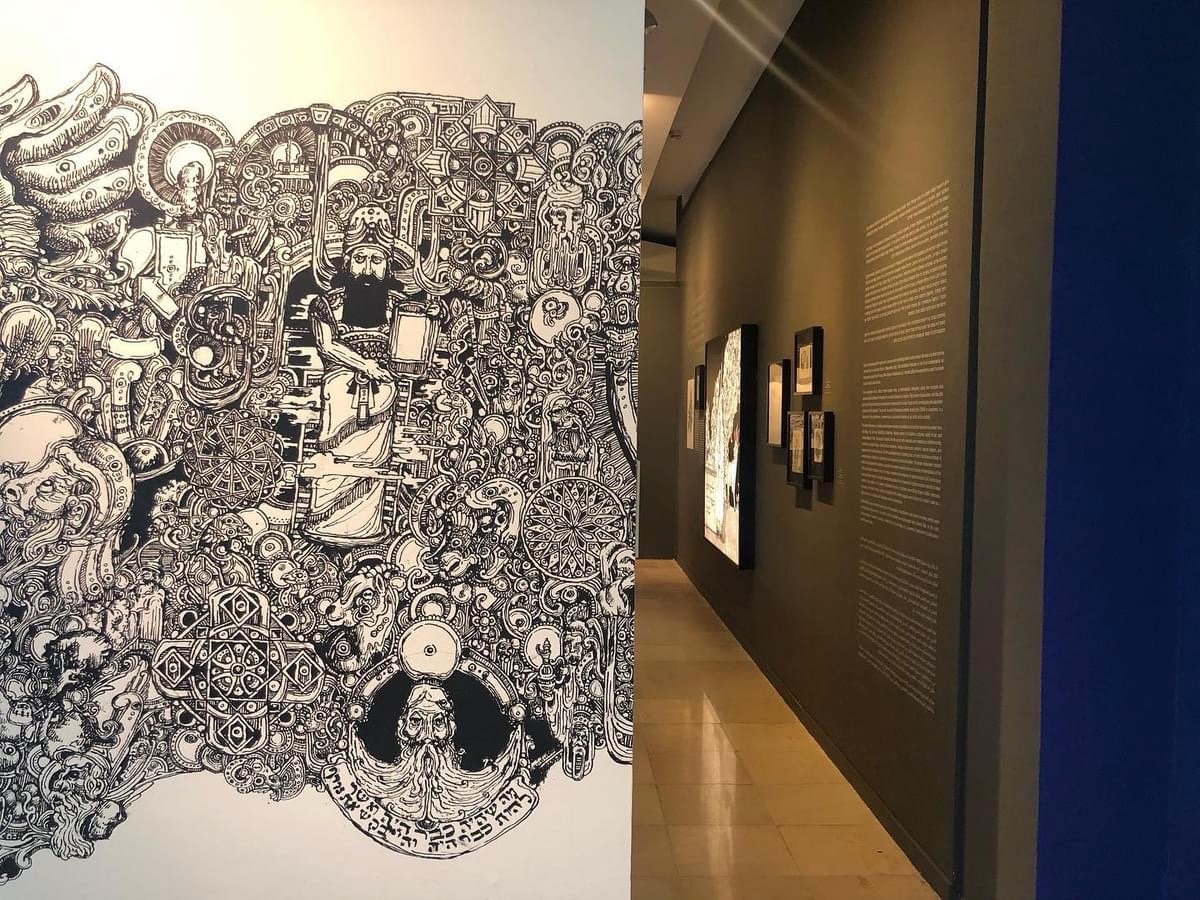
Rosenzweig worked on this visual Torah scroll during four months of the COVID-19 pandemic, before he was drafted into the army. He completed his mandatory service just before the October 7 Hamas attack, and was called up for reserve duty.
When looking closely, viewers can see that the scroll is divided loosely into three sections, from the earliest times in Jewish history, featuring familiar Biblical figures such as Titus, Job, and Ecclesiastes, to the Holocaust, the state of Israel, and the symbols of contemporary Israeli life.
Rosenzweig’s parents and grandmother are regular guides for the exhibit,
and it’s been amazing therapy for them, said Levitt, who has extended the exhibit through the summer, given the steady stream of visitors who come to see it.
“Kuma” is one of two current exhibits at the Bible Lands Museum that doesn’t specifically harken to archaeology, but instead refers to the study of ancient history with modern understanding, one of the aims of the cultural institution.
‘Letters Soaring in the Air’
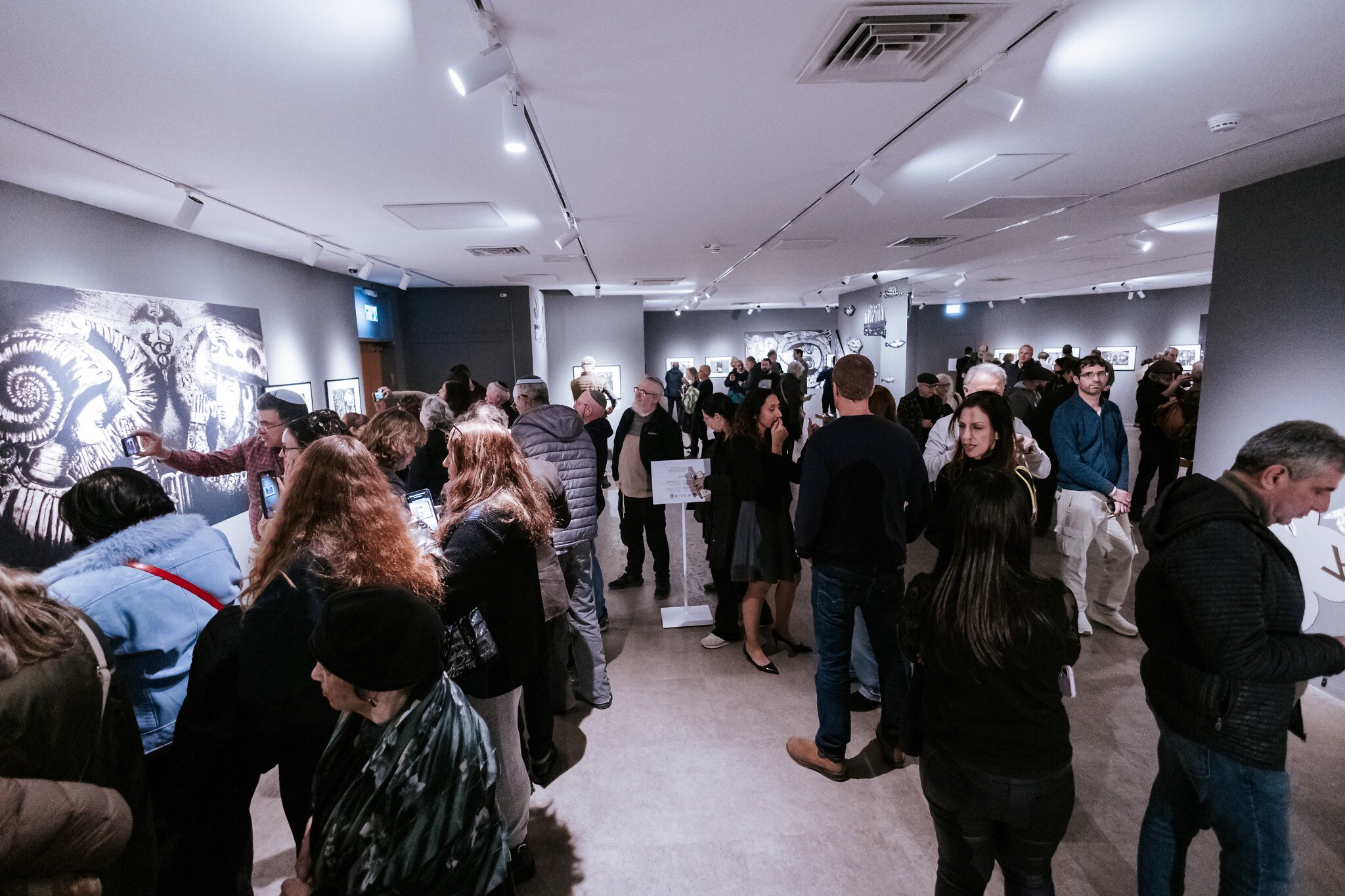
The museum’s other new exhibit opened in February, and is focused on 22 letters of the Hebrew alphabet in Jewish mystical tradition, which sees them as the building blocks of creation.
The works featured in “Letters Soaring in the Air” are the product of a six-year collaboration by Russian-Israeli artists Sergey Bunkov and Tenno Pent Sooster, with additional collaboration from digital artist Maxim Bunkov, a Bezalel Academy art student and the son of Sergey Bunkov.
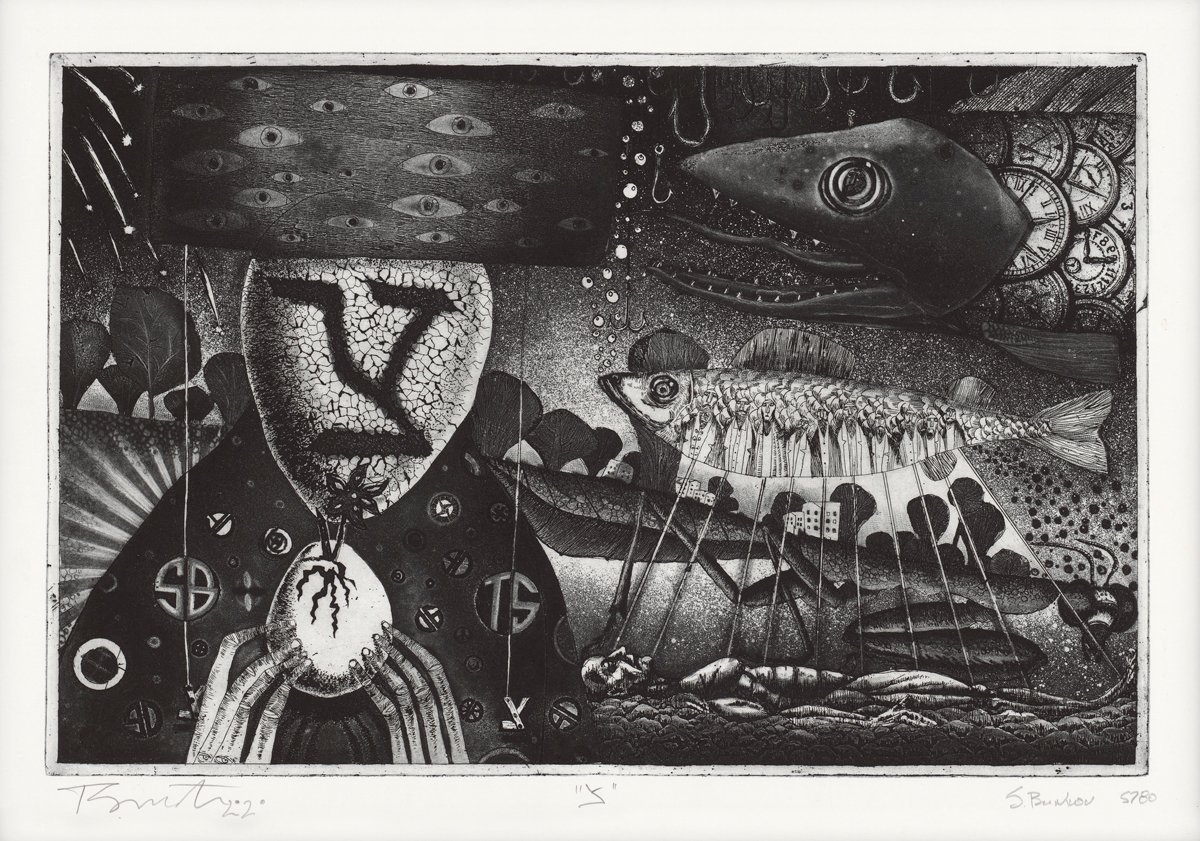
The mystical, fantastic black-and-white artworks by Bunkov and Sooster trace the evolution from the ancient Canaanite script to their rich interpretations in Jewish mysticism, where each letter holds meanings far beyond their role in written language, as portrayed in the imagery included in each portrait.
“It’s interesting for us because we have a gallery upstairs that talks about the evolution of the alphabet from pictograph to the earliest form of Hebrew to modern Hebrew,” said Levitt. “We have objects that represent the earliest forms of Hebrew.”
Maxim Bunkov used augmented reality to bring the two-dimensional etchings to life.
Each artwork can be brought to life by visitors using the downloadable Artivive app, enabling them to see the Hebrew letters move in digital space, perhaps especially enticing for the younger crowd.
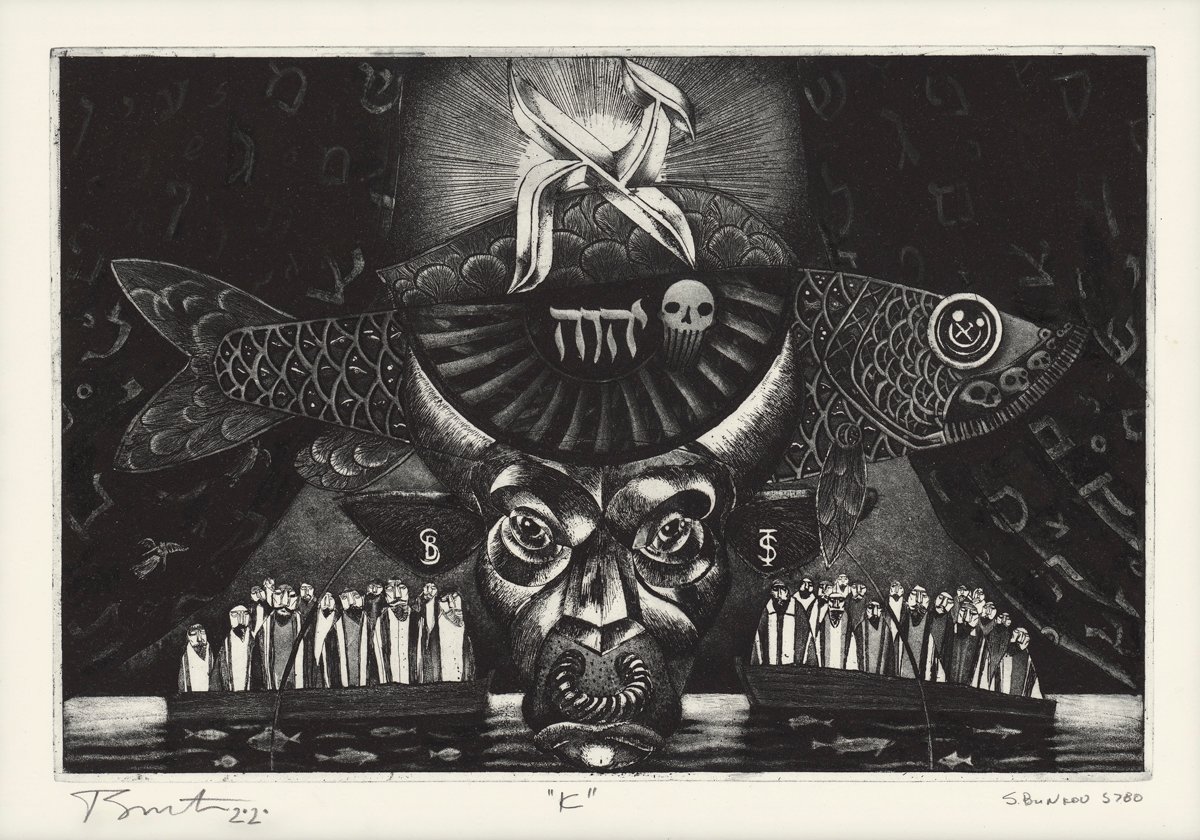
There’s also a connection to “Kuma,” Rosenzweig’s artwork situated upstairs. While Rosenzweig took the Torah and filled it with imagery, Bunkov and Sooster examine the letters of the alphabet and augment their meaning.
“The Hebrew letters, the Hebrew alphabet, isn’t just an instrument for writing, even though we think of it as something you read or something you sign,” said Levitt. “But even in rabbinic times, the alphabet always was more than that, there’s this notion that the world was created based on these letters, that each letter has multitudes of meanings, the whole notion of gematria or numerology, the mystical element.”
In addition to these themes, the artists also added elements of their own stories, of growing up in the Soviet Union and making their way to Israel, into the artwork.
Levitt, a professor of Hebrew Bible and student of ancient archaeology who directed the Jewish studies program at San Diego State before moving to Israel in 2023 to assume the museum’s director position, sees in both exhibits an interconnectedness between history, culture, theology, religion and ancient Israel, as well as their ability to capture a viewers’ imagination.







The Times of Israel Community.