

Iran TV uses green screen to bypass headscarf rules
Iranian director Jalil Saman says country’s ban on women displaying hair ‘ruined’ many movies set before 1979 revolution
 Add ToI as a Preferred Source on Google
TEHRAN, Iran (AFP) — For Iranian viewers sitting down for this year’s primetime historical drama during the Muslim holy month of Ramadan, there was a shock: you could see women’s hair.
The director’s trick: popping across the border to neighboring Armenia to film women without headscarves in front of a “green screen” and then super-imposing them into the background of Iranian scenes.
“This is a technical achievement for our cinema and television that can be of service in future,” director Jalil Saman said in Wednesday’s Haft-e Sobh newspaper.
The month of Ramadan, which started on Saturday, is always a showcase for high-profile TV serials and this year it is Saman’s “Nafas” (“Breath”), about a nurse being dragged into the revolutionary tumult of the late 1970s, that has garnered the most attention.
Iranian TV can show foreign films with unscarved women — although too much leg or cleavage gets blurred out or hidden behind a digitally inserted object such as a lamp.
But local programs must normally abide by strict rules in which no female hair can be shown, even for historical dramas or scenes set in a family home where real-life women do not cover their heads.
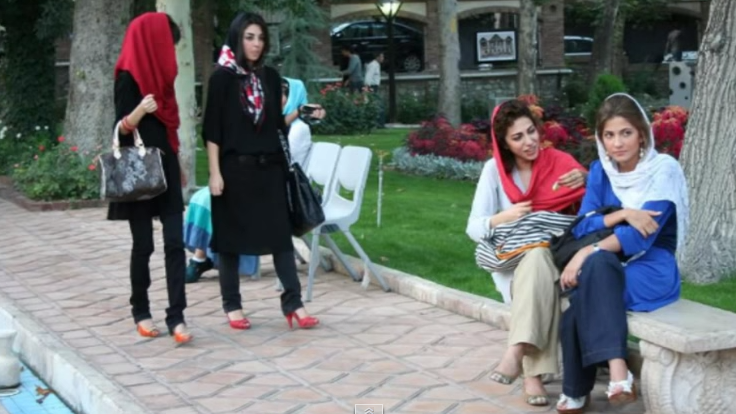
Saman said it would have been absurd to show everyone in a headscarf since the show is set before the Islamic revolution of 1979 when women were free to wear whatever they wanted.
Shows set during that period are usually “ruined,” he told Haft-e Sobh, because they cannot show how things really looked.
“They give the impression that Islam was followed more before the revolution than today,” he said.
“We have only shown a part of how it was before the revolution but some cannot even tolerate this.”
Saman said he was refused permission by the censors to use actresses in wigs, a trick used for several high-profile shows in the past.
The other popular option — having women in hats with scarves wrapped around their ears and neck — was “ridiculous” he added.
So instead Saman turned to “green screening”, in which actresses are filmed in front of a green background that can be digitally removed and the character inserted into other scenes.
Iranian film-makers must obtain three separate authorizations: for the script, filming and release.
But the authorities admit that a majority of Iranians now own a satellite dish — even though they are technically illegal — beaming in uncensored programming from all over the world.
It is part of the steady erosion of strict Islamic rules — in practice, if not in theory — that has also seen headscarves pushed further and further back, especially in wealthier parts of Tehran.
Iranian President Hassan Rouhani won a resounding re-election victory this month, promising a further easing of social restrictions, although he faces considerable opposition from the clerical establishment.







The Times of Israel Community.