

Less than a third of Israelis say country won the war against Hamas in Gaza, poll finds
Only 17% think Hamas will lay down its arms, according to Channel 12; Zman survey finds a third of Israelis oppose any partnership with Arab parties, slim majority would support some form
 Add ToI as a Preferred Source on Google
Less than a third of Israelis believe Israel won the recent Gaza war, and even fewer believe the Hamas terror group will lay down its arms, according to a poll published Thursday.
Meanwhile, weekly surveys by Channel 12 and Zman Yisrael, The Times of Israel’s Hebrew-language sister site, did not find any significant change in the likely standing of the various parties, were elections, which must take place by the end of October, to be held today.
When respondents to the Channel 12 poll were asked whether, in light of the agreements reached over governance of Gaza, their opinion was that Israel won the war, just 29 percent of respondents said yes. A majority (54%) said they believe Israel did not win the war, while 17% said they don’t know.
Thursday’s poll came less than a week after the military located and returned the body of slain police officer Master Sgt. Ran Gvili, who was killed battling terrorists on October 7, 2023. He was the last Israeli, living or dead, held in Gaza.
The goals the government set out for the campaign in Gaza were the return of the hostages, the destruction of Hamas as a military and governing power, and the prevention of a future threat to Israel from the Strip.
Asked what they think will happen going forward, just 17% of Israelis – including just 29% of coalition voters – believe Hamas will lay down its arms, while 73% think it won’t, and 10% said they don’t know. The full breakdown of opposition/coalition voters’ answers to this question was not included in the network’s report.

The disarmament of the Hamas terror group, which took control of Gaza almost two decades ago, was a key demand of Israel in negotiations to end the war, and Jerusalem has said it won’t allow the rebuilding of the devastated Strip before then.
Though demanded by the US plan for Gaza, which the agreed-upon ceasefire was envisioned as the first stage, Hamas has never publicly agreed to give up its weapons.
US President Donald Trump claimed Thursday that “it looks like” Hamas is “going to disarm,” while his special envoy Steve Witkoff said: “They will because they have no choice. They’re going to give up their AK-47s.”
Arab parties surge to 16 seats if running together as Joint List
If elections to the Knesset were held today, neither Prime Minister Benjamin Netanyahu’s hardline coalition nor the current opposition bloc would win a majority in the 120-seat Knesset, without the support of the Arab-majority Joint List.
This week’s surveys came a week after the four parties that make up the Joint List – Hadash, Ra’am, Ta’al, and Balad – signed an agreement to reconstitute the bloc, which broke apart ahead of the last elections in 2022. United, they gained one mandate over the same poll last week.
According to Channel 12, the current coalition would win 51 seats, while the current opposition bloc would win just 57. The Joint List would secure the remaining 12. According to Zman Yisrael, the coalition would win 51, the opposition 53, and the Joint List would take 16.
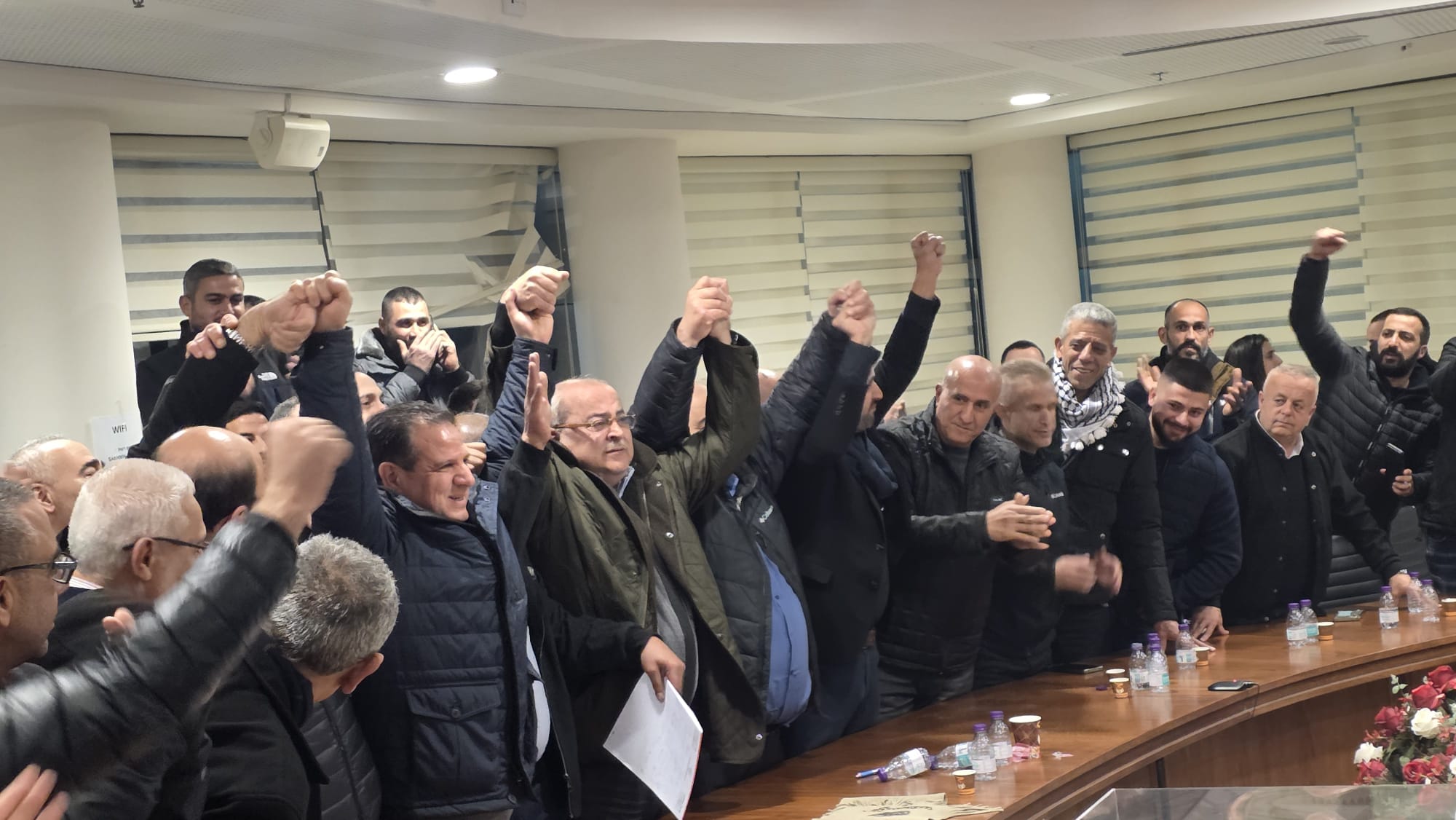
The latter result, an exceptional showing for the Arab parties compared to previous polls, raises the question of whether Ra’am, led by Mansour Abbas, would be able to provide the opposition bloc a majority even if it broke away from the Joint List after elections.
The only Israeli government to have formally included an Arab party was led by former prime minister Naftali Bennett and Yesh Atid chair Yair Lapid in 2021-2022, which counted Ra’am among its slim, 61-seat majority.
When polled on each party separately, however, respondents to the Zman poll gave the coalition 53, the opposition 56, and Ra’am six of the remaining 11 mandates — meaning Abbas’s party could in fact tip the scales.
According to Zman, 34% of the public opposes any political partnership with Ra’am, while 28% support it being part of the coalition, and 24% would favor it supporting the coalition from outside the government, meaning that 52% would support it in some form. The remaining 14% said they don’t know.
When Channel 12 asked opposition voters about the Joint List or one of its components supporting a coalition from outside the government, 48% said they would support it, while 37% said they would be against the arrangement, and 15% said they didn’t know.

Within each bloc, the party breakdown was almost unchanged from last week. According to Channel 12, Netanyahu’s Likud would be the largest party, with 27 seats. It would be followed by the party led by Bennett, which would win 21.
The Joint List, as mentioned, would get 12. The left-wing Democrats, led by Yair Golan, would win 11, the Sephardic ultra-Orthodox Shas would win nine, and former IDF chief Gadi Eisenkot’s “Yashar!” would also hold nine seats. Lapid’s Yesh Atid would take eight seats, as would hawkish Yisrael Beytenu and far-right Otzma Yehudit. United Torah Judaism would have the smallest representation, with seven seats.
According to the Zman survey, assuming the Joint List is reconstituted: Likud would win 27, Bennett’s party 19, the Joint List 16, Yisrael Beytenu 10, Shas 9, The Democrats 9, Yesh Atid 8, UTJ 8, Yashar 7, and Otzma Yehudit 7.
Failing to cross the 3.25% electoral threshold, according to both surveys, would be far-right Religious Zionism, led by Finance Minister Bezalel Smotrich, Blue and White, led by ex-IDF chief Benny Gantz, and the “Reservists” party, focused on universal conscription.

Channel 12 also asked how respondents would vote if Bennett, Eisenkot, and Lapid ran on a single list. That potential merger would create the largest party in the Knesset, with 38 seats, but the rest of the breakdown would be the same.
Voters still prefer PM over any of his major rivals
The Channel 12 poll also asked respondents who they believe is better suited to be prime minister, placing Netanyahu against each of his main rivals. In all cases, Netanyahu was preferred by a marked plurality.
Between Netanyahu and Bennett, 42% said they prefer Netanyahu, while 33% said they prefer Bennett, while 19% chose “neither one,” and 6% said they don’t know.
Compared to Lapid, 44% said they prefer Netanyahu, 24% said they prefer the opposition leader, 26% chose “neither one,” and 6% said they don’t know.
And between the premier and Eisenkot, 43% chose Netanyahu, while 28% chose the former general, 22% chose “neither one,” and 7% said they don’t know.
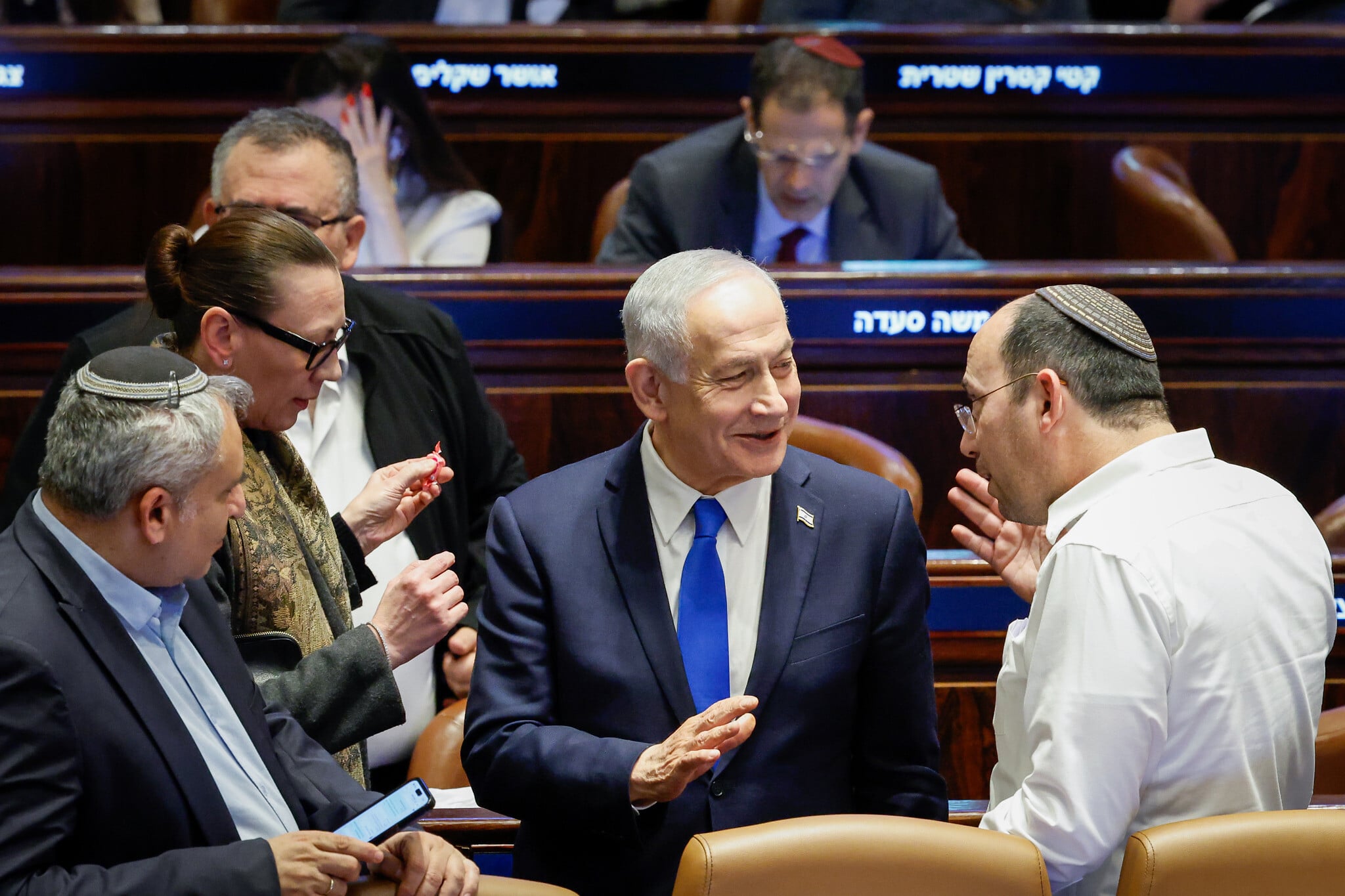
Under the law, a national election must be held by the end of October this year. If the budget fails to pass or the Knesset disperses, it will be held earlier.
Netanyahu said Tuesday that “the last thing” Israel currently needs is elections, though a highly controversial measure to codify an exemption to mandatory military service for full-time yeshiva students has at times apparently threatened to collapse the coalition.
The Channel 12 survey was conducted on January 29 by the Midgam polling firm, via the internet and telephone. It polled 501 people, representative of the adult population in Israel. Its margin of error was 4.4%.
Zman’s survey was conducted January 28-29, by Tatika Research and Media in collaboration with the Adgenda panel, and included 500 Jewish and Arab respondents, controlled for age, religion, gender and place of residence. Its margin of error was also 4.4%.









The Times of Israel Community.