

 From the Liveblog of
Monday, September 1, 2025
From the Liveblog of
Monday, September 1, 2025
Following Gafni comments, Deri says answer to anti-Sephardi racism is ‘actions on the ground’
 Add ToI as a Preferred Source on Google
Sam Sokol is a former political correspondent at The Times of Israel. He was previously a reporter for the Jerusalem Post, Jewish Telegraphic Agency and Haaretz. He is the author of "Putin’s Hybrid War and the Jews"
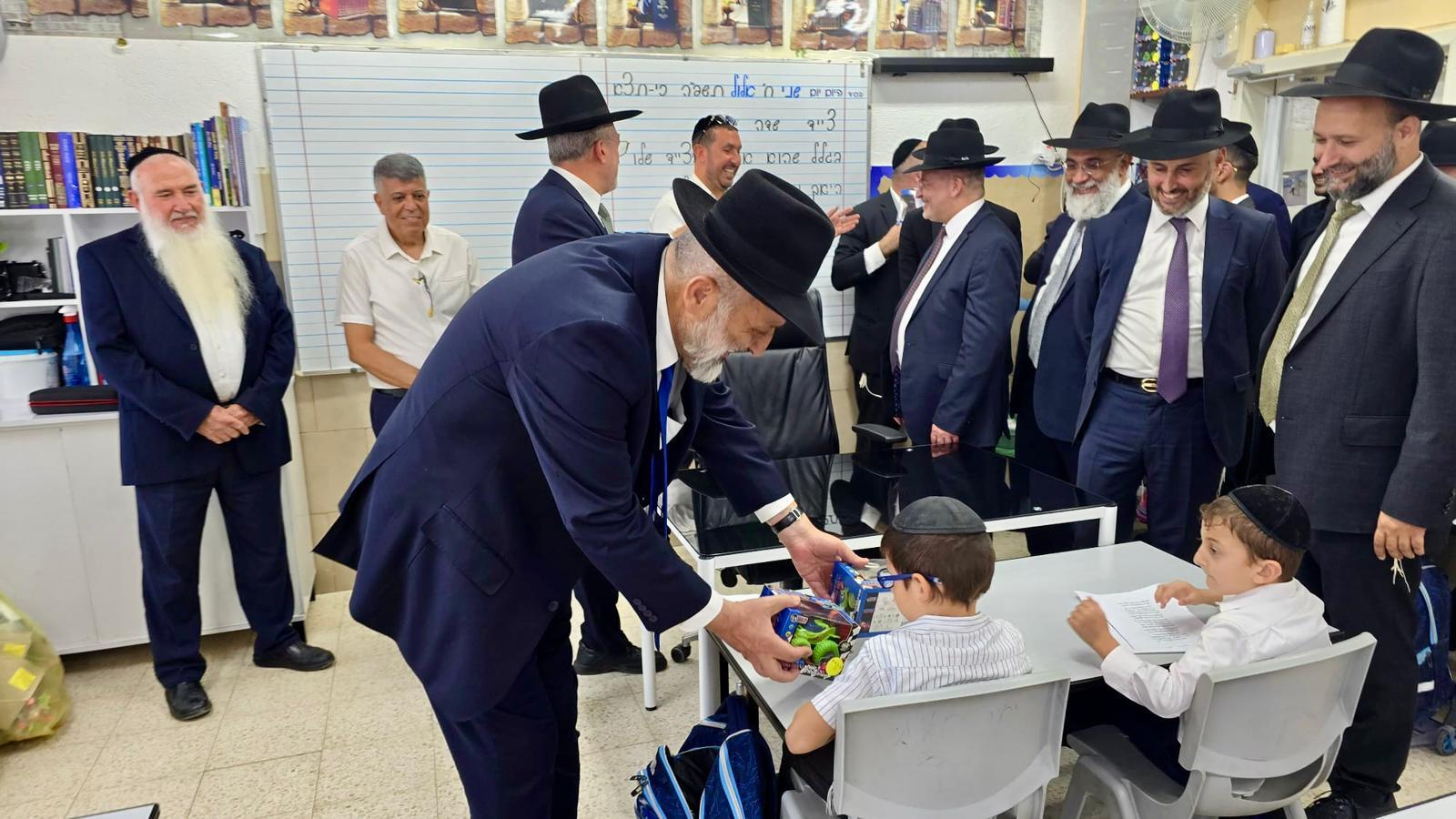
Marking the beginning of the new school year, Shas chairman Aryeh Deri declares that the best way to respond to anti-Sephardi discrimination in education is to open more and more sectoral schools.
While attending an event in the southern city of Ofakim, Deri declares, “We stop sectarian discrimination not by shouting, but by actions on the ground, by opening more and more excellent educational institutions throughout the country, with a high level of education and education in values.”
Deri’s comments appear to come in response to United Torah Judaism MK Moshe Gafni’s statement this morning calling on Shas to open additional schools for Sephardi students in the city of Beit Shemesh so that “your girls” do not need to “crowd into our institutions.”
Discrimination against Sephardi students has plagued the Haredi community for years and critics charge that many Ashkenazi schools maintain unofficial quotas of Sephardi students, stemming from racism against families of Middle Eastern origin. United Torah Judaism represents Haredim of Ashkenazi, or European, origin, while Shas represents those of Middle Eastern and North African extraction.
According to Channel 13, dozens of Sephardi girls in Beit Shemesh were not accepted to schools this year. Efforts by the city to persuade Ashkenazi institutions to accept the students led some rabbis to threaten not to open their schools this year.
In a statement, the Shas party replied that its mission is “to establish excellent educational institutions for the Sephardi community, and it has been operating with great success for decades throughout the country.” Gafni’s remarks, it said, “made it clear how important it is that the Shas movement continues to be strong and independent, and how much the Sephardic community cannot rely on any other party to take care of it.”







The Times of Israel Community.