

No more jokes about bombs by bicycle: As Lviv is targeted, its calm begins to fray
The western Ukrainian city has been sheltered from most of the fighting to date; now it increasingly feels the influence of war

 Add ToI as a Preferred Source on Google
Carrie Keller-Lynn is a former political and legal correspondent for The Times of Israel
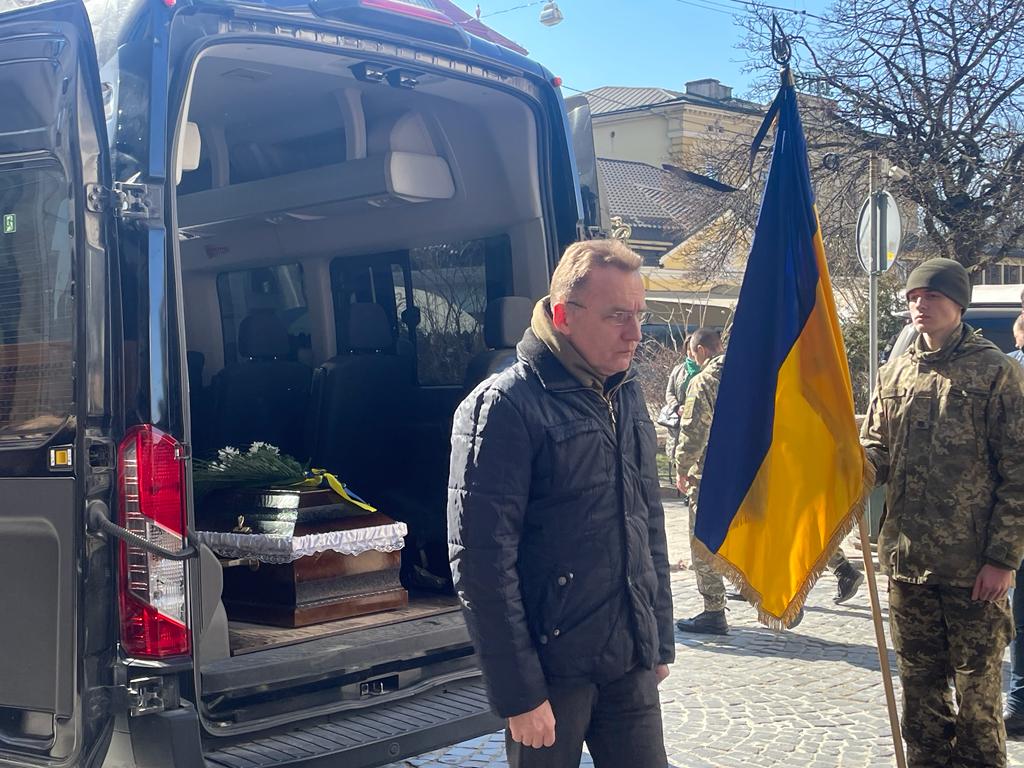
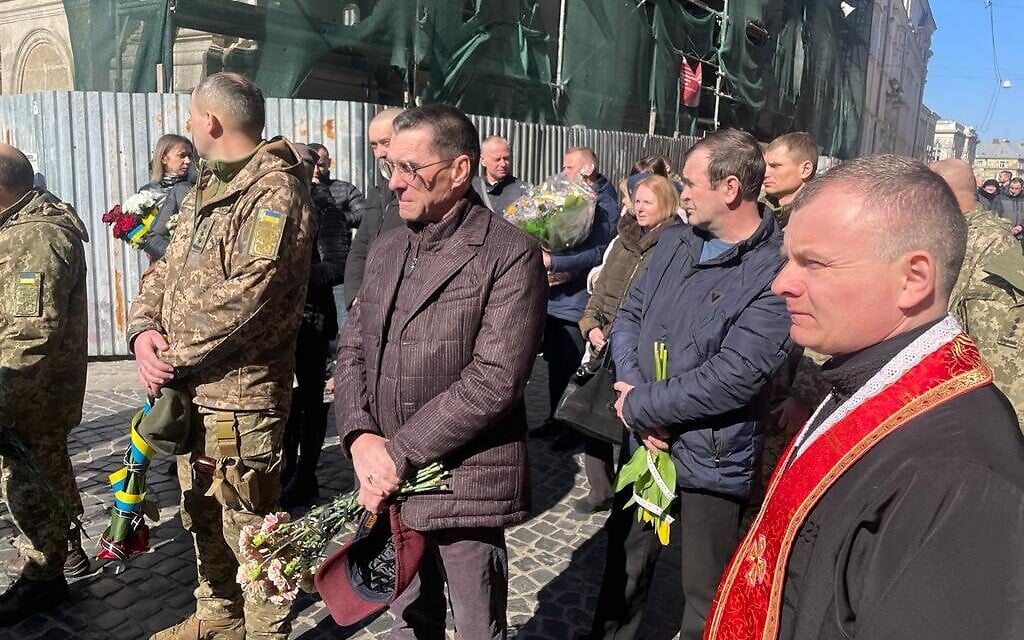
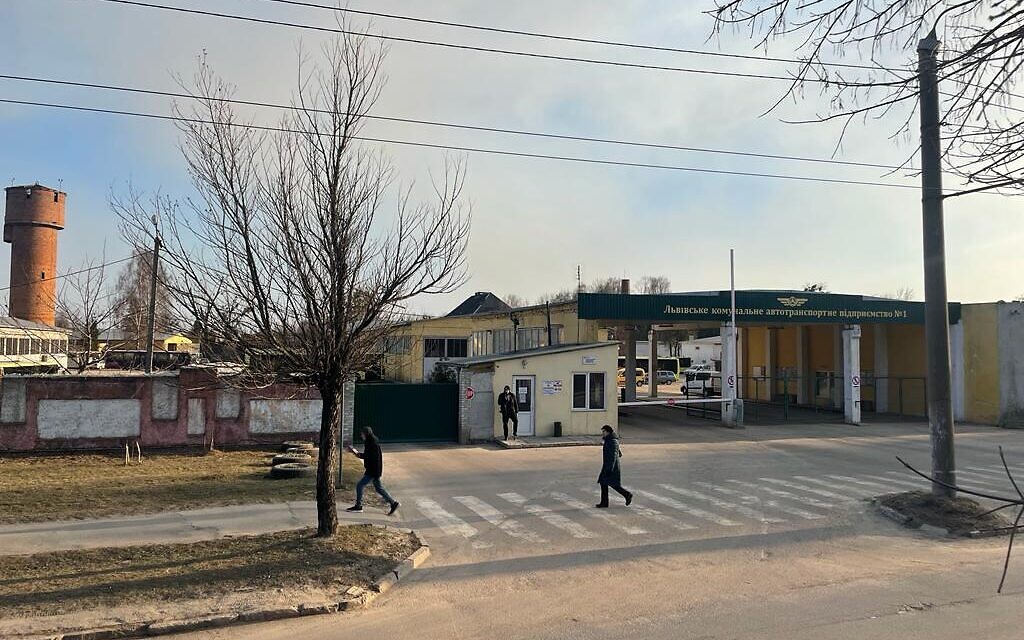
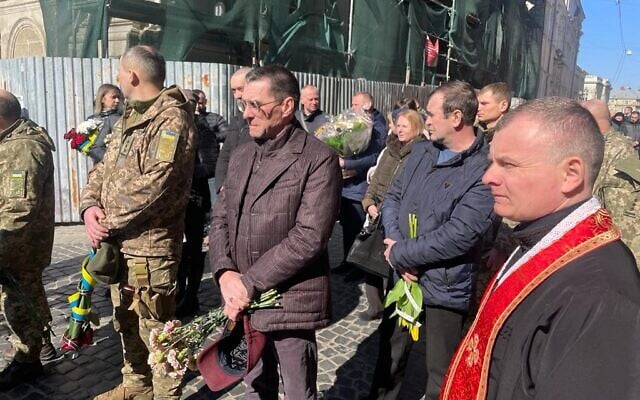
LVIV, Ukraine — Outside a church in central Lviv on Friday, a group of Ukrainian soldiers stood in formation, at attention but stealing expectant glances towards the side. One signaled the drummer, who began to pound a slow, monotone beat, seconds before the sanctuary’s heavy door swung open, and the funeral of Colonel Serheii Kohan began.
Leading the assemblage was a color guard, followed by soldiers carrying a large wooden cross and an official photograph of Kohan. Pallbearers followed with his casket, laying it in a black Mercedes Sprinter Van, currently doubling as a municipal hearse.
Kohan’s first loved one to place flowers on his coffin fought to keep his composure, with only a silent tear rolling down his cheek. With the seal broken, the rest of the small group of his family, friends, and colleagues hugged, intermittently turning their faces to wipe their eyes.
Responsible for training foreign military volunteers, Kohan was among 35 soldiers killed on Sunday by a Russian cruise missile attack on the International Center for Peacekeeping and Security in Yavoriv, a military base west of Lviv. The strike also injured more than 130.
In addition to attacking Yavoriv, Russia has conducted multiple strikes on airports in nearby Lutsk, Ivano-Frankivsk and most recently, Lviv itself, aerial assaults marking the most significant Russian incursions into western Ukraine.
Funerals for soldiers killed at Yavoriv have been ongoing all week in Lviv, puncturing the pervading feeling in the city that the front – hitherto focused on larger cities in Ukraine’s central and eastern regions and southern coast – was elsewhere.
On Friday morning, calm was shattered again when Russian cruise missiles exploded near Lviv’s airport, the first air assault within the city. Lviv Mayor Andriy Sadovyi said that there were no casualties in the attack, but an aircraft maintenance facility near the airfield was destroyed.
“When the air raid sirens dragged on for three hours last week, we were joking that the Russians were delivering the bombs on bicycles,” said Maksim, who declined to share his last name.
“After this morning, people have been more quiet. We’re not making bicycle jokes anymore,” he said, soon after the Lviv facility was destroyed.
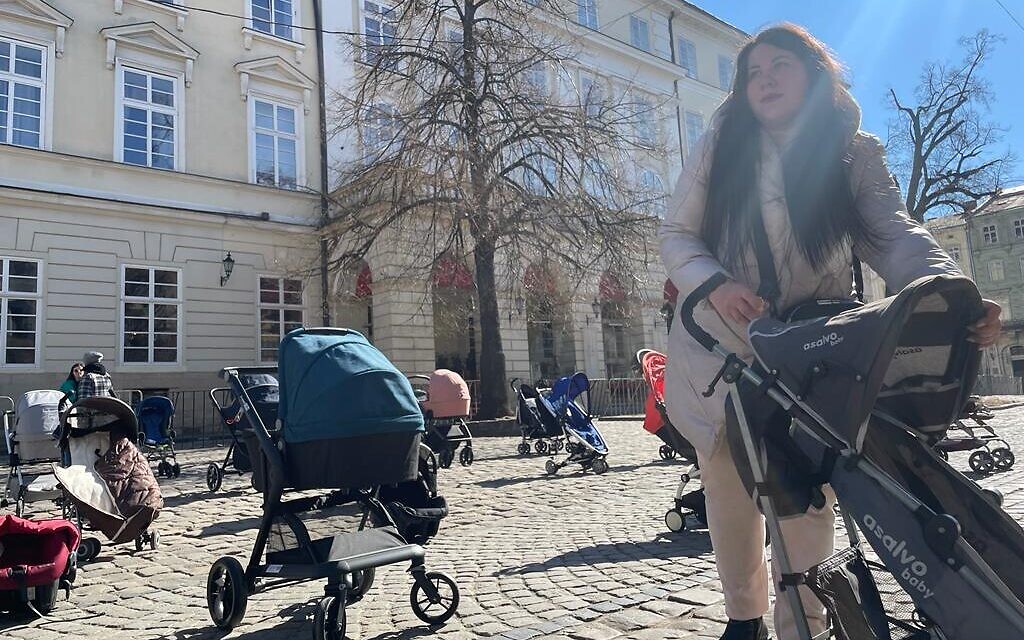
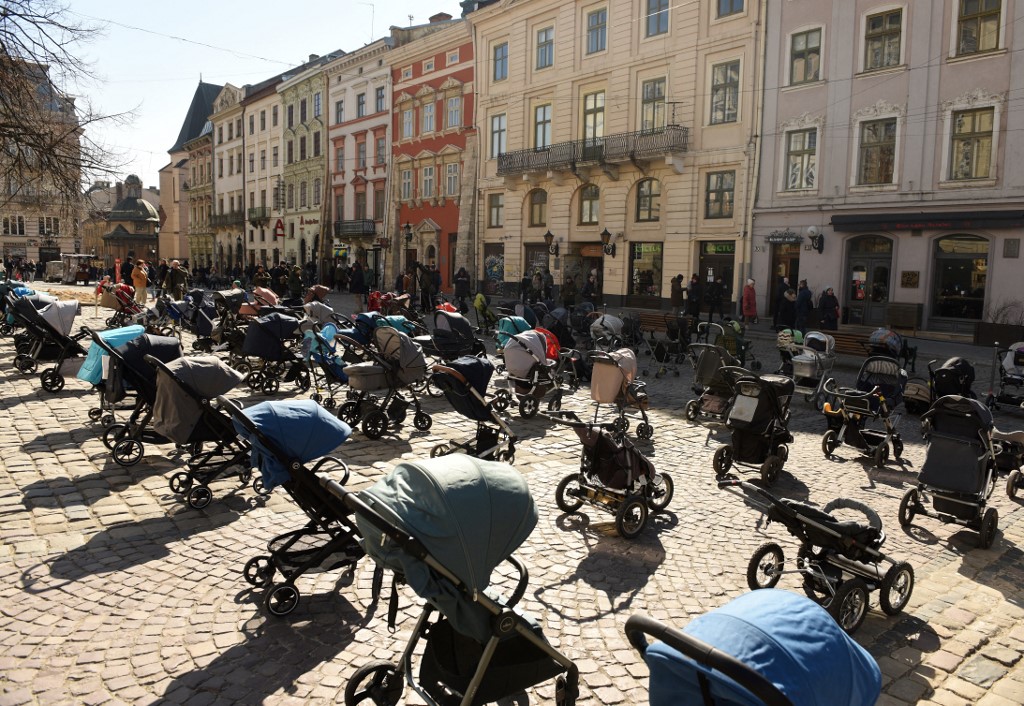
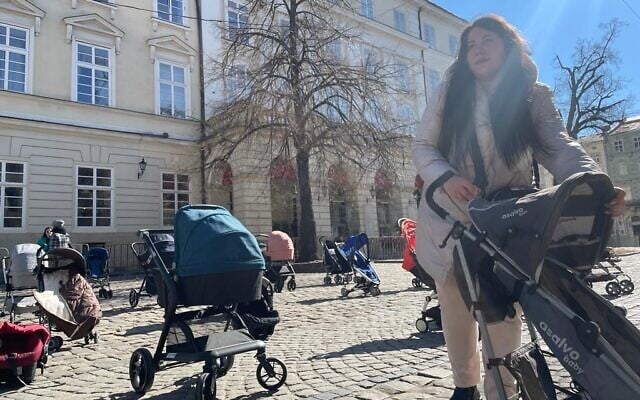
A few hours later, the Lviv City Hall staged a demonstration to remind people of the 109 children it counts as casualties of the war, placing dozens of empty strollers outside the municipal building.
Lviv has turned into a haven for internally displaced Ukrainians, with an estimated 200,000 relocated within the city. Every hotel room, hostel, and apartment in the city has been rented, and many of the city’s large cultural institutions have been converted into shelters.
In a large theater by Lviv’s central train station, inflatable mattresses have been neatly ordered around the plush green velvet seats. In the hour before curfew on Thursday evening, children ran around playing in groups, while their parents clustered into corners, enjoying the silence or quietly chatting. Some refugees threw jackets over their heads, attempting to black out the bright theatre lights, in order to sleep. The air was thick with the heat and scent of many bodies.
Vladi, who preferred a first name for privacy, has been living with his family in northern Israel for several years. Days before Russia invaded on February 24, he flew to Ukraine to try to convince his reticent grandmother to evacuate with him. By the time the war broke out, it was too late. As a Ukrainian citizen of fighting age, he cannot leave the country.
In the past days, Vladi made his way from a village, near embattled Kharkiv, to a refugee center in Lviv, trading community for perceived safety.
“I’m all alone here,” the young man said. “I’m not even from Lviv. My family is in Israel, and I can’t leave.”






The Times of Israel Community.