

Top judge’s querying of terror suspect’s detention prompts coalition calls for dismissal
Supreme Court Justice Khaled Kabub argued that suspect, who threw pipe bombs that did not explode, may be eligible for house arrest since fellow suspects were freed in hostage deal
 Add ToI as a Preferred Source on Google
Jeremy Sharon is The Times of Israel’s legal affairs and settlements reporter
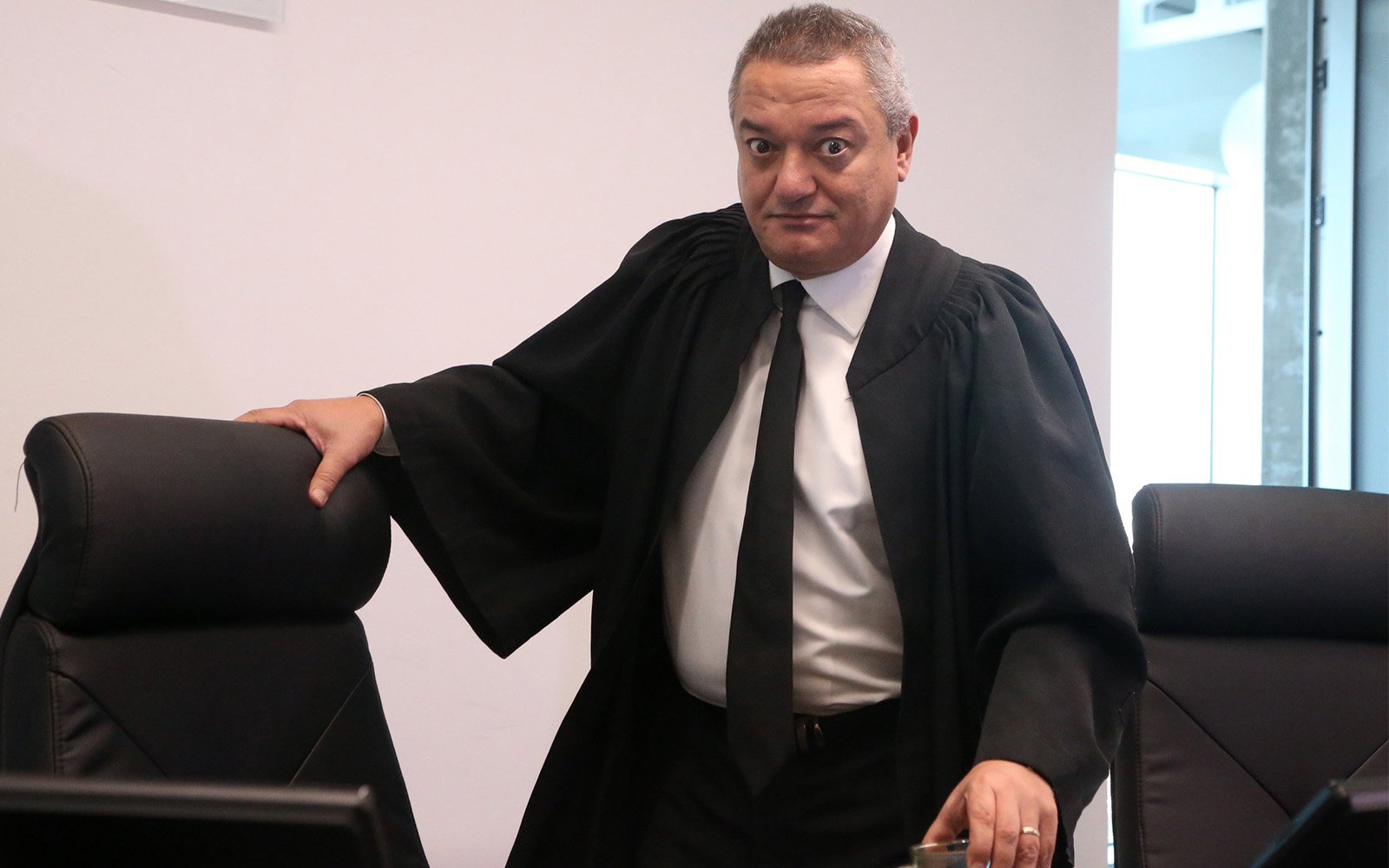
Controversial comments made by Supreme Court Justice Khaled Kabub in a recent hearing on the detention of a terror suspect raised the ire of government ministers and coalition MKs Monday, and gave rise to calls for his impeachment.
Kabub’s comments during a Supreme Court hearing in January were first aired by Kan news on Monday, based on minutes of the session.
At the hearing, Kabub asked why the suspect in question could not be sent to house arrest with electronic restraints, since some of his fellow suspects had been released under the terms of the November hostage release agreement with Hamas.
Kabub nevertheless eventually ruled that the suspect be kept in detention.
Communications Minister Shlomo Karhi of the Likud party denounced Kabub over his comments, suggesting he had sought to give Hamas a negotiations “bonus,” and called for the justice’s dismissal, while the right-wing B’Tsalmo organization filed a complaint to the State Ombudsman for Judges.
The hearing in question concerned an individual from East Jerusalem who had been involved in rioting in the city’s Sur Baher neighborhood in November 2022. The suspect, along with three minors, made and threw pipe bombs that did not cause any injuries.
At the Supreme Court hearing in January over the State Attorney Office’s request for a second extension of the suspect’s remand, Kabub asked the attorney representing the State Attorney whether house arrest with electronic restraints could be considered, instead of ongoing remand extensions.

He noted that three of the other suspects in the case had been released, and argued that the suspect under discussion might therefore also be eligible for more lenient conditions.
When the State Attorney’s representative pointed out that the three released suspects had been set free in the hostage release agreement with Hamas, Kabub insisted that it had been the State Attorney’s Office that had agreed to their release and that it was therefore reasonable to consider easing the terms of detention of the suspect under discussion.
“You found it appropriate to release them. To release those ones and claim that [this one] is so dangerous that he cannot be released with [electronic] restrains, there is a bit of a dissonance between these two [positions] and it is a shame for me to write… The state’s position is rigid,” said Kabub.
Despite this exchange, the justice ultimately agreed to extend the suspect’s remand for 90 days, but asked the Jerusalem District Court to reevaluate the possibility of downgrading his detention to house arrest with electronic restraints.
In response to the story, Karhi accused Kabub of essentially backing Hamas’s negotiation strategy.
“Hamas murdered and slaughtered our sons and daughters and is trying to force us to release murderers from jail in return for our captives, and Justice Kabub is giving Hamas a tailwind and granting them a bonus in the deal, for terrorists who remained in jail,” fumed Karhi.

“The Judicial Selection Committee must convene in order to impeach Justice Kabub immediately,” the minister demanded.
Likud MK Moshe Saada said Kabub’s comments reflected “a total disconnect” with reality, while ultranationalist MK Limor Son Har Melech said the justice’s comments were “grave and outrageous” and also called for his ouster.
The State Attorney’s Jerusalem District Office told Kan that it rejected Kabub’s arguments, and insisted that it was not the State Attorney’s Office that had decided which Palestinian prisoners to release in the November deal with Hamas, but the government and the Shin Bet.
It added that, regardless of who decided which prisoners should be released, that process “was not supposed to at all influence proceedings against suspects who were not part of the hostages deal.”
The Judicial Authority said in response that “The courts speak through their decisions and rulings, and through them alone,” in reference to the fact that Kabub ultimately ruled to extend the suspect’s remand.
In the last few weeks, Kabub has been the subject of complaints to the State Ombudsman of the Israeli Judiciary due to his alleged violation of the ethical rules of conduct for judges.
Several allegations have been raised that the justice promoted his daughter’s law firm on several occasions, and met with Tel Aviv Mayor Ron Huldai in contravention of the rules of conduct for judges.








The Times of Israel Community.