

Trump alleges ‘surprise ballot dumps’ stealing vote as Biden aide says he’ll win
President’s comments, without evidence, come after he claimed he’d won election, alleged fraud, said he’d go to Supreme Court; Democrat challenger ahead in Michigan, Wisconsin
 Add ToI as a Preferred Source on Google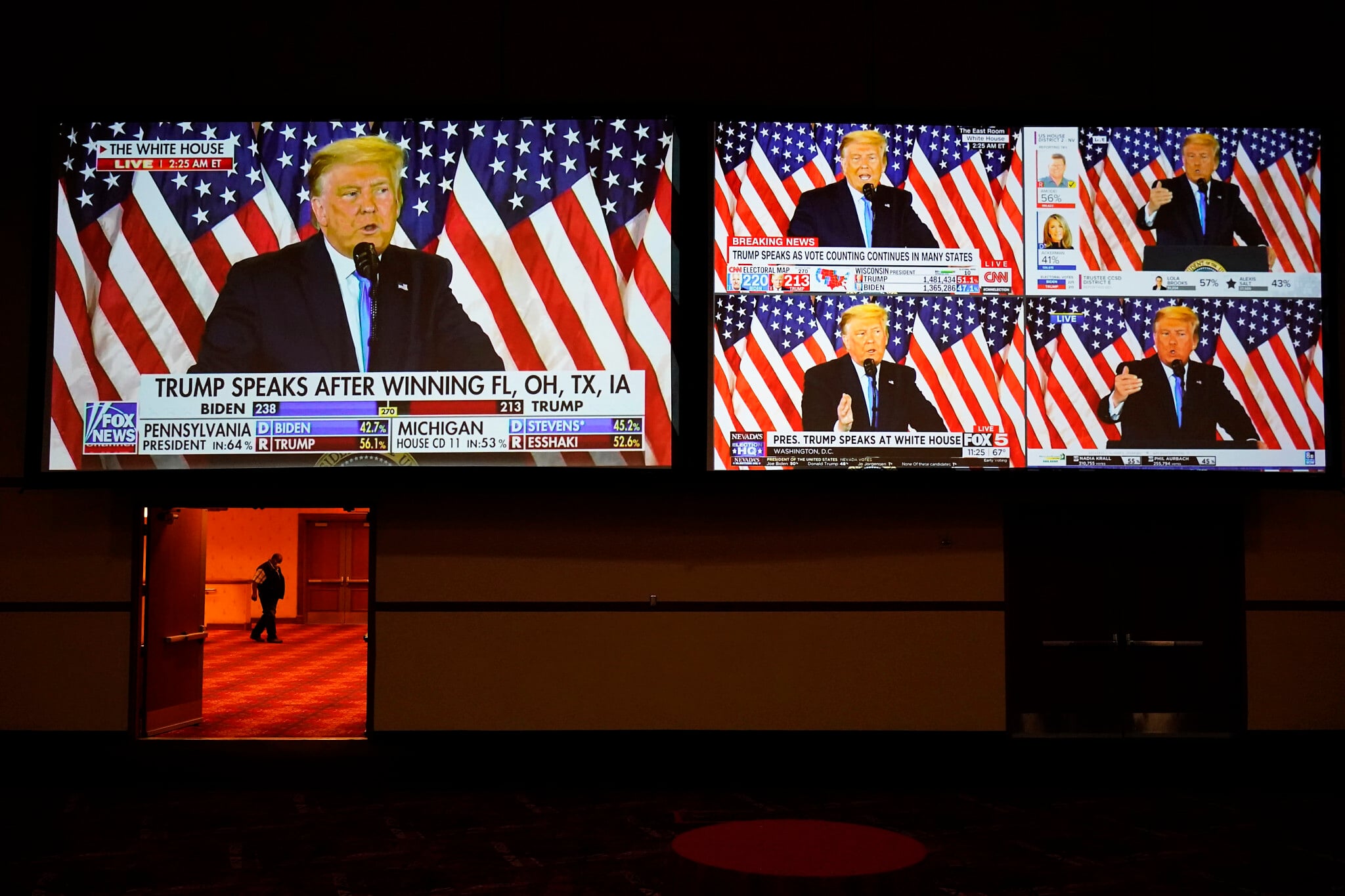
US President Donald Trump alleged without evidence on Wednesday that there had been “surprise ballot dumps” in states where he had been leading in the race for the White House, while Democrat Joe Biden vowed to push for every vote to be counted.
The comments came as Biden appeared to move into the lead in the key battleground states of Michigan and Wisconsin, with hundreds of thousands of ballots yet to be counted. In Pennsylvania, Trump held onto his lead, but over a million votes remained outstanding there, according to state officials.
“Last night I was leading, often solidly, in many key States, in almost all instances Democrat run & controlled,” Trump tweeted Wednesday morning. “Then, one by one, they started to magically disappear as surprise ballot dumps were counted.”
Trump did not offer any evidence for his allegation of “ballot dumps” and there have been no reports of any irregularities. The tweet was flagged by Twitter for being potentially misleading.
In a second tweet, he claimed that the mail-in ballots were “devastating in their percentage and power of destruction.”
How come every time they count Mail-In ballot dumps they are so devastating in their percentage and power of destruction?
— Donald J. Trump (@realDonaldTrump) November 4, 2020
The comments came hours after Trump, in an extraordinary move from the White House, issued premature claims of victory and said he would take the election to the Supreme Court to stop the counting. It was unclear exactly what legal action he might try to pursue.
Biden also took to Twitter and vowed Wednesday that his campaign would not “rest until every vote is counted” in the US election.
We won't rest until everyone's vote is counted. Tune in as my campaign manager @jomalleydillon and campaign adviser Bob Bauer give an update on where the race stands. https://t.co/Rwz4iR25B3
— Joe Biden (@JoeBiden) November 4, 2020
His campaign chief said he was on course to win the presidency. “By this afternoon, he will have leads in states that will put him over 270 electoral votes,” Jennifer O’Malley Dillon said in a call with reporters, according to NBC. Biden “is on track to win this election, and he will be the next president of the United States,” she added.
As state officials worked to count those votes, all eyes were on the key battleground states of Wisconsin, Michigan and Pennsylvania with the fate of the United States presidency hanging in the balance.
The high stakes election was held against the backdrop of a historic pandemic that has killed more than 230,000 Americans and wiped away millions of jobs. Both candidates spent months pressing dramatically different visions for the nation’s future and voters responded in huge numbers, with more than 100 million people casting votes ahead of Election Day.
But the margins were exceedingly tight, with the candidates trading wins in battleground states across the country. Trump picked up Florida, the largest of the swing states, while Biden flipped Arizona, a state that has reliably voted Republican in recent elections. Neither cleared the 270 Electoral College votes needed to carry the White House.
Vote tabulations routinely continue beyond Election Day, and states largely set the rules for when the count has to end. In presidential elections, a key point is the date in December when presidential electors met. That’s set by federal law.
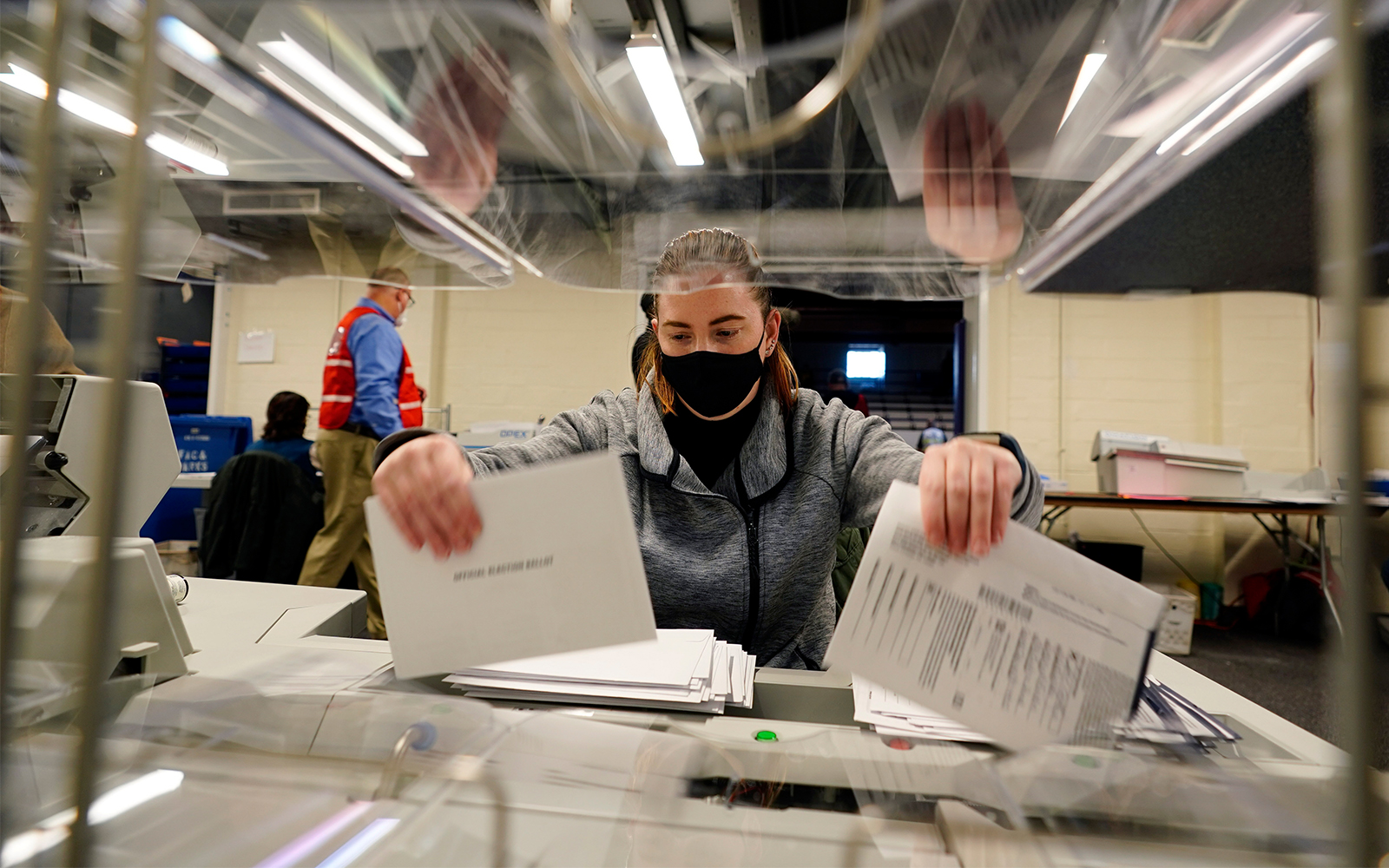
Several states allow mailed-in votes to be accepted after Election Day, as long as they were postmarked by Tuesday. That includes Pennsylvania, where ballots postmarked by Nov. 3 can be accepted if they arrive up to three days after the election.
Pennsylvania Gov. Tom Wolf tweeted that his state had over 1 million ballots to be counted and that he “promised Pennsylvanians that we would count every vote and that’s what we’re going to do.”
Trump appeared to suggest those ballots should not be counted, and that he would fight for that outcome at the high court. But legal experts were dubious of Trump’s declaration.
“I do not see a way that he could go directly to the Supreme Court to stop the counting of votes. There could be fights in specific states, and some of those could end up at the Supreme Court. But this is not the way things work,” said Rick Hasen, a professor of law and political science at the University of California-Irvine.
Trump has appointed three of the high court’s nine justices including, most recently, Amy Coney Barrett.
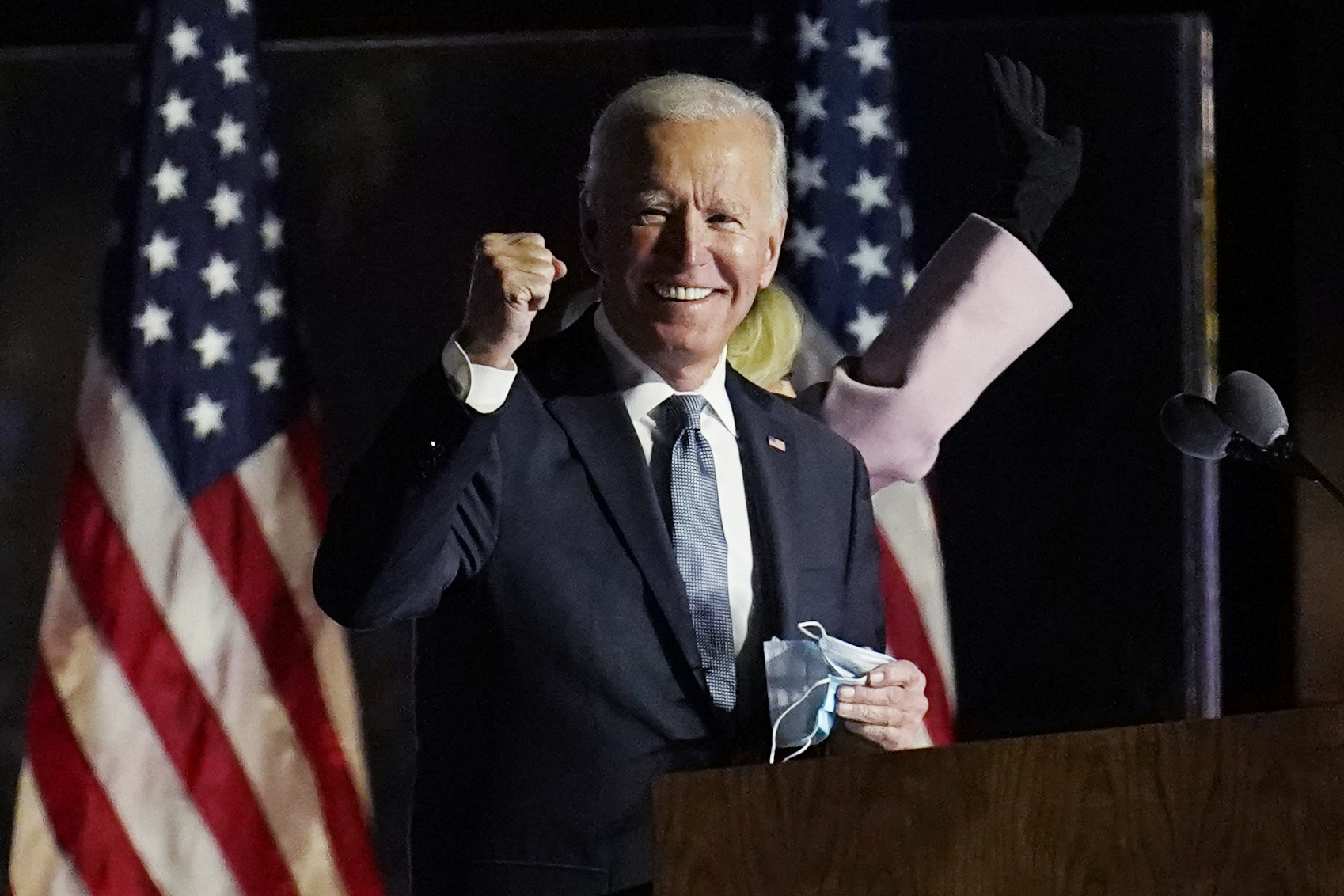
Biden, briefly appearing in front of supporters in Delaware, urged patience, saying the election “ain’t over until every vote is counted, every ballot is counted.”
“It’s not my place or Donald Trump’s place to declare who’s won this election,” Biden said. “That’s the decision of the American people.”
Democrats typically outperform Republicans in mail voting, while the GOP looks to make up ground in Election Day turnout. That means the early margins between the candidates could be influenced by which type of votes — early or Election Day — were being reported by the states.
Throughout the campaign, Trump cast doubt about the integrity of the election and repeatedly suggested that mail-in ballots should not be counted. Both campaigns had teams of lawyers at the ready to move into battleground states if there were legal challenges.
The tight overall contest reflected a deeply polarized nation struggling to respond to the worst health crisis in more than a century, with millions of lost jobs, and a reckoning on racial injustice.
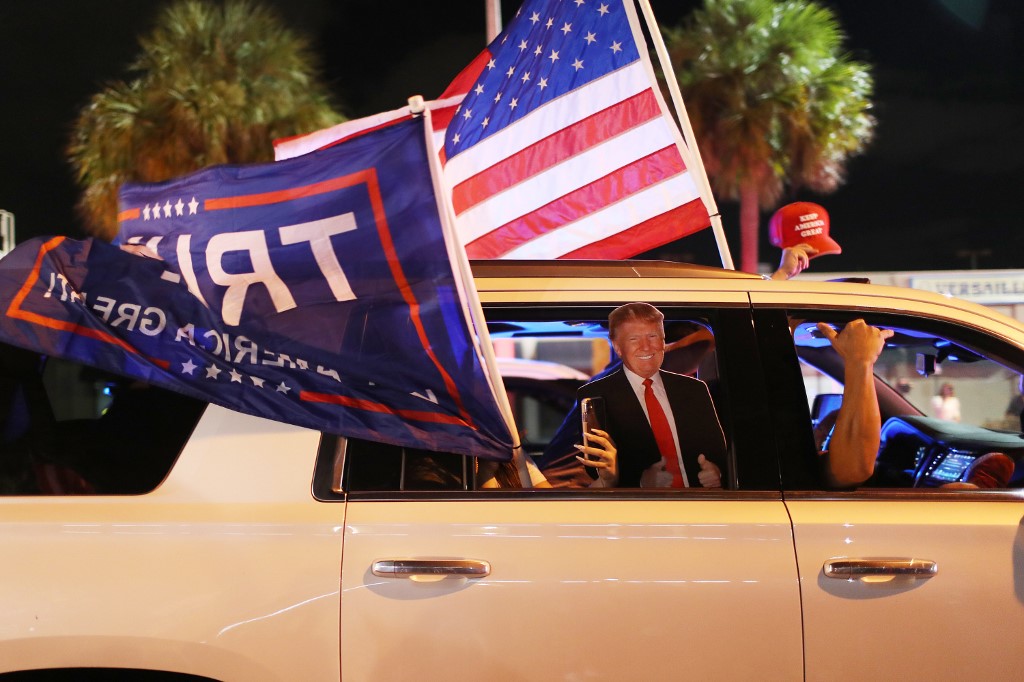
Trump kept several states, including Texas, Iowa and Ohio, where Biden had made a strong play in the final stages of the campaign. But Biden also picked off states where Trump sought to compete, including New Hampshire and Minnesota. But Florida was the biggest, fiercely contested battleground on the map, with both campaigns battling over the 29 Electoral College votes that went to Trump.
The president adopted Florida as his new home state, wooed its Latino community, particularly Cuban-Americans, and held rallies there incessantly. For his part, Biden deployed his top surrogate — President Barack Obama — there twice in the campaign’s closing days and benefitted from a $100 million pledge in the state from Michael Bloomberg.
Democrats entered the night confident not only in Biden’s prospects, but also in the party’s ability to take control of the Senate. But the GOP held several seats that were considered vulnerable, including in Iowa, Texas and Kansas. The House was expected to remain under Democratic control.
The coronavirus pandemic — and Trump’s handling of it — was the inescapable focus for 2020.
For Trump, the election stood as a judgment on his four years in office, a term in which he bent Washington to his will, challenged faith in its institutions and changed how America was viewed across the globe. Rarely trying to unite a country divided along lines of race and class, he has often acted as an insurgent against the government he led while undermining the nation’s scientists, bureaucracy and media.
The momentum from early voting carried into Election Day, as an energized electorate produced long lines at polling sites throughout the country. Turnout was higher than in 2016 in numerous counties, including all of Florida, nearly every county in North Carolina and more than 100 counties in both Georgia and Texas. That tally seemed sure to increase as more counties reported their turnout figures.
Voters braved worries of the coronavirus, threats of polling place intimidation and expectations of long lines caused by changes to voting systems, but appeared undeterred as turnout appeared it would easily surpass the 139 million ballots cast four years ago.
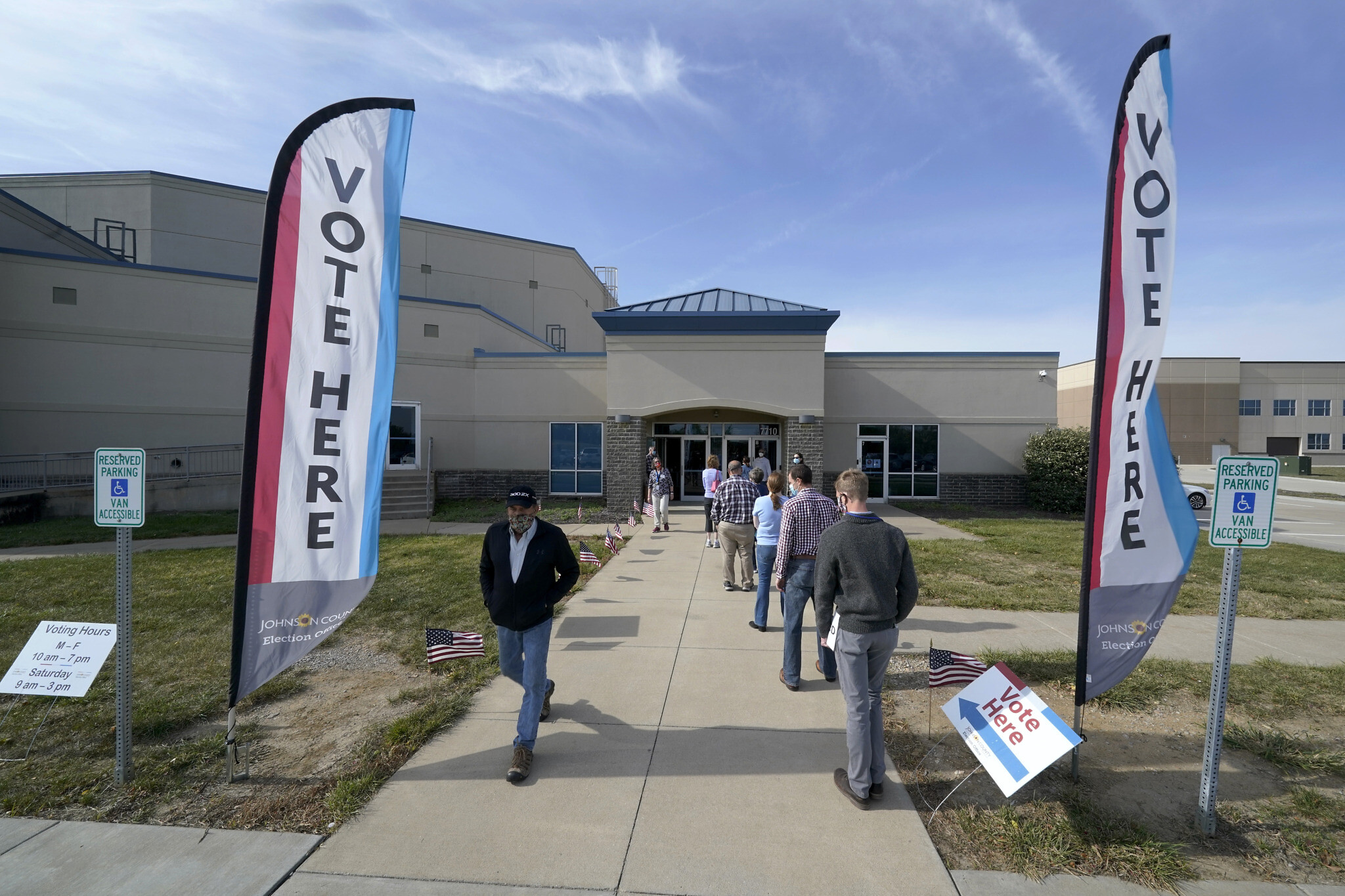
No major problems arose on Tuesday, outside the typical glitches of a presidential election: Some polling places opened late, robocalls provided false information to voters in Iowa and Michigan, and machines or software malfunctioned in some counties in the battleground states of Ohio, Pennsylvania, Georgia and Texas.
The cybersecurity agency at the Department of Homeland Security said there were no outward signs by midday of any malicious activity.
With the coronavirus now surging anew, voters ranked the pandemic and the economy as top concerns in the race between Trump and Biden, according to AP VoteCast, a national survey of the electorate.
Voters were especially likely to call the public health crisis the nation’s most important issue, with the economy following close behind. Fewer named health care, racism, law enforcement, immigration or climate change
The survey found that Trump’s leadership loomed large in voters’ decision-making. Nearly two-thirds of voters said their vote was about Trump — either for him or against him.









The Times of Israel Community.