

Why the Book of Mormon is the Great American Novel
When a Jewish author sets off on quest to understand the fantastical foundational text of Mormonism, he ends up learning more about himself
 Add ToI as a Preferred Source on Google
Renee Ghert-Zand is the health reporter and a feature writer for The Times of Israel.
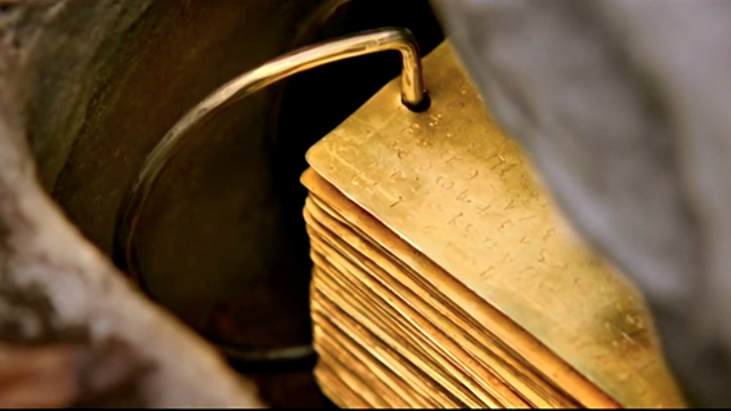
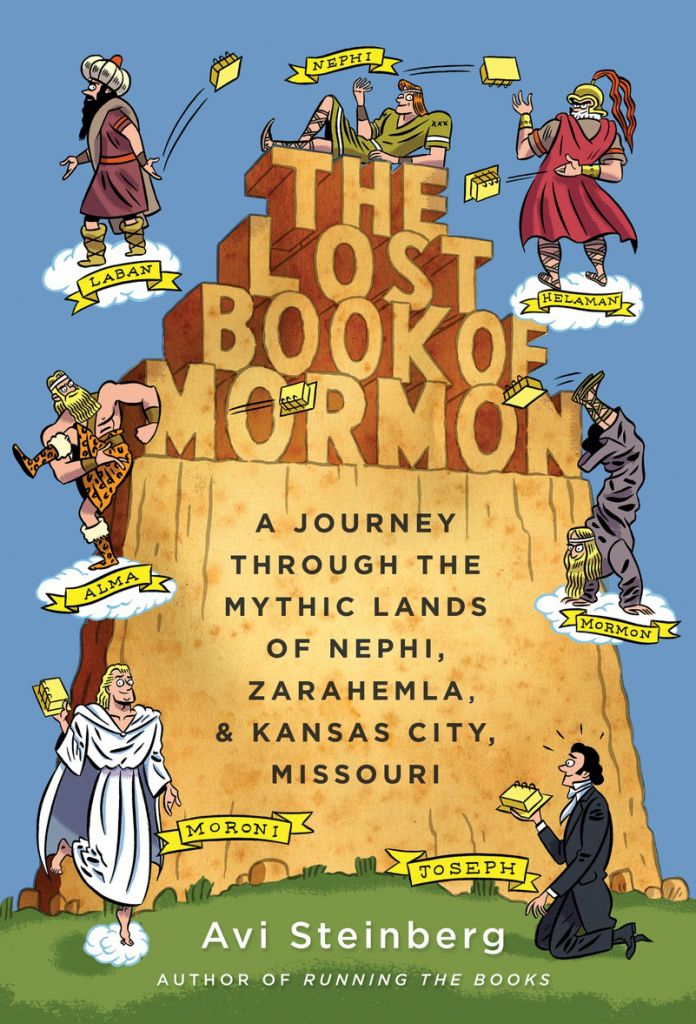
The recently published “The Lost Book of Mormon: A Journey Through the Mythic Lands of Nephi, Zarahemla, and Kansas City, Missouri” is not about what you think it is. While it’s true it is about the foundational text of the Church of Jesus Christ of Latter-Day Saints, the non-fiction book actually turns out to be an unexpectedly humorous and insightful memoir by a young Jewish writer who, while delving into the sacred book of another religion, figures out who he is as a writer — and a person.
Readers familiar with Avi Steinberg’s first book, “Running the Books” (2011), will know he has a way of turning his life experiences into bitingly funny memoirs with laugh-out-loud moments. But this time, instead of serving as an accidental prison librarian, Steinberg, who was raised as an Orthodox Jew, finds himself on a quest to visit geographic locations central to the narrative of the revelatory text penned by Mormon prophet Joseph Smith.
So, what’s a nice Jewish boy doing on an improbable pilgrimage adventure to Jerusalem, Mesomerica and upstate New York? And why is he so ready to follow the trail proscribed by gold plates an early 19th century American farmer claimed he dug up at the instruction of an angel named Moroni and translated from an ancient language in to English? Well, that’s an interesting story.
While on an extended stay in Jerusalem and procrastinating finishing revisions to the manuscript to his first book, Steinberg started delving in to the Book of Mormon’s opening story. In it a small group of ancient Israelites take off from Jerusalem for America after a murder takes place.
“This story of leaving Jerusalem and coming to the New World was my own family’s story,” Steinberg tells The Times of Israel from his home in Cambridge, Massachusetts.
His family’s departure from the Holy City was rather less dramatic than that of the characters in the Book of Mormon, but he nonetheless identifies with their journey. Steinberg, now 35, was born in Jerusalem to parents who had immigrated to Israel from St. Louis in 1971. When he was five years old, his parents moved the family back to the United States, where Steinberg grew up, first in Cleveland and then in Cambridge.
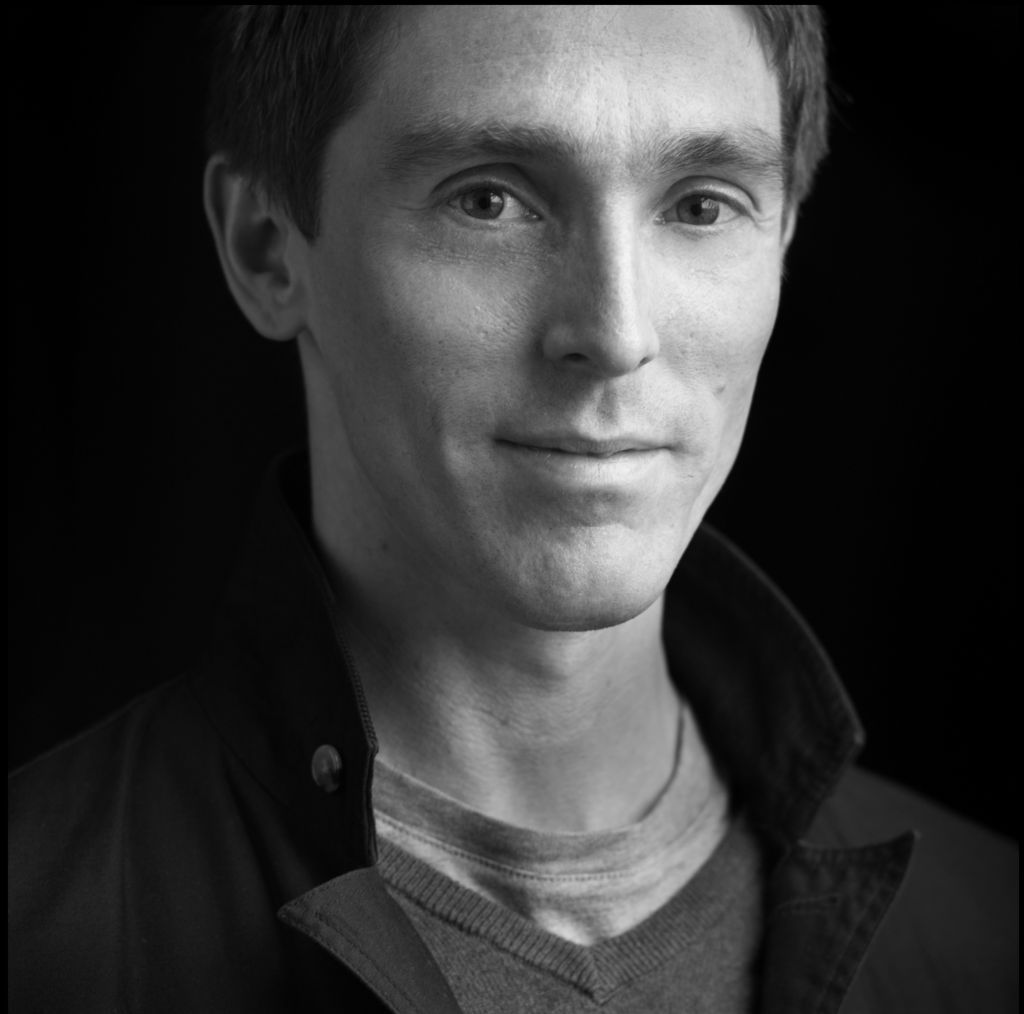
Steinberg, however, retained a close connection with Israel, studying at a yeshiva in the West Bank settlement of Efrat during high school summers, and also for a year between high school and college.
While growing up, Steinberg knew nothing about what was written inside the Book of Mormon, despite the fact that he had found a copy lying in a subway station and had brought it home.
“I was a kid who was interested in religion and I knew it was some kind of outsider bible, so I thought it was interesting,” he recalls.
“But my mom was horrified when I brought it home, so I just put it on my shelf and kept it as a sort of collectible.”
The next time the Book of Mormon entered his consciousness was when he met a young woman in college he was interested in. As Steinberg tried to get her to make out with him, she told him about her desire to convert to Mormonism. (Ultimately, he says, it wasn’t Mormonism she was drawn to, rather lesbianism.)
By then, Steinberg had transferred from Yeshiva University to Harvard and was studying early American literature.
‘The story strives too hard, and that speaks to the human desire to become part of a religious text. Joseph Smith was trying to enter biblical literature’
“The Book of Mormon presented itself as a link between the Hebrew Bible and American Puritanism,” says Steinberg, who is no longer religiously observant.
While in Jerusalem working on his first book, Steinberg thought about the Bible in humanistic terms. As he walked around the Old City, he wondered about the people who had written the holy books.
“Just a few people wrote the stories that are at the root of our culture. The fact that it is not divine makes it all the more interesting,” he says.
Realizing that the Book of Mormon is at its core a Jerusalem story, he decided to go to the places mentioned in it and get into the mindset of not only the characters in the story, but also the unconventional American man who created them.
“I approached it as a sort of thought experiment. What if the story were true? It’s a crazy, absurd story, but that makes it all the more human,” he says.
“The story strives too hard, and that speaks to the human desire to become part of a religious text. Joseph Smith was trying to enter biblical literature.”
The fantastical nature of the Book of Mormon narrative didn’t put Steinberg off at all. The fact that Joseph Smith was a real person living in a real historical period of interest to Steinberg was enough to propel him along his own unusual literary journey.
Steinberg gets a bookseller in Jerusalem’s Mahane Yehuda market to track down a rare copy of the Book of Mormon for him — not an easy feat, given that Mormon proselytizing is prohibited and the book is banned from Hebrew publication in Israel. (The bookseller’s find, however, was in Samoan.)
The author contemplates psychological theories of the Jerusalem Syndrome and then joins an eccentric and infinitely amusing bunch of American and Australian Mormons for a tour of Central American and Mexican sites purportedly connected to the stories in the Book of Mormon.
Steinberg does not allow the irrational notion of Mayan Hebrews to sidetrack him from his quest to understand Joseph Smith and what it means for an author to live through his text and for his text to live through him.
The young writer caps off his Book of Mormon-inspired travels by showing up at the base of a hill in upstate New York believed to be the site where Smith dug up the gold plates. There, he volunteers to take part in a huge Book of Mormon extravaganza in which tall, buff Brigham Young University students always get the starring roles.
Alas, Steinberg’s hopes for stardom, or at least a small speaking role, are dashed when the producers discover that he has been using a false name (albeit a Jewish one) and send him packing. (Steinberg says his use of a pseudonym had nothing to do with posing as an undercover writer and everything to do with his psychological state at the time, as his marriage was falling part.)
‘If you take Mormonism away from the Book of Mormon, you can read it as an American book’
Pretty early on in reading the “The Lost Book of Mormon,” one realizes that it is not at all about Mormonism, and more about the possibility that Joseph Smith’s book could be considered a great American novel that predates Melville and Twain.
“If you take Mormonism away from the Book of Mormon, you can read it as an American book,” Steinberg said.
But this is not to say that the author completely removes religion from the picture. In fact, he found religion by studying the Book of Mormon.
“I realized the importance of religion to me. I grew up with religion and left it, but I’ve realized that you don’t ever leave religion,” says Steinberg, who was always more attracted to text study than to ritual practice.
“Literature and being a writer is my religion.”










The Times of Israel Community.