

Brother of Gay Pride stabbing victim decries march ‘fiasco’
As questions multiply on officials’ failure to prevent Yishai Schlissel from copying his decade-old attack, police chief vows probe: No whitewash
 Add ToI as a Preferred Source on Google
Itamar Sharon is a news editor at The Times of Israel
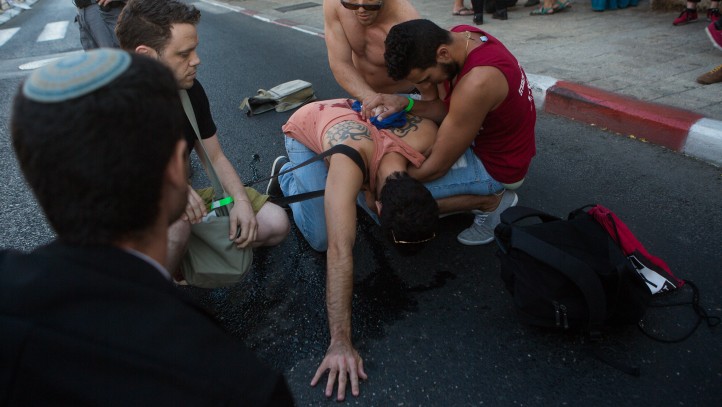
The brother of a 26-year-old man seriously injured in Thursday’s stabbing attack during Jerusalem’s Gay Pride Parade lambasted judicial and law enforcement officials for what he called the “fiasco” of the day’s events.
The man, identified only as Gilad, questioned the courts’ decision to release assailant Yishai Schlissel from prison several weeks ago, after he spent a decade in jail for a similar attack that injured three people in 2005. Schlissel was originally sentenced to 12 years in prison, but was released two years early. Gilad also expressed frustration at the failure of the police to prevent Schlissel from approaching the parade, in light of his history.
“I’m angry at the judges who let him go and at the police. This was a fiasco. It could have been prevented. I don’t understand why he was released early,” he said.
Gilad added that his brother had attended the annual march to support the LGBT community. “He came with friends. He has a girlfriend. But it doesn’t matter,” he added.
Gilad’s brother was still being treated at the capital’s Hadassah Ein Kerem Hospital, along with three other victims.
The 16-year-old girl who was critically injured in the attack was in stable condition, doctors said late at night, though her life was still in danger.
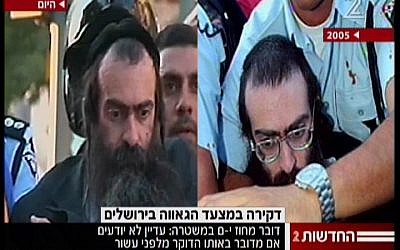
NRG News reported that friends and teachers of the girl had arrived at the Shaare Zedek Medical Center in the capital to support her family. One of her teachers called her “a student who excels at everything she does, who helps others.”
Acting Police Commissioner Bentzi Sau said Thursday night that an investigative team would be set up to probe the police handling of the event. “This is something that must not happen,” he stated at a press conference, vowing that lessons would be learned.
“We will investigate this thoroughly,” he added. “There will be no whitewashing.”
Standing beside him, Public Security Minister Gilad Erdan agreed that the perpetration of the attack “raises difficult questions.” He, too, promised an extensive review of police conduct ahead of and during the march.
Jerusalem police chief Moshe (Chico) Edri has suffered the brunt of the criticism for failing to prevent the attack.
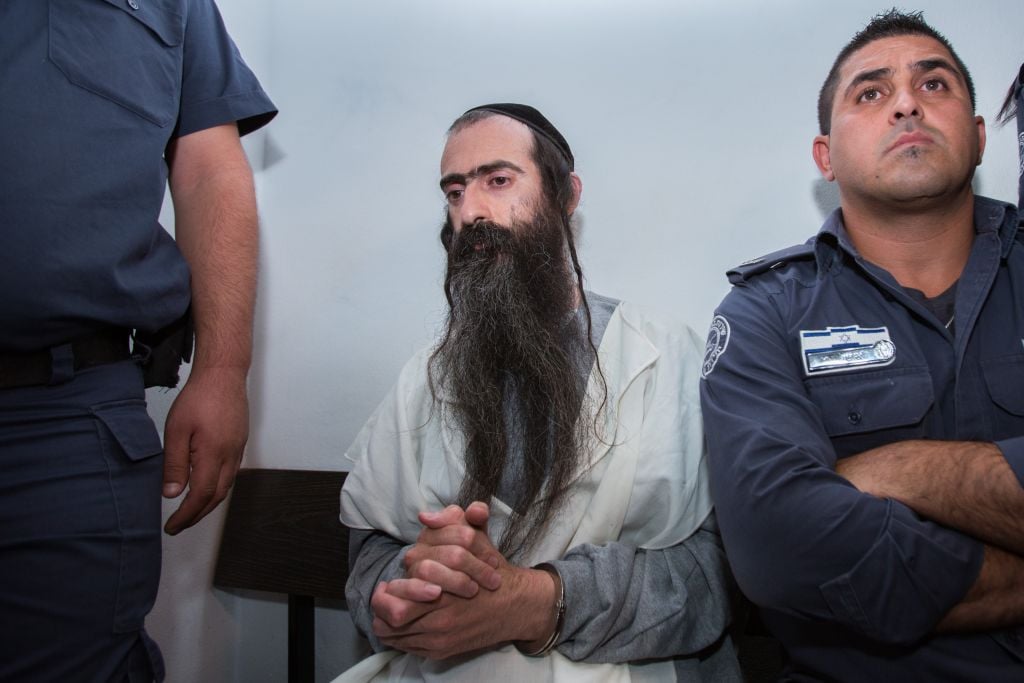
Ynet reported that Schlissel’s name and photo were included in an internal intelligence report that was provided to policemen — ahead of the march — regarding possible troublemakers.
Haaretz, meanwhile, claimed that policemen securing the parade were instructed to stop and question any ultra-Orthodox person who attempted to approach the procession, but did not do so in Schlissel’s case.
Edri told reporters that while police were aware that Schlissel had been released, they did not have any concrete information that he was planning another attack.
Schlissel had made a series of statements following his release from prison three weeks ago, indicating that he could be planning another attack on the Gay Pride rally.
Following his release, Schlissel distributed a handwritten, anti-gay manifesto in which he called the pride march “shameful” and “blasphemous,” and alluded to plans to perpetrate another attack.
“It is incumbent upon every Jew to risk beatings or imprisonment and together to stop the desecration for the sanctity of His name. If we refrain from declaring war, they’ll feel free to spread this shame all over the world,” he wrote.
Two eyewitnesses told The Times of Israel that, before the attack, a policewoman had noticed Schlissel approaching the parade and told him to stay away.
Schlissel presumably walked along side streets adjacent to the march route and rejoined the parade near the corner of Washington and Keren Hayesod streets, where he ran at the crowd, screaming, and began stabbing people with a kitchen knife.
Tamar Pileggi contributed to this report.


The Times of Israel Community.