

Despite protests, dozens gather to honor fallen ultra-Orthodox soldiers
Druze minister says ‘not even over his dead body’ will he allow religious extremists to shame Haredi servicemen
 Add ToI as a Preferred Source on Google
Judah Ari Gross is The Times of Israel's religions and Diaspora affairs correspondent.
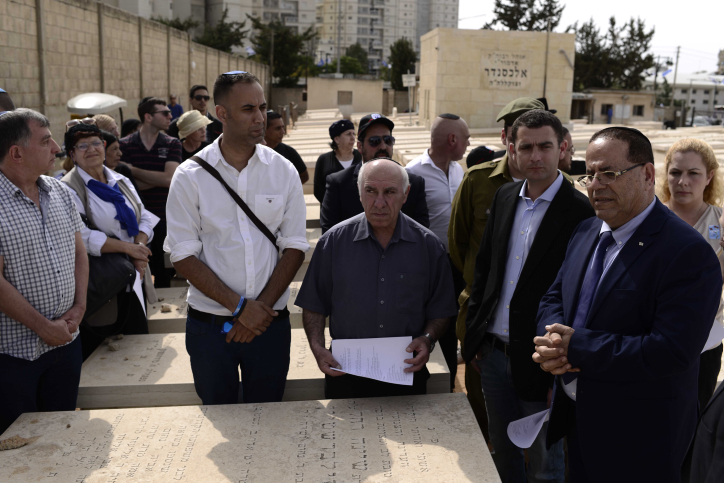
Dozens gathered to honor Israel’s oft-forgotten fallen ultra-Orthodox soldiers at the grave of Pvt. Yitzhak Levinstein, in the Zichron Meir Cemetery in the Tel Aviv suburb of Bnei Brak on Monday, Memorial Day.
The service was interrupted multiple times, as members of the ultra-Orthodox community shouted at and occasionally shoved participants, before police were called to keep them away.
The ultra-Orthodox world generally shuns military service and civil society in general, and those who do serve in the Israel Defense Forces often do so against their parents’ wishes. As such, the graves of fallen ultra-Orthodox soldiers typically go unvisited on Memorial Day, though some yeshivas seek to remedy that.
There are no official records kept of how many ultra-Orthodox are among the 23,544 fallen soldiers commemorated on Memorial Day, but the figure is likely in the low hundreds.
The ceremony was organized by the right-wing Im Tirzu organization and ultra-Orthodox wing of the Likud party. It was the second year such a service was held for ultra-Orthodox soldiers, though the first was quickly overrun by protesters and was forced to end early.
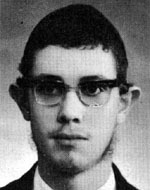
For Monday’s service, attendees gathered around the grave of Pvt. Yitzhak Levinstein, who was born in Jaffa in 1950.
He was 17-years-old when he was killed on October 25, 1967, the Jewish holiday of Hoshanah Rabah. He’d enlisted in the IDF three months earlier.
Levinstein was gunned down in an ambush by Jordanian terrorists as he guarded the Damia Bridge, which connects Jordan and the West Bank.
Yaakov Vider, a member of the Likud party from Bnei Brak who organized the ceremony, told the story of Yitzhak Fisher, another ultra-Orthodox soldier buried in the Bnei Brak cemetery.
Then, as now, the issue of ultra-Orthodox Jews, also known as Haredim, serving in the military was a contentious one. His parents and rabbis tried to convince him not to join the military, and instead spend his time studying, “but he insisted on carrying out his duty and enlisted,” Vider said.
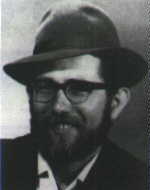
In 1969, Fisher saw a farmer get hit by Egyptian shelling in southern Israel. He rushed to help the man, but the next artillery salvo killed them both.
The attendees of the ceremony spanned the religious spectrum. A handful of Haredim in black velvet yarmulkes were in attendance, but most of the crowd were Modern Orthodox Jews, in knit yarmulkes, as well as secular Jews and one Druze Israeli, Likud Minister Ayoub Kara.
As Vider, Kara and Matan Peleg, the head of Im Tirzu, addressed the crowd, their remarks were repeatedly drowned out in the protest cries of around a dozen Haredi men.
“Why are you doing this here?” one man shouted. “What aren’t you in Tel Aviv? It’s all political.”
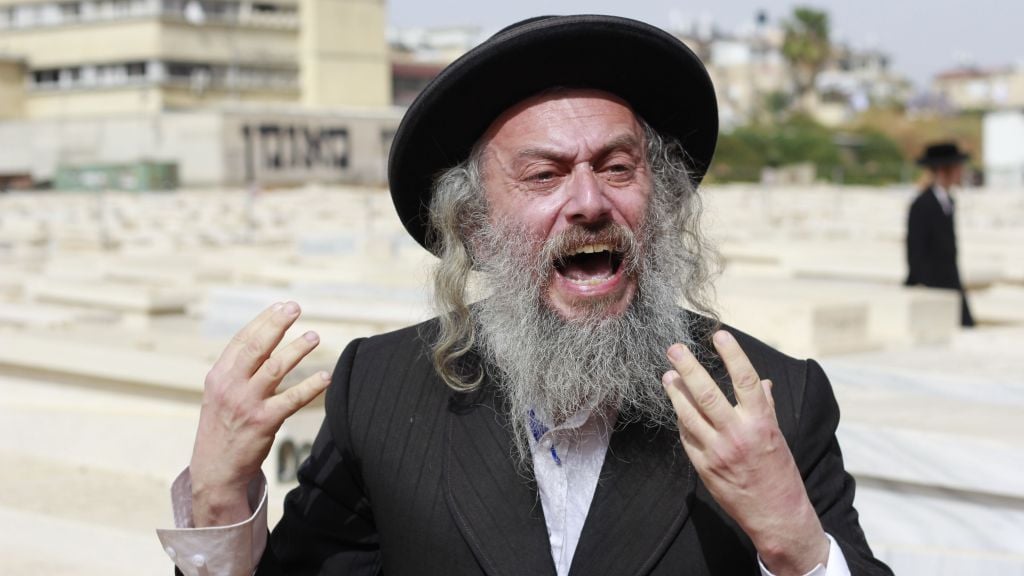
A second, and one of the loudest, screamed that “dead soldiers are a tragedy, but so are Jews that desecrate Shabbat.”
The men then accused Israel of carrying out a “holocaust of Judaism,” by allowing secularism to thrive.
After a few minutes, police arrived at the scene and pushed back the protesters to the other end of the cemetery, where they continued to shout, though less audibly.
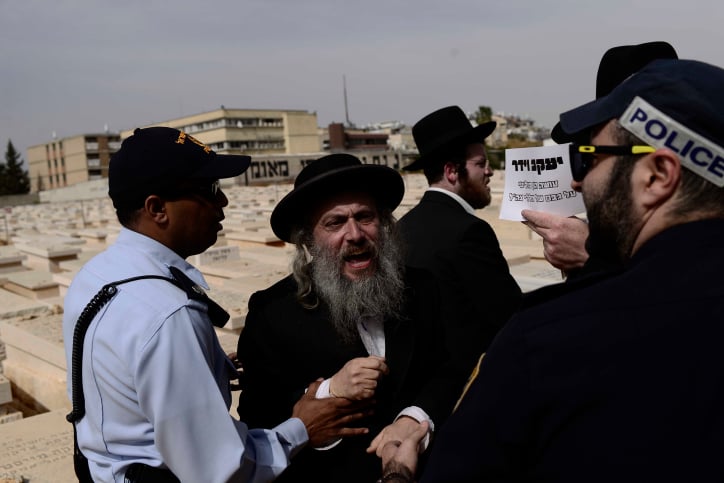
Another protester railed against the fact that men and women serve together in the IDF. “You’ve killed our sons and daughters,” he screamed, before he too was pushed away by a police officer.
A female attendee of the service joked that she should start singing in order to drive the protesters away, as ultra-Orthodox men refrain from listening to a woman sing, as it is considered immodest.
A soldier at the event, a resident of Bnei Brak who asked not to be named, said he’d heard about last year’s ceremony and decided to attend this Memorial Day because he feared there would again be a low turnout. He was concerned his picture might be spread online because of the media coverage at the event. “But it’s okay, I’ll be fine,” he said.
Ultra-Orthodox have, at times, attacked IDF soldiers, specifically ultra-Orthodox IDF soldiers, in parts of Bnei Brak, in Jerusalem’s Mea Shearim neighborhood and in some sections of Beit Shemesh.
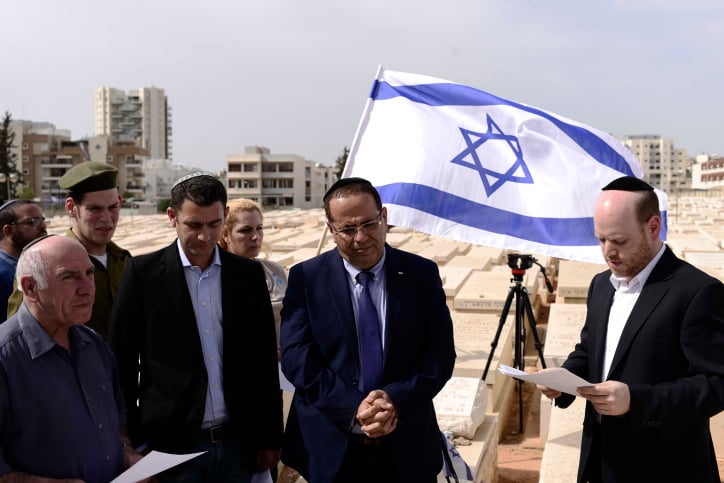
During his speech, Kara decried the phenomenon of “religious extremism” in Israel, motioning to the ultra-Orthodox protesters in the cemetery.
The minister said that “not even over [his] dead body” would he allow “a Haredi soldier to feel ashamed of his service.”
Peleg reminded the attendees that “there are still Haredim guarding our borders,” and expressed hope for further integration.
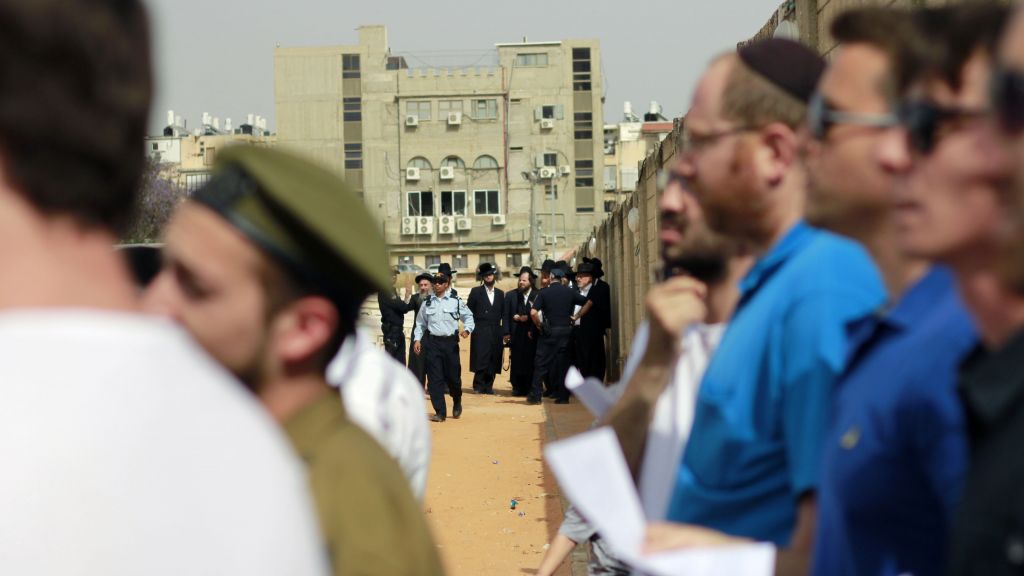
“There’s no rift in our society, just tension that needs to be overcome,” he said.
The organizers said they hoped next year’s service would grow even larger, to better drown out the protesters and show respect for Haredi soldiers.
The service ended with the national anthem, Hatikva, and the traditional song “Ani Ma’amin.”
On the way out, many of the participants stopped to pray the afternoon services together, before heading off to prepare for the Independence Day celebrations, due to start a few hours later.


The Times of Israel Community.