

EU calls for swift divorce, but Britain sees no rush
With UK still digesting its momentous decision to leave union, European leaders urge exit process to start ‘as soon as possible’
 Add ToI as a Preferred Source on Google
Now that Britain has voted to leave the European Union, the bloc’s first order of business is figuring out how to get rid of it. Surprisingly, that’s a tall order.
Britain seemingly has the luxury to pick and choose when to start the laborious, intricate process of disengagement from the 28-nation group, which is expected to take years.
EU leaders exhorted Britain on Saturday to activate as soon as possible Article 50 of the EU’s governing Lisbon Treaty, which contains the exit clause and is the key to let the EU get on with its political life.
German Foreign Minister Frank-Walter Steinmeier, hosting the six original states of the European Union in Berlin, said they were in agreement that London must not wait to start the complex procedure of extracting itself from the bloc.
“We join together in saying that this process must begin as soon as possible so we don’t end up in an extended limbo period but rather can focus on the future of Europe and the work toward it.”
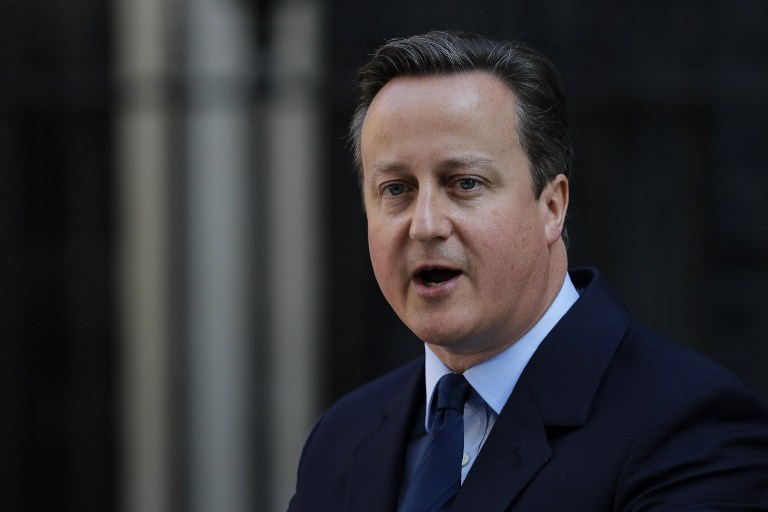
His French counterpart Jean-Marc Ayrault said it was urgent David Cameron, who on Friday said he would resign by October, clear the way for new leadership to manage the transition out of the union.
“There is urgency. There is no time to lose,” said French Foreign Minister Jean-Marc Ayrault.
In announcing his resignation, Cameron said it should be his successor who leads the negotiations under Article 50 of the EU’s Lisbon Treaty which sets out a two-year timeframe to leave.
However Steinmeier, Ayrault, the Netherlands’ Bert Koenders, Italy’s Paolo Gentiloni, Belgium’s Didier Reynders and Luxemburg’s Jean Asselborn stressed in the German capital that time was of the essence.
“We understand and respect the result (of the referendum) and understand that Britain is now concentrating on Britain,” Steinmeier said, flanked by the other ministers.
“But London has a responsibility toward more than just Britain. We must now be allowed to focus on the future of Europe and that means that after the decision taken in Britain, the process by which we negotiate Britain’s exit must begin.”
Britain, however, saw no need for quick action.
“It is vital to stress that there is now no need for haste,” said former London Mayor Boris Johnson, the most prominent supporter of the “leave” campaign.
Cameron’s statement that the process probably would not be triggered before October, when he steps down, indicated that he agreed.
At a two-day summit of the 28 EU leaders opening Tuesday, Cameron will be asked to leave the room at some stage so the other leaders can assess their future without Britain.
The 27 will find much political and legal uncertainty.
No country has ever left the EU before, so no one knows exactly how the process will play out beyond the fact that Britain must, at some point, unambiguously notify the bloc of its intentions and set a two-year clock ticking for negotiating its departure. Until it formally withdraws, Britain will remain a member, with all the rights and obligations that go along with membership.
It is in Britain’s interest to delay the process so it can better prepare its exit conditions and pressure other EU nations to make concessions.
In the short term, the EU’s policy commissioners will meet Monday in Brussels to take stock of developments. The European Commission, the EU’s executive arm, must make recommendations to Britain’s partners about what principles they might use to guide the exit negotiations.
Member states must agree with a qualified majority — or about two-thirds — on Britain’s departure. But should the talks drag on toward the two-year time limit, all 27 would have to agree unanimously to extend the negotiations. If no extension is allowed, EU law would automatically cease to apply to Britain after two years.

The European Parliament will hold an emergency session Tuesday, hours before the summit. It must endorse any final decision by the member states by a simple majority, but the session is only likely to focus on a political resolution taking note of the UK vote and stating the assembly’s position on what should happen next.
Until the process is completed and Britain withdraws, any EU agencies on British territory could remain there, British EU lawmakers would still work in the parliament, and the UK would still have a say in other negotiations, such as trade talks with other countries.
In addition, the hundreds of British citizens employed by the EU’s institutions and agencies could keep their jobs conceivably for a few more years.





The Times of Israel Community.