

Jerusalem seniors raise Nepal earthquake relief funds
Retirement residence’s Nepali caregivers do what they can from Israel to support suffering families
 Add ToI as a Preferred Source on Google
Renee Ghert-Zand is the health reporter and a feature writer for The Times of Israel.
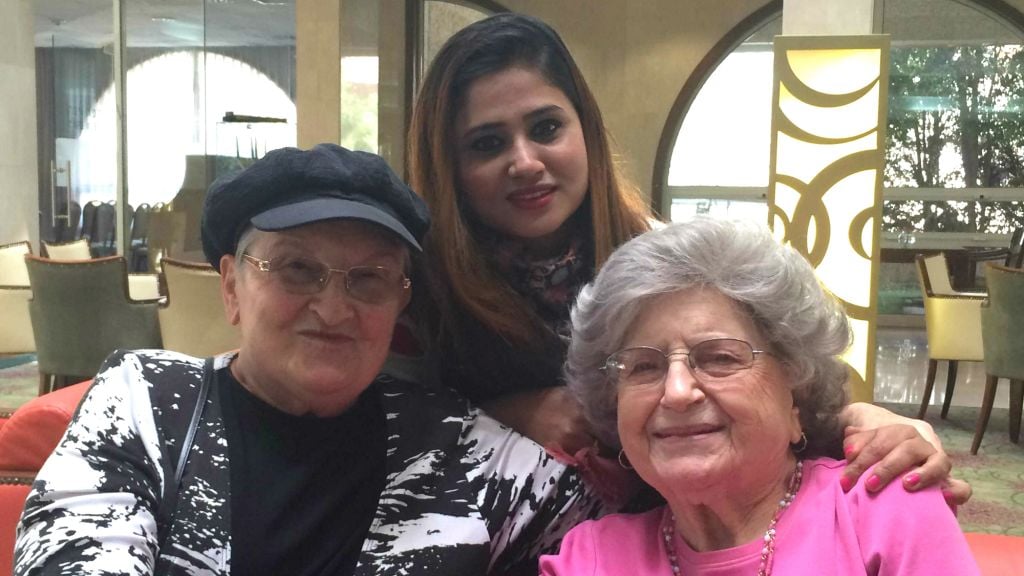
Sima Bhusal was far from home when an earthquake hit her native Nepal on April 25. She was, however, relieved to be with her “family” in Israel in the aftermath of the natural disaster, as she learned more about how her relatives and friends in Kathmandu are coping and tries to help them from here.
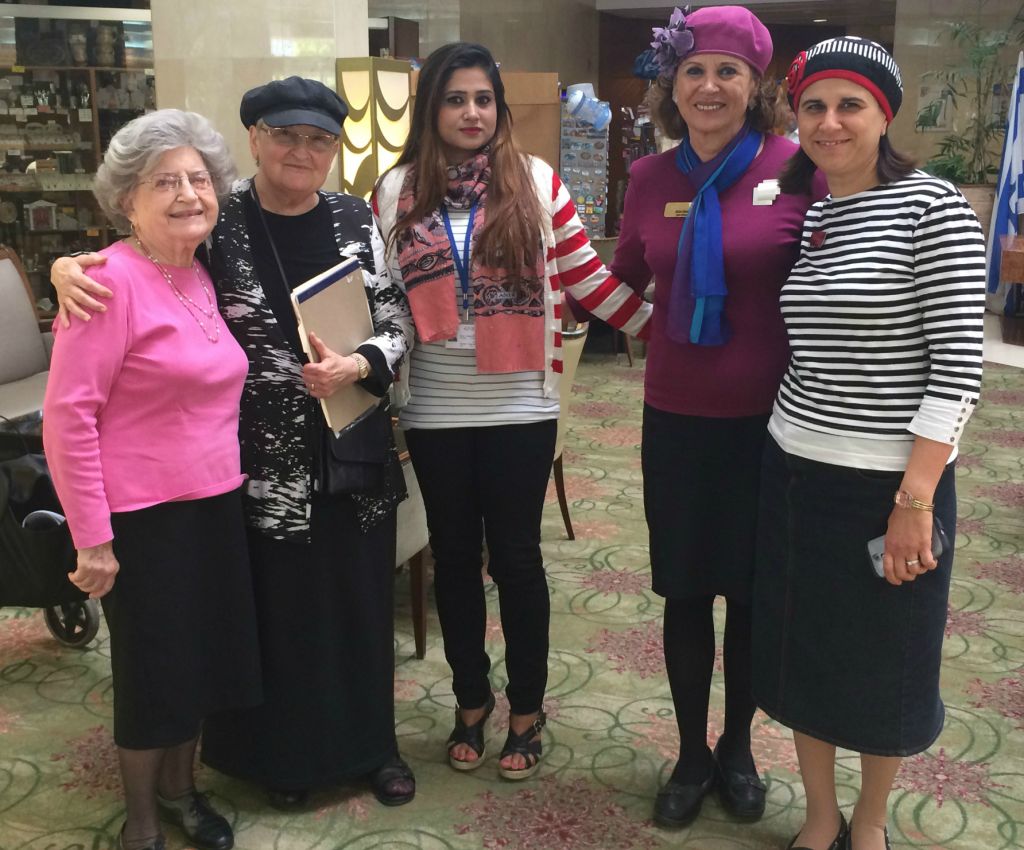
Bhusal has been in the country for five years, and has worked the last three as a caregiver at Jerusalem’s Tovei Ha’ir seniors’ residence, whose staff and residents she considers her second family.
It’s a two-way street, it seems.
In the wake of the devastating earthquake, residents and staff at the home began opening up their wallets to help the countrymen of Bhusal and the other 12 Nepali employees at the facility.
“It’s just the nature of the people who live in this residence to assist others,” said Chaya Subar, chair of the residents’ committee. “When someone is in trouble, we get in there and help.”
According to Tobie Goldman, immediate past chair of the residents’ committee, the monies contributed by the seniors will be matched by the Tovei Ha’ir administration. In 2013, the residents raised NIS 6,000 for Typhoon Haiyan relief in the Philippines, and they hope to match or surpass this sum in their efforts to help the Nepalis. They plan on donating the funds to Israeli aid efforts on the ground, such as the IDF field hospital where, as of May 4, 718 patients have been treated, 43 life-saving surgeries have been performed and seven babies have been delivered.
Subar, 76, Goldman, 91, and the other seniors did not wait long to spring into action. Less than two days after the earthquake, there was already a collection box sitting on the counter at Tovei Ha’ir’s front reception area.
Subar plans to spread the news about the fundraising effort through the upcoming edition of the resident’s newsletter, which is printed in both Hebrew and English (40 percent of the 180 residents are English-speakers).
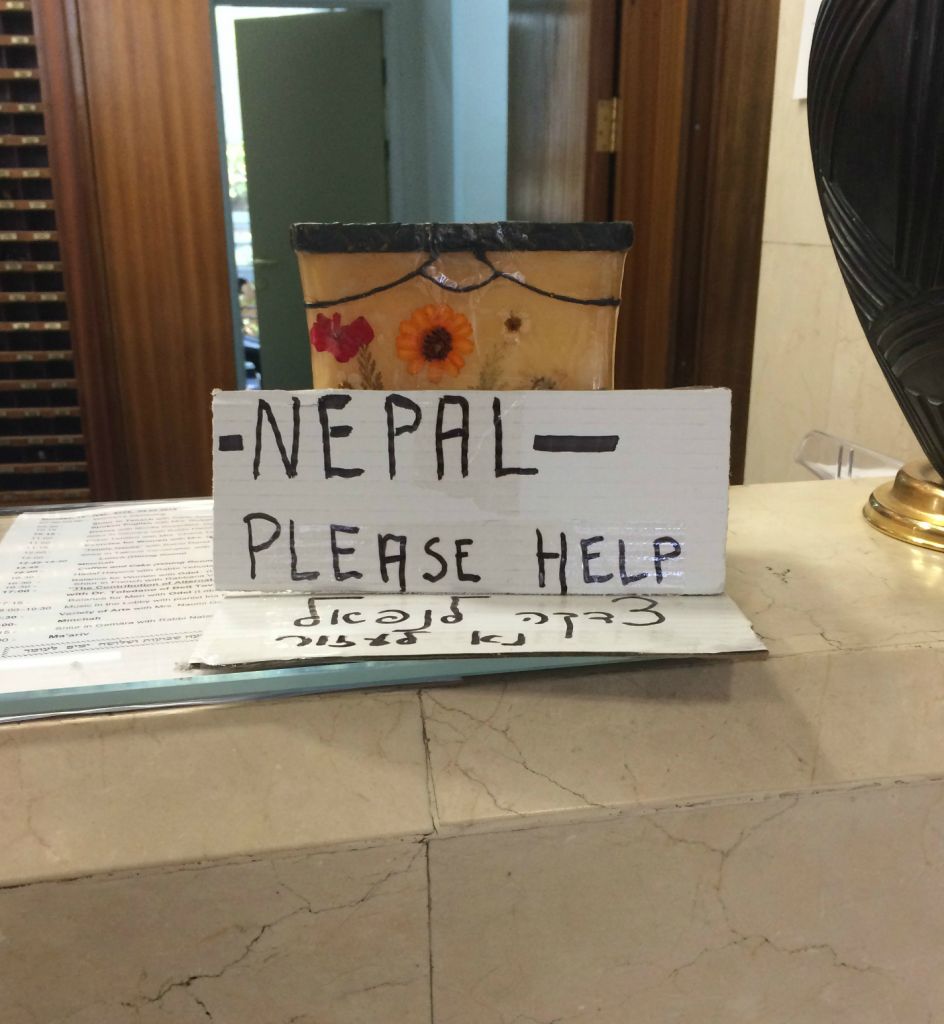
“We’re going to keep the collection box out until there is no more giving. We don’t have a cut-off date for donating,” said Goldman, who reported a positive response so far.
No family members of the Nepali employees of Tovei Ha’ir were injured or killed in the earthquake. However, some have had to live out in the streets because of the aftershocks and damage sustained by their homes. Bhusal’s sister and her family will have to rebuild their home, which is now unsafe to live in.
While Bhusal’s family survived the earthquake, she told The Times of Israel in proficient Hebrew that some of her friends are unaccounted for.
“It’s painful that so many people are gone,” she said.
“It’s hard to be away from my family,” said 26-year-old Bhusal, who married half a year ago but left her husband back in Nepal.
“But I earn money here and I was able to buy and send supplies home to Kathmandu after the earthquake. I can help from here.”
Bhusal reported that her mother cried when she spoke to her on the phone last Sunday. While she misses her daughter, she told her she was happy she feels so at home at Tovei Ha’ir.
“I’ve learned that Jews don’t just help themselves. They help others, too,” Bhusal said.
The senior residents of Tovei Ha’ir continue to follow the news from Nepal and do what they can to help.
They also take important lessons away from what has happened in a faraway place and apply them to home.
“I just hope Israel learns from this. We are on a major fault line. I think we need more earthquake preparedness,” said Subar.




The Times of Israel Community.