

Major legislative defeat signals Obama’s influence waning
As lawmakers from his own party thwart trade bill crucial to his legacy, president may already be entering lame-duck territory
 Add ToI as a Preferred Source on Google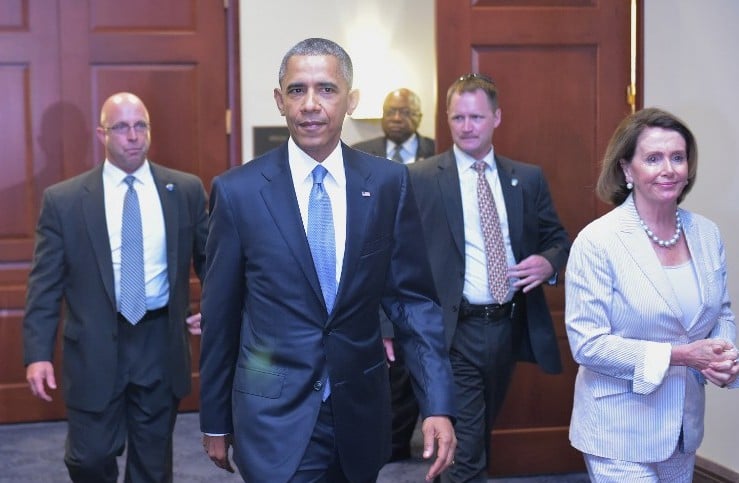
WASHINGTON — This was hardly the promising start the White House wanted for one of the most challenging months in President Barack Obama’s second term.
The US House of Representatives dealt a setback to Obama’s ambitious trade agenda Friday, voting to block a measure giving him fast-track authority to conclude a trans-Pacific trade accord.
The vote, in which some two-thirds of the House opposed the so-called Trade Adjustment Assistance, was a stinging defeat for Obama, who personally came to Capitol Hill in an effort to get fellow Democrats on board with his trade plan.
After two last-minute, high-profile appeals to rescue his global trade agenda, Obama was knocked off stride Friday, rebuffed by lawmakers from his own party. The defeat in the House seriously damaged his chances of capping his presidency with a groundbreaking economic pact with 11 Pacific rim countries.
For Obama, it was an ominous first in a June full of trials that could determine his standing for the remaining year-and-a-half of his presidency.
Besides the prospects for an international trade deal, Obama is also awaiting a decision by the Supreme Court that could upend his health care law, and he faces a June 30 deadline to conclude an accord that aims to curb Iran’s nuclear ambitions.
Together they symbolize the totality of the president’s achievements in domestic, economic and national security policies.
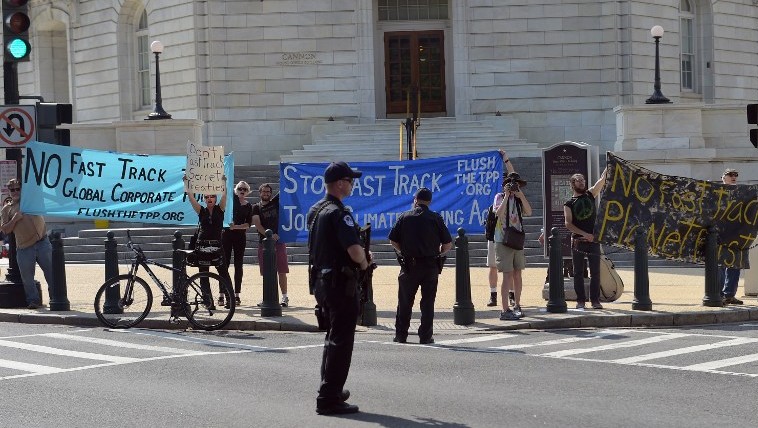
Friday’s setback for Obama was the result of a complicated legislative strategy that linked passage of trade negotiating powers for the president with a measure that would provide training and assistance to American workers who lost jobs because of trade. In the end, a narrow majority led by Republicans passed the “fast-track” trade measure that gives the president the right to negotiate deals that Congress can only approve or reject, but not change. Then a large majority of Democrats, eager to kill the fast-track powers, joined a majority of Republicans to vote against the assistance package for workers.
At the White House, officials drew attention to the narrow passage of the trade negotiation piece of the bill and noted that the legislation had overcome similar moribund moments in the Senate.
“I’m tempted to walk out here and say that it’s deja vu all over again,” White House spokesman Josh Earnest said.
But Obama’s struggles Friday raised fresh questions about his ability to hold sway over fellow Democrats. He made a surprise entrance Thursday night at Nationals’ Park, the Major League Baseball stadium where lawmakers were playing their annual charity game. Obama arrived with a case of his White House beer for the winners.
Obama then made a rare trip to the Capitol on Friday morning to meet with House Democrats. Asked as he emerged if he had changed any minds, Obama replied, “It’s just a question if I changed votes.”
He hadn’t.
Rep. Peter DeFazio, D-Ore., a critic of the trade legislation, offered a blistering critique: “He’s ignored Congress and disrespected Congress for years and then he shows up at the baseball game with homemade beer, and then comes to the caucus and lectures us for 40 minutes about his values and whether or not we’re being honest by using legislative tactics to try and stop something which we believe is a horrible mistake for the United States of America and questions our integrity.”
DeFazio added, “It wasn’t the greatest strategy.”
At issue in the health care case before the Supreme Court case is whether Congress authorized federal subsidy payments for health care coverage regardless of where people live, or only for residents of states that created their own insurance marketplaces. Nearly 6.4 million low- and moderate-income Americans could lose coverage if the court rules people enrolled through the federal site aren’t eligible for the subsidies.
Obama has taken an aggressive stance ahead of the court’s announcement, arguing that the 5-year-old law is well established and that the case against it is so flimsy that the court should not even have considered it.
“This is now part of the fabric of how we care for one another,” he said this week.
As for Iran, negotiators from the United States, Britain, France, Germany, Russia, China and Iran face a June 30 deadline as they continued talks in Vienna aimed at curbing Tehran’s ability to build a nuclear bomb.
Iran denies any nuclear weapon ambitions and says its nuclear program is meant for power and other peaceful purposes. The talks have been difficult, with Western and Iranian negotiators still disagreeing on key points like inspections.
Obama has already come under criticism from some US allies in the Middle East and members of Congress, who say the administration has conceded too much in the talks.
But the Iran talks provided the White House with an opportunity Friday to suggest that relations with House Democrats aren’t as sour as Friday’s vote might suggest. Earnest, the White House spokesman, noted that nearly every House Democrat signed a letter last month voicing support for Obama’s efforts to complete a deal with Iran.
“I don’t think there’s anybody who’s suggested that that priority is going to be threatened just because we might have a disagreement over this particular issue,” he said.
It all points to a potentially turbulent start to Obama’s summer.
By the Fourth of July, the president may be basking in the Independence Day spirit, or he may be licking his wounds.






The Times of Israel Community.