

On to New Hampshire as Cruz beats Trump, Democrats tight
Clinton defeats Sanders by less than three-tenths of 1 percent in contest that showcases voter dissatisfaction on both sides
 Add ToI as a Preferred Source on Google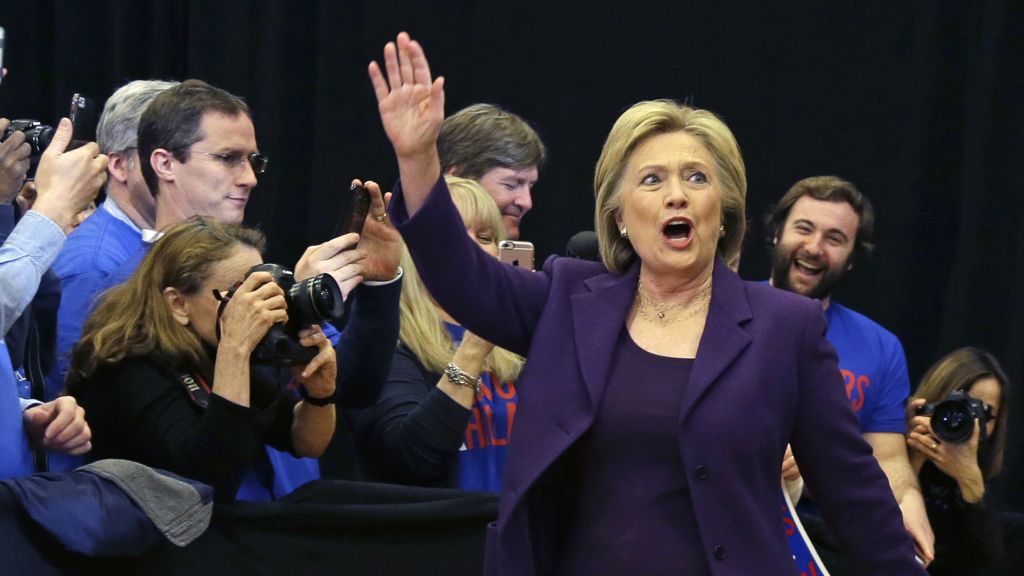
MANCHESTER, New Hampshire — Republicans and Democrats scrambling for their party’s 2016 nomination for president descended on the tiny New England state of New Hampshire on Tuesday, leaving behind the Iowa caucuses where Ted Cruz, a fiery, conservative Texas senator loathed by his own party’s leaders, swept to victory over billionaire Donald Trump and Florida Sen. Marco Rubio.
Among Democrats, Vermont Sen. Bernie Sanders rode a wave of voter enthusiasm to a virtual tie with Hillary Clinton, long considered her party’s front-runner.
With all precincts reporting, Clinton led Sanders by less than three-tenths of 1 percent. The Iowa Democratic Party declared the contest “the closest in Iowa Democratic caucus history.” Sanders did not concede the race to Clinton, and his spokesman Michael Briggs said they were “still assessing” whether to ask for a recount.
The outcome in the country’s first nominating contest drew a line under voter dissatisfaction, especially among Republicans, with the way government in Washington operates, with anger over growing income inequality and fears of global turmoil and terrorism.
Cruz’s victory in Monday’s caucuses, which drew a record turnout, was a blow to Trump, the real estate mogul who has roiled the Republican field for months with controversial statements about women and minorities.
Cruz now heads to next Tuesday’s first-in-the nation primary vote in New Hampshire as an undisputed favorite of the furthest right voters, including evangelical voters and others who prioritize an abrupt break with President Barack Obama’s policies.
But Trump still holds a commanding lead in New Hampshire and national polls.
New Hampshire has historically favored more moderate candidates than Iowa, and more than 40 percent of the state’s electorate are not registered in any political party, giving them the power to choose which parties’ primary to vote in on Feb. 9.
Cruz on Tuesday suggested he was focused on New Hampshire but also on South Carolina, which votes 11 days later.
Trump came in second slightly ahead of Rubio, whose stronger-than-expected finish could help cement his status as the favorite of mainstream Republican voters who worry that Cruz and Trump are too caustic to win the November general election.
Trump sounded humble in defeat, saying he was “honored” by the support of Iowans. And he vowed to keep up his fight, telling cheering supporters that “we will go on to easily beat Hillary or Bernie or whoever the hell they throw up.”
In the Democratic race, Iowa caucus-goers were choosing between Clinton’s pledge to use her wealth of experience in government to bring about steady progress on party ideals and Sanders’s call for radical change in a system rigged against ordinary Americans. Young voters overwhelmingly backed Sanders.
Clinton, the former secretary of state, U.S. senator and first lady, was hoping to banish the possibility of dual losses in Iowa and in New Hampshire, where she trails Sanders, who is from neighboring Vermont. Two straight defeats could throw into question her ability to defeat the Republican nominee.
Clinton appeared before supporters to declare she was “breathing a big sigh of relief.” She stopped short of claiming victory.
Sanders had hoped to replicate Obama’s pathway to the presidency by using a victory in Iowa to catapult his passion and ideals of “democratic socialism” deep into the primaries.
Sanders still faces an uphill battle against Clinton, who has deep ties throughout the party’s establishment and a strong following among a more diverse electorate that plays a larger role in primary contests in February and March.
Iowa has long led off the state-by-state contests to choose delegates for the parties’ national conventions. Historically, a victory has hardly assured the nomination, but a win or an unexpectedly strong showing can give a candidate momentum, while a poor showing can end a candidacy.
Some of the establishment Republican candidates have been focusing more on New Hampshire than Iowa, including former Florida Gov. Jeb Bush, Ohio Gov. John Kasich and New Jersey Gov. Chris Christie.
The caucuses marked the end of at least two candidates’ White House hopes. Former Maryland Gov. Martin O’Malley ended his longshot bid for the Democratic nomination, and former Arkansas Gov. Mike Huckabee dropped out of the Republican race.
The state’s 30 Republican delegates to the national convention are awarded proportionally based on the vote, with at least eight delegates going to Cruz, seven to Trump and six to Rubio. Even without a declared winner, The Associated Press awarded all but one of the 44 Democratic convention delegates. Clinton led Sanders 22 to 21, with the remaining delegate to be awarded to the statewide winner.
Copyright 2016 The Associated Press.








The Times of Israel Community.