

Republicans to talk foreign policy, but keep eyes on Trump and Adelson
Candidates at debate expected to gun for Israel-backing mega-donor’s support, attempt to distance themselves from front-runner’s comments on Muslims
 Add ToI as a Preferred Source on Google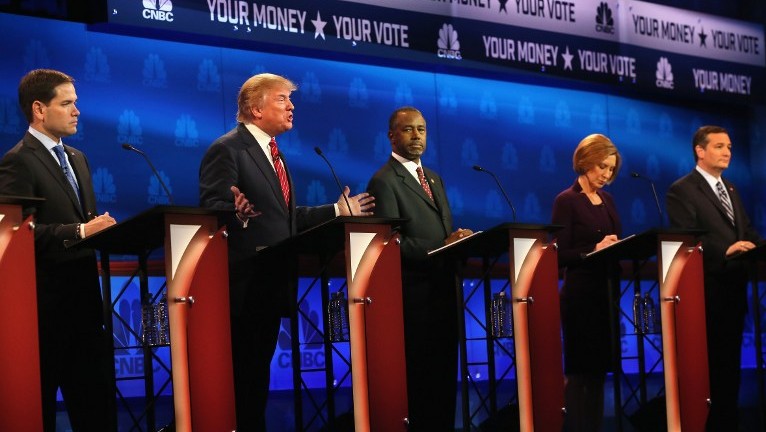
WASHINGTON — With foreign policy and national security dominating the discourse for Republican presidential hopefuls, candidates will gather Tuesday evening on the home turf of the pro-Israel Republican mega-donor, casino magnate Sheldon Adelson, for the last GOP debate of 2015 and the first since terrorist attacks in Paris and California brought confronting Islamist terrorism to the forefront of the campaign.
Tuesday’s debate will be held at Las Vegas’ Venetian Casino, owned by Adelson, whose deep pockets are seen as key to many candidates making a run at the White House.
Adelson, along with his Israeli-born wife, Miriam, donated $93 million to Republicans in the 2012 election cycle, making them the highest individual political donors in America that year.
In what pundits have nicknamed “the Adelson Primary,” many Republican presidential candidates are continuing to jockey for a position to receive a similar windfall in this elections cycle, particularly if it could help boost their standing against another casino owner — billionaire mogul-turned candidate Donald Trump.
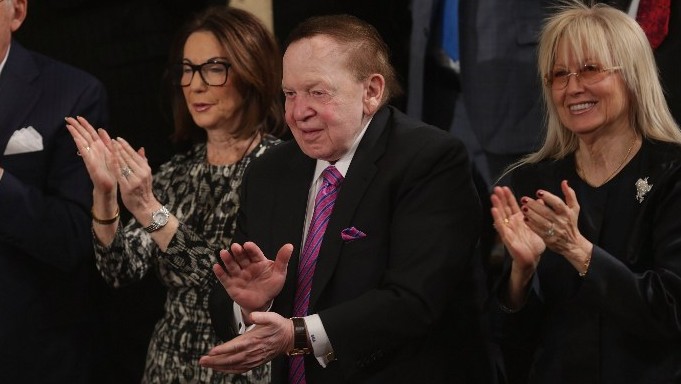
This is not the first time that Adelson has hosted would-be Republican candidates. This spring, the Venetian hosted the Republican Jewish Coalition’s four-day convention, where Sen. Ted Cruz and now-defunct candidate Texas Governor Rick Perry courted potential voters and donors. On Adelson’s turf, candidates know, vocal support for Israel is essential.
But even as candidates eye Adelson’s checkbook, most debate-viewers will be focused on Trump, whose juggernaut candidacy took another twist last week with his call to ban Muslims from the US, resulting in widespread condemnation and him nixing a trip to Israel.
A total of nine candidates will take the stage for the CNN-hosted debate, including Sens. Marco Rubio and Ted Cruz, both of whom are reported to be in the running for the “Adelson Primary” due to their strongly stated opinions on Israel and Iran.
With just a month and a half left until the first votes are cast, the two are positioned directly behind front-runner Trump, with Cruz leading the real estate developer in the first battleground state of Iowa.
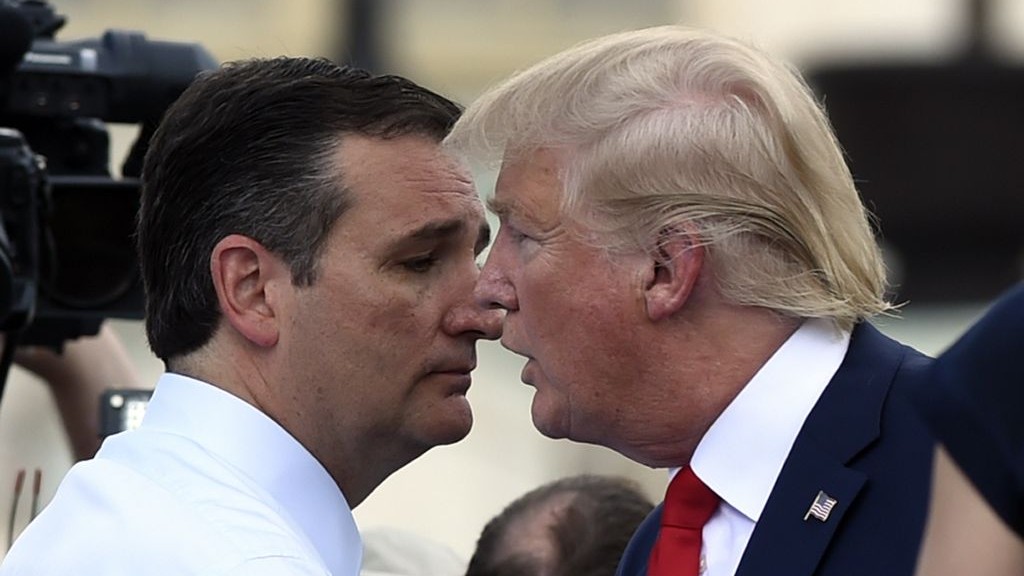
Cruz’s rise in the polls — which is also due to declining support for Carson, who flopped at this month’s Republican Jewish Coalition, where he repeatedly pronounced “Hamas” as if it were “Hummus” — has made him the object of more targeted criticism in the last week, particularly from Trump (who said he “lacks the judgment” to be president and is “a little bit of maniac,” based on his Senate conduct) and Marco Rubio, who is vying to win as an establishment candidate.
Rubio has been avidly courting Adelson for his support, and has met with him privately on a number of occasions, including for dinner in Washington shortly before launching his campaign in April.
The debate is the first since Trump announced his proposal, which was met with widespread denunciation from both Democrats and Republicans, and has been rejected by all of Trump’s GOP rivals for president, though by different degrees.
Cruz, who has clashed with the GOP establishment, is positioned as the most conservative candidate in the race, enabling him to potentially benefit from any erosion of support for Trump. But while other candidates were unequivocal in pushing back against Trump over the idea, Cruz tried to thread the needle, saying he did not share Trump’s position, but did not go so far as to directly criticize the idea.
“Well that, that is not my policy,” Cruz said to a group of reporters. “I’ve introduced legislation in the Senate that would put in place a three-year moratorium on refugees coming from countries where ISIS or al Qaeda can control a substantial amount of territory. And the reason is that’s where the threat is coming from.”
This divide between flat-out repudiation and cryptic distancing will be on display tonight, said Dick Simpson, a political scientist with the University of Illinois-Chicago.
“Some of the more moderate candidates will suggest that Trump’s idea of preventing all Muslims from coming to America, those kinds of extreme positions, are foolish,” he told The Times of Israel. “Some candidates will try and parse sort of a halfway distance between moderates and Trump. But all the candidates will be trying to find a way to be not as extreme as Trump.”
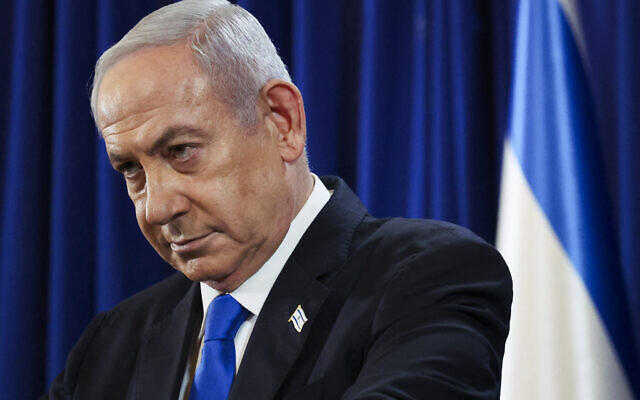
Trump’s proposal continues to dominate the US news cycle – and day-to-day events on the campaign trail. Amid the furor following the announcement, Trump confirmed — and then abruptly cancelled — a meeting with with Prime Minister Benjamin Netanyahu scheduled for December 28. Trump acknowledged pressure on the Israeli premier to cancel, saying on Twitter that the two would meet “at a later date, after I become president of the US.”
The official podium line up for Tuesday's #GOPDebate is here: https://t.co/rihpNbnSvR pic.twitter.com/9xoRoER7AQ
— CNN (@CNN) December 13, 2015
Trump later called Netanyahu’s subsequent rejection of his remarks on Muslims “inappropriate” in an interview Sunday morning with CNN’s Jake Tapper.
“He modestly condemned them, and I thought it was sort of inappropriate that he condemned them, but that’s OK,” Trump said.
In addition to the eight other front-runners sharing the stage – and likely trading barbs – with Trump from his center-podium spot, four candidates — former Arkansas Gov. Mike Huckabee, former Pennsylvania Sen. Rick Santorum, South Carolina Sen. Lindsey Graham and former New York Gov. George Pataki — will appear in the undercard debate, airing beforehand.
One of the biggest surprises in the lineup was Sen. Rand Paul’s appearance on the the main stage. The original criteria for participating in the main event was initially an average of 3.5 percent in certain national polls or 4 percent in either of the two early-voting states, Iowa and New Hampshire. Although Paul has languished below any of these threshholds, a Fox News poll released Sunday showed Paul at five percent support, giving him the needed boost.
Paul, the son of former presidential candidate Rep. Ron Paul, differs sharply with Adelson on foreign policy issues.
A libertarian-leaning isolationist who advocates for non-interventionism abroad and cuts in defense spending, Paul has clashed in the past with many pro-Israel Republicans who insist that such a shift in American policy would have a deleterious effect on America’s military support for Israel, and Israel maintaining its qualitative military edge.
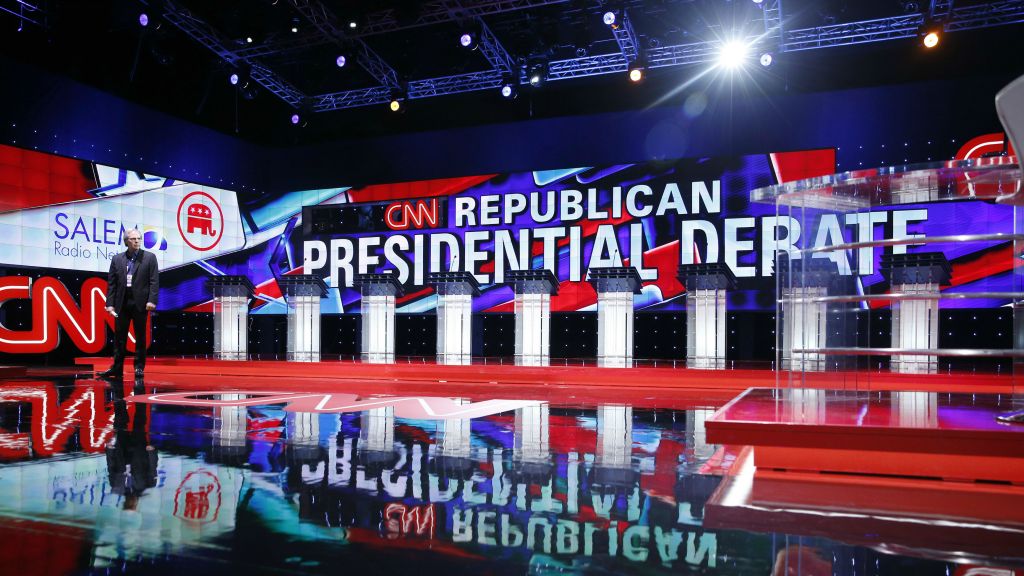
The debate, hosted by CNN and Salem Radio, is the fifth among Republicans and marks a critical moment heading into the Iowa caucuses, the first primary contest of the election, scheduled for February 1.
It will take place at 8:30 PM Eastern time and will be moderated by Wolf Blitzer. It can be live streamed for free at cnn.com.




The Times of Israel Community.