

Rouhani: ‘Religious duty’ obligates Iran to abide by nuke deal
Iranian president tells US radio he is ready to discuss ‘plan of action’ for Syria, says ‘we must all act in unison’
 Add ToI as a Preferred Source on Google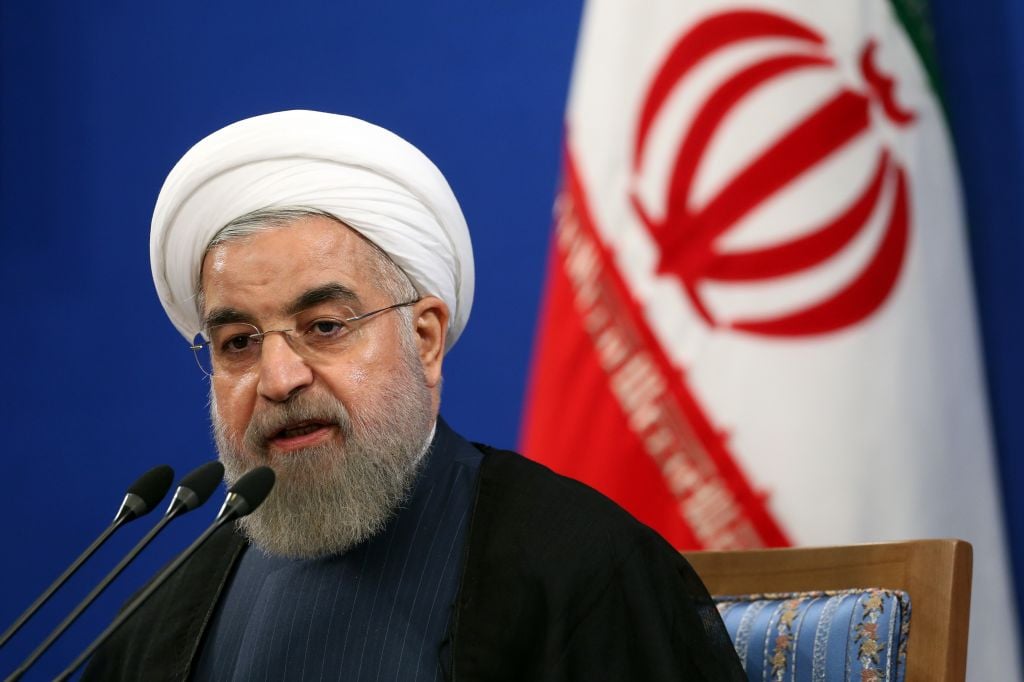
Iranian President Hassan Rouhani says it is his country’s “religious duty” to abide by the nuclear deal recently reached between Tehran and major world powers, and that he is ready to join international diplomatic efforts in discussing a “plan of action” for ending the conflict in Syria.
In an interview with America’s National Public Radio, Rouhani was asked about concerns Iran wouldn’t allow nuclear inspectors onto military bases. He replied by saying the Islamic Republic “always lived up to” any agreement it signed, and indicated possible future cooperation with the US on other matters.
“This is our cultural framework. This is our comportment. This is our religious duty,” the president was quoted as saying in a preview of the full interview set to air Monday on NPR.
Much like in the US, Rouhani said Iranians were divided by “two differing viewpoints” of the historic accord agreement aimed at curbing Iran’s controversial nuclear program.
Rouhani said that some Iranians “have a very negative viewpoint” of the accord, and have expressed concern the US won’t abide by the agreement after US President Barack Obama leaves office next year. The Republican party has expressed uniform opposition to the agreement, which lifts crippling sanctions on Iran in return for restrictions on the country’s nuclear program.
“You do know that some of the congressmen and women, some of the senators here in the United States, have said very clearly — or written letters to that effect — that after the end of the Obama administration, [they] will not keep the government’s commitment to this agreement,” he said.
“So, all of these are things preoccupy and worry some folks back in Iran as well,” Rouhani added.
Interview with @NPR now. #IranDeal revived hope that negotiations, though not easy, can resolve complicated cases pic.twitter.com/XjafY6dZrO
— Hassan Rouhani (@HassanRouhani) September 26, 2015
Rouhani, who is in New York for the annual United Nations General Assembly meeting, said that Tehran-Washington cooperation on other issues — including a common strategy to resolve the war in Syria — would depend on whether US abides by the terms of the nuclear agreement.
“So, assuming, God willing, that everything moves forward in a positive manner, there are opportunities in the future for us to hold a dialogue in the very least to hold dialogue about other topics,” he told the radio station.
‘Plan of action’ for Syria
Rouhani also said that he was ready to discuss a “plan of action” for Syria’s post-war future after the Islamic State group is defeated.
Iran, which along with Russia is allied with President Bashar Assad in the war, has until now been kept out of UN diplomatic efforts to piece together a political solution for Syria.
“That is not a problem for us from right now, to start holding discussions and dialogues so as to determine and reach the conclusion of the next plan of action after the terrorists are driven out that territory,” Rouhani said.
“But we must all act in unison and have a formula that is required to drive out the terrorists, immediately.”
Rouhani is expected to address the crisis in Syria in his speech to the UN General Assembly on Monday, shortly after Obama and Russian leader Vladimir Putin take the podium.
The Iranian leader said his country was ready to discuss “the upcoming options” and added that the Syrian government should be included to “reach a plan of action.”
Tehran has been providing financial and military support to the Damascus regime as well as military advisers on the ground in Syria, where more than 240,000 people have died and four million people have been driven from their homes.
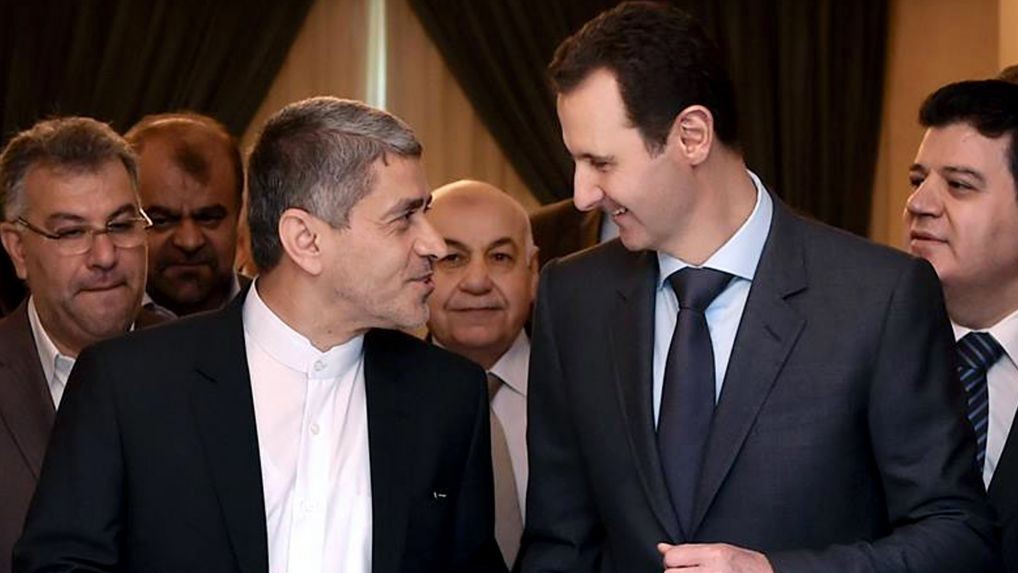
Western powers are seeking to enlist Iran in a new strategy to address the crisis after Russia beefed up its military presence in Syria in a bid to gain the upper hand on the future political transition.
The West has softened its demands for Assad to leave power, signaling that the president could stay on in an interim role as part of a two-stage transition.
Rouhani added that the Syrian people must “have the last word and most important word” on the future of the county, in reference to elections that could cap an interim transition.






The Times of Israel Community.