

Israeli source: Iran deal is done, all that remains is the fine print
World powers in marathon talks throughout Saturday; Iranian FM reportedly shouts at Kerry for reneging on understandings
 Add ToI as a Preferred Source on Google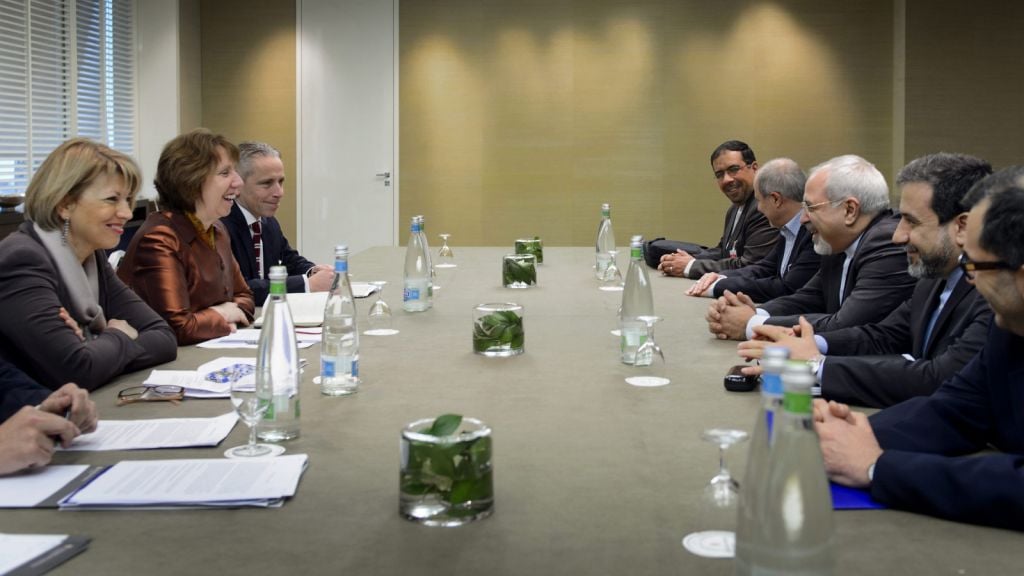
All the terms of a deal between world powers and Iran on the country’s controversial nuclear program have been agreed upon, and all that remains is to draft the fine print of the agreement, a senior Israeli official said Saturday night.
The source, quoted by Israel’s Army Radio, was basing the assessment on conversations held by several Israeli officials with members of some of the P5+1 delegations that, on Saturday, spent a fourth consecutive day negotiating the deal in Geneva. The source estimated that the accord would be signed within days.
Iran’s Deputy Foreign Minister Abbas Araghchi, for his part, was quoted late Saturday as saying that 98 percent of the deal was done, but that the final 2% was the most difficult.
Israel’s Channel 2 News, which reported Araghchi’s comments, also said Saturday’s talks in Geneva had been marked by several occasions on which Iran’s Foreign Minister Mohammad Javad Zarif shouted at US Secretary of State John Kerry and accused him of reneging on the terms of previously agreed aspects of the interim deal. “You keep changing your positions,” Zarif reportedly shouted at Kerry.
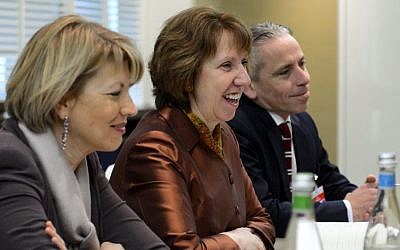
Kerry, top European Union diplomat Catherine Ashton and Zarif met for nearly two hours earlier Saturday to discuss the details of the emerging deal, but no statements were issued.
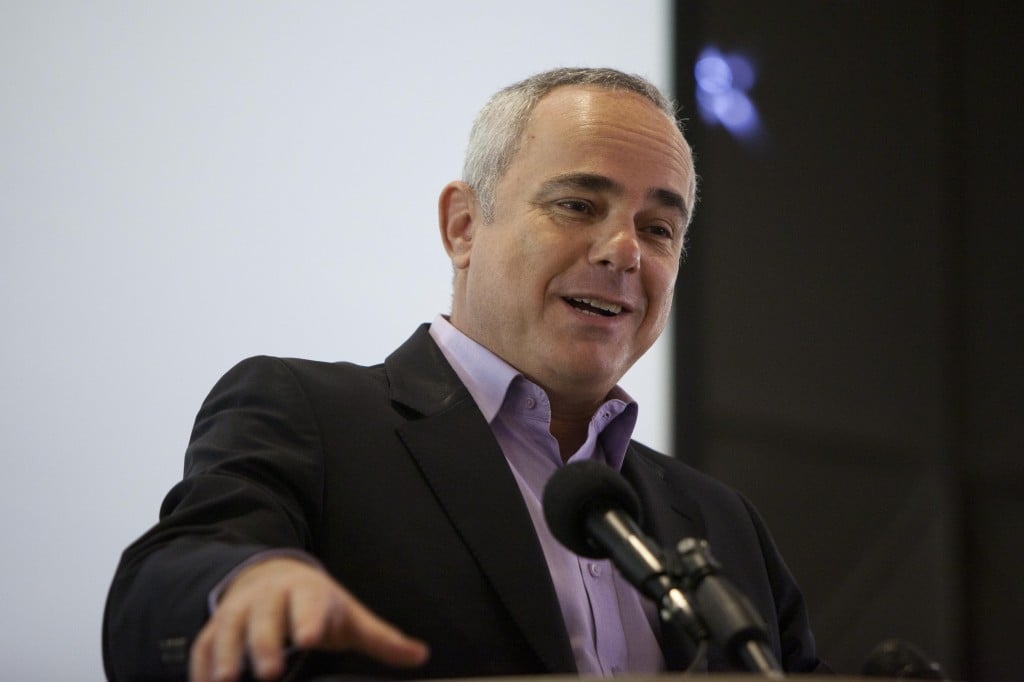
Israel’s Intelligence and Strategic Affairs Minister Yuval Steinitz spoke with officials from several of the international delegations and urged them to make clear that any interim deal would not release Tehran from its obligations under the Non-Proliferation Treaty. Steinitz also sought reassurances that construction of the plutonium reactor in Arak would be stopped, and that uranium already enriched to 20% by Iran would be shipped out of the country.
“Intense and difficult negotiations are under way and it is not clear whether we [will] reach an agreement tonight,” Fars news agency quoted Araghchi as saying earlier Saturday, as translated by AFP. “The dispute is over the wording,” he added, without indicating whether talks would continue on Sunday.
“We have now entered a very difficult stage,” Zarif was quoted by AFP Saturday as telling Iranian state media.
The State Department, meanwhile, announced that Kerry would travel to London on Sunday to meet with Britain’s Foreign Secretary William Hague and the Libyan prime minister.
The US secretary of state and the world’s other top diplomats joined Iran nuclear talks Saturday, cautioning that there were no guarantees their participation would be enough to seal a deal to curb Tehran’s rogue program in return for limited sanctions relief.
The goal is a six-month agreement to partially freeze Iran’s nuclear program while offering Iran incentives through limited sanctions relief. If the interim deal holds, the parties would negotiate final-stage deals to ensure Iran does not build nuclear weapons.
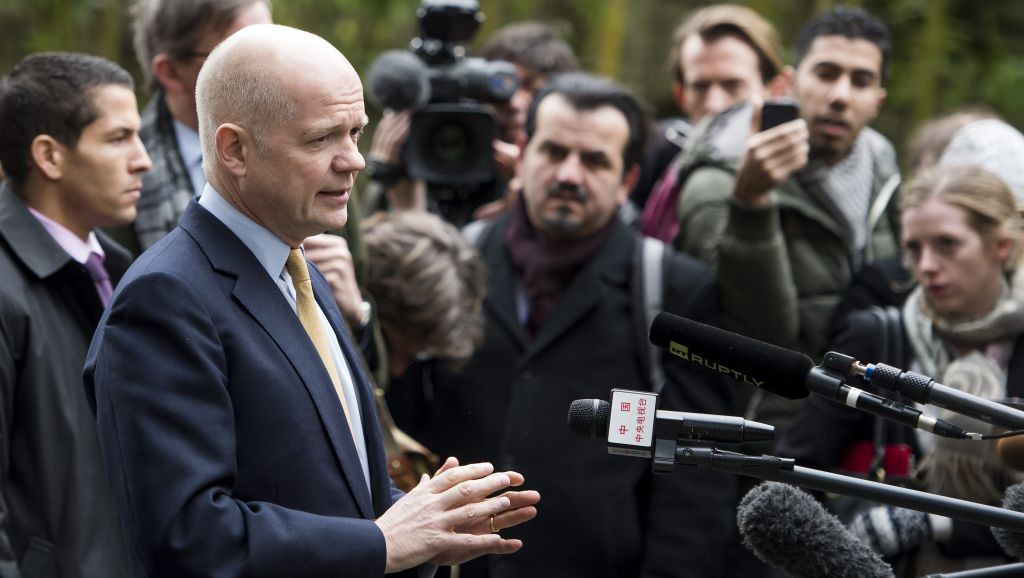
Hague, who flew into Geneva on Saturday, spoke of “very difficult negotiations,” saying “narrow gaps” remained on the same issues that blocked agreement at the last round earlier this month.
“We’re not here because things are necessarily finished,” Hague told reporters. “We’re here because they’re difficult, and they remain difficult.”
Kerry and his counterparts from Russia, Britain, France, China and Germany headed for Geneva after diplomats said Friday that Zarif and Ashton had made progress on a key sticking point — Iran’s claim to a right to produce nuclear fuel through uranium enrichment.
Details were not released but it appeared the two sides were trying to reconcile Iran’s insistence that it has a right to enrich for peaceful purposes while assuaging fears that Tehran was secretly trying to build a bomb, a charge the Iranians deny. Israel’s Channel 2 said on Friday that Iranian delegates to the talks were claiming that the P5+1 nations had recognized that “right” — a major concession if true, and one that Israel has warned would give ostensible legitimacy to the Iranian nuclear program.
As the talks entered an intensive phase, Chinese Foreign Ministry spokesman Hong Lei said the negotiations had reached “the final moment,” according to China’s Xinhua news agency.
Zarif warned Saturday afternoon that the Islamic Republic would not give in to the “excessive demands” of world powers as the nuclear talks entered what he called a “critical phase.”
Araghchi said earlier Saturday morning that there were only “two or three more points of disagreement” between the Islamic Republic and the P5+1 powers over the tentative deal. “The two sides are close to an agreement,” he said. “We must see if we can resolve these differences.”
Unnamed Arab officials also told CNN that a deal with Iran seemed “very near.”
Others were less upbeat.
Germany’s Foreign Minister Guido Westerwelle spoke of “a realistic chance” for a deal but said “there is still a lot of work to do.” Russian Deputy Foreign Minister Sergei Ryabkov told RIA-Novosti news agency that negotiations were very close to a breakthrough but “unfortunately, I cannot say that there is assurance of achieving this breakthrough.”
French Foreign Minister Laurent Fabius told reporters he wanted “a deal — but a solid deal — and I am here to work toward that end.”
Fabius’s brief comments conveyed a more guarded tone than did his public remarks during a previous round of talks two weeks earlier. Those statements fanned talk of disunity among the world powers negotiating with Iran.
According to most accounts, it was France’s concern that the negotiators were rushing into a flawed deal with Iran that delayed an agreement during that previous round of talks.
The obstacles included Iran’s plutonium reactor under construction in Arak as well as a formula for providing limited sanctions relief without weakening international leverage against the Islamic Republic.
The arrival of the foreign ministers followed a day in which diplomats appeared more and more positive that a deal could be struck.
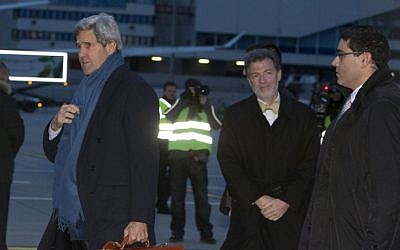
Before departing for Geneva Friday, Kerry told reporters he was optimistic regarding the prospect of an agreement with Iran — but not over the next two days. Kerry reportedly anticipated flying on to Israel if an agreement was signed to immediately brief Prime Minister Benjamin Netanyahu on its terms.
Netanyahu has been publicly castigating the US over the terms of the emerging deal — which would provide for a partial freeze in the Iranian program and the easing of some sanctions — and has implored Kerry not to sign it. Netanyahu has also vowed to “stand alone” if necessary to prevent Iran attaining nuclear weapons.
In Canada on Friday, Israel’s Defense Minister Moshe Ya’alon echoed Netanyahu’s description of the likely deal as “bad.” Ya’alon, who held talks with his US counterpart, Chuck Hagel, acknowledged the differences between the US and Israel over the deal, but also stressed the fundamental closeness of the US-Israel alliance.
As talks in Geneva adjourned for the day on Friday night, a diplomat said Zarif and Ashton had made progress on the issue of Iran’s claim to a right to uranium enrichment. Iran’s official IRNA news agency quoted Araghchi in Geneva as saying that Iran’s right to uranium enrichment must be part of any deal, and Zarif told Iran’s Press TV that Iran’s “right” to peaceful nuclear energy, “including enrichment,” must be respected.
Enrichment is a hot-button issue because enriched uranium can be used both to make reactor fuel and as fissile material in nuclear weapons. Iran argues it is enriching only for power, and scientific and medical purposes. And it says it has no interest in nuclear arms.
But Washington and its allies point to Tehran’s earlier efforts to hide enrichment, and allege it worked on developing such weapons.
Iran has insisted on its right to enrich throughout almost a decade of mostly fruitless nuclear negotiations. But Zarif last weekend indicated that Iran was ready to sign a deal that does not expressly state that claim, raising hopes that a deal could be sealed at the current Geneva round.
For the US and Iran, the talks represent more than trying to hammer out a nuclear deal. In style and substance they are an extension of the historic dialogue opened during September’s annual UN gathering, which included a 15-minute phone conversation between US President Barack Obama and Iran’s new president, Hassan Rouhani.
The nuclear negotiations have included intensive one-on-one sessions between US and Iranian envoys, offering opportunities to widen contacts and begin the long process of reconciliation after more than three decades of estrangement. It also gives Rouhani’s government a chance to show skeptical hard-liners that dialogue is possible with Washington without putting the country’s Islamic system in peril.
Iranian hard-liners have been suspicious of talk of nuclear compromise since Rouhani took office in September, fearing his team will give too much at the negotiating table and not get enough in terms of sanctions relief.
On Wednesday, Iran’s supreme leader, Ayatollah Ali Khamenei, said his country would never compromise on “red lines.” Since then Tehran has publicly reverted to its original stance — that the six powers must recognize uranium enrichment as Iran’s right, despite strong opposition by Israel and within the US Congress.
Still, comments from Iranian officials in Geneva indicated that reverting to tough talk on enrichment may be at least partially meant for home consumption.
In Geneva, a senior Iranian negotiator said the Iranian claim to the right to enrich did not need to be explicitly recognized in any initial deal, despite Khamenei’s comment, adding that the supreme leader was not planning to intervene in the talks. He did suggest, however, that language on that point remained difficult and that there were other differences.
Work is proceeding on a compromise along the lines of what the Iranian negotiator said — avoiding a direct reference to any country’s right to enrich but still giving enough leeway for Iran to accept it, said a diplomat involved in the talks.
Senior Iranian analyst Trita Parsi, citing conversations with Iranian and US officials, said the draft includes a reference to the nuclear Non-Proliferation Treaty, which Iran claims is the guarantor of each country’s right to enrich by granting signatories the right to pursue nuclear power for peaceful uses.
That argument is rejected by the United States and its allies, which say the treaty does not directly mention such a right.
Parsi said Tehran wants the wording to make clear that Iran is not a “permanent outcast,” but has the same rights and responsibilities as all other signatories to the treaty.
Russia and China in recent years have signaled acceptance of Iran’s demand that its right to enrich for peaceful purposes be recognized, and Germany supports the right of any country to that activity as long as it is peaceful. But the other three nations at the table with Iran — the United States, Britain and France — have continued to balk at the prospect.
The last round of talks between Iran and the six world powers ended Nov. 10 with no deal, even after Kerry, Lavrov, the foreign ministers of Britain, France and Germany and a Chinese deputy foreign minister flew in and attempted to bridge differences.
The United States and its negotiating partners have signaled they are ready to ease some sanctions in return for a first-step deal that starts to put limits on Iran’s nuclear program.
They want Iran to stop enriching to a level higher than its main stockpile and only a technical step away from weapons-grade uranium as part of such a deal. They also seek limits on overall enrichment, and a formulation that reduces the proliferation danger from a reactor Iran is building that will produce enough plutonium for up to two weapons once completed.
But they insist that the most severe penalties — on Tehran’s oil exports and banking sector — will remain until the two sides reach a comprehensive agreement to minimize Iran’s nuclear arms-making capacity.
No details on relief offered have been made public. And the US administration has not commented on reports from congressional officials that Obama’s team estimates Iran could get $6-10 billion in benefits over six months for rolling back its nuclear program.
Several US senators — both Democrat and Republican — have voiced displeasure with the parameters of the potential agreement, arguing that the US and its partners are offering too much for something short of a full freeze on uranium enrichment.
In Moscow this week to meet with Russian President Vladimir Putin, Netanyahu renewed his demand for a halt to all Iranian nuclear programs that could be turned from peaceful uses to making weapons.
Israel wants a settlement that is “genuine and real,” he said.
“Israel believes that the international community must unequivocally ensure the fulfillment of the UN Security Council’s decisions so that uranium enrichment ends, centrifuges are dismantled, enriched material is taken out of Iran and the reactor in Arak is dismantled,” continued Netanyahu, referring to Iran’s plutonium reactor under construction.
“They must not have nuclear weapons,” he told a gathering of Russian Jews. “And I promise you that they will not have nuclear weapons.”





The Times of Israel Community.