

Ya’alon: Gaza war security cabinet worst I’ve seen in 20 years
Ex-defense minister attacks high-level panel as ‘irresponsible,’ after the state comptroller faults him for failing to brief ministers on tunnel threat
 Add ToI as a Preferred Source on Google
Judah Ari Gross is The Times of Israel's religions and Diaspora affairs correspondent.
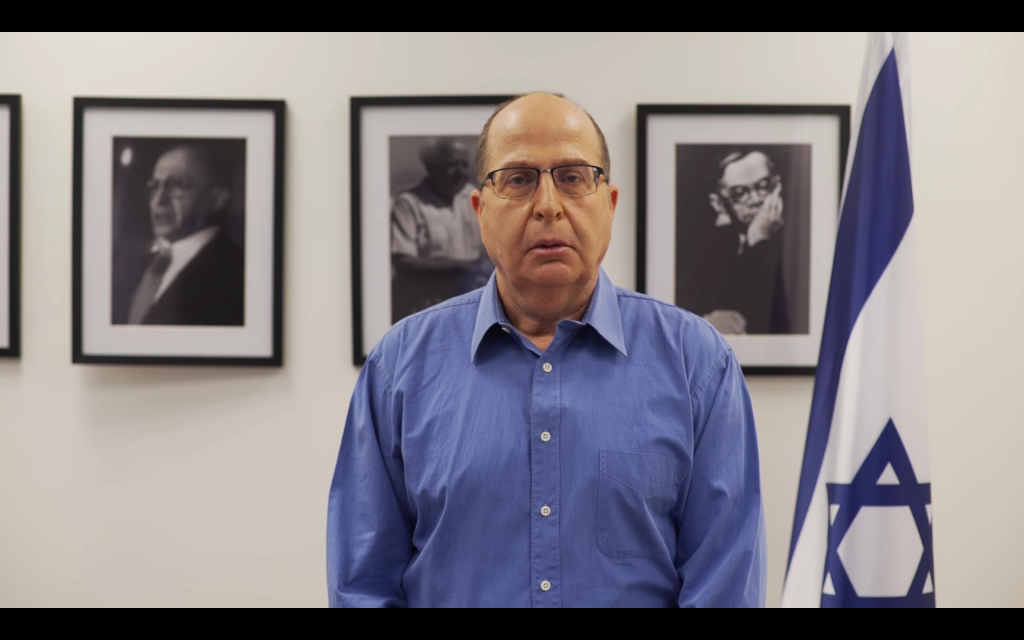
Former defense minister Moshe Ya’alon on Tuesday lambasted the high-level security cabinet in 2014 as the “worst and most irresponsible” he has seen in his 20-years of attending cabinet meetings.
The former defense minister was responding to a scathing Gaza war report released on Tuesday accusing him and other Israeli leaders of failing to fully apprise the ministers on the panel of the Hamas terror threat.
In a YouTube video, Ya’alon charged that the state comptroller probe failed to truly investigate the conflict and instead fell prey to “politicians with ulterior motives.”
Standing in front of an Israeli flag and portraits of Zeev Jabotinsky, David Ben-Gurion, and Menachem Begin, Ya’alon acknowledged that the campaign had not been waged perfectly, but placed the blame for its shortcomings on two factors: the unpredictability of war and the security cabinet.
In war, he said, there are always “unexpected events, unplanned developments, a bitter enemy opposing [you], mistakes and lessons that must be learned.”
State comptroller probes after the campaigns are supposed to assist in learning from past mistakes, he said. But that did not happen with the document released on Tuesday, he added.
‘The cabinet during Protective Edge was the worst and most irresponsible that I have ever seen’
“The [Operation] Protective Edge report became a political report,” he said. “It ignores wider considerations because it fell prisoner to politicians with ulterior motives… who sullied the process.”
Since the 2014 war, known in Israel as Operation Protective Edge, Ya’alon has been blunt in his criticism and condemnation of Education Minister Naftali Bennett, who served on the security cabinet alongside him, pillorying him as “minister of leaks.”
On Tuesday evening, however, Ya’alon widened his scope to include the entire security cabinet.
“The cabinet during Operation Protective Edge was the worst and most irresponsible that I have ever seen,” Ya’alon said. “And I say that as someone who has been a member of cabinets since 1995.”
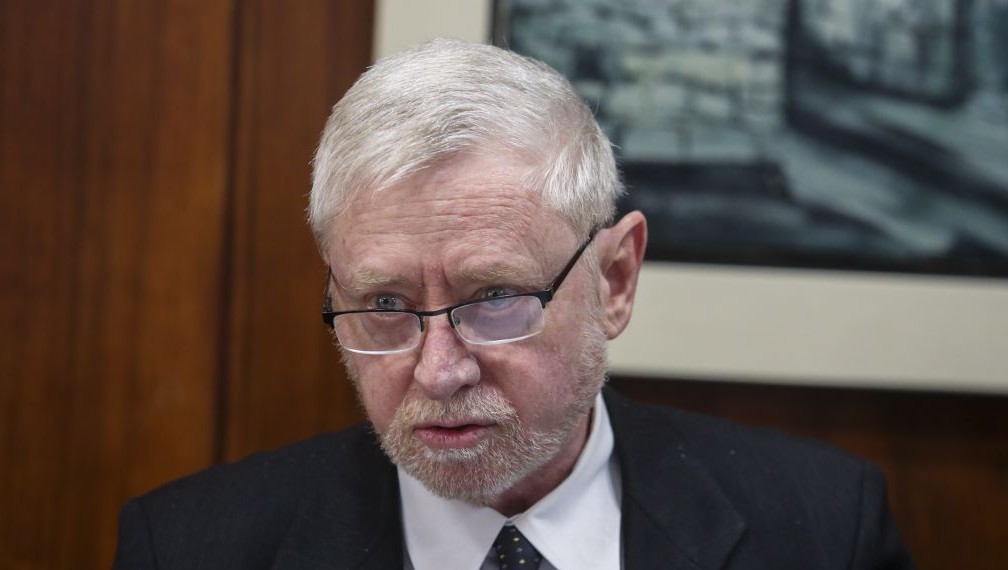
State Comptroller Yosef Shapira’s report found considerable fault in the way the security cabinet was managed during the 2014 operation. However, in the document, this criticism is from the top down.
Prime Minister Benjamin Netanyahu and Ya’alon are said to have failed to adequately inform the security cabinet about the threat posed by Hamas attack tunnels ahead of the conflict.
The former defense minister said the cabinet was “superficial, political and populistic, a cabinet of leaks, of speaking for the stenographer, or speaking in two voices — one in the room and the other in public.”
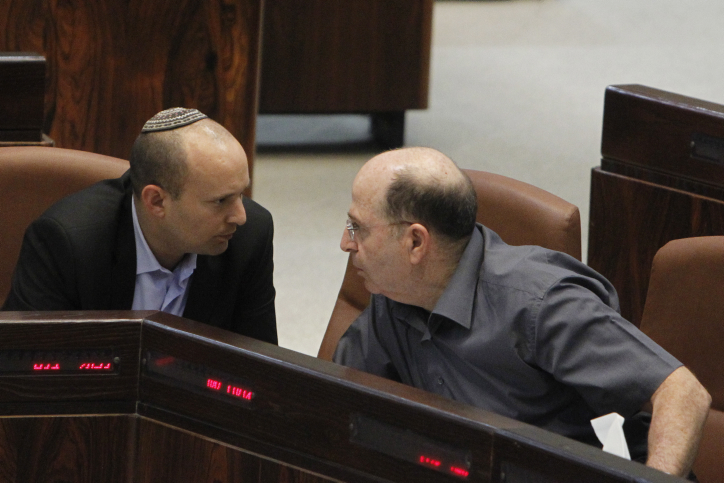
Ministers who had a “sharp tongue on Facebook and Twitter” were weak when it came time to make decisions, Ya’alon said, in a likely reference to his foe Bennett.
He then chided himself for not finding “a solution to the kindergarten that formed in the security cabinet, then and there.”
Before the report’s release, Ya’alon also took to social media to defend himself against the impending criticism.
“In the next week, you’re going to hear a lot about Protective Edge,” Ya’alon wrote on his Facebook page on Saturday night, using the Israeli name for the operation. “They’ll say that we didn’t know, that we didn’t tell them, that we didn’t report to them. And the biggest lie of all? That we weren’t prepared and we lost. That’s nonsense.”
Taking another dig at Bennett, Ya’alon added, “There are those who leak, and those who fight.”
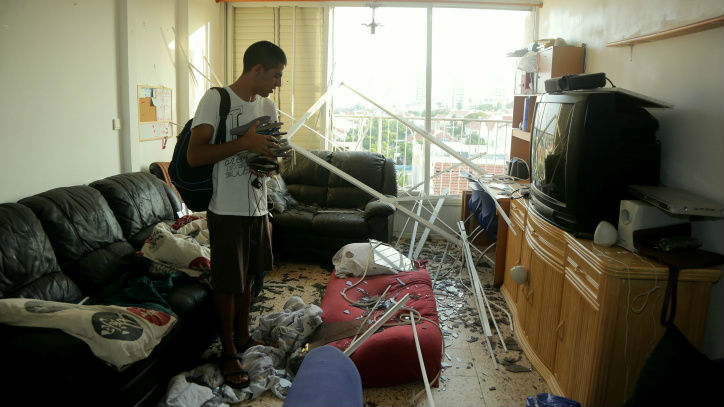
Israel’s 50-day campaign against Hamas in Gaza began as a predominantly aerial campaign in response to repeated rocket attacks from the Strip, similar to the 2012 Operation Pillar of Defense. But after Hamas made use of its tunnel network to carry out attacks inside Israel, the focus shifted to tackling the subterranean threat.
By the war’s end on August 26, 2014, the IDF had targeted over 30 tunnels, of which 14 had crossed the border into Israel. Thousands of rockets had been fired by Hamas and other Gaza terror groups indiscriminately into Israel. A total of 74 people — 68 soldiers, 11 of whom were killed in cross-border tunnel attacks; and 6 civilians — died on the Israeli side of the conflict. In Gaza, more than 2,000 people were killed, with Israel putting the percentage of civilians killed at approximately 50 percent and the Palestinians estimating it to be closer to 70%.
Israel said Hamas was responsible for the proportion of civilian Gazan deaths, as the terror group embedded military infrastructure, including tunnel entrances and rocket launchers, in residential neighborhoods.



The Times of Israel Community.