

Burrowing into ground, Israel’s Bedouin build makeshift bomb shelters to skirt red tape
Residents of unrecognized Negev villages are unable to get permits to construct secure rooms, so instead they improvise what they can, for peace of mind if not actual protection
 Add ToI as a Preferred Source on Google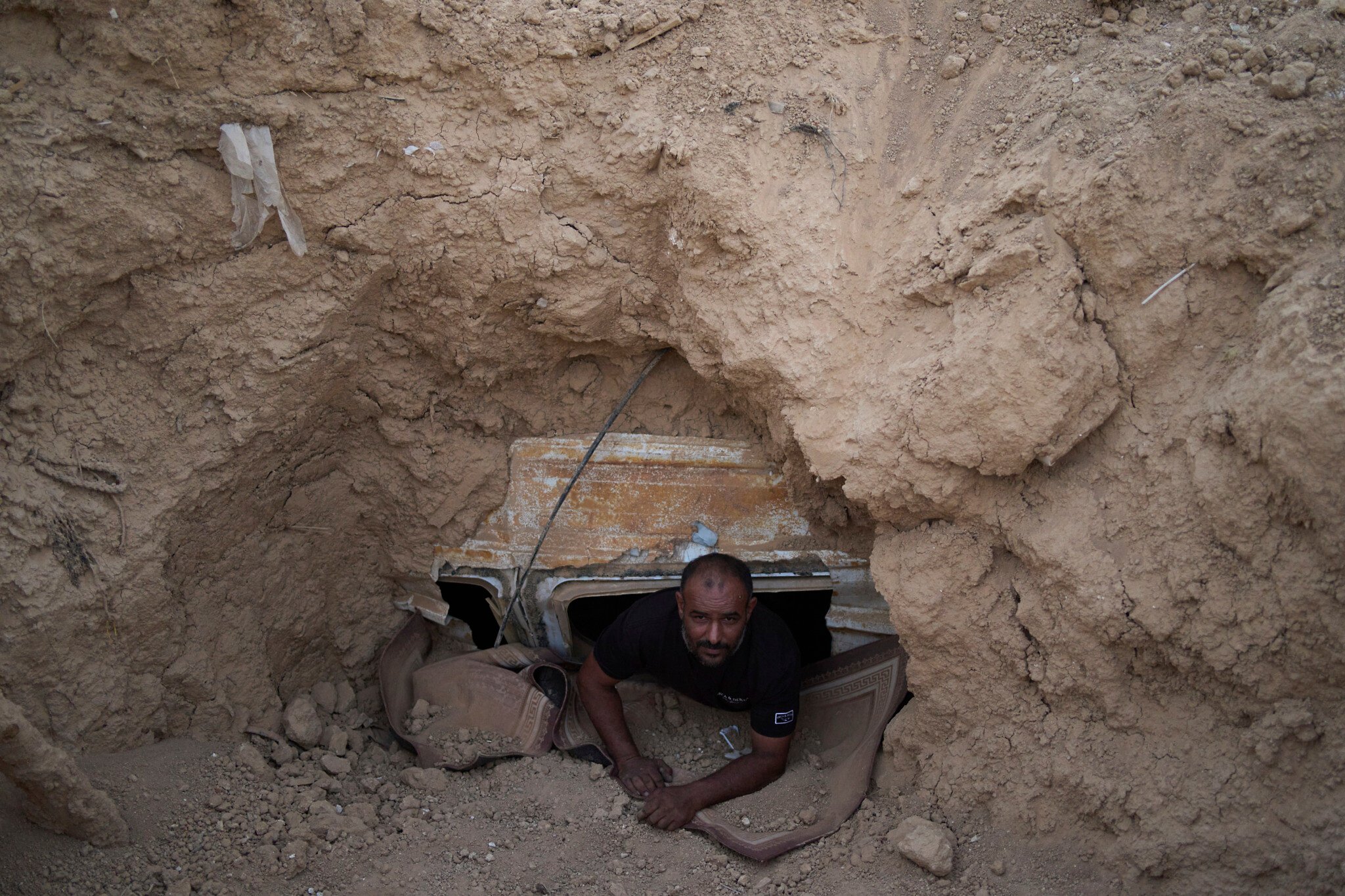
When the sirens wail in the southern Israeli desert to herald an incoming missile, Ahmad Abu Ganima’s family scrambles outside. Down some steps hewn out of the dirt, one by one, they squeeze through the window of a minibus buried under 10 feet (three meters) of dirt.
Abu Ganima, a mechanic, got the cast-off bus from his employer after it was stripped for parts. He buried it in his yard to create an ad-hoc bomb shelter for his family. Abu Ganima is part of Israel’s 300,000-strong Bedouin community, a previously nomadic tribe that lives scattered across the arid Negev Desert.
More than two-thirds of the Bedouin have no access to shelters, says Huda Abu Obaid, executive director of Negev Coexistence Forum, which lobbies for Bedouin issues in southern Israel. As the threat of missiles became more dire during the 12-day war with Iran last month, many Bedouin families resorted to building DIY shelters out of available material: buried steel containers, buried trucks, repurposed construction debris.
“When there’s a missile, you can see it coming from Gaza, Iran or Yemen,” says Amira Abu Queider, 55, a lawyer for the sharia, or Islamic, court system, pointing to the wide-open sky over Al-Zarnug, a village of squat, haphazardly built cement structures. “We’re not guilty, but we’re the ones getting hurt.”
Communities lack public services
Al-Zarnug is not recognized by the Israeli government and does not receive services such as trash collection, electricity or water. Nearly all power comes from solar panels on rooftops, and the community cannot receive construction permits. Residents receive frequent demolition orders.
Around 90,000 Bedouins live in 35 unrecognized villages in southern Israel. Even those Bedouin who live in areas “recognized” by Israel have scant access to shelter. Rahat, the largest Bedouin city in southern Israel, has eight public shelters for 79,000 residents, while nearby Ofakim, a Jewish town, has 150 public shelters for 41,000 residents, Abu Obaid says.
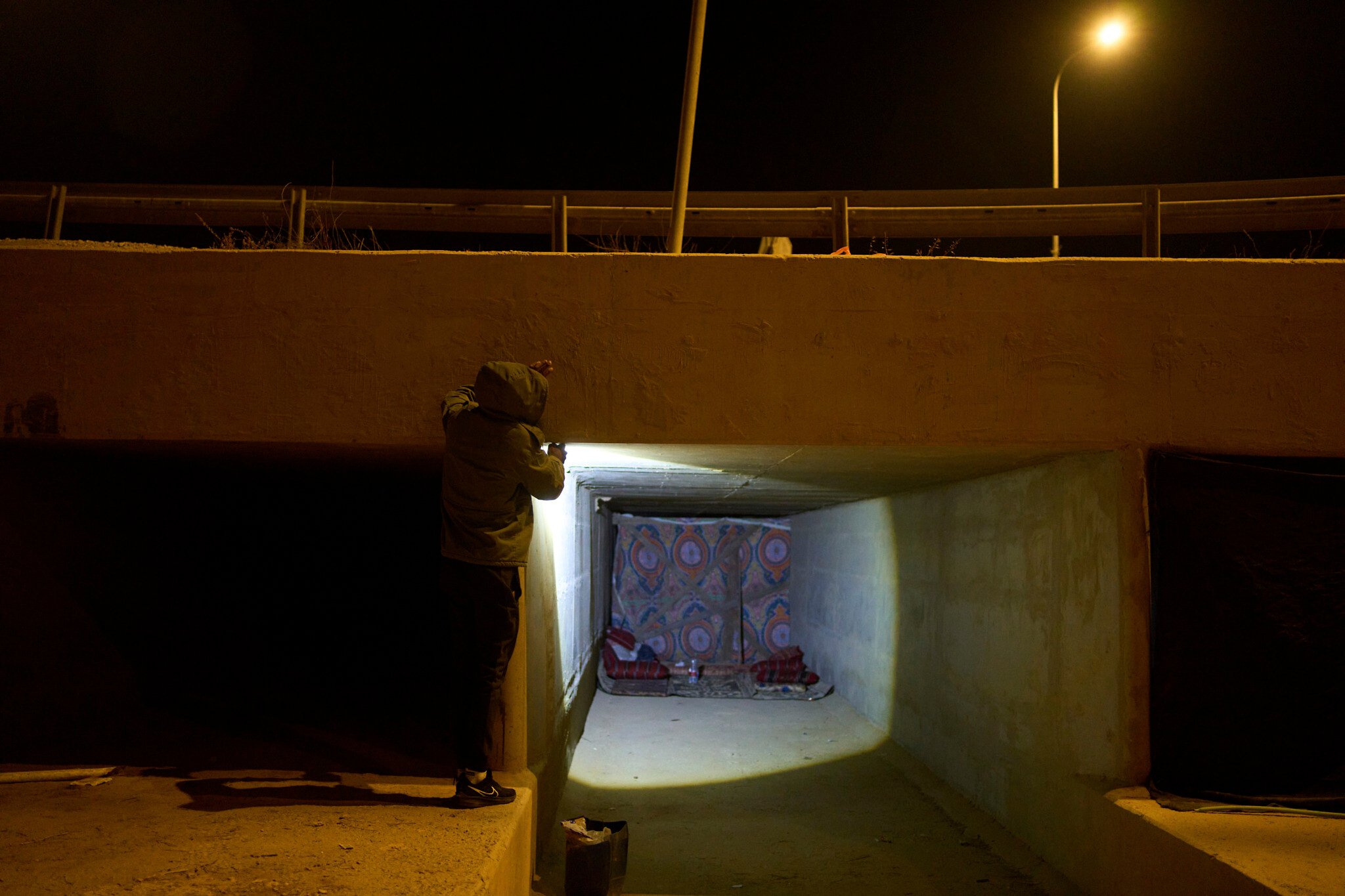
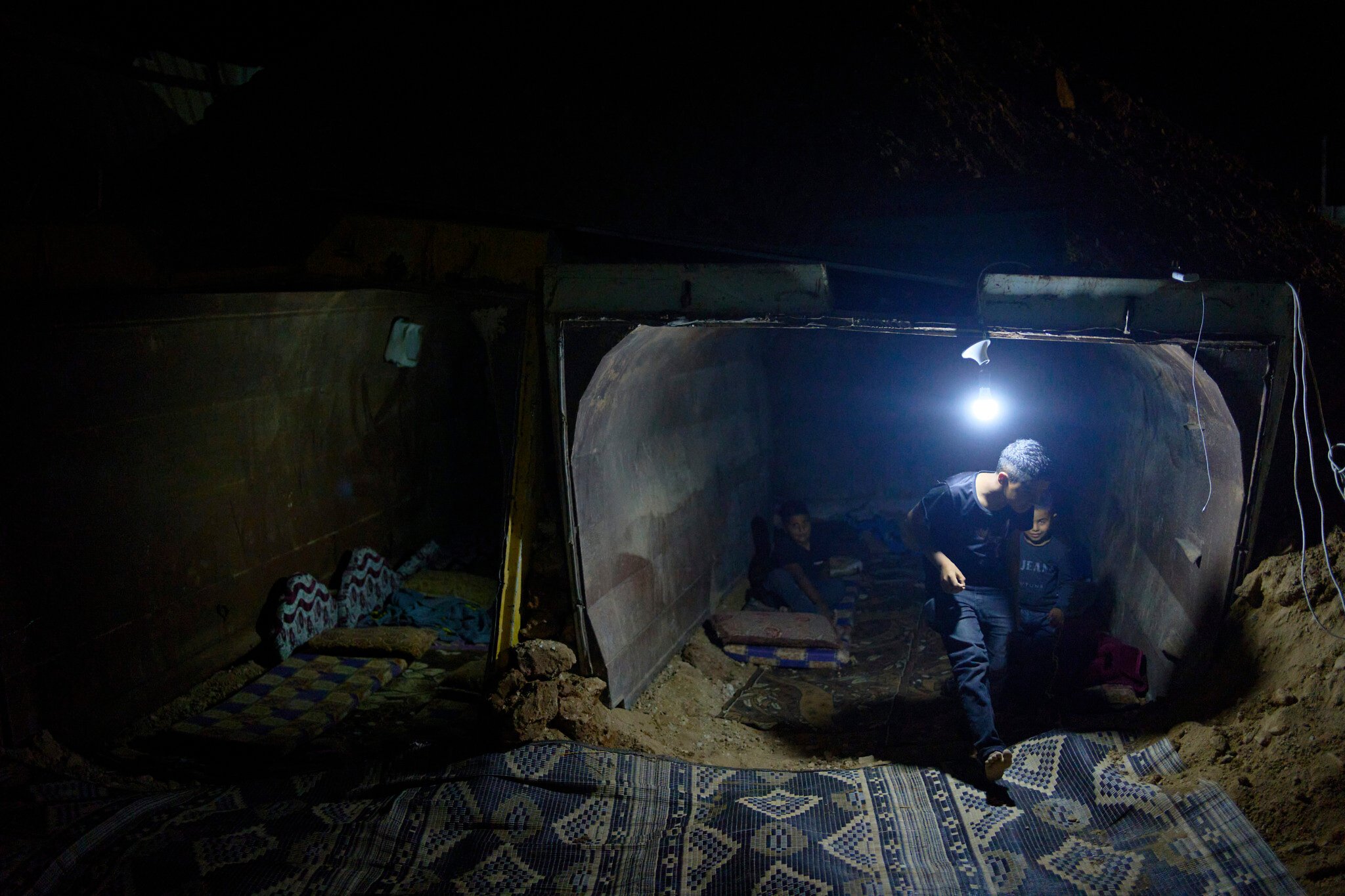
Sometimes, more than 50 people try to squeeze into the three square meters of a mobile bomb shelter or a buried truck. Others crowded into cement culverts beneath train tracks, meant to channel storm runoff, hanging sheets to try to provide privacy. Shelters are so far away that sometimes families were forced to leave behind the elderly and people with mobility issues, residents say.
On October 7, 2023, when Hamas launched its invasion of southern Israel, 21 Bedouins were killed and six were taken hostage to Gaza, according to local leaders. Seven Bedouin, including children, were killed by missiles during the Hamas barrage on the first day of the attack, Abu Obaid says. That attack triggered the ongoing war in Gaza and, as regional Iranian proxies also attacked Israel, led to a direct confrontation between Israel and Iran. The Islamic Republic twice fired missile and drone barrages at Israel, which responded with airstrikes.
During the first of the two barrages, in April 2024, a Bedouin girl suffered a severe head injury from missile shrapnel, one of the only civilian injuries.
Last month, Israel launched surprise strikes on Iran’s nuclear and ballistic missile facilities, saying they posed an existential threat. Iran retaliated by launching over 500 ballistic missiles and around 1,100 drones at Israel. The attacks killed 29 people and wounded over 3,000 in Israel, according to health officials and hospitals. However, no Bedouins were killed or injured during the 12-day war.
People want an escape plan
Some 70-80% of Israelis have access to a private or public shelter, which includes neighborhood shelters, experts say, although about half of non-Jewish Israelis do not.
Engineering standards for bomb shelters and protected rooms are exhaustive and specific, laying out thickness of walls and types of shockwave-proof windows that must be used. The Bedouins making their own shelters know that they don’t offer much or any protection from a direct hit, but many people say it makes them feel good to go somewhere. Inside the minibus, Abu Ganeima says, the sound of the sirens are deadened, which is comforting to his children.
“Our bomb shelters are not safe,” says Najah Abo Smhan, a medical translator and single mother from Al-Zarnug. Her 9-year-old daughter, terrified, insisted they run to a neighbor, where they had repurposed a massive, cast-off truck scale as the roof of a dug-out underground shelter, even though they knew it wouldn’t be enough to protect them from a direct hit. “We’re just doing a lot of praying.”
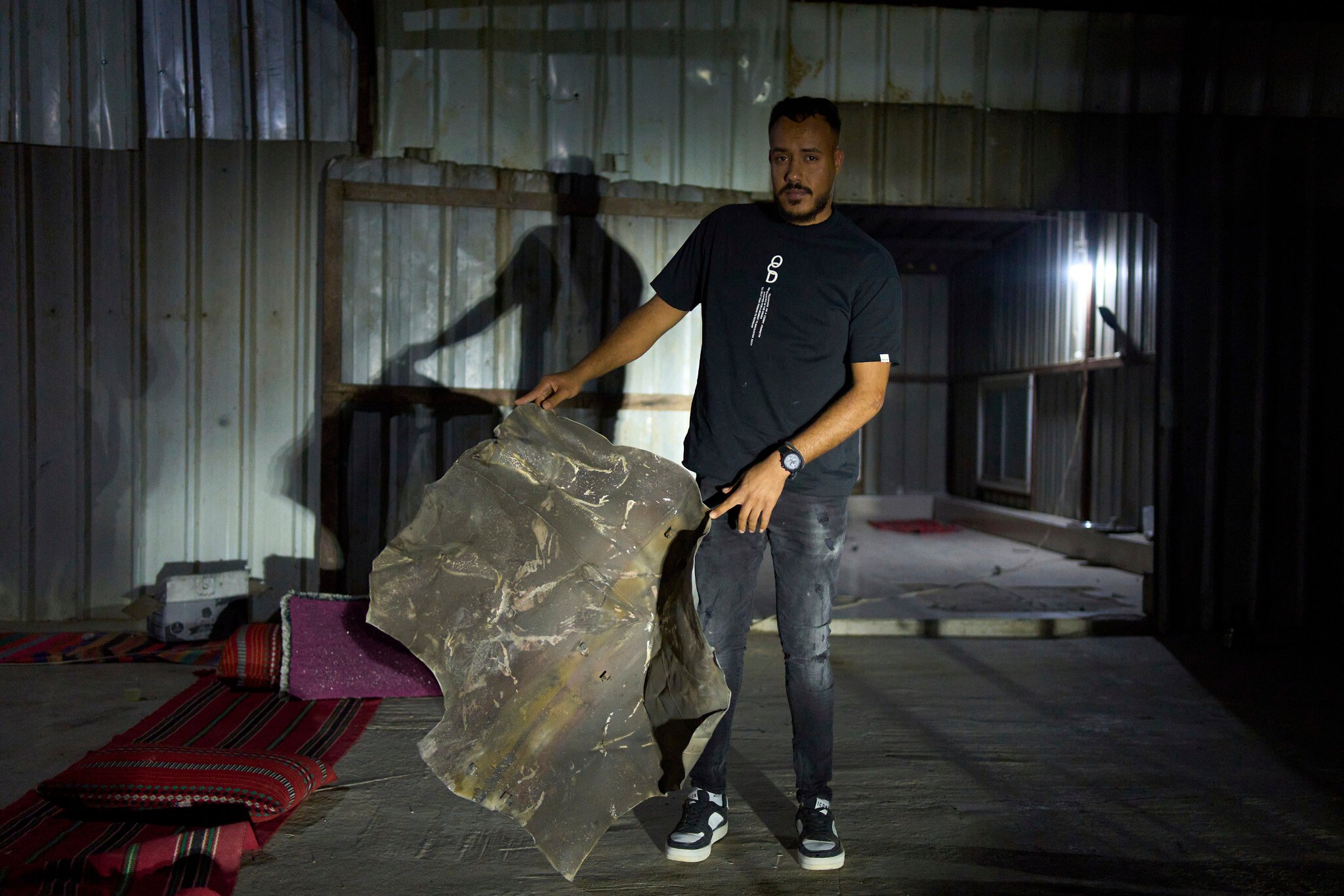
When sirens blared to warn of incoming missiles, a “scene filled with fear and panic” unfolded, says Miada Abukweder, 36, a leader from Al-Zarnug.
“Children screamed, and mothers feared more for their children than for themselves. They were thinking about their children while they were screaming, feeling stomach pain, scared, and crying out, ‘We are going to die, where will we go?'” says Abukweder, part of a large clan of families in the area.
The feeling of not having anywhere to go or hide, many say, is almost as terrifying as the missiles themselves.
Some shelters were donated but aren’t enough
Immediately after the October 7 Hamas attack, Israeli security services placed around 300 mobile bomb shelters in Bedouin areas, Abu Obaid says. Civil service organizations also donated a handful of mobile shelters. But these mobile bomb shelters are not built to withstand Iran’s ballistic missiles, and are grossly inadequate to meet widespread need. Abu Obaid estimates thousands of mobile shelters are needed across the far-flung Bedouin communities.
The Home Front Command, the Israeli military body responsible for civilian issues, says bomb shelters are the responsibility of local authorities and property owners. There are no local authorities responsible for unrecognized Bedouin villages. The Home Front Command says that due to the ongoing wars, it is assisting local communities, including the Bedouin, with dozens of temporary bomb shelters in coming months, though communities have received demolition orders, rather than shelters, in the past weeks.
Israel’s Arabs — roughly 20% of the country’s 10 million people — are citizens with the right to vote but often suffer discrimination. Bedouins are Israeli citizens and some serve in the army, but they are the poorest members of the country’s Arab minority. More than 70% live below the poverty line, Abu Obaid says.
Abu Obaid says Bedouin residents aren’t asking Israel to finance their bomb shelters; they are simply asking the state to give them construction permits so they can build homes with adequate shelters. Because of the lack of permits, many people are forced to risk building illegally. But few are willing to build reinforced rooms or shelters because of the high cost of construction.
“People don’t even want to try it,” Abu Obaid says. “It’s very expensive, and then two weeks later the state comes and says you have to destroy it.”







The Times of Israel Community.