

Fashion exhibit looks at design as symbol of hope during World War II
Holon Design Museum launches ‘Heroines,’ a look at World War Two-era designers who leaned on fashion, as well as Holocaust items
 Add ToI as a Preferred Source on Google
Jessica Steinberg, The Times of Israel's culture and lifestyles editor, covers the Sabra scene from south to north and back to the center
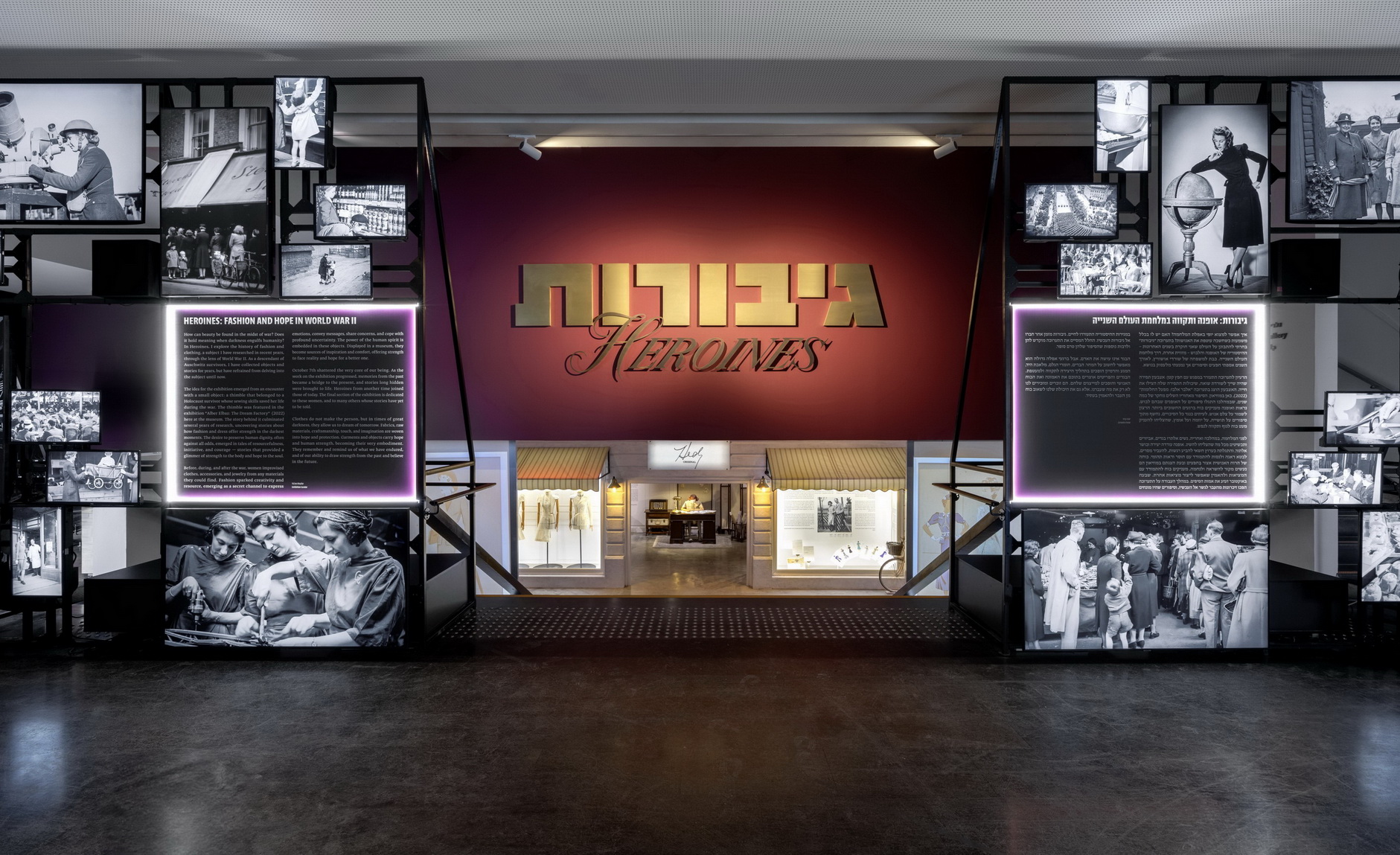


It isn’t unusual to compare aspects of the Holocaust with the devastating October 7 Hamas terrorist attack, and the Design Museum Holon offers a similar note in its latest exhibit, “Heroines,” examining how fashion design provided a sense of hope during dark times.
“Heroines,” which opened March 31 and will remain at the museum through January 2026, is timed with Israel’s Holocaust Remembrance Day, marked the week after Passover.
It’s curated by Ya’ara Keydar, a known art historian and fashionista, who brings the stories and creations of fashion designers during World War Two, under the threat of war.
“My family history always made me think that World War II was not a topic that should be addressed in my field,” said Keydar, “but life took me on a journey following inspiring heroines, who saw fashion and clothing as a way to hold on to life and optimism in humanity’s most difficult moments.”
The entire exhibit, housed in the circular museum designed by architect Ron Arad, looks back at how women improvised and used ingenuity to move forward, one design at a time, during a period of great unknowns.
The exhibit opens with the story of Hedy Strand, a Czech fashion designer and her husband who perished in the Holocaust, whose story and designs ended up in Milwaukee with relatives, eventually brought to life in an exhibit by the Jewish Museum Milwaukee.
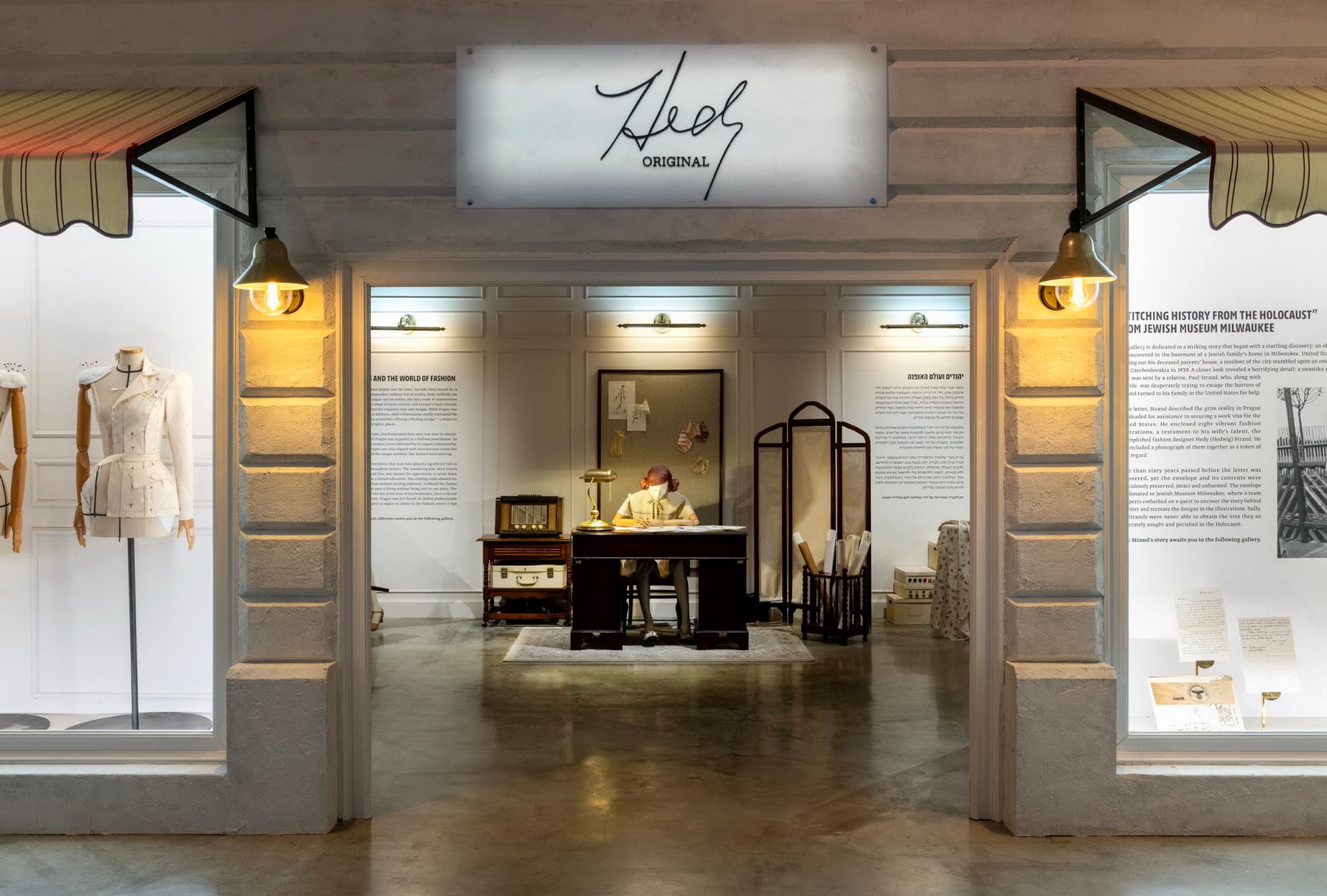
The Holon Design Museum borrowed parts of the exhibit and eight of Strand’s design ensembles were recreated in Israel, in an exhibit that tells her story.
Strand’s Czech design atelier is recreated, with her designs displayed on a rotating stage, set up as a haute couture studio.
A side gallery includes a selection of items from the Yad Vashem Holocaust Museum in Jerusalem, such as a sweater knitted by a concentration camp victim, made from improvised knitting needles and yarn unraveled from a German soldier’s socks, and a bra created and sewn from stolen fabric.
The third gallery, the museum’s Peripheral Corridor that encircles the main exhibit, includes vitrines filled with dozens of items that were made in the US and England during and to support the war effort.
There was a contraption created to draw seams on women’s stockings when silk wasn’t available, glow-in-the-dark accessories made to light the way during blackouts, and victory pins worn to support the war effort, including diamond versions designed by Cartier.
The pins are reminiscent of the yellow ribbon pins worn by many today for the hostages held in Gaza, which were first created by a local designer, said Idit Barak, a professor of fashion design at Shenkar who researched and curated the gallery of accessories.
“It’s so similar to what’s going on here,” said Barak. “There’s a battle to get up and keep creating. You have to keep on doing things.”
Patriotic fashion from World War II included makeup company Elizabeth Arden’s particular lipstick color, Montezuma Red, created to support the Women in the Marines, and Forget-Me-Not bracelets worn by women to remember their men fighting abroad.
The accessories in the exhibit are accompanied by the magazine and newspaper advertisements from the 1940s that promoted the items.
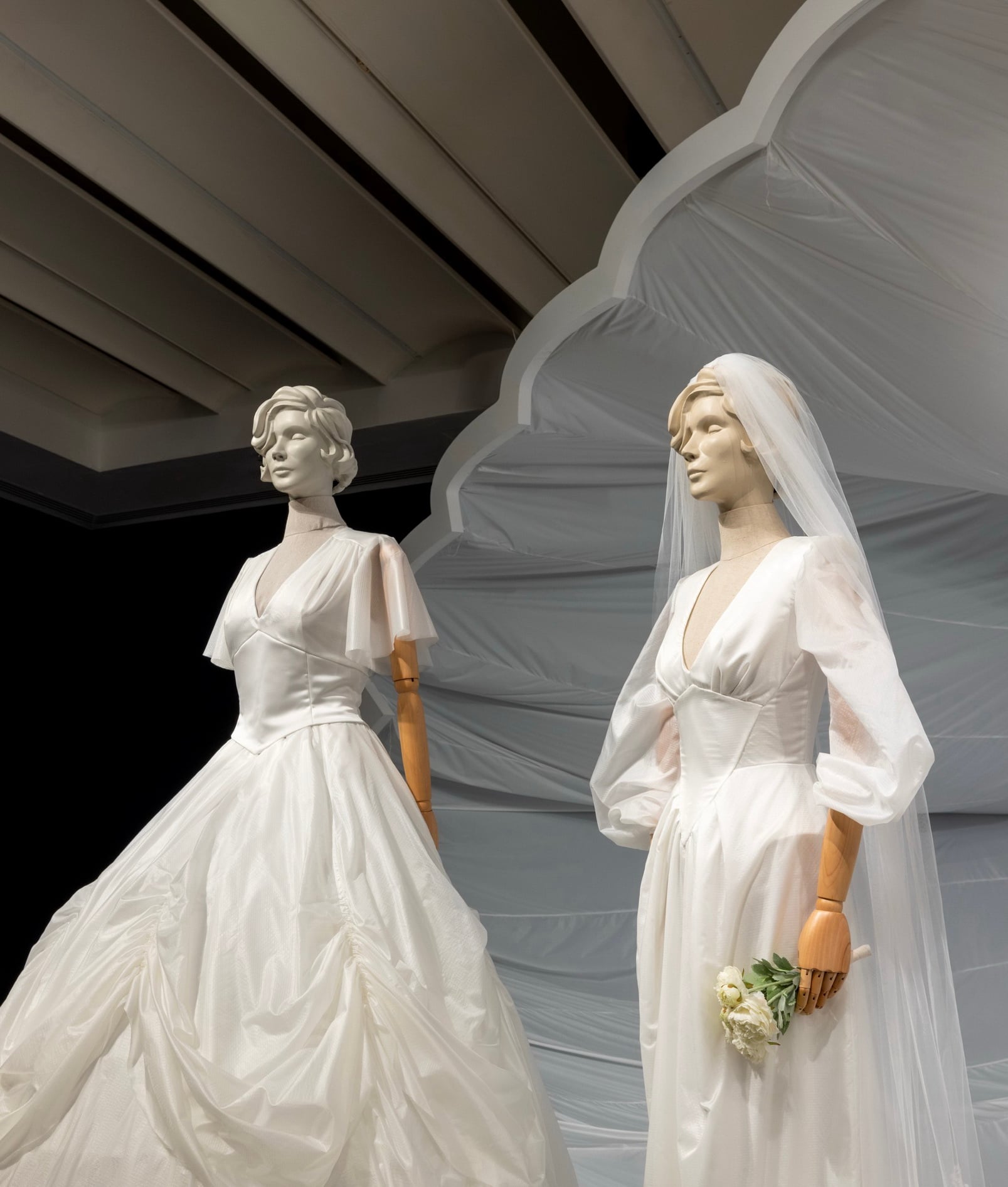
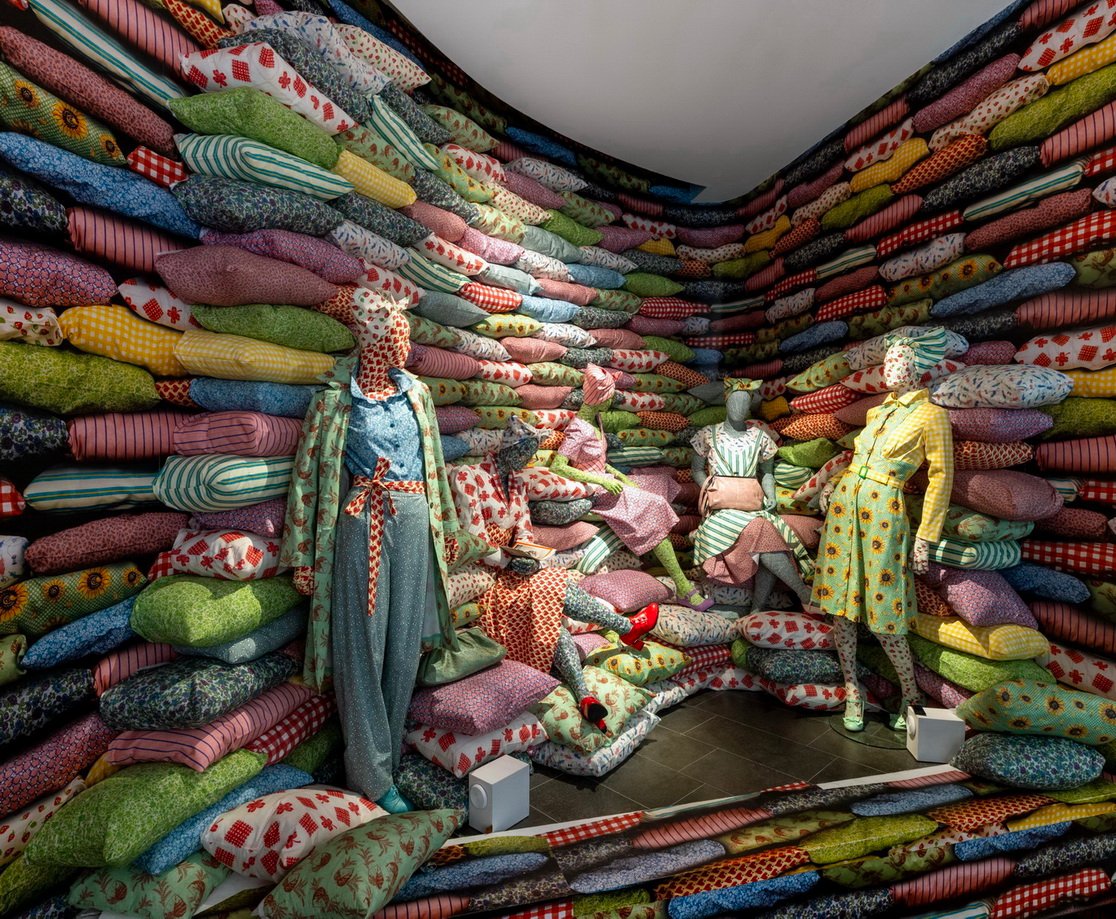
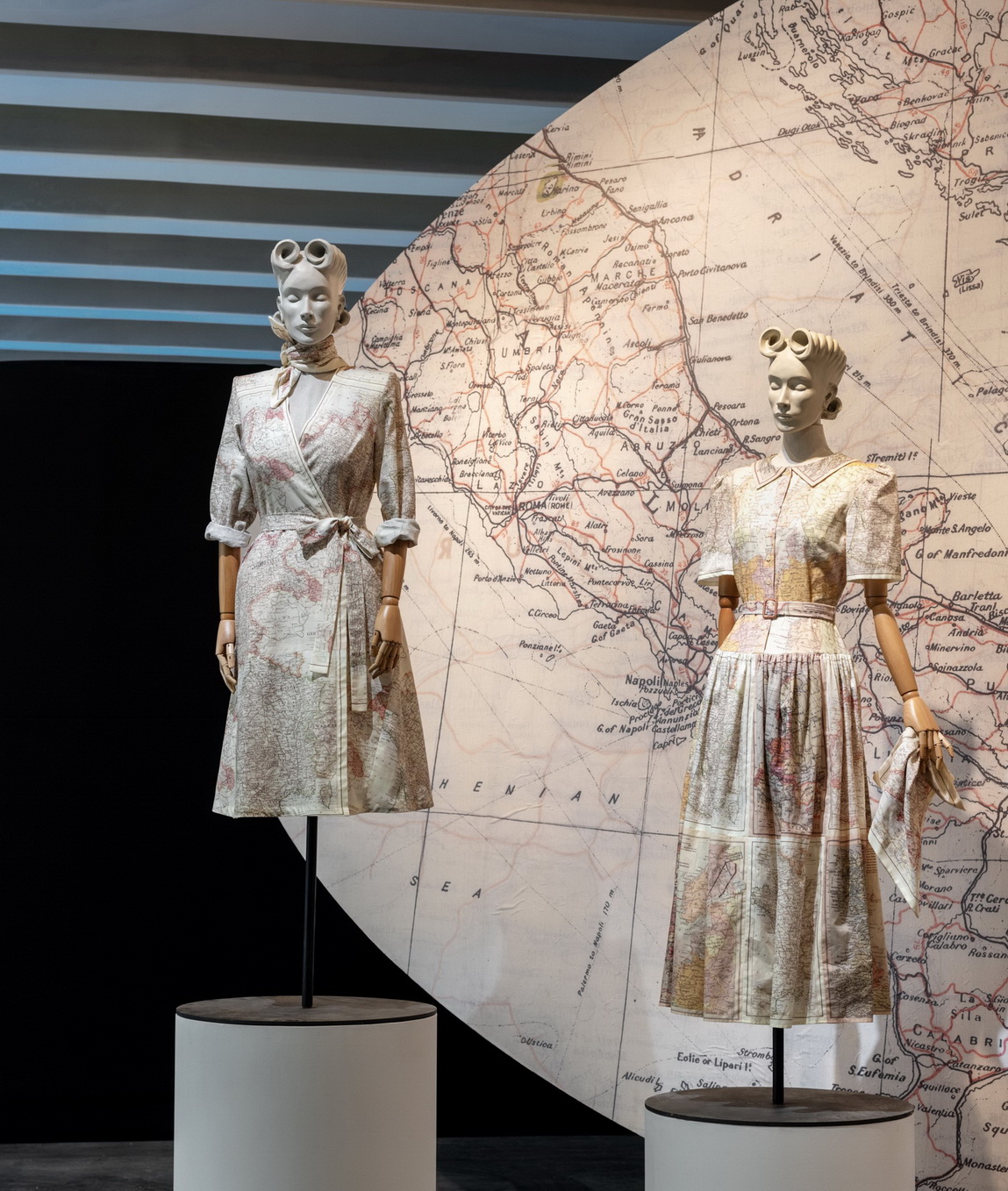
The upper galleries of the exhibit look at life after the war; the first section includes wedding dresses made from parachute fabric, gowns sewn from silk escape maps and dresses sewn from flour sackcloth, a kind of upcycling effort designed out of necessity.
The final section of the exhibit takes a deeper look at life after the war, with the gallery designed to mimic a massive, empty swimming pool to display the Gottex bathing suits of designer Lea Gottlieb, the Holocaust survivor who created her swimsuit empire in Israel after the war.
Gottlieb often used daisies in her swimsuit designs, alluding to how she carried a large bouquet of daisies in her native Hungary whenever she went to visit her husband in a forced labor camp, to hide the yellow Jewish star pinned to her clothing and draw less notice from the Nazi soldiers.
The daisies appeared over and over again in Gottlieb’s designs, on bodices and bottoms of her bikinis and one-piece suits, a personal testament to the designer’s intense desire to survive and continue to live and thrive.

“I knew this was an excellent opportunity to look to the past to draw hope from it for the future,” said Maya Dvash, chief curator of the museum. “The ingenuity, improvisation and courage demonstrated by women in different eras are at the heart of the world of design, and I knew they would inspire us, especially in these times.”










The Times of Israel Community.