

IDF stays on upped alert as West Bank protests appear to lose steam
Demonstrations over US capital recognition have fallen short of predictions, but fears remain they could pick up renewed momentum
 Add ToI as a Preferred Source on Google
Judah Ari Gross is The Times of Israel's religions and Diaspora affairs correspondent.
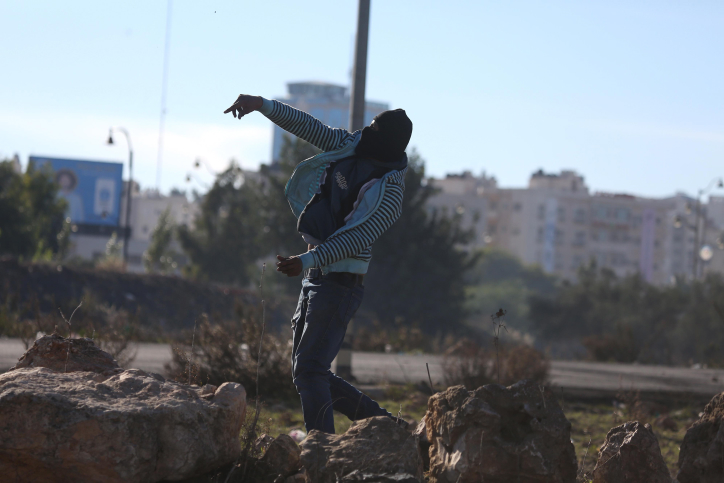
The thousands of Palestinians who turned out to protest US President Donald Trump’s recognition of Jerusalem as Israel’s capital on Friday gave way to hundreds of demonstrators on Saturday, with fewer still taking to the streets during the day on Sunday.
The military was conducting constant assessments to decide whether or not to keep in place the additional battalions that it sent into the West Bank at the end of last week.
As of Sunday afternoon, the added troops remained in place.
The sharp decline in the intensity of the protests from Friday to Saturday, coupled with the fact that schools in the West Bank reopened on Sunday, indicated that those reinforcements could be released shortly, barring an unforeseen development.
It was not immediately clear if Sunday afternoon’s stabbing attack outside the Jerusalem bus station would constitute such an unforeseen development.
“We’re doing a situational assessment, tracking everything that’s happening,” a military official said.
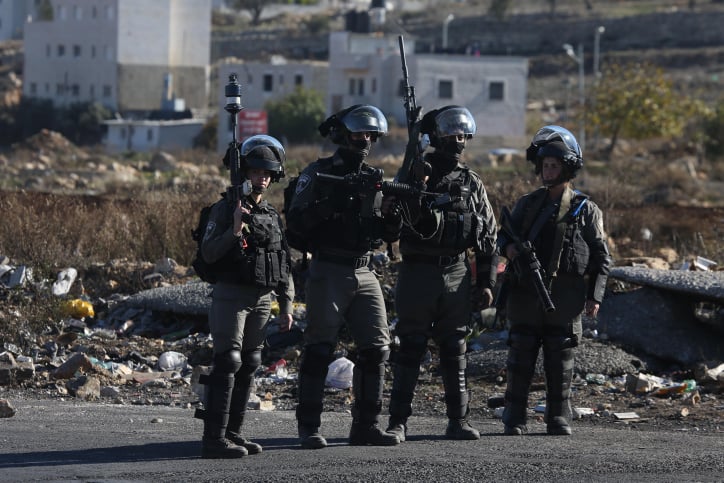
On Thursday, the army sent an unspecified number of extra battalions to the West Bank, it said, out of concerns that additional forces would be necessary to respond to violent riots in the area.
Not all of those added troops ended up being necessary, as fewer Palestinians came out to demonstrate and riot than were expected.
The protests in the West Bank and Gaza Strip, by all accounts, could have been far larger, with major Palestinian groups, like Fatah and Hamas, calling for mass demonstrations and seemingly all the world’s media outlets watching the developments. Hamas, specifically, called for a new intifada, or uprising.
But those mass demonstrations didn’t occur.
In the course of Friday, thousands of Palestinians took part in protests in the West Bank, spread out in some 30 locations. The IDF put the total figure at some 5,000 protesters, Hundreds of rioters were treated by the Palestinian Red Crescent, the vast majority for tear gas inhalation. Several dozen were hit by rubber bullets, it said, and a handful were hit by live fire, though none was critically wounded.
In the Gaza Strip, two protesters were reportedly shot and killed as they rioted near the security fence and, according to the army, ignored calls to halt and warning shots in the air.
This weekend’s West Bank protests were similar in size to those that took place in July after Israel installed metal detectors at the entrance to the Temple Mount, following a deadly terror attack in which two police officers were killed.
However, in the so-called “Temple Mount crisis” of July, East Jerusalem served as a far more prominent center of unrest and violence, with thousands of young men clashing with Israeli troops — which did not happen on the same scale this past weekend.
Yet, while the intensity of the Palestinian protests has so far fallen short of predictions, that does not preclude the possibility that they will pick up renewed momentum.
Any number of events could spark larger protests. For instance, if a large number of Palestinian rioters, or if a particularly young one, were killed by Israeli troops in a demonstration, that could bring more people to the streets.
The military has been cautious to avoid using live fire during West Bank protests, instead largely using less-lethal riot dispersal weapons, like tear gas, stun grenades and rubber bullets.
In his White House proclamation on Wednesday, Trump defied experts’ dire warnings as to severe repercussions on the entire Middle East that would stem from his recognition of Jerusalem as Israel’s capital.
So far, the region hasn’t fulfilled the predictions.
Perhaps mitigating Trump’s proclamation was the fact that he remained vague, apparently careful not to specify the boundaries of Jerusalem or even rule out the possibility that Palestinians could get East Jerusalem as a capital in a future two-state solution.
"Where Is Jerusalem??": The @StateDept acknowledges that Trump recognized Jerusalem as the capital of Israel, but this what happens when @APDiploWriter asks where Jerusalem is… pic.twitter.com/R45M2OxTX1
— Amichai Stein (@AmichaiStein1) December 8, 2017
Additionally, hours after his speech, Trump signed a waiver preventing the move of the US embassy from Tel Aviv to Jerusalem for at least another six months. Moreover, when asked, the US State Department would not even say that Jerusalem is located inside Israel.








The Times of Israel Community.